
Ip Man
Chinese Wing Chun grandmaster and teacher of Bruce Lee.

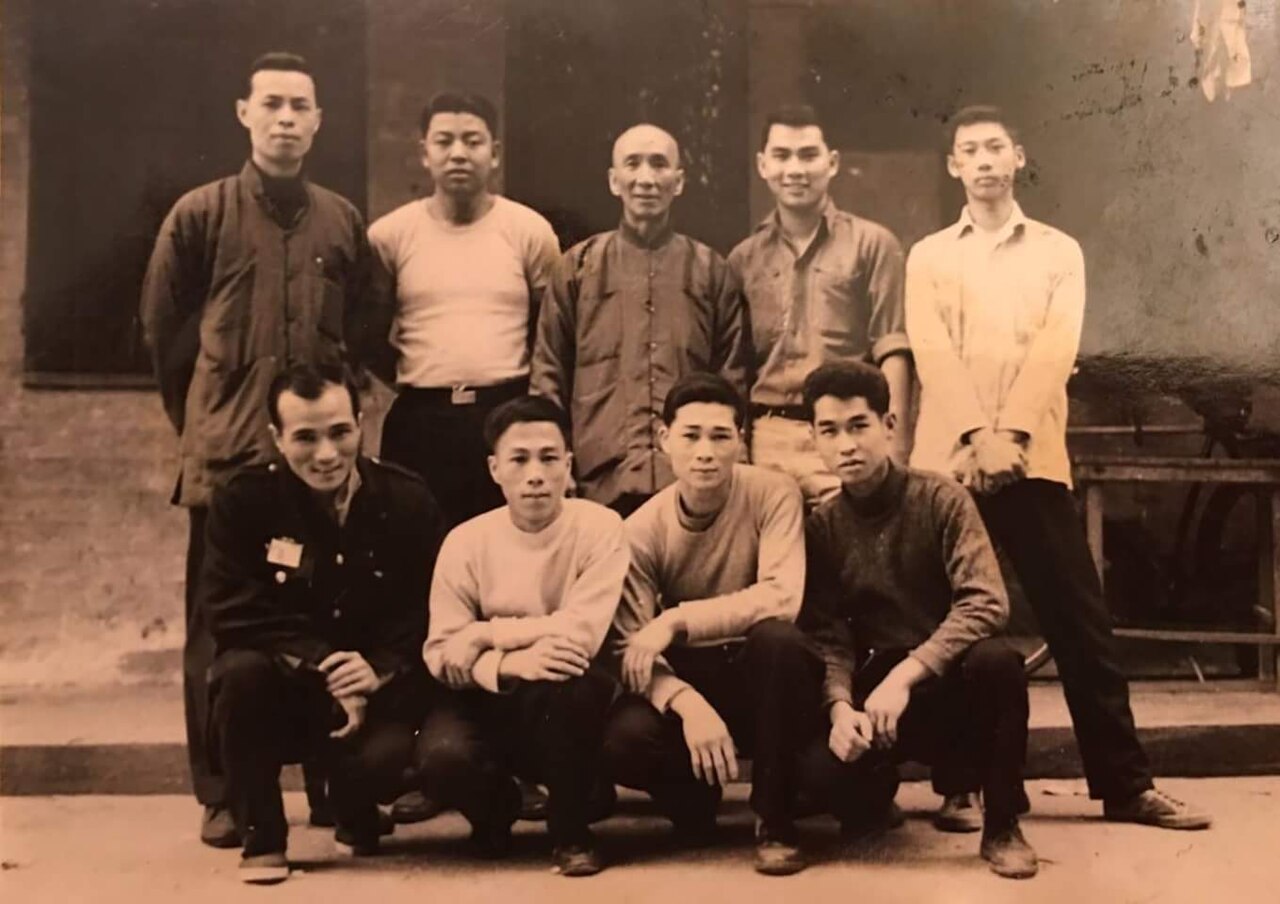
Fred Cherrygarden · CC BY-SA 4.0
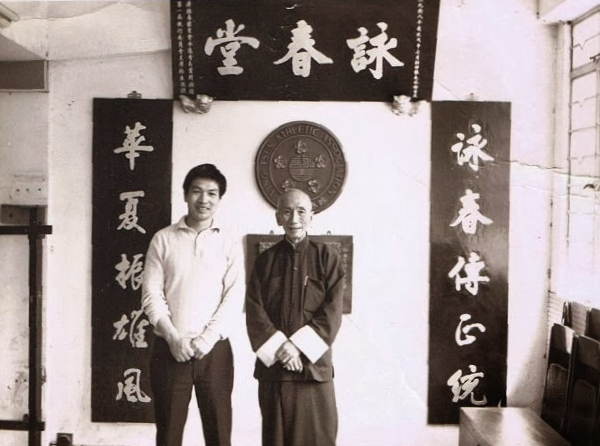
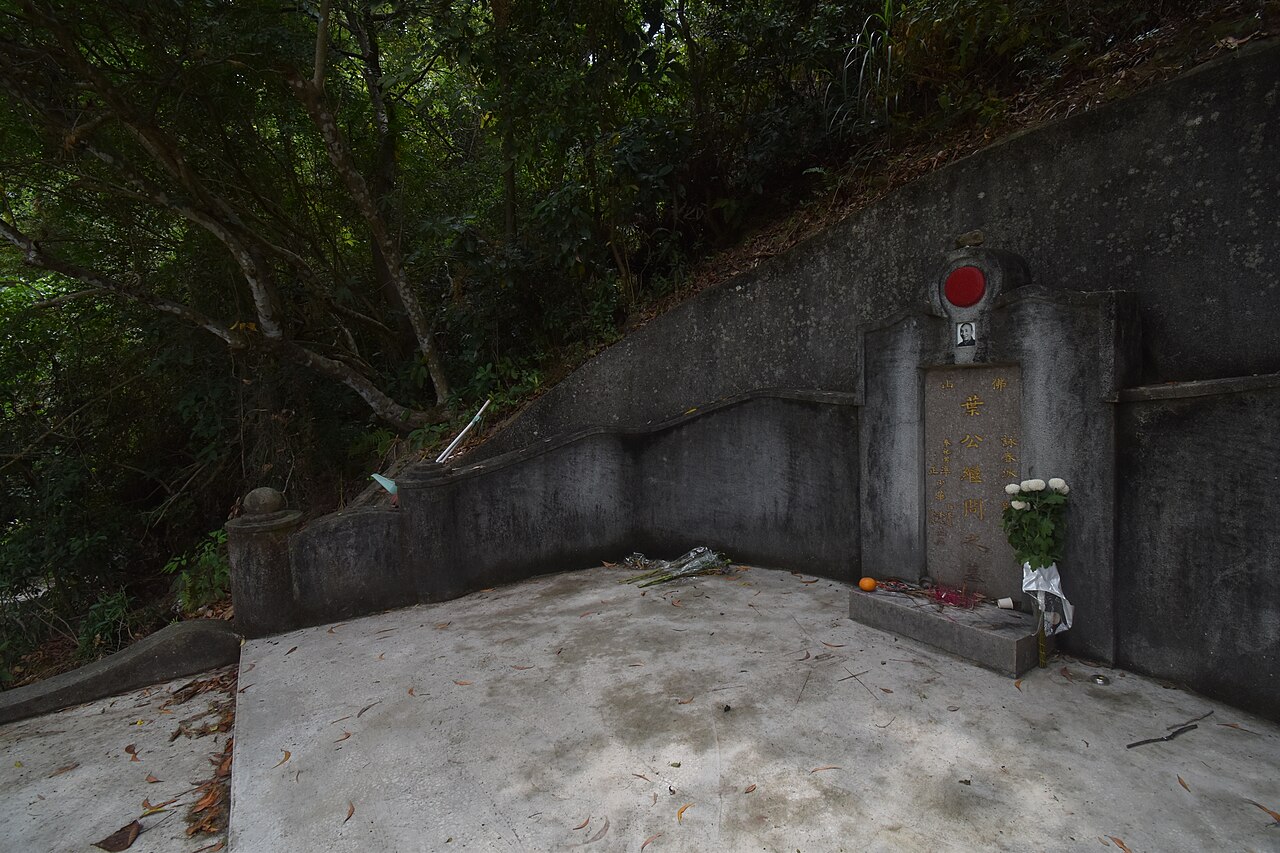
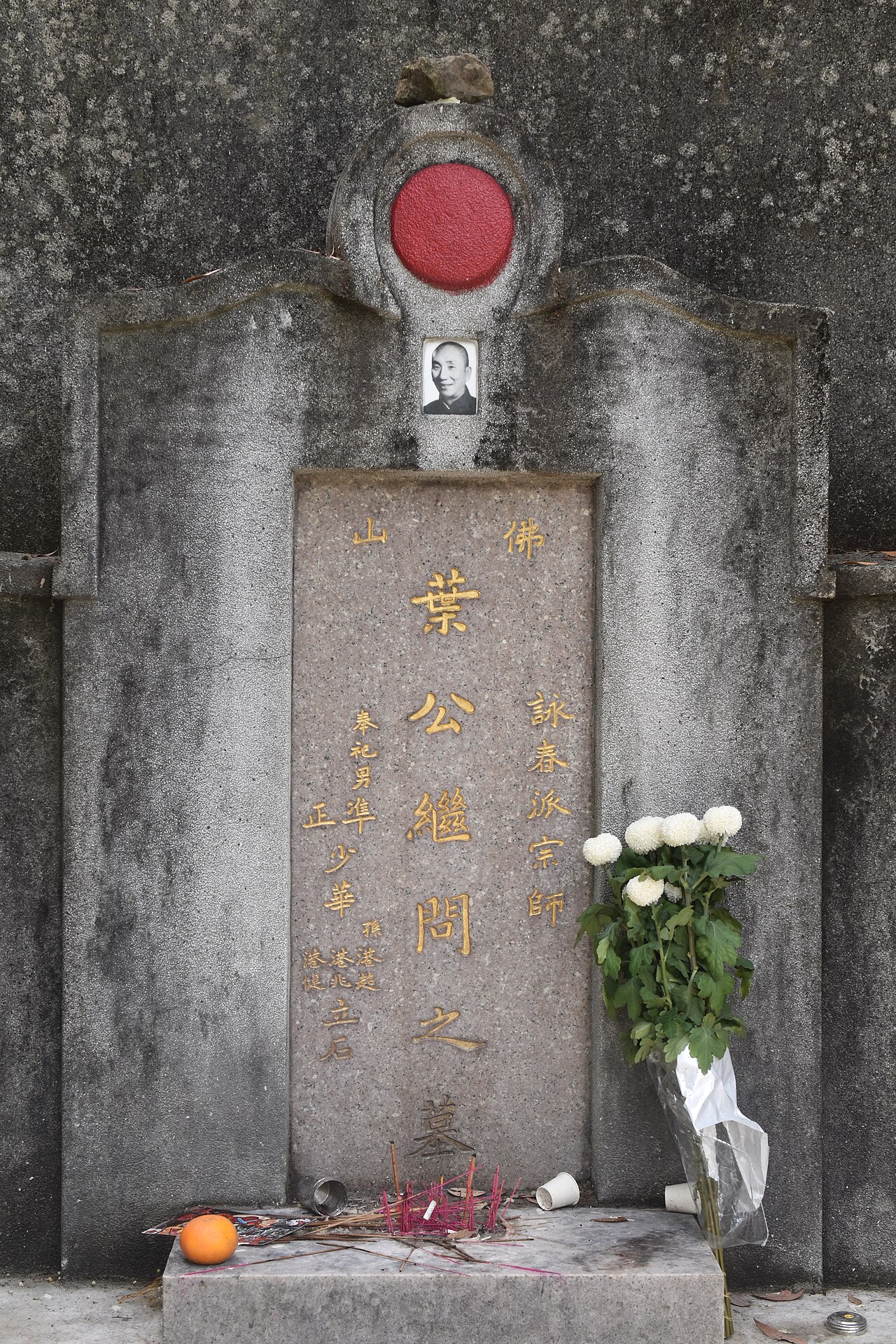
Ip Man (born Ip Kai-man; 1 October 1893 – 2 December 1972), also referred to as Yip Man, was a Chinese martial arts grandmaster. He started teaching Wing Chun at age 20. Among his students were several future martial arts masters, most notably Bruce Lee. Ip Man was the third of four children born to Ip Oi-dor and Ng Shui in Foshan, Guangdong. He grew up in a wealthy household and received a traditional Chinese education alongside his older brother Ip Kai-gak, older sister Ip Wan-mei, and younger sister Ip Wan-hum. He began learning Wing Chun from Chan Wah-shun at either age 9 or 13. Chan was 57 at the time and took Ip on as his 16th and final student. Because of Chan’s advanced age, Ip trained with him for only three years before Chan suffered a mild stroke in 1909 and retired to his village. Most of Ip’s early skills came from Ng Chung-sok, Chan’s second-most senior student. At 16, Ip moved to Hong Kong with help from his relative Leung Fut-ting and attended St. Stephen’s College, a secondary school for wealthy families and foreigners. Six months later, a classmate named Lai told Ip that a friend of Lai’s father, an expert in kung fu, was staying with them and offered a friendly sparring match. Ip, undefeated at the time, accepted eagerly. He went to Lai’s house on a Sunday afternoon and challenged the man, who turned out to be Leung Bik. Leung Bik easily overwhelmed Ip, and a second duel ended the same way. Discouraged, Ip left without speaking and felt so embarrassed he stopped mentioning his martial arts background. A week later, Lai told Ip that Leung Bik had asked about him. Ip said he was too ashamed to return, but Lai revealed that Leung Bik had praised Ip’s technique and was the son of Leung Jan, who had trained Ip’s own master, Chan Wah-shun. Ip then trained with Leung Bik until Leung’s death in 1911. Ip returned to Foshan in 1916 at age 24 and became a police officer for the Nationalist government. He taught Wing Chun to subordinates, friends, and relatives but never ran an official school. Notable students from this period included Lok Yiu, Chow Kwong-yue, Kwok Fu, Lun Kah, Chan Chi-sun, and Lui Ying. Chow Kwong-yue was considered the most talented but left martial arts for trade. Kwok Fu and Lun Kah went on to teach Wing Chun in Foshan and Guangdong. Chan Chi-sun and Lui Ying moved to Hong Kong but did not take students. Ip married Cheung Wing-sing, and they had children: sons Ip Chun and Ip Ching, and daughters Ip Nga-sum and Ip Nga-wun. During the Second Sino-Japanese War, Ip sided with the Kuomintang. What he did during the war is unclear. There is a disputed rumor that he joined the Central Bureau of Investigation and Statistics academy in Guizhou in 1938 and later returned to Foshan as an undercover intelligence officer. It is believed he lived with Kwok Fu during the war and only returned to Foshan after it ended. After the war, Ip served as captain of the Foshan police patrols for a few years. In 1949, he found time to train his second son, Ip Ching. At the end of 1949, after the Chinese Communist Party won the civil war, Ip—a Kuomintang member—left Foshan for Hong Kong with his wife and elder daughter. Ip, his wife Cheung, and their daughter arrived in Hong Kong via Macau in 1950. His wife and daughter later returned to Foshan to retrieve their identity cards. When the border between China and Hong Kong closed in 1951, Ip and Cheung were separated permanently; Cheung remained in Foshan until her death. At 56, Ip struggled to find work. His only prior job was as a policeman, but he either could not or would not join the Hong Kong Police Force. Friends helped him get a job at a restaurant, where he made connections through the Hong Kong Restaurant Workers’ Association. The association had a martial arts club led by Leung Sheung, but Ip kept his own martial arts background hidden. He was addicted to opium and bought it on the black market in Hong Kong. Because opium was expensive, he needed steady income to support his habit and his family back in Foshan. Ip began teaching Wing Chun in the early 1950s to escape poverty and, allegedly, to fund his opium addiction. His earliest students were mostly poor, uneducated members of the Restaurant Workers’ Association and restless young men drawn to Ip’s charisma and the promise of toughness in 1950s Hong Kong. His teaching business started poorly; students typically stayed only a couple of months. He moved his school twice—first to Castle Peak Road in Sham Shui Po, then to Lee Tat Street in Yau Ma Tei—where only a few former students continued training with him. One notable student was Grandmaster Chow Tze Chueng, teacher of Sifu Donald Mak.
- born
- 1 October 1893
- died
- 2 December 1972
- field
- Martial arts
- nationality
- Chinese
- known_for
- Teaching Wing Chun; teacher of Bruce Lee
Lore & Background
Ip Man was born as Ip Kai-man to Ip Oi-dor and Ng Shui, the third of four children, and grew up in a wealthy family in Foshan, Guangdong. At age 16, Ip moved to Hong Kong and attended St. Stephen's College. After the war, he served as captain of the Foshan police patrols. In Hong Kong, Ip struggled with unemployment and began teaching Wing Chun in the early 1950s to escape poverty and allegedly feed his opium addiction. His teaching business grew slowly, and by the 1960s he attracted wealthier students. Ip died on 2 December 1972 from laryngeal cancer, only seven months before the death of Bruce Lee.
Reader's Guide
Ip Man’s significance stems from his role as the grandmaster who transformed Wing Chun from a regional fighting system into a globally recognized martial art, largely through his most famous student, Bruce Lee. His own training began in childhood under Chan Wah-shun, from whom he learned for only three years before a stroke forced Chan’s retirement; Ip then completed his education under Chan’s senior student, Ng Chung-sok. A pivotal defeat at the hands of Leung Bik—the son of his own master’s teacher—prompted Ip to train further with Leung until his death. As a young man, Ip worked as a police officer in Foshan and taught Wing Chun informally to subordinates, friends, and relatives, never operating a formal school. During the Second Sino-Japanese War, he sided with the Kuomintang and may have served as an undercover intelligence officer, though this remains uncertain. After the war, he briefly served as a police captain before fleeing to Hong Kong in 1950 following the Communist victory. There, struggling with unemployment and an opium addiction, Ip began teaching Wing Chun in the early 1950s to escape poverty. His earliest students were poor restaurant workers and restless young men drawn to his charisma and the promise of self-defense in Hong Kong’s dangerous streets. Though his teaching business started poorly, with students staying only months, a core group persisted. Ip’s legacy is that of a teacher who, despite personal hardships, produced a generation of practitioners who spread Wing Chun worldwide, linking traditional Chinese martial arts to global popular culture.
Did You Know?
- Ip Man started learning Wing Chun from Chan Wah-shun when he was 9 or 13, becoming Chan's 16th and last student.
- He was twice defeated in sparring by Leung Bik, who later revealed himself as the son of Leung Jan, Ip's own master's teacher.
- Ip Man was addicted to opium and used tuition money from his students to support his addiction.
- He died on 2 December 1972, only seven months before the death of his most famous student, Bruce Lee.
The Wing Chun Tradition
Within the vast landscape of codified combat systems, Ip Man carved out his identity as a dedicated practitioner of Wing Chun, a discipline rooted in the broader family of Chinese martial arts and kung fu traditions. At its core, Wing Chun shares the fundamental purpose that unites all martial arts: the development of skills to physically overcome an opponent and to protect oneself or others from bodily threat. Like many traditional Chinese arts, Wing Chun exists within a framework that may be connected to philosophical and spiritual currents—Taoism, Confucianism, or Buddhism—giving practitioners a dimension of practice that extends beyond mere physical technique. The training itself draws from a wide arsenal of methods, including striking techniques such as punches and kicks, blocking and parrying movements, and the cultivation of proper stances. For Ip Man, mastering these codified practices was not simply a pursuit of competitive sport or performance; it was a lifelong engagement with a tradition of combat training that demanded discipline, repetition, and an understanding of both offense and defense.
A Teacher of Renowned Fighters
Beyond his own practice, Ip Man's most enduring contribution lay in his role as an instructor. The records note that he taught many other martial artists who would themselves become famous figures in the world of combat disciplines. This teaching role placed him at a pivotal point in the transmission of knowledge—passing codified techniques, training methodologies, and the underlying principles of his art to a new generation. In the world of martial arts, instruction often involves a progression through structured training: foundational movements, sparring exercises, partner drills such as pushing hands, and repetitive practice with equipment like wooden dummies. A teacher who shapes multiple renowned students is, in effect, a node through which an entire tradition flows and multiplies. Ip Man's influence thus extends far beyond his personal skill; it radiates outward through every student he mentored, each carrying forward the techniques and philosophy they absorbed under his guidance into their own careers and lineages.
Among the Greats of Combat
Ip Man's name appears in the same distinguished company as figures from every corner of the global martial arts world. Alongside him stand practitioners and founders from an extraordinary range of traditions: the Japanese judo and aikido lineages, the Korean and Okinawan arts, the European and Filipino combat systems, and the Indian disciplines. He is listed in the same breath as Miyamoto Musashi, the legendary swordsman of history, and Gichin Funakoshi, the man who shaped Shotokan karate. This placement underscores that his fame transcends any single regional or stylistic boundary. While many martial artists are known primarily for competitive sport, film performance, or the founding of new organizations, Ip Man's recognition rests on his mastery of a specific Chinese art and his extraordinary capacity to pass that mastery on. He occupies a space that is both deeply rooted in a particular tradition and universally acknowledged across the entire spectrum of human combat practice.
The Ecosystem of Martial Arts
The martial arts world in which Ip Man operated was a rich and multifaceted one. Martial arts, as codified systems of combat training, are studied for a wide variety of reasons—self-defense, competitive sport, physical exercise, artistic expression in the form of dance, or spiritual and philosophical development. Many traditions are intertwined with belief systems ranging from Buddhism and Taoism to Confucianism, Chinese folk religion, and even distant traditions like Zoroastrianism or Shinto, while others are governed by a strict code of honor. The practical side of training spans an enormous range of equipment and methods: from the simple wooden dummy and the structured partner exercise of chi sao, to full sparring sessions, to the use of weapons including staffs, swords, and spears. Whether the context is a controlled dojo, a competitive ring, or the unpredictable reality of a street confrontation, the underlying purpose remains the same—effective self-defense and the ability to protect others. Ip Man's Wing Chun practice existed within this entire ecosystem of purpose, philosophy, and physical discipline.
Gallery

Frequently Asked Questions
Who is Ip Man?
Ip Man (1893–1972) was a Chinese martial arts grandmaster best known for teaching Wing Chun. He took up instruction in the art at the age of twenty and went on to train a generation of fighters.
What martial art is Ip Man associated with?
Ip Man is the grandmaster most closely linked to Wing Chun, a close-range Chinese fighting system. He began teaching the style when he was twenty years old.
Who was Ip Man's most famous student?
Among his many pupils who went on to become martial arts masters in their own right, Bruce Lee is by far the most well-known. Lee's global fame in cinema and combat sports is often traced back to his Wing Chun training under Ip Man.
What were Ip Man's birth and death dates?
Ip Man was born on 1 October 1893 and passed away on 2 December 1972. His full birth name was Ip Kai-man, though he is also commonly referred to as Yip Man in Cantonese romanization.
Why is Ip Man important in martial arts history?
Ip Man is credited with preserving and passing on Wing Chun to a new generation of practitioners during a period when the art was at risk of being lost. His students, particularly Bruce Lee, carried the system into the modern era and onto the world stage.
More in Martial Arts And Combat Sports 1-24
Related in Martial Arts And Combat Sports
Links follow this subject's own source article.
Spotted an error? Know more?
This is a living reference — every entry is fact-audited, and reader corrections feed straight into our audit queue. Suggest an edit · See this site's audit record