
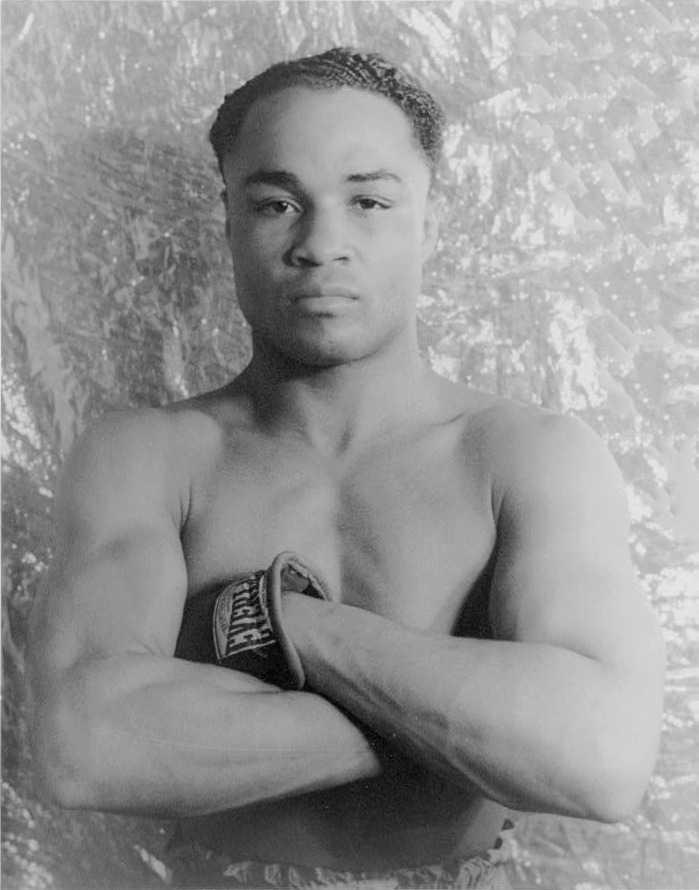
Henry Armstrong
First boxer to hold three world titles simultaneously.

Unknown author · Public domain
Henry Armstrong, born Henry Jackson Jr. on December 12, 1912, in Columbus, Mississippi, was the son of a sharecropper father of African American descent and a mother of half-Cherokee heritage. During the early Great Migration, his family moved to St. Louis, Missouri, where he graduated as an honor student from Vashon High School before adopting the ring name Armstrong. He began his professional boxing career in 1931 with a knockout loss to Al Iovino, but secured his first win later that year against Sammy Burns. After moving to Los Angeles in 1932 and suffering two consecutive four-round decision losses, he rebounded with an eleven-fight winning streak. By 1936, he was fighting across Los Angeles, Mexico City, and St. Louis, facing notable opponents including Baby Arizmendi and former world champion Juan Zurita. In 1937, Armstrong achieved a remarkable record of 27 wins with 26 knockouts, his only opponent lasting the full ten rounds being Aldo Spoldi. He knocked out former world champions Frankie Klick and Benny Bass, then defeated World Featherweight Champion Petey Sarron in six rounds at Madison Square Garden to claim his first world title. The following year, he extended his knockout streak to 27 consecutive wins, one of the longest in boxing history, before challenging World Welterweight Champion Barney Ross. Despite weighing less than Ross, Armstrong won by unanimous decision, adding the welterweight crown. He then dropped weight to challenge World Lightweight Champion Lou Ambers, winning by split decision. This made Armstrong the first boxer ever to simultaneously hold world championships in three weight divisions: featherweight, lightweight, and welterweight. He vacated the featherweight title rather than maintain the required weight. Over the next two years, he defended the welterweight title nineteen times—still the most in that division’s history—beating fighters such as Ceferino Garcia and Pedro Montañez. He lost the lightweight belt in a rematch with Ambers and later fought Garcia, then World Middleweight Champion, to a ten-round draw in an unsuccessful bid for a fourth division title. After losing the welterweight championship to Fritzie Zivic in a 15-round decision, Armstrong retired in 1945 with an official record of 152 wins, 21 losses, and 9 draws, including 101 knockouts. Post-retirement, he briefly operated a Harlem nightclub, returned to
- field
- Professional boxing
- known_for
- First boxer to hold world championships in three weight divisions simultaneously
Verified Timeline
Lore & Background
Henry Armstrong, born Henry Jackson Jr., stood as a compact, powerful figure in the ring, known for his relentless pressure and exceptional punching power. His professional career spanned from 1931 to 1945, during which he amassed 152 wins, 21 losses, and 9 draws, with 101 knockouts. Armstrong’s defining achievement came in 1938 when he became the first boxer ever to simultaneously hold world championships in three weight divisions: featherweight, lightweight, and welterweight. He began his title reign by knocking out Petey Sarron to claim the featherweight crown, then defeated Barney Ross for the welterweight title, and later beat Lou Ambers for the lightweight belt. His streak of 27 consecutive knockout wins remains one of the longest in boxing history. Armstrong’s range as a fighter was extraordinary; he competed across the featherweight, lightweight, and welterweight classes, and even challenged for the middleweight title. His 19 successful defenses of the welterweight championship still stand as the most in that division’s history. After retiring, he became an ordained Baptist minister. He was posthumously inducted into the International Boxing Hall of Fame in its inaugural class of 1990, and is widely ranked among the greatest pound-for-pound fighters of all time by historians and publications.
Reader's Guide
Henry Armstrong’s career is defined by an unprecedented simultaneous hold of world championships in three weight divisions—featherweight, lightweight, and welterweight—a feat no boxer had achieved before. His featherweight reign began in 1937 when he knocked out Petey Sarron at Madison Square Garden to claim the 126-pound title. That same year, he compiled a remarkable 27–0 record with 26 knockouts, including victories over former champions Frankie Klick and Benny Bass. His streak of 27 consecutive knockout wins remains one of the longest in boxing history. In 1938, after defeating Barney Ross for the welterweight crown and Lou Ambers for the lightweight belt, Armstrong became the first fighter to hold three world titles simultaneously. He defended the welterweight championship 19 times, a division record that still stands. His attempt to win a fourth title in the middleweight division ended in a draw with champion Ceferino Garcia, a result many observers felt he deserved to win. Armstrong retired in 1945 with an official record of 152 wins, 21 losses, and 9 draws, including 101 knockouts. Posthumously inducted into the International Boxing Hall of Fame in its inaugural 1990 class, he is consistently ranked among the greatest pound-for-pound fighters in history by BoxRec, The Ring, ESPN, and the International Boxing Research Organization. His simultaneous three-division championship achievement remains a singular milestone in boxing, cementing his legacy as a transformative figure in the sport’s history.
Did You Know?
- Henry Armstrong is listed as a lineal featherweight champion, holding the title from 1937 to 1938.
- He is included in the source's list of notable featherweights.
- Armstrong is recognized as the first boxer to hold world championships in three weight divisions simultaneously.
- His featherweight reign is recorded as 1937-1938 in the lineal champions list.
Holding the Lineal Title (1937–1938)
Henry Armstrong's brief but significant tenure as the recognized lineal featherweight champion spanned from 1937 to 1938, after which he vacated the belt. This one-year window placed him squarely in the middle of the division's most established era, a period when the 126-pound upper limit had long been standardized in the United States following the 1920 fix. His reign did not extend beyond that single year, and the act of vacating meant the title passed out of his hands rather than being stripped in a loss. In the broader succession, Armstrong's holding sits between the earlier vacated reign of Bat Battalino (1929–1932) and the subsequent capture of the line by Joey Archibald in 1939. That gap of roughly seven years between Battalino's vacating and Archibald's rise underscores how the lineal title could sit dormant, and Armstrong's 1937–1938 window represents one of the shorter recognized reigns in the featherweight lineage recorded in the division's history.
Among the Division's Most Recognized Fighters
In any accounting of the featherweight class's all-time greats, Henry Armstrong's name appears on the roster of notable fighters who defined the division across more than a century of competition. He is listed in the same breath as figures spanning every era of the weight class: the early pioneers like Abe Attell, whose lineal reign stretched from 1903 to 1912, the mid-century icons Willie Pep and Sandy Saddler, and the modern-era stars such as Manny Pacquiao, Marco Antonio Barrera, and Vasiliy Lomachenko. This grouping signals that Armstrong is regarded not merely as a participant but as a benchmark figure whose contributions to the 126-pound division earned him a permanent place in its pantheon. His inclusion alongside names from the 1890s through the 2020s speaks to the enduring respect his work commands within the sport's historical record.
The 126-Pound World He Fought In
By the time Henry Armstrong claimed the lineal featherweight title in 1937, the weight class he competed in had already undergone a long process of standardization. The British had consistently recognized 126 pounds as the ceiling, but American rules had started far lower at just 114 pounds. Early champion George Dixon nudged the limit upward first to 120 and then to 122 pounds before the United States finally locked in 126 in 1920. The division itself had not gained broad acceptance until 1889, when the Ike Weir–Frank Murphy bout gave it wider legitimacy, though an even earlier 1860 contest between Nobby Clark and Jim Elliott is sometimes cited as a proto-championship. Armstrong thus entered a division whose rules and identity had been settled for nearly two decades, fighting under a unified standard that allowed his 1937–1938 reign to be measured against a consistent historical yardstick.
A Link in the Chain of Champions
The lineal succession of featherweight titles reads like a relay race stretching from Billy Murphy in 1890 all the way to Manny Pacquiao's vacated reign in 2005, and Henry Armstrong occupies one specific baton-pass in that long chain. He inherited the line after a period of vacancy following Bat Battalino's 1932 vacating, held it through 1937 and 1938, and then released it himself before Joey Archibald picked it up in 1939. The pattern of vacating titles is common throughout the succession—Young Griffo, Young Corbett II, Kid Kaplan, Bat Battalino, Alexis Arguello, and Manny Pacquiao all vacated rather than lost—so Armstrong's departure from the title fits a recurring rhythm in the division's history. His single entry in the chain, sandwiched between two other short reigns, marks him as a transitional figure whose year on the lineal throne connected the late-1930s landscape of the featherweight class to whatever followed.
Gallery
Frequently Asked Questions
Who is Henry Armstrong?
Henry Armstrong, born Henry Jackson Jr. in 1912, was an American professional boxer best known for an unprecedented feat in the ring: simultaneously holding world titles in three separate weight divisions. He is widely celebrated as one of the most dominant pound-for-pound competitors in the history of the sport.
What made Henry Armstrong's 1938 achievement unique in boxing history?
In 1938, Armstrong became the first fighter ever to hold the featherweight, lightweight, and welterweight world championships all at the same time. That simultaneous three-division title span had never been accomplished by any boxer before him.
Which weight classes did Henry Armstrong hold world titles in?
Armstrong occupied the world championships in the featherweight, lightweight, and welterweight divisions concurrently in 1938. Holding all three belts at once made his record a first in the history of professional boxing.
Why do boxing fans rank Henry Armstrong among the all-time greats?
His ability to compete at the highest level across three different weight classes in a single era demonstrated a rare combination of skill, speed, and adaptability. That versatility is why he is consistently cited as one of the top pound-for-pound fighters the sport has ever produced.
When was Henry Armstrong born and when did he die?
Henry Jackson Jr. was born on December 12, 1912, and passed away on October 22, 1988, at the age of 75. His legendary competitive career took place primarily during the 1930s.
More in Martial Arts And Combat Sports 1-24
Spotted an error? Know more?
This is a living reference — every entry is fact-audited, and reader corrections feed straight into our audit queue. Suggest an edit · See this site's audit record