
Georges St-Pierre
Canadian former professional mixed martial artist and two-division UFC champion.

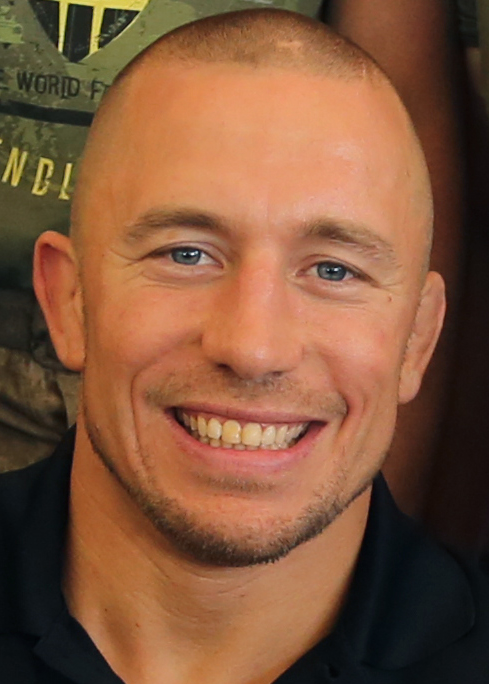
Didier Descouens · Public domain
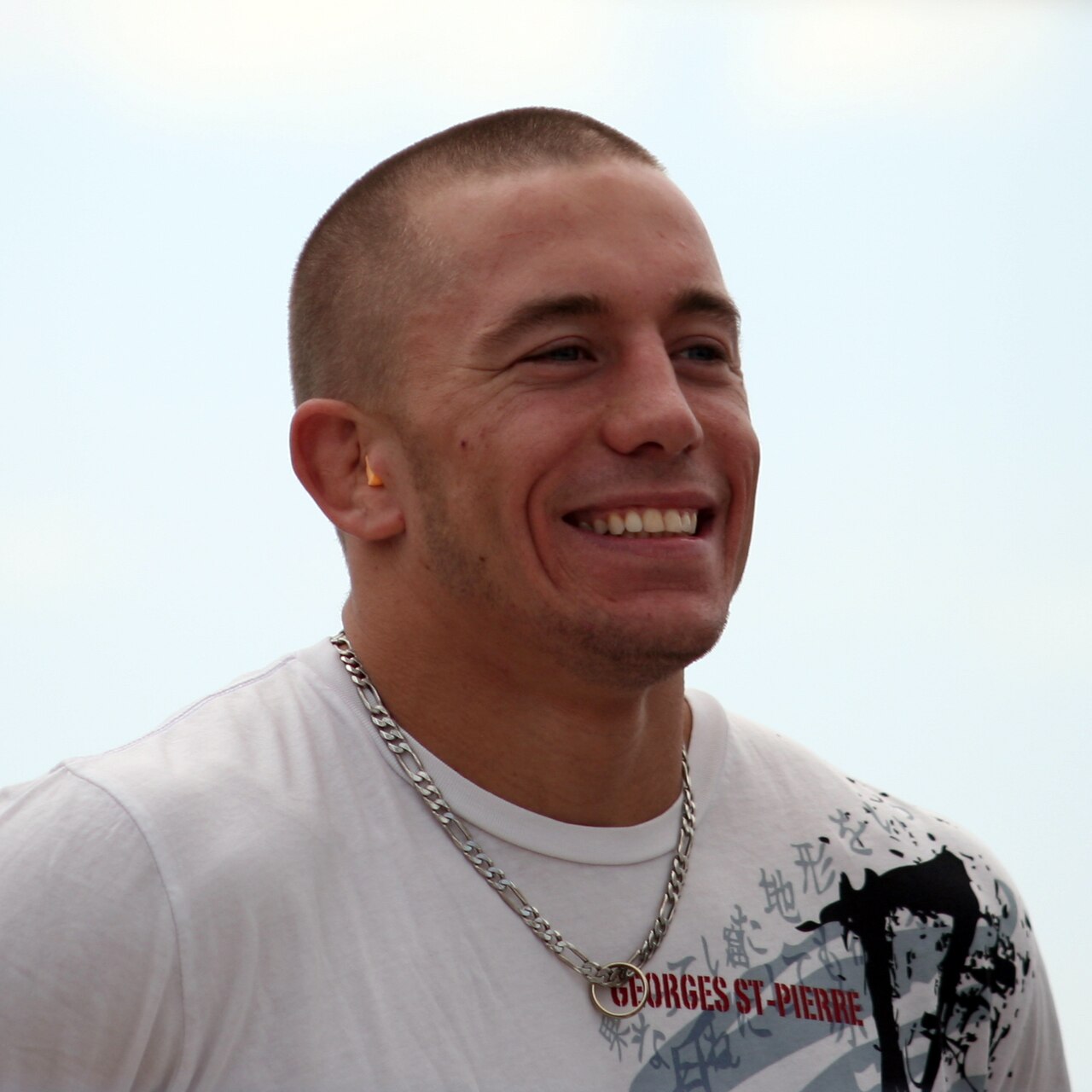
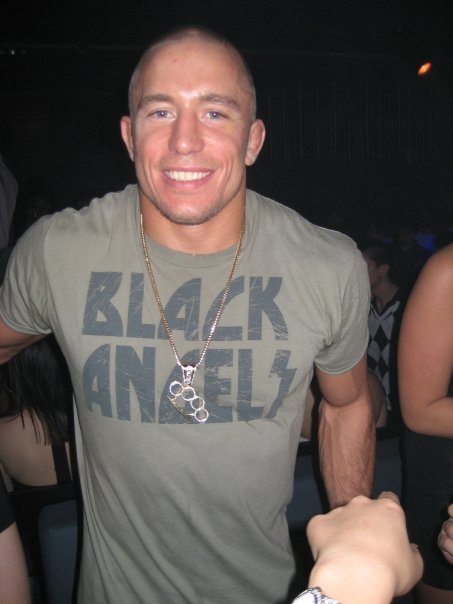
Georges St-Pierre (born May 19, 1981), often called GSP, is a Canadian former pro mixed martial artist. He is considered one of the all-time greats in MMA. St-Pierre held championship belts in two UFC weight classes: welterweight and middleweight. He became the UFC Welterweight Champion three times—winning the undisputed title twice and the interim title once between November 2006 and April 2008. For years, Sherdog and other outlets ranked him the world’s top welterweight. Rogers Sportsnet named him Canadian Athlete of the Year in 2008, 2009, and 2010. Fight Matrix ranks him as the best welterweight ever and the most accomplished fighter in MMA history. In a survey by The Athletic, MMA fighters voted him the greatest pound-for-pound fighter ever. He still holds several UFC welterweight records: most title-fight wins (12), most successful title defenses (9), highest significant strike defense percentage (73.1%), highest takedown accuracy (73.7%), and most takedowns landed (87). He also holds UFC records for most control time (2:42:04) and most top position time (2:22:05). St-Pierre retired as the reigning welterweight champion in December 2013. At that point, he had the most wins in title bouts and the second-longest combined title streak in UFC history (2,204 days), defending his belt nine straight times. He also won a record 33 consecutive rounds between 2007 and 2011. He returned to the Octagon in November 2017 at UFC 217, submitting Michael Bisping to win the middleweight title. That made him the fourth fighter in UFC history to become a multi-division champion. He gave up the belt a few weeks later, citing health issues, and officially retired from MMA. Outside fighting, he has appeared in films including *Kickboxer: Vengeance* (2016), *Captain America: The Winter Soldier* (2014), *Cartels* (2017), and *King of Killers* (2023). St-Pierre was born on May 19, 1981, in Saint-Isidore, Quebec, to Roland and Pauline St-Pierre. He has two younger sisters. His childhood was tough—other kids at school stole his clothes and money. He played hockey, skated, and did other sports. At age seven, he started learning Kyokushin Karate to defend himself from a school bully. In high school at École Pierre-Bédard, he held the record for most chin-ups. After graduating, he studied kinesiology at Cégep Édouard-Montpetit. Before turning pro, he worked as a bouncer at a Montreal nightclub called Fuzzy Brossard and as a garbageman for six months to pay for school. He earned a 2nd dan black belt in Kyokushin karate at age 12 and had his first pro fight at 20. As a kid, he was inspired by Jean-Claude Van Damme, and later called fighting him in *Kickboxer: Vengeance* “a dream come true.”
Throughout his career, St-Pierre trained with many groups at various gyms. He started wrestling training between ages 19 and 20 at the Reinitz Wrestling Center’s Montreal Wrestling Club, run by Victor Zilberman, and kept training there until he retired. World champion Guivi Sissaouri also coached him. He became known for his strong wrestling, often out-wrestling opponents who were accomplished wrestlers. He trained extensively with Canada’s national wrestling team and aimed to join them for the 2008 and 2012 Olympics, but his duties as UFC welterweight champion prevented that. Before his fight with B.J. Penn at UFC 58, he trained at the Renzo Gracie Jiu-Jitsu Academy in New York. He got his brown belt in BJJ from Renzo Gracie on July 21, 2006, and his black belt from Bruno Fernandes in September 2008. He also trained with Rashad Evans, Nathan Marquardt, Keith Jardine, Donald Cerrone, and others at Greg Jackson’s gym in New Mexico. Some of Jackson’s students came to Montreal to help him prepare for UFC 94 against Penn at Tristar Gym. His strength and conditioning coach was Jonathan Chaimberg of Adrenaline Performance Centre in Montreal; his head trainer was Firas Zahabi of Zahabi MMA at Tristar. They cornered all his later fights and remain close friends. Between 2006 and 2009, he trained Muay Thai under Phil Nurse at the Wat in New York City. St-Pierre made his UFC debut at UFC 46, beating highly ranked Karo Parisyan by unanimous decision. At UFC 48, he defeated Jay Hieron by technical knockout in just 1:42 of the first round. After that win, he faced Matt Hughes at UFC 50 for the vacant welterweight title. Despite a competitive showing against the more experienced Hughes, St-Pierre tapped out to an armbar with 10 seconds left in the first round. It was his first loss; he later said he was in awe of Hughes going into the fight.
- born
- May 19, 1981
- nationality
- Canadian
- known_for
- Two-division UFC champion; three-time UFC Welterweight Champion; UFC Middleweigh
Verified Timeline
Lore & Background
St-Pierre was born in Saint-Isidore, Montérégie, Quebec, to Roland and Pauline St-Pierre on May 19, 1981. He has two younger sisters. He began learning Kyokushin Karate at age seven to defend himself against a school bully. He attended high school at École Pierre-Bédard, where he held the school record for number of chin-ups done. After graduation he enrolled in kinesiology studies at Cégep Édouard-Montpetit. Before turning pro as a mixed martial artist, St-Pierre worked as a bouncer at a Montreal night club in the South Shore called Fuzzy Brossard and as a garbageman for six months to pay for his school fees. Already a 2nd dan Kyokushin karate black belt at age 12, his first professional fight was at age 20. As a youth, St-Pierre was inspired by Jean-Claude Van Damme, and described fighting him in the film Kickboxer: Vengeance as 'a dream come true'.
Reader's Guide
Georges St-Pierre made his UFC debut at UFC 46, defeating Karo Parisyan by unanimous decision. He faced Matt Hughes at UFC 50 for the vacant UFC Welterweight Championship, tapping out to an armbar with 10 seconds left in the first round. At UFC 65, St-Pierre won the UFC Welterweight Championship by defeating Matt Hughes via technical knockout in the second round, earning a Knockout of the Night award. He lost the title to Matt Serra at UFC 69 in 2007 when Serra forced a stoppage at 3:25 of round one. St-Pierre rebounded with a unanimous decision win over Josh Koscheck at UFC 74. He retired as the reigning welterweight champion in December 2013, having held the record for most wins in title bouts and the second longest combined title streak in UFC history (2,204 days) while defending his title nine consecutive times. He also won a record 33 consecutive rounds between 2007 to 2011. He returned at UFC 217 in November 2017, defeating Michael Bisping by submission to win the middleweight title, becoming the fourth fighter in the UFC to be a multi-division champion. He relinquished the title a few weeks later, citing health reasons, and officially retired from MMA. Fight Matrix lists him as the top MMA welterweight of all time and the most accomplished fighter in MMA history. He was voted as the greatest pound-for-pound MMA fighter in history in The Athletic MMA fighter survey.
Did You Know?
- St-Pierre began learning Kyokushin Karate at age seven to defend himself against a school bully.
- He was already a 2nd dan Kyokushin karate black belt at age 12.
- He worked as a bouncer at a Montreal night club called Fuzzy Brossard and as a garbageman for six months to pay for his school fees.
- St-Pierre won a record 33 consecutive rounds between 2007 to 2011.
- He described fighting Jean-Claude Van Damme in the film Kickboxer: Vengeance as 'a dream come true'.
Dominance & Record-Breaking Legacy
Georges St-Pierre's reign atop the UFC welterweight division stands as one of the most statistically dominant stretches in combat sports history. Between November 2006 and April 2008, he captured the welterweight belt twice and the interim title once, then went on to defend it nine consecutive times. His career totals include a remarkable 12 victories in title fights, a 73.1 percent significant strike defense rate, and 73.7 percent takedown accuracy across 87 takedowns landed. He also accumulated 2 hours, 42 minutes, and 4 seconds of total control time and 2 hours, 22 minutes, and 5 seconds in top position. From 2007 through 2011, he won 33 consecutive rounds, a feat that underscores how thoroughly he dismantled opponents night after night. Sherdog and other outlets ranked him the number-one welterweight for years, Fight Matrix lists him as the most accomplished fighter in MMA history, and The Athletic's fighter survey voted him the greatest pound-for-pound competitor ever. Rogers Sportsnet named him Canadian Athlete of the Year in 2008, 2009, and 2010, cementing his status far beyond the cage.
Triumph, Setback, and the Ultimate Return
St-Pierre's UFC journey was shaped by both early heartbreak and a triumphant late-career chapter. His debut at UFC 46 saw him outpoint Karo Parisyan, and a quick technical knockout of Jay Hieron followed. Yet at UFC 50, facing the seasoned Matt Hughes for the vacant welterweight crown, he was caught in an armbar with just ten seconds left in round one — his first professional loss. He channeled that defeat into a string of dominant performances, submitting Dave Strasser with a kimura, outscoring Jason Miller, and locking a rear-naked choke on Frank Trigg before the first minute of round one expired. After retiring as the reigning champion in December 2013, St-Pierre made a stunning comeback at UFC 217 in November 2017. There, he submitted Michael Bisping to claim the middleweight title, becoming only the fourth fighter in UFC history to hold championships in two weight classes. Weeks later, citing health concerns, he relinquished the belt and stepped away from the sport for good.
A Mosaic of Disciplines
St-Pierre's technical foundation was built across an unusually wide range of martial arts and training environments. He first picked up Kyokushin Karate at age seven to fend off a school bully and earned his second-degree black belt by twelve. Wrestling came later, around nineteen or twenty, when he joined the Montreal Wrestling Club under Victor Zilberman at the Reinitz Wrestling Center, a relationship that lasted until his final bout. World champion Guivi Sissaouri also coached him, and he drilled alongside members of the Canadian national wrestling team, twice aiming for Olympic berths in 2008 and 2012 before UFC obligations intervened. His grappling game deepened at the Renzo Gracie Jiu-Jitsu Academy in New York, where he received a brown belt in 2006 and a black belt under Bruno Fernandes in September 2008. Between 2006 and 2009 he studied Muay Thai with Phil Nurse at the Wat in New York City, and he regularly trained at Greg Jackson's Submission Fighting Gaidojutsu gym in New Mexico alongside fighters like Rashad Evans and Donald Cerrone. His strength work was overseen by Jonathan Chaimberg, while Firas Zahabi served as his head trainer out of the Tristar gym in Montreal.
From Quebec Small-Town Roots to the Silver Screen
Born in the quiet village of Saint-Isidore in Montérégie, Quebec, in 1981, St-Pierre grew up with two younger sisters under the care of Roland and Pauline St-Pierre. His school years were marked by hardship — classmates would steal his clothes and money — and it was that environment that drove him to the dojo at seven. He also played hockey, skated, and held his high school's chin-up record at École Pierre-Bédard. After enrolling in kinesiology at Cégep Édouard-Montpetit, he worked as a bouncer at a South Shore nightclub called Fuzzy Brossard and spent six months as a garbage collector to cover tuition. Jean-Claude Van Damme was his childhood hero, a connection that came full circle when he shared the screen with Van Damme in the 2016 martial arts film Kickboxer: Vengeance, a role he called a dream realized. His acting credits also include a part in Captain America: The Winter Soldier (2014), the action film Cartels (2017), and King of Killers (2023), extending his public presence well beyond the cage.
Gallery
Frequently Asked Questions
Who is Georges St-Pierre?
Georges St-Pierre, widely known by his initials GSP, is a Canadian former mixed martial artist born on May 19, 1981. He spent the peak of his career competing in the UFC, where he became one of the most decorated fighters in the organization's history.
What UFC titles did GSP win?
St-Pierre captured the UFC Welterweight Championship on three separate occasions and also claimed the UFC Middleweight Championship, which made him a two-division titleholder in the sport.
Why is GSP considered one of the greatest MMA fighters of all time?
His sustained dominance across two weight classes, multiple title defenses, and a reputation for finishing opponents with striking and grappling alike set him apart from peers. Fans and analysts frequently point to his versatility and longevity as the reasons he sits at the top of GOAT conversations.
What is GSP's nationality and background?
He is Canadian, having grown up in Montreal, Quebec, and he carried the Canadian flag throughout his entire professional fighting career in the UFC.
How did Georges St-Pierre's fighting career end?
After stepping away from the octagon for several years, he briefly returned to compete before retiring a final time, bringing closure to a career that had spanned well over a decade of elite-level competition.
More in Martial Arts And Combat Sports 1-24
Related in Martial Arts And Combat Sports
Links follow this subject's own source article.
Spotted an error? Know more?
This is a living reference — every entry is fact-audited, and reader corrections feed straight into our audit queue. Suggest an edit · See this site's audit record