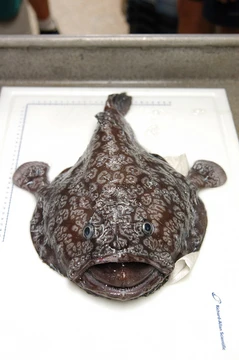
Urolophus
A genus of round rays with a distinctive tail crest.
Last updated

Nick Long · via Wikipedia: Urolophus · CC BY-SA 2.0
Urolophus is a genus of round rays. Most species live in the western Pacific Ocean and the Indian Ocean, but one species is found in the Pacific waters off the coast of Mexico. The genus was first described by Müller and Henle in an 1837 issue of Bericht Akademie der Wissenschaften zu Berlin. The name comes from the Greek words oura (tail) and lophos (crest).
In this genus, the outer edges of the nostrils do not form enlarged lobes, though they may have a small knob at the rear. A fossil species once placed here, Urolophus crassicaudatus, was discovered in Monte Bolca, northern Italy, in deposits from the late Ypresian stage of the Eocene epoch (about 49 million years ago). However, Marramà et al. (2020) moved that species to the genus Arechia. There are currently 21 recognized species in the genus, including the Sepia stingray, Sandyback stingaree, Circular stingaree, Crossback stingaree, Chesterfield Island stingaree, Wide stingaree, Patchwork stingaree, Spotted stingaree, Java stingaree (extinct), Kai stingaree, Kapala stingaree, Lobed stingaree, Mitotic stingaree, New Caledonian stingaree, Coastal stingaree, Butterfly stingaree, Sparsely-spotted stingaree, Coral Sea stingaree, Yellowback stingaree, Greenback stingaree, and Brown stingaree.
Scientific classification
- KingdomAnimalia
- PhylumChordata
- ClassChondrichthyes
- SubclassElasmobranchii
- OrderMyliobatiformes
- FamilyUrolophidae
- GenusUrolophus
Named by J. P. Müller & Henle, 1837
Sources: Wikipedia taxobox: Urolophus (CC BY-SA 4.0)
Quick Facts
- Type species
- Raja cruciata
Facts from the source article.
Lore & Background
The name Urolophus combines the Greek words oura, meaning 'tail', and lophos, meaning 'crest', reflecting a notable anatomical feature. In this genus, the outer rims of the nostrils are not enlarged into lobes, though they may form a small knob at the back. The genus was first described by Müller and Henle in 1837.
A fossil species, Urolophus crassicaudatus, was discovered in Monte Bolca, northern Italy, in deposits from the late Ypresian stage of the Eocene epoch, approximately 49 million years ago. However, Marramà et al. (2020) transferred this species to the genus Arechia, removing it from Urolophus.
The genus currently includes 21 recognized species, such as the Sepia stingray (Urolophus aurantiacus), the Sandyback stingaree (Urolophus bucculentus), and the Crossback stingaree (Urolophus cruciatus). One extinct species, Urolophus javanicus, is also listed.
More in Marine Fish Genera
Sources
Compiled from Wikipedia and the sources listed below. Text from Wikipedia is available under CC BY-SA 4.0; this entry is adapted from it.
- Wikipedia: Urolophus (CC BY-SA 4.0).
- Word definitions: the Codexery glossary, each quoted from its Wikipedia article.
Spotted an error? Know more?
Reader corrections go straight into our review queue. Suggest an edit · How this site is sourced