American bison
A North American species of bison, nearly extinct, now recovering.

Kurt Kaiser · CC0
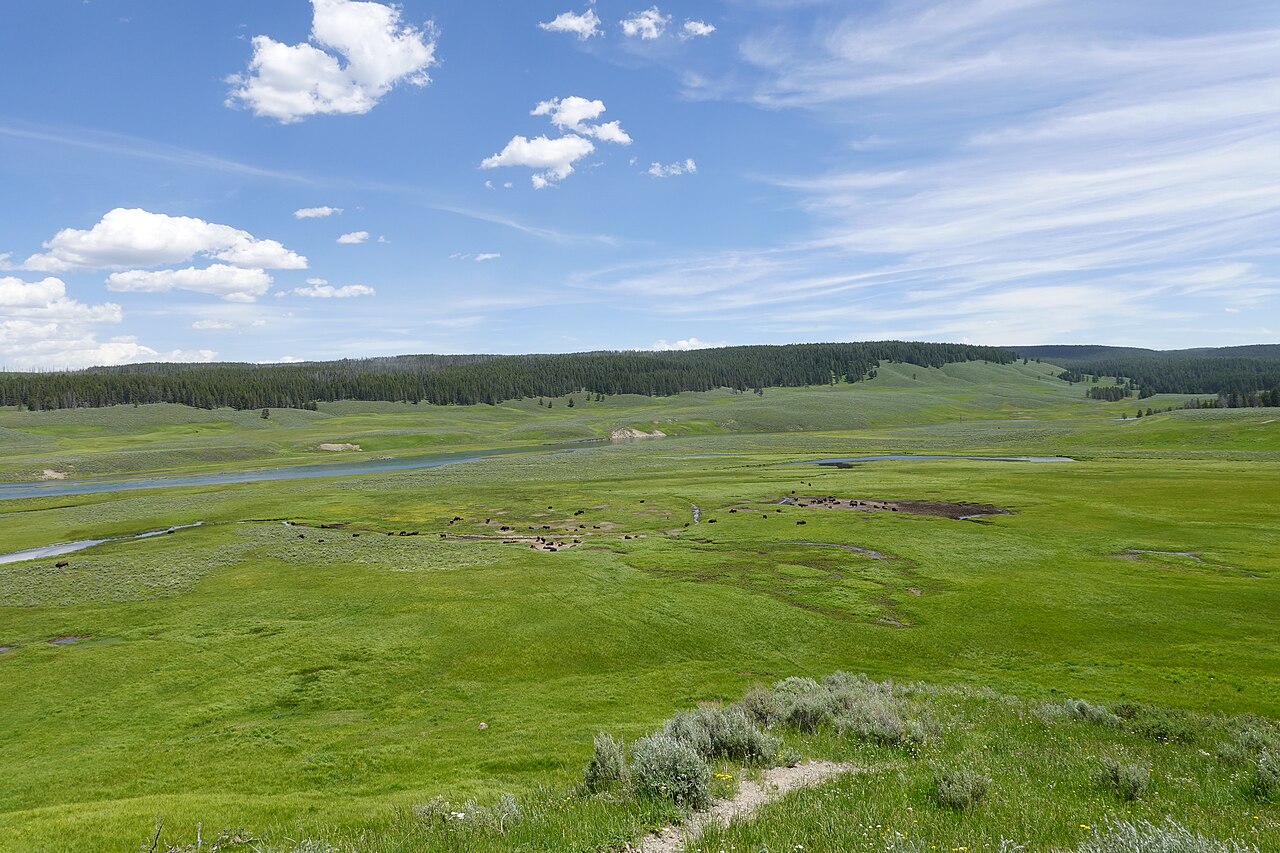
The American bison (Bison bison), often called the American buffalo, is a native North American species and one of only two living bison species, the other being the European bison. Its ancient range, known as the great bison belt around 9000 BC, covered rich grasslands from Alaska down to the Gulf of Mexico and east to the Atlantic coast, reaching as far north as New York, south to Georgia, and possibly into northern Florida. Sightings near Buffalo Ford on the Catawba River in North Carolina were recorded as late as 1750.
Two main types, or ecotypes, have been identified: the plains bison (B. b. bison), which is smaller with a rounder hump, and the wood bison (B. b. athabascae), which is larger and has a taller, squarer hump. A proposal to split the plains bison into northern and southern subspecies has little scientific backing. The wood bison ranks among the largest wild bovids globally, second only to the Asian gaur. Wild bison can weigh up to 1,270 kg (2,800 lb), making them one of the heaviest land animals in North America and the heaviest herbivore on the continent.
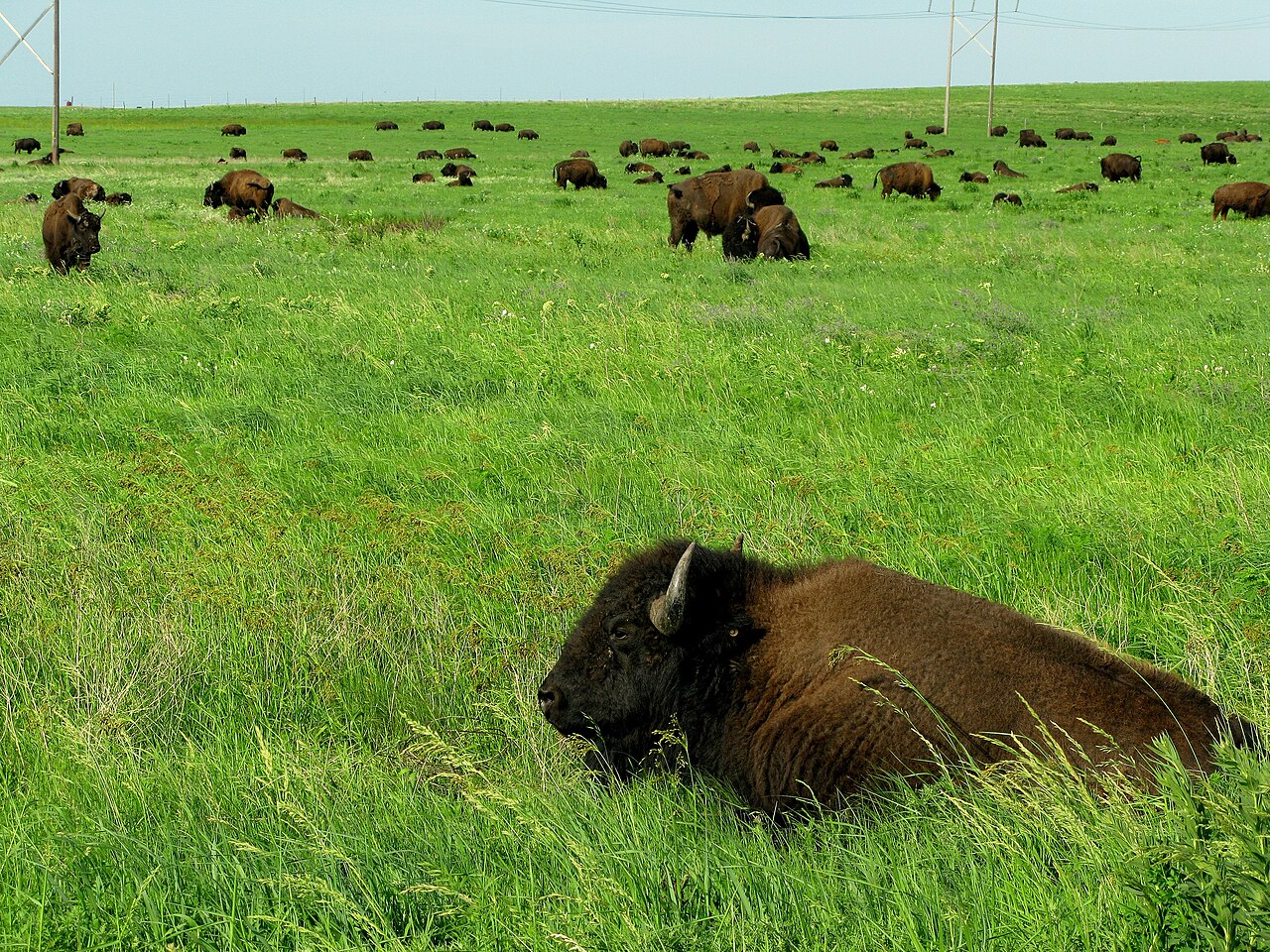
Once numbering an estimated 60 million in the late 1700s, the species was driven to near extinction by the late 1800s. Commercial hunting, slaughter, and diseases from domestic cattle reduced the population to just 541 animals by 1889. This destruction was part of the genocide of Native Americans, as bison were vital for their traditional way of life—providing food, hides for clothing and shelter, and materials for tools. Recovery efforts began in the mid-1900s, and by March 2019, the wild population had rebounded to roughly 31,000. For many years, most bison lived in national parks and reserves, but reintroductions have allowed them to roam freely in parts of the United States, Canada, and Mexico. Some are kept in smaller conservation herds, others in private commercial herds, and a population has even been introduced to Russia’s Ingilor Nature Park in Yakutia.
For millennia, Indigenous peoples of the Great Plains have maintained deep cultural and spiritual ties to the American bison. It is the national mammal of the United States.
**Etymology**
In American English, both “buffalo” and “bison” are correct for this animal, but British English reserves “buffalo” for the African buffalo and water buffalo. The term “buffalo” was first used for the American mammal in English by 1625, while “bison” appeared in the 1690s. Samuel de Champlain applied the French word “buffles” in 1616 after seeing skins and a drawing from the Nipissing First Nation, who said they traveled forty days from east of Lake Huron to trade with a nation that hunted the animals. “Buffel” comes from Portuguese “bufalo” (water buffalo), from Latin “bufalus” (an antelope or wild ox), and Greek “boubalos,” which also gave rise to “Bubal hartebeest.” “Bison” was borrowed from French in the early 1600s, from Latin “bison” (aurochs), from a Proto-Germanic word related to “wisent,” and was first applied to American buffalo in the 1690s.
In Plains Indian languages, male and female bison have distinct names rather than a single generic term. For example, in Arapaho: “bii” (bison cow) and “henéécee” (bison bull); in Lakota: “pté” (bison cow) and “tȟatȟáŋka” (bison bull). This distinction is not typical for other large mammals in these languages, highlighting the special significance of bison in Plains Indian life and culture.
**Description**
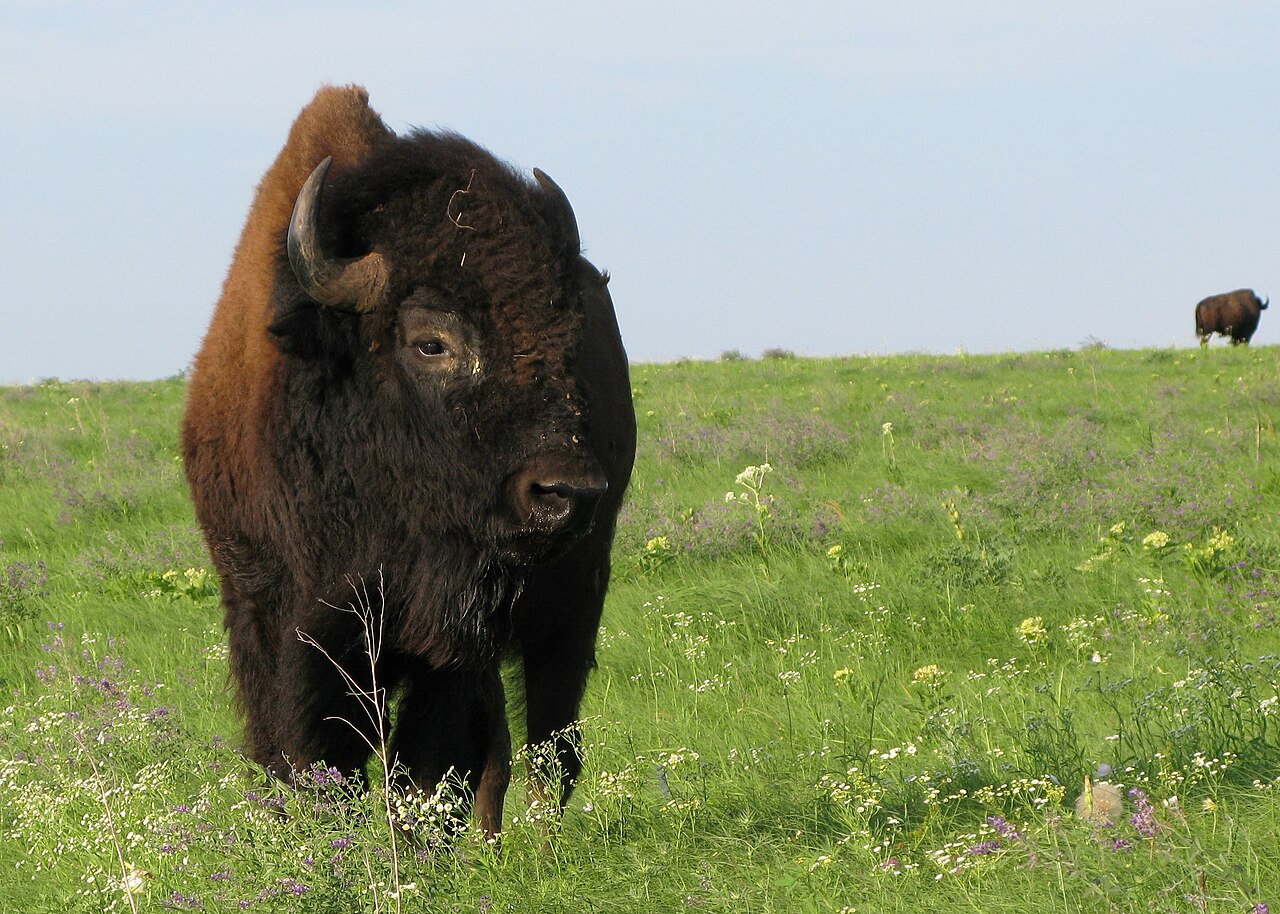
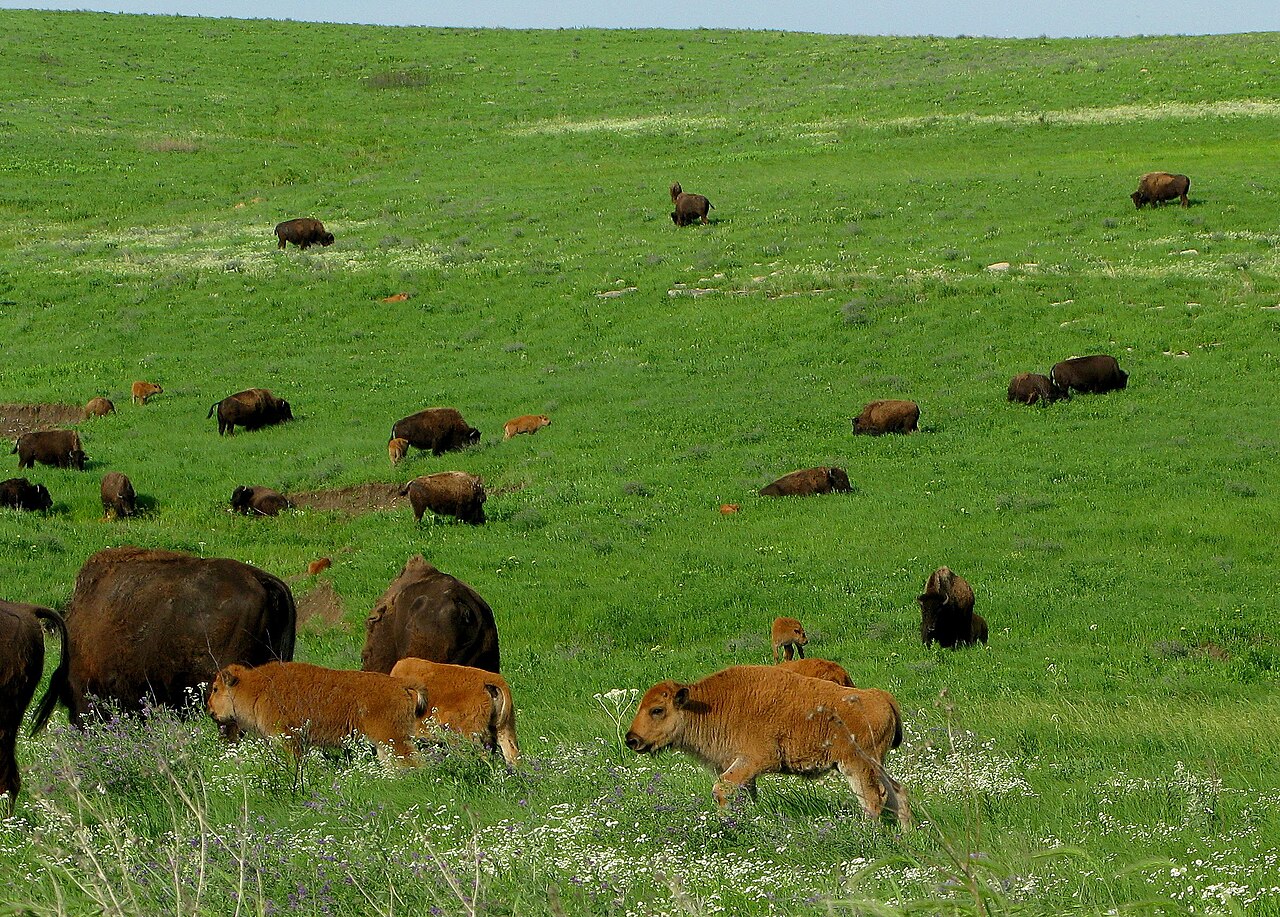
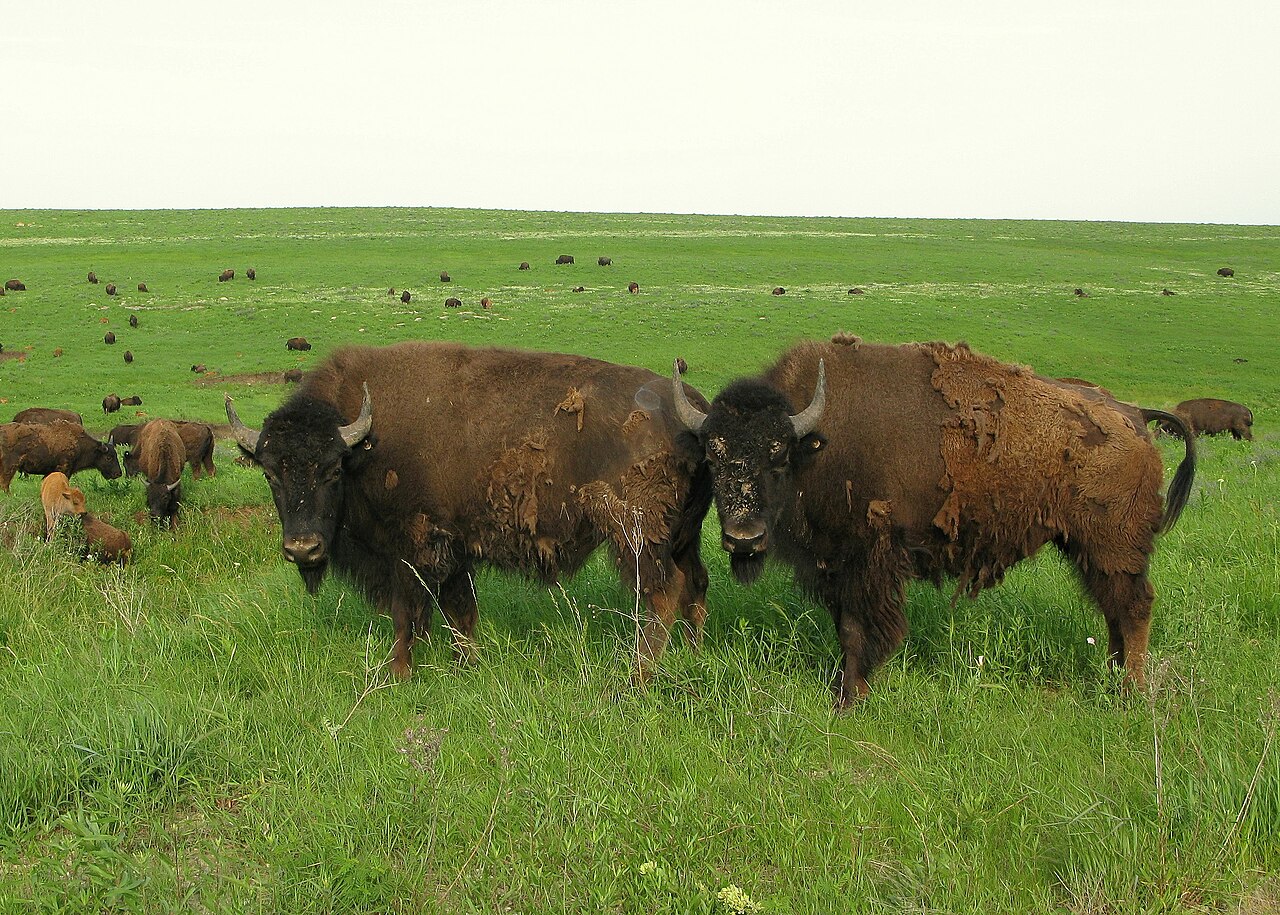
A bison has a shaggy, long, dark-brown winter coat and a lighter, lighter-brown summer coat. Males are much larger and heavier than females. Plains bison tend toward the smaller end of the size range, while wood bison are larger. Head-to-rump length can reach up to 3.5 m (11 ft 6 in) for males and 2.85 m (9 ft 4 in) for females, with tails adding 30 to 95 cm (1 ft 0 in to 3 ft 1 in). Shoulder height ranges from 186 to 201 cm (6 ft 1 in to 6 ft 7 in) for plains and wood bison, respectively. Typical weights vary from 318 to 1,179 kg (701 to 2,599 lb). For males, median weights are about 730 to 792.5 kg (1,609 to 1,747 lb) for plains bison and 943.6 kg (2,080 lb) for wood bison; for females, medians range from 450 to 497.6 kg (992 to 1,097 lb), though the lowest weights likely reflect animals around sexual maturity at 2 to 3 years old.
The heaviest wild plains bison bull ever recorded weighed 1,270 kg (2,800 lb), with some bulls estimated at 1,400 kg (3,000 lb). Wood bison are on average significantly larger and heavier than plains bison, though data for the former is limited since the rediscovery of a relatively pure herd. At Elk Island National Park, which hosts both types, maximum bull weights were 1,186 kg (2,615 lb) for plains and 1,099 kg (2,423 lb) for wood bison, but three-quarters of all bison over 1,000 kg (2,200 lb) there were wood bison. When raised in captivity for meat, weights can be even higher.
- Historical range
- Great bison belt (Alaska to Gulf of Mexico, east to the Appalachians)
Lore & Background
The American bison has two described subspecies or ecotypes: the plains bison (B. b. bison), smaller and with a more rounded hump, and the wood bison (B. b. athabascae), larger and with a taller, square hump. The wood bison is one of the largest wild species of extant bovid in the world, surpassed only by the Asian gaur. Bison are herbivores, grazing on grasses and sedges of the North American prairies, with a daily schedule involving two-hour periods of grazing, resting, and cud chewing. Spanning back millennia, Indigenous peoples of the Great Plains have had cultural and spiritual connections to the American bison.
Reader's Guide
The American bison holds profound significance in North American history and ecology. Its historical range, the great bison belt, covered vast grasslands from Alaska to the Gulf of Mexico and east to the Atlantic Seaboard. The species was a major resource for the traditional way of life of Native Americans, providing food, hides for clothing and shelter, and horns and bones for tools. The near-extinction of the bison in the 19th century, driven by commercial hunting and slaughter, as well as the introduction of bovine diseases, is linked to the genocide of Native Americans. Today, bison freely roam in several regions in the United States, Canada, and Mexico, and have been introduced in Russia. The species is the national mammal of the United States, and its cultural and spiritual connections to Indigenous peoples of the Great Plains endure.
Did You Know?
- The American bison is one of two extant species of bison, along with the European bison.
- The American bison has been introduced in Russia, with a population established in Ingilor Nature Park in Yakutia.
The Great Bison Belt: A Continent-Spanning Range
The American bison, one of only two living bison species alongside its European relative, is entirely native to North America. Around 9000 BC, the species occupied what is called the great bison belt — an enormous stretch of fertile grassland that stretched from Alaska in the west all the way to the Gulf of Mexico in the south. In the east, the range pressed nearly to the Atlantic tidewater in certain areas, reaching as far north as New York and as far south as Georgia. A handful of sources even push the southern boundary into northern Florida. The species' presence in the southeastern interior persisted remarkably late; as late as 1750, bison were still sighted near Buffalo Ford along the Catawba River in North Carolina. This extraordinary geographic breadth underscores just how thoroughly the animal was woven into the ecology of the continent long before European contact reshaped the landscape.
Two Ecotypes, One Iconic Silhouette
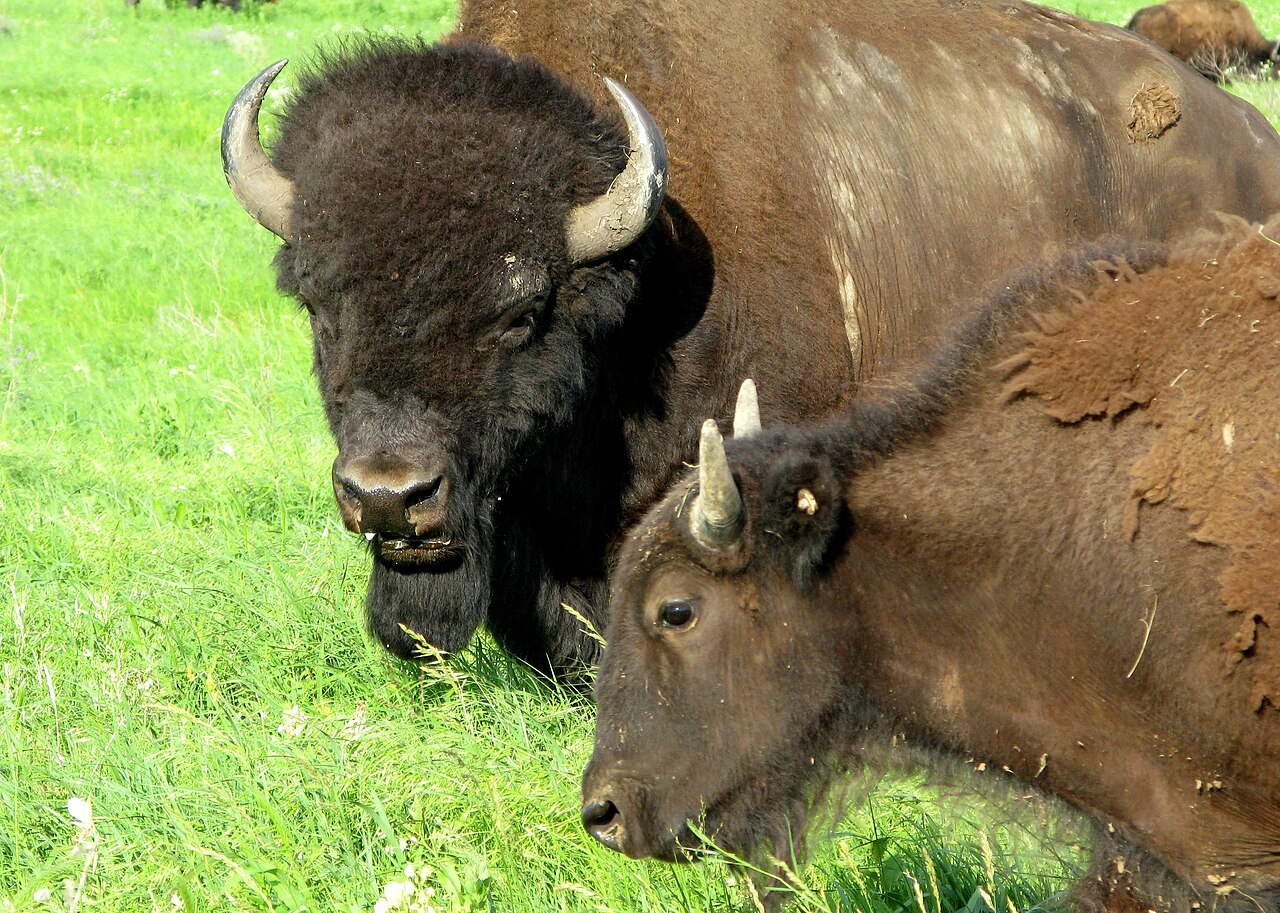
Two ecotypes of the American bison are recognized: the plains bison (Bison bison bison), the smaller form with a more rounded shoulder hump, and the wood bison (Bison bison athabascae), the larger variant distinguished by a taller, squarer hump. A proposal to further split the plains form into northern (B. b. montanae) and southern (B. b. bison) subspecies has received limited scientific backing. The wood bison ranks among the largest wild bovids still alive on Earth, second only to the Asian gaur. Males can reach head-rump lengths of up to 3.5 meters and stand 186 to 201 centimeters at the withers, depending on ecotype. Weights span a wide range, from roughly 318 kilograms for younger or smaller individuals up to a recorded wild maximum of 1,270 kilograms. Both sexes bear short, curved horns that can span 90 to 124 centimeters tip to tip, used in dominance contests and defense. The animal wears a thick, dark-brown shaggy coat in winter that thins to a lighter shade in summer, and it feeds exclusively on the grasses and sedges of the North American prairies.
From Sixty Million to 541: The Long Road Back
In the late 1700s, an estimated sixty million American bison roamed the continent in vast herds. By 1889, that number had collapsed to a mere 541 animals. The devastation was driven by commercial hunting and slaughter throughout the nineteenth century, compounded by bovine diseases introduced through contact with domestic cattle. The slaughter was also a deliberate instrument in the broader genocide of Native Americans, because the bison was the cornerstone of Plains Indigenous life — providing food, hides for clothing and shelter, and horns and bones for tools. Recovery efforts gained momentum in the mid-twentieth century, and by March 2019 the wild population had rebounded to roughly 31,000 individuals. For decades those animals were concentrated in a handful of national parks and reserves, but multiple reintroduction programs have since allowed the species to roam freely across parts of the United States, Canada, and Mexico. Smaller conservation herds and private commercial operations also maintain populations, and the bison has even been introduced to Russia, where a group now lives in Ingilor Nature Park in Yakutia.
Names, Languages, and a Thousand-Year Bond
The bison's name in English carries a layered history. The word buffalo was applied to the animal as early as 1616, when Samuel de Champlain used the French term buffles after Nipissing First Nation members showed him skins and a drawing of the creature; those Indigenous people said they had traveled forty days from east of Lake Huron to trade with another nation that hunted the animals. The term bison entered English usage in the 1690s, borrowed from French and ultimately tracing back to Latin and Proto-Germanic roots. In British English, buffalo is reserved for African and water buffalo, while American English treats both words as acceptable. Perhaps most revealing is the linguistic treatment in Plains Indian languages: in Arapaho, the bison cow is bii and the bull is henéécee; in Lakota, pté and tȟatȟáŋka respectively. This sex-based distinction is unusual — Arapaho uses gender-neutral terms for elk and mule deer — and likely reflects the animal's extraordinary spiritual and cultural weight in Indigenous life, a bond spanning millennia. Today the bison stands as the national mammal of the United States.
Gallery
Frequently Asked Questions
Who is American bison?
The American bison (Bison bison) is a large bovine native to North America, frequently called the "American buffalo" in everyday language. It is one of only two living bison species, the other being the European bison.
Where did American bison historically live?
Before European settlement, bison roamed a vast continental stretch often called the great bison belt, extending from Alaska down to the Gulf of Mexico and eastward to the Appalachian range. They largely avoided the coastal regions east of those mountains.
How did American bison nearly go extinct?
Nineteenth-century commercial hunting and mass slaughter by settlers and the meat industry decimated wild herds to a few hundred animals. Cattle-borne diseases introduced alongside domestic livestock further weakened the surviving populations and pushed the species to the brink of disappearance.
What is American bison's current status?
The species is now classified as recovering, with protected herds in national parks and reserves slowly rebuilding numbers. Its population, however, remains a tiny fraction of the tens of millions that once moved across the continent.
Why is American bison important to North American ecology and culture?
As a keystone grazer, bison historically shaped grassland ecosystems by cycling nutrients and maintaining plant diversity across the plains. They also carry deep cultural significance for many Indigenous nations and stand as a powerful symbol of the continent's natural heritage.
More in Mammals 1-24
Spotted an error? Know more?
This is a living reference — every entry is fact-audited, and reader corrections feed straight into our audit queue. Suggest an edit · See this site's audit record