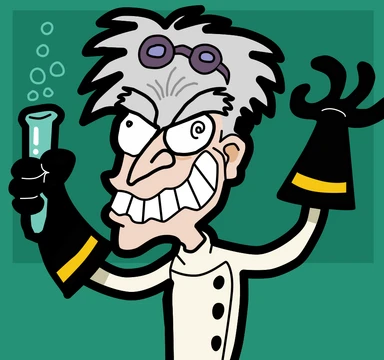
The Awful Dr. Orloff
A landmark Spanish horror film, featuring a mad scientist and his blind henchman—though not the earliest of its kind.

The Awful Dr. Orloff (released in Spain as *Gritos en la noche*, meaning "Screams in the Night", and in France as *L'Horrible Docteur Orloff*) is a 1962 horror film directed and written by Jesús Franco. The story follows the mad Dr. Orloff, played by Howard Vernon, who, with the help of a blind and obedient henchman named Morpho, kidnaps beautiful women to use their skin for grafts to repair his daughter's disfigured face. A Spanish-French co-production shot in Madrid, it is often cited as an early landmark in Spanish horror, though not the very first—earlier examples include *La torre de los siete jorobados* (1944) and *El hombre que amaba a los monstruos* (1958).
This was Franco's first horror movie and the beginning of a long collaboration with Vernon. Contrary to some claims, Franco did not reuse the Orloff and Morpho characters in *Vampyros Lesbos*, *Revenge in the House of Usher*, or *Faceless*; those films feature different mad scientists and no direct connection to Orloff or Morpho.
The plot is set in early 1900s Paris, where Police Inspector Tanner investigates a string of abductions of attractive women from nightclubs. The culprit is Dr. Orloff, a mad scientist performing the skin-graft surgeries.
During the production of his musical tribute *Vampiresas 1930*, Franco showed his producers the British film *The Brides of Dracula* (1960) and proposed making similar films "in the same vein, but with a different style." He secured the same French co-producer, Eurociné, which had backed *Vampiresas 1930*. Filming took place on location in Madrid and at Estudios Ballesteros. The cast was mostly Spanish, but the lead role went to Swiss actor Howard Vernon, who was based in France.
Worried about censorship under Spain's conservative Falangist regime, Franco created two versions: an uncut one and a cut version for British and Spanish audiences that removed nudity. To avoid harming Spain's reputation, he set the story in France—a tactic later used by other Spanish horror filmmakers like Paul Naschy.
The film premiered in Madrid on 9 March 1962 as *Gritos en la noche*, then in Paris on 1 October 1962 as *L'horrible Dr. Orloff*. It reached the United Kingdom in late 1963 as *The Demon Doctor* with an "X" certificate. In the U.S., it opened on 7 October 1964 as the second half of a double feature with *The Horrible Dr. Hichcock* (1962).
Quick Facts
- Native Name
- es · Gritos en la noche
- Director
- Jesús Franco
- Producer
- Leo Lax / Marius Lesœur / Sergio Newman
- Starring
- Howard Vernon / Conrado San Martín / Diana Lorys / Ricardo Valle / María Silva / Perla Cristal
- Music
- Jose Pagan / Antonio Ramírez Ángel
- Cinematography
- Godofredo Pacheco
- Editing
- Alfonso Santacana
- Studio
- Hispamer Film / Plaza Films Intl. / Eurociné / Leo Lax Production
- Distributor
- Delta Films (Spain)
- Runtime
- 93 minutes
- Country
- Spain / France
- Language
- Spanish
Facts from the source article.
Lore & Background
The Awful Dr. Orloff was the first horror film directed by cult filmmaker Jesús Franco, and the first of many subsequent collaborations with Howard Vernon. Despite occasional claims, Franco did not reuse the Orloff and Morpho characters in later films such as *Vampyros Lesbos*, *Revenge in the House of Usher*, or *Faceless*; those films feature different mad scientists and no direct connection to Orloff or Morpho. The plot is set in early 1900s Paris, where Police Inspector Tanner investigates a series of abductions of beautiful women from nightclubs, perpetrated by Dr. Orloff and his henchman Morpho.
Reader's Guide
The Awful Dr. Orloff is significant as the first internationally successful horror and exploitation film production from Spain. It initiated an entire subgenre mixing horror and medical science fiction in a gory way bordering on the pornographic, according to Phil Hardy's book Science Fiction (1984). The film received negative initial reviews, with The New York Times calling it 'appalling' and The Monthly Film Bulletin describing it as 'at once appalling and unique.' Retrospective reviews note its influence, with Donald C. Willis calling it a variation on Eyes Without a Face while praising its lighting. Franco produced two versions to evade Spanish censors, setting the film in France to avoid damaging Spain's reputation, a scheme later used by other Spanish horror filmmakers like Paul Naschy.
Did You Know?
- The film was released in the United Kingdom as The Demon Doctor in late 1963 with an 'X' certificate.
- Franco produced two versions of the film, one unedited and one with nudity cut for British and Spanish audiences.
- The most complete print is the Spanish print, running 93 minutes.
- Franco reused footage from The Awful Dr. Orloff in Revenge in the House of Usher.
Production & Creative Origins
Jesús Franco's path to making The Awful Dr. Orloff began in an unexpected place. While in the midst of shooting Vampiresas 1930, a tribute to Hollywood musicals, he persuaded his producers to screen the 1960 British gothic The Brides of Dracula. The experience struck him enough that he immediately pitched a project in the same territory but with his own distinct visual sensibility. He secured the backing of Eurociné, a Paris-based company that had already co-produced his musical, making this a genuine Spain–France collaboration. Principal photography unfolded on location in Madrid and at Estudios Ballesteros, with a largely Spanish ensemble surrounding the France-based Swiss actor Howard Vernon in the lead. Franco navigated a thorny political landscape: the conservative Falangist censors could have blocked the picture outright. He sidestepped this by setting the story in Paris rather than Spain, a ruse later adopted by fellow Spanish genre filmmakers such as Paul Naschy. To satisfy both domestic and British sensibilities, he delivered two cuts—one uncut and one stripped of nudity—ensuring the film could cross borders without losing its core identity.
Plot & Characters
Set against the backdrop of early twentieth-century Paris, the narrative follows Police Inspector Tanner as he investigates a string of disturbing disappearances: beautiful women vanishing from nightclubs one by one. The trail leads to Dr. Orloff, a deranged scientist consumed by a single, obsessive mission—to reconstruct the ruined face of his disfigured daughter using skin harvested from his abducted victims. Assisting him is Morpho, a blind, devoted henchman who carries out the doctor's grotesque procedures without question. The dynamic between the cold, calculating Orloff and the silent, obedient Morpho gives the film much of its unsettling atmosphere. Though the story is set in France, the production itself was a Spain–France co-venture shot entirely in Madrid, and the picture is widely regarded as the earliest Spanish horror film. It also marked Franco's first foray into the genre and the beginning of a long creative partnership with Vernon, who brought a distinctive European intensity to the role of the maddened physician.
Legacy & Character Reuse
The characters of Dr. Orloff and his blind assistant Morpho proved far more durable than a single 1962 picture. Franco returned to them repeatedly across the following decades, often with Howard Vernon reprising the role. The 1964 sequel El Secreto del Dr. Orloff, also released under the title The Mistresses of Dr. Jekyll, carried the name but told a largely unrelated story centered on a new mad scientist. Beyond that, the Orloff figure resurfaced in Only a Coffin (1967), Orloff and the Invisible Man (1970), The Sinister Eyes of Dr. Orloff (1973), two 1984 entries, and Faceless (1988). Franco even lifted footage from the original for Revenge in the House of Usher, where Vernon played a different character entirely. Critic Phil Hardy later declared the 1962 film the initiator of an entire subgenre blending horror with medical science fiction in a manner he described as bordering on the pornographic. As the first internationally successful Spanish horror and exploitation production, it opened a door that subsequent Spanish genre filmmakers walked through for years.
Release & Critical Reception
The film's journey to audiences was anything but straightforward. It opened in Madrid on 9 March 1962 under the Spanish title Gritos en la noche, then appeared in Paris in October as L'horrible Dr. Orloff. British audiences saw it in late 1963 as The Demon Doctor, carrying an X certificate, while American viewers encountered it on 7 October 1964 as the second half of a double bill with The Horrible Dr. Hichcock. Initial critical response was harsh. The New York Times quipped that the adjectives in both titles were "not only descriptive but also accurate." The Monthly Film Bulletin called it "at once appalling and unique," noting its ludicrous qualities made it almost enjoyable, while singling out one or two shots as worthy of James Whale and describing the score as "quasi-musical noises." Yet even that same reviewer concluded it was "a singular film...really most extraordinary." Retrospective critic Donald C. Willis saw it as a trivial variation on Eyes Without a Face but praised the castle lighting and night exteriors. The most complete surviving print is the 93-minute Spanish version, and a remastered Blu-ray with French and English dubs arrived from Kino Lorber in August 2013.
Frequently Asked Questions
Who is The Awful Dr. Orloff and who plays him?
The Awful Dr. Orloff is the title mad scientist of a 1962 Spanish-French horror film, portrayed by actor Howard Vernon. The picture was written and directed by Jesús Franco and shot in Madrid.
What is Dr. Orloff's mad scheme in the film?
Orloff kidnaps attractive women so he can harvest their skin and use it for grafts to mend his daughter's disfigured face. His operations are carried out with the aid of a blind henchman.
Who is Morpho in The Awful Dr. Orloff?
Morpho is Dr. Orloff's loyal, blind servant who helps him abduct the women needed for his skin-graft experiments. He is described as obedient and serves as the scientist's right hand throughout the story.
Why is The Awful Dr. Orloff considered important in horror cinema?
The film is frequently cited as an early landmark of Spanish-language horror, though it is not the absolute first of its kind. It helped establish a tradition of mad-scientist and body-horror storytelling within Spanish cinema.
What are the alternative titles and production details for The Awful Dr. Orloff?
Released in Spain as Gritos en la noche ('Screams in the Night') and in France as L'Horrible Docteur Orloff, the film is a Spanish-French co-production originally shot in Spanish. It was produced in 1962 and filmed in Madrid.
More in Mad scientist films 1-24
Spotted an error? Know more?
Reader corrections go straight into our review queue. Suggest an edit · How this site is sourced