Solar eclipses on the Moon
Solar eclipses on the Moon are Earth's lunar eclipses.
Last updated
Solar eclipses on the Moon occur when Earth passes between the Sun and the Moon, blocking sunlight. These events are visible only from the near side and small adjacent portions of the far side where Earth appears in the sky. They are notable because they correspond to lunar eclipses seen from Earth.
Quick Facts
- Lunar recession rate
- about 3.8 cm (1.5 in) per year
Facts from the source article.
History
When the Moon first formed, it was much closer to Earth, so total solar eclipses from the lunar surface lasted longer than they do now. Over millions of years, the total phase shortened while the partial phase grew, and eclipses happened more often.
Tens of millions of years later, as the Moon’s orbit drifted away, eclipses became less frequent. Hundreds of millions of years ago, Earth completely hid the Sun’s chromosphere, making totality slightly longer than the partial phase. Today, the Moon recedes by about 3.8 centimeters each year, so totality continues to shrink and the partial phase slowly expands.
Centre of the Earth's shadow
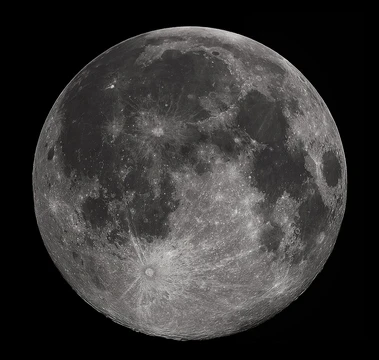
During total solar eclipses on the Moon, the near side is usually entirely covered by Earth's umbra, unlike Earth which receives only a small portion of the Moon's umbra. Some total and all partial eclipses cover at most half or part of the Moon in the umbra. The Moon's surface appears not just black but red and brown, as measured by the Danjon scale, because sunlight is refracted through Earth's atmosphere, forming an atmospheric ring. During long totality, temperatures plunge on the Moon but not in many maria; Oceanus Procellarum, Mare Tranquillitatis, and some craters with basalt floors, such as Tycho, remain warm, while craters like Copernicus and Langrenus are slightly cooler but still warmer than areas outside basins.
At its edges of the near side and its small surroundings
At the western edges of the near side and small surrounding far side areas where Earth is partly seen, some solar eclipses begin at sunrise, with the Sun partially visible or partially eclipsed. In the east, some eclipses end at sunset, with the Sun seen before sunset or partially visible.
In polar areas, Earth is visible in high-altitude regions of craters, hills, mountains, and some lunar seas; in deep craters and most lower ground, Earth is never visible. Around seven to eight degrees into the far side, part of Earth's view is blocked, and eclipses are seen at higher and medium altitudes. At the farthest far side areas within the near side, Earth is seen only in the highest portions.
More in Lunar Science
Sources
Compiled from Wikipedia and the sources listed below. Text from Wikipedia is available under CC BY-SA 4.0; this entry is adapted from it.
- Wikipedia: Solar eclipses on the Moon (CC BY-SA 4.0).
Spotted an error? Know more?
Reader corrections go straight into our review queue. Suggest an edit · How this site is sourced