King Solomon's Mines (1950 film)
Second film adaptation of H. Rider Haggard's novel.

Unknown author · CC BY-SA 4.0
King Solomon's Mines (1950) is an American adventure film and the second movie adaptation of H. Rider Haggard's 1885 novel. Compton Bennett and Andrew Marton directed it, with a cast including Deborah Kerr, Stewart Granger, and Richard Carlson. Helen Deutsch wrote the screenplay. Released by Metro-Goldwyn-Mayer on November 24, 1950, the film succeeded both critically and commercially. It won the Oscar for Best Cinematography (Color) and was nominated for Best Film Editing and Best Picture at the 23rd Academy Awards.
The story unfolds in British East Africa (colonial-era Kenya) in 1897. Allan Quatermain, an experienced British safari guide, is convinced by Elizabeth Curtis to find her husband, who vanished in the unexplored African interior while searching for the legendary King Solomon's mines. Elizabeth possesses a copy of the map her husband followed. She and her brother, John Goode, join the expedition. Allan initially dislikes having women on a safari, but as the grueling journey wears on, he and Elizabeth fall in love. The group encounters Van Brun, a lone white man living with a tribe, who reveals he met Mr. Curtis. Allan recognizes Van Brun as a fugitive who won't let them leave, so they take him hostage to escape safely. Van Brun tries to shoot Allan but kills his loyal assistant Khiva instead. Allan kills Van Brun, and the party flees the angry villagers. A tall, mysterious native named Umbopa joins them. When they reach the region where the mines are thought to be, they meet people who look like Umbopa and learn he is royalty returning to overthrow the usurper King Twala. Umbopa leaves with his supporters to start a rebellion, while Allan, Elizabeth, and John go to a tense meeting with Twala at his kraal. John uses his last rifle bullet to kill an attacker, temporarily calming the natives. Twala's advisor, Gagool, says the tribe saw Curtis and leads them to a cave filled with jewels and his skeletal remains. While they are distracted, Gagool triggers a booby trap that seals them inside. They escape through an underground river and reunite with Umbopa and his followers. They all return to Twala's compound. Umbopa's people decide the disputed kingship by having the two claimants duel to the death. Despite cheating by one of Twala's men, Umbopa wins. He then provides an escort for his friends' return trip.
In November 1946, MGM announ
- Release date
- November 24, 1950
- Director
- Compton Bennett and Andrew Marton
- Screenplay by
- Helen Deutsch
- Starring
- Deborah Kerr, Stewart Granger, Richard Carlson
- Production company
- Metro-Goldwyn-Mayer
- Academy Awards
- Won Best Cinematography (Color); nominated for Best Film Editing and Best Picture
Lore & Background
The film is set in British East Africa in 1897. Experienced safari guide Allan Quatermain is persuaded by Elizabeth Curtis to find her husband, who disappeared while searching for King Solomon's mines. Elizabeth and her brother John Goode join the adventure, and during the journey, Allan and Elizabeth fall in love. The party encounters various dangers, including a fugitive named Van Brun, and meets Umbopa, a mysterious native who is later revealed to be royalty seeking to dethrone King Twala. After a tense meeting with Twala, the adventurers are trapped in a cave by the king's advisor Gagool but escape through an underground river. Umbopa eventually wins a duel to claim the throne and provides an escort for his friends' return.
Reader's Guide
King Solomon's Mines (1950) was MGM's most successful film of 1950 and the second highest-grossing film in the United States that year. It was filmed on location in Africa, with production equipment transported by a convoy of Dodge trucks traveling over 70,000 miles. The film marked the beginning of Eva Monley's career as a Hollywood script supervisor and location scout. It was adapted for radio on Lux Radio Theatre in 1952, with Kerr and Granger reprising their roles. The film's legacy includes its Academy Award wins for cinematography and editing, and its place as a notable adventure film of the era.
Did You Know?
- The film was shot on location in Uganda, the Belgian Congo, Tanganyika, and Kenya, with cave scenes filmed in Slaughter Canyon Cave at Carlsbad Caverns National Park.
- MGM wanted Errol Flynn to co-star, but he chose instead to star in Kim.
- The film returned a profit of $4,049,000, making it MGM's most successful film of 1950.
- A parody version was performed on Jack Benny's radio show over two episodes in January 1951.
Production & Filming
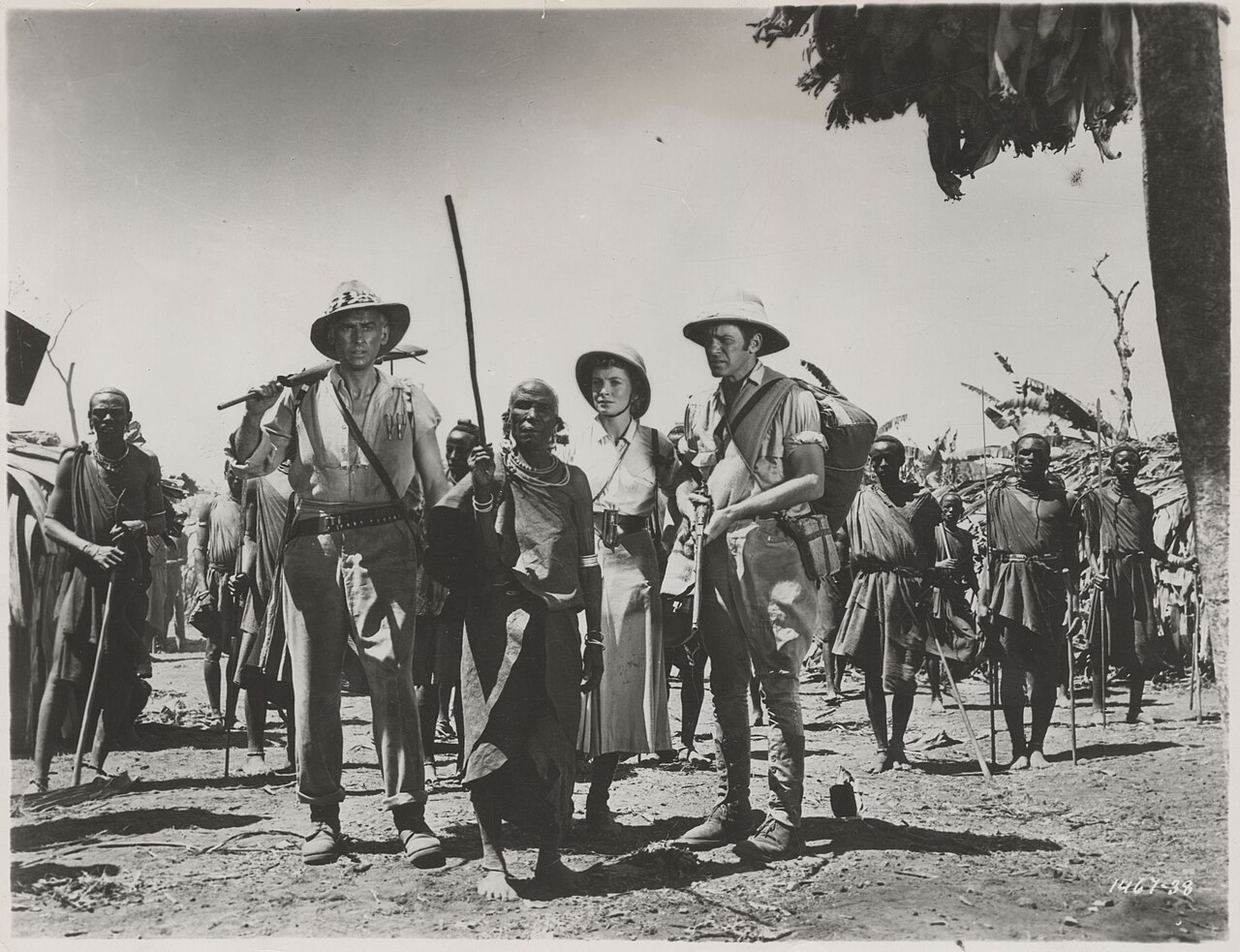
The 1950 adaptation represented one of MGM's most ambitious overseas productions during an era when the studio typically committed to only one or two large-scale location shoots per year. When the long-delayed production of Quo Vadis freed up resources, the studio seized the chance to send its crew deep into Africa. The logistical undertaking was enormous: a convoy of Dodge trucks hauled production equipment across more than 70,000 miles (110,000 km) to reach the set. Filming spanned multiple territories, including Murchison Falls in Uganda, the Watusi regions of Astrida, Volcano Country and Stanleyville in the Belgian Congo, Tanganyika, and sites in Kenya such as Rumuruti and Machakos. Renowned big game hunter Bunny Allen served as technical adviser. The cave sequence was shot at Slaughter Canyon Cave in Carlsbad Caverns National Park, with additional scenes captured at Sitting Bull Falls in New Mexico. After five months on location, Andrew Marton replaced Compton Bennett as director in February 1950; the studio cited illness, though industry rumors pointed to creative friction with cast members. Eva Monley also launched her Hollywood career here as script supervisor and location scout.
Adaptation & Casting
While most screen versions of Haggard's 1885 novel introduced a female protagonist, this iteration departed even more substantially from the source than the 1937 British production. In the original book, Umbopa—a king in disguise—carries considerable narrative weight, and the earlier film gave Paul Robeson top billing for that role. The 1950 version, by contrast, greatly diminished Umbopa's presence and agency in the story. On the casting front, MGM initially wanted Errol Flynn to co-star; he had just wrapped That Forsyte Woman for the studio when Compton Bennett was signed to direct in July 1949. Flynn ultimately chose to headline Kim instead, and Stewart Granger stepped into the lead the following month. Deborah Kerr was announced as the female lead that same July, with Richard Carlson joining in September. Helen Deutsch, assigned in October 1948, crafted the screenplay, while Sam Zimbalist produced after MGM acquired the rights from Gaumont British in November 1946.
Plot & Narrative
Set in colonial-era Kenya in 1897, the story follows Allan Quatermain, a seasoned British safari guide who reluctantly agrees to search for Elizabeth Curtis's missing husband, who vanished in the African interior while pursuing the legendary King Solomon's mines. Elizabeth and her brother John join the expedition, and despite Allan's initial resistance to having women on a safari, a romance slowly blooms over the grueling journey. The party encounters Van Brun, a fugitive living among a tribe, whose hostile actions lead to the death of Allan's loyal companion Khiva. A tall, enigmatic native named Umbopa joins the group, only to later reveal himself as royalty seeking to overthrow the usurper King Twala. After discovering Curtis's skeletal remains and a cache of jewels in a cave—where a booby trap nearly kills them—the adventurers escape via an underground river. The climax centers on a duel to the death between Umbopa and Twala, which Umbopa wins despite cheating by one of Twala's men, securing his throne and escorting his friends home.
Reception & Legacy
Released by MGM on November 24, 1950, the film became a major financial triumph, earning over five million dollars in North America and nearly five million internationally, ultimately returning a profit exceeding four million dollars. It stood as MGM's top-grossing release of 1950 and ranked as the second highest-earning film in the United States that year. Its international reach was equally impressive, placing third at the British box office in 1951 and drawing over four million admissions in France. Critics were largely favorable: Bosley Crowther acknowledged some "hokum" but praised the scenic beauty, while Variety highlighted its "high excitement" and "excellently staged fights." Harrison's Reports lauded its ability to hold audiences "from start to finish." At the 23rd Academy Awards, the film won Best Cinematography (Color) for Robert L. Surtees and Best Film Editing, and received a Best Picture nomination. The Monthly Film Bulletin offered a dissenting view, calling it "a somewhat stilted epic" and questioning Kerr's casting.
Gallery
Frequently Asked Questions
What is King Solomon's Mines (1950 film)?
It is a 1950 American adventure movie produced by Metro-Goldwyn-Mayer, serving as the second screen adaptation of H. Rider Haggard's 1885 novel. The film was directed by Compton Bennett and Andrew Marton and released on November 24, 1950.
Who stars in King Solomon's Mines (1950 film)?
The principal cast includes Deborah Kerr, Stewart Granger, and Richard Carlson. Helen Deutsch wrote the screenplay that shaped their characters for the screen.
Where and when does the story of King Solomon's Mines (1950 film) take place?
The narrative is set in 1897 within British East Africa, specifically in colonial-era Kenya. A group of explorers travels into the African interior in search of the fabled mines of the title.
What Academy Award did King Solomon's Mines (1950 film) win?
At the 23rd Academy Awards, the film took home the Oscar for Best Cinematography (Color). It also earned nominations for Best Film Editing and Best Picture.
Why is King Solomon's Mines (1950 film) considered important to adventure cinema?
As the second major film adaptation of Haggard's classic novel, it helped solidify the story's legacy in the adventure genre. Its critical and commercial success, combined with its Oscar win, made it a standout production for MGM in the early 1950s.
More in Lost world films 1-24
Spotted an error? Know more?
This is a living reference — every entry is fact-audited, and reader corrections feed straight into our audit queue. Suggest an edit · See this site's audit record