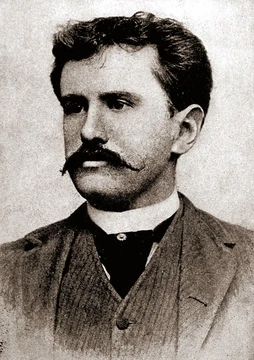
Émile Augier
French dramatist who satirized social moralization and greed.

Émile Augier was a French dramatist whose works marked a decisive shift away from the romanticism that had dominated French theatre. Born into the well-to-do bourgeoisie, he reflected that class’s values in his plays. After a legal education, he wrote his first play, a two-act verse comedy titled *La Ciguë*, which was initially rejected by the Théâtre Français but achieved considerable success when produced at the Odéon in 1844, setting him on his career. Augier described his own life as “without incident,” but his plays were anything but. He frequently collaborated with other writers, including Jules Sandeau, Eugène Marin Labiche, and Édouard Foussier. His early important work, *L’Aventurière* (1848), already deviated from romantic ideals, and in *Le Mariage d’Olympe* (1855), he portrayed a courtesan realistically, without the glorification found in Dumas’s *La Dame aux Camélias*. In *Gabrielle* (1849), he made the husband, not the lover, the sympathetic character. Augier also provided the libretto for Charles Gounod’s first opera, *Sapho* (1851). His plays often served as moral critiques, lashing out at greed, clerical power (as in *Le Fils de Giboyer*, 1862, which required direct imperial intervention to be staged), and the selling of favors by wives in *Les Lionnes pauvres* (1858). Works like *Les Effrontés* (1861) and *La Contagion* (1866) satirized social moralization and lust for power. *Le Gendre de Monsieur Poirier* (1854), written with Sandeau, is considered a high point of his art. After the Franco-Prussian War, his *Jean de Thommeray* (1873) struck a patriotic note. His last two dramas, *Madame Caverlet* (1876) and *Les Fourchambault* (1879), were problem plays, where he acted as a moralist in the tradition of Molière. He ceased writing after 1879, fearing he might produce inferior work. He was elected to the Académie française in 1857, occupying seat 1.
- field
- Dramatist
- nationality
- French
- known_for
- Moralistic plays satirizing social issues; member of the Académie française
Verified Timeline
Lore & Background
Émile Augier, born at Valence, Drôme, was the grandson of the writer Pigault Lebrun and belonged by both birth and temperament to the well-to-do bourgeoisie. After a good education and legal training, he wrote a two-act verse play, *La Ciguë*, which was rejected by the Théâtre Français but produced with considerable success at the Odéon, settling his career. He described his own life as "without incident." His early important work, *L'Aventurière* (1848), already deviated from romantic ideals, and in *Le Mariage d'Olympe* (1855) he portrayed the courtesan realistically, not glorified as in Dumas's *Dame aux Camélias*. In *Gabrielle* (1849), the husband, not the lover, is the sympathetic character. He provided the libretto for Charles Gounod's first opera, *Sapho* (1851), in which the title character is wholly heterosexual and a courtesan is the villainess. His works often satirized greed, social moralization, ultramontanism, and lust of power, notably in *Les Effrontés* (1861), *Le Fils de Giboyer* (1862)—which was regarded as an attack on the clerical party and brought out by direct imperial intervention—and *La Contagion* (1866). *Lions et renards* (1869), written with Jules Sandeau, is considered the high-water mark of his art. He also produced the graceful drawing-room comedy *Philiberte* (1853). His later problem plays, *Madame Caverlet* (1876) and *Les Fourchambault* (1879), show him as a moralist in the manner of Molière. His works depend not on elaborate plot but on characters built from real people. He died at his home at Croissy-sur-Seine.
Reader's Guide
Émile Augier’s significance as a dramatist stems from his role as a moralist who used the stage to critique contemporary society, particularly the greed of gold, ultramontanism, and the lust of power. His plays depend not on elaborate plot but on characters built from real people, and his domestic range of subject matter scarcely appears in the form of pure poetry. Augier belonged to the well-to-do bourgeoisie in spirit as well as by birth, and his work consistently reflected that perspective. His career began with a two-act verse play, *La Ciguë*, which was refused at the Théâtre Français but achieved considerable success at the Odéon, settling his path. He frequently collaborated with other writers, including Jules Sandeau, Eugène Marin Labiche, and Édouard Foussier. His play *Le Fils de Giboyer* was regarded as an attack on the clerical party in France and was brought out by direct imperial intervention. Augier’s early important work, *L’Aventurière*, already showed a deviation from romantic ideals, and in *Mariage d’Olympe* the courtesan is shown as she is, not glorified as in Dumas’s *Dame aux Camélias*. In *Gabrielle*, the husband, not the lover, is the sympathetic character. He provided the libretto for Charles Gounod’s first opera, *Sapho*, in which a courtesan is the villainess and the title character is wholly heterosexual. In *Les Lionnes pauvres*, the wife who sells her favours comes under the lash. His later works, including *Madame Caverlet* and *Les Fourchambault*, are problem plays, and he is considered a moralist in the same sense as Molière. His last comedy was *Les Fourchambault* in 1879, after which he wrote no more, restrained by the fear of producing inferior work.
Did You Know?
- Émile Augier was the grandson of the novelist Pigault Lebrun.
- He described his own life as 'without incident'.
- Augier died at his home at Croissy-sur-Seine.
- His plays critique the greed of gold, ultramontanism, and the lust of power.
- Augier's characters are built from real people, not elaborate plots.
More in Literature And Writers 1-24
Spotted an error? Know more?
This is a living reference — every entry is fact-audited, and reader corrections feed straight into our audit queue. Suggest an edit · See this site's audit record