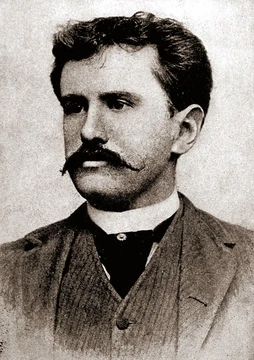
Su Bai
Korean literary critic and poet of the Koryo period.

Su Bai (3 August 1922 – 1 February 2018) was a Chinese archaeologist and bibliographer, best known as the inaugural chair of Peking University’s Department of Archaeology, a position he held from 1983 to 1988. His pioneering work in the archaeology of Buddhism earned him the Lifetime Achievement Award from the Chinese Archaeology Association in 2016. Born in Shenyang, Liaoning Province, Su entered Peking University’s History Department in 1940 and graduated in 1944, then completed graduate studies in archaeology at the university’s Institute of Humanities. His education included studies under notable scholars: he learned the history of Sino-foreign relations, Chinese mythology with Sun Zuoyun, oracle bone studies, and Buddhist history from Tang Yongtong. A former student, who later became president of the Beijing Palace Museum, described Su’s knowledge as “encyclopedic.” He began teaching at the Institute of Humanities in 1948.
In 1950, Su shifted to field research and excavation. From 1951 to 1952, he directed the excavation of three Song dynasty tombs in Baisha, Yuzhou, Henan, publishing the influential report *The Song Tombs at Baisha* in 1957. The work combined historical and archaeological analysis to examine Song society and customs, though it did not consider that tomb paintings might depict an imaginary spiritual realm. The report remained academically significant for decades. Su’s Buddhist archaeology began in 1947 with the study of Chinese grottoes. In 1978, he published a paper in *Acta Archaeologica Sinica* challenging the dating and periodization of the Yungang Grottoes proposed by Japanese authorities Nagahiro and others; after academic debate, Nagahiro revised his stance. Su also advanced new dating for the Kizil Caves in Kucha, revising earlier German chronologies.
As department head, Su trained many prominent archaeologists, including Hang Kan, Zhang Zhongpei, Fan Jinshi, and An Jiayao. He was a strict teacher; even after Fan Jinshi became a renowned Dunhuang expert, Su rejected early drafts of her grotto report, which took five more years to publish in 2011. Su retired in 2004 after over five decades of work. A dedicated bibliographer and book collector, he amassed over 10,000 volumes, including rare books, filling three of his home’s four rooms. In 2010, he donated his entire collection to Peking University Library, which established the
- born
- 1168
- died
- 1241
Lore & Background
Yi Kyubo was born in Yeoju, Gyeonggi Province in 1168, though no accurate records confirm this. From age nine he studied all the literature of the Confucian Classics and could remember it after reading once. He entered Munheon Gongdo, the best private school, and stood out, especially in the Gakchok Busi poetry test. In 1189 he passed the Sima Si preliminary exam, and in 1190 he passed the Yebusi main exam, selected as Dongjinsa. After his father died, he went to Cheonmasan in Kaeseong, called Baekungeosa, and lived there writing. There he wrote "Cheonmasansi" and the heroic epic "Dongmyeongwangpyeon," which sings of the life of Dongmyeongwang, founder of Goguryeo. In 1199, when a rebellion broke out in Donggyeong (Gyeongju), he volunteered to join the army and became a military officer. Yi Kyubo was one of the most important literary critics of his time, concerned with form theory (yongsa ron) and creative theory (shunui ron). His views diverged from Yi Illo, who rejected the importance of individual creativity in poetry; Yi Illo was more conservative and placed greater emphasis on Hanmun forms and elegant language.
Reader's Guide
Yi Kyubo's significance lies in his dual role as poet and critic. His epic "The Lay of King Tongmyong" is considered a nationalist rebuttal to Chinese-dominated historical traditions and Mongol political dominance. He wrote prose in the kajon genre, including "Tale of the Turtle in Clear Water" and "The Story of Mr. Yeast." Modern scholars attribute Chinese influence in his writing to Bai Juyi, Tao Yuanming, and Su Dongpo. He wrote a poem called "Reading Tao Yuanming's Poems" and declared Su Dongpo "the greatest man of letters, towering over all others in modern times." Koryo envoys had acquired copies of the Wenyuan yinghua, one of four major encyclopedic works compiled during Song emperor Taizong's reign, which taught Song-era writers how to compose poetry.
Did You Know?
- Approximately 1,500-2,000 of Yi Kyubo's poems survive, along with numerous prose works.
- He passed the Sima Si preliminary exam in 1189 and the Yebusi main exam in 1190.
- He wrote the heroic epic "Dongmyeongwangpyeon" about the founder of Goguryeo.
- He served as a military officer after volunteering to join the army during a rebellion in Donggyeong in 1199.
- The Collected Works of Minister Yi of Korea is one of the earliest texts of a Korean writer commissioned by an official patron.
Prodigious Beginnings in Yeoju
Yi Kyubo's origins remain uncertain. While tradition places his birth in Yeoju, Gyeonggi Province in 1168, no accurate records confirm this. By age nine he had studied all the Confucian Classics and could remember them after a single reading. He entered Munheon Gongdo, the best private school, and stood out among peers, particularly in the Gakchok Busi poetry test. In 1189 he passed the Sima Si preliminary exam, and in 1190 he passed the Yebusi main exam, earning the title Dongjinsa. After his father died, he withdrew to Cheonmasan in Kaeseong, called Baekungeosa, where he devoted himself to writing.
The Epic of Tongmyeong and the Call to Arms
Two defining threads run through Yi Kyubo's middle years: martial service and mythic poetry. In 1199, when rebellion erupted in Donggyeong (Gyeongju), he volunteered for military duty and served as an officer. At his mountain retreat he produced "The Lay of King Tongmyong," a heroic epic tracing the life of Dongmyeongwang, founder of Goguryeo. The poem emphasizes local Korean historical legends and cultural achievements, serving as a nationalist rebuttal to Chinese-dominated historical traditions and Mongol political dominance. He also composed "Cheonmasansi" during this period.
Theorist of Form and Feeling
Yi Kyubo is recognized as one of the most important literary critics of the Koryo period, focusing on form theory (yongsa ron) and creative theory (shunui ron). His views diverged from Yi Illo, who rejected the importance of individual creativity in poetry. Yi Illo was more conservative and placed greater emphasis on Hanmun forms and elegant language. Yi Kyubo also wrote in the kajon genre—fictitious biographies popularized by Han Yu—producing "Tale of the Turtle in Clear Water" and "The Story of Mr. Yeast."
Bridging Empires: Chinese Masters and a Korean Voice
Modern scholars attribute Chinese influence in Yi Kyubo's writing to Bai Juyi, Tao Yuanming, and Su Dongpo. Bai Juyi was one of the most influential Tang writers, more influential than Li Bai and Du Fu. Koryo envoys acquired copies of the Wenyuan yinghua, one of four major encyclopedic works compiled under Song emperor Taizong, intended to teach Song-era writers how to compose poetry. Yi Kyubo wrote a poem called "Reading Tao Yuanming's Poems." He declared Su Dongpo "the greatest man of letters, towering over all others in modern times." The 13th-century Collected Works of Minister Yi of Korea preserves approximately 1,500-2,000 of his poems and numerous prose works.
Frequently Asked Questions
Who is Su Bai?
Su Bai was a Korean literary critic and poet active during the Koryo dynasty, born in 1168 and passing away in 1241.
How much of Su Bai's writing survives today?
Roughly 1,500 to 2,000 poems along with a number of prose pieces are known to have come down to us from his lifetime.
What is the Collected Works of Minister Yi of Korea?
It is a 13th-century compilation of Su Bai's writings that stands as one of the earliest examples of a Korean author's complete works being gathered under the commission of an official patron.
What role did Su Bai play in Korean literary culture?
He functioned as both a poet and a literary critic during the Koryo period, contributing to the shaping and evaluation of Korean literary tradition in his era.
Why is Su Bai's collected works considered a milestone?
The compilation marks one of the first known instances of an official patron commissioning the assembly of a Korean writer's full output, setting an early precedent for the preservation of Korean literary heritage.
More in Literature And Writers 1-24
Spotted an error? Know more?
This is a living reference — every entry is fact-audited, and reader corrections feed straight into our audit queue. Suggest an edit · See this site's audit record