Pilgrim: Faith as a Weapon
A 1997 adventure game based on Paulo Coelho's novel.

Arxel Tribe · via Wikipedia: Pilgrim: Faith as a Weapon · Fair use
Pilgrim: Faith as a Weapon is a 1997 adventure video game developed by Arxel Tribe and published by Infogrames. It is the first title in a trilogy that also includes The Legend of the Prophet and the Assassin (1999) and The Secrets of Alamut (2001). The game is notable as a commercial cultural heritage game and graphic interactive fiction, written by Paulo Coelho and based on his autobiographical novel The Pilgrimage.
- Release year
- 1997
- Developer
- Arxel Tribe
- Publisher
- Infogrames
- Genre
- Adventure, point-and-click
- Based on
- The Pilgrimage by Paulo Coelho
- Platform
- PC
Lore & Background
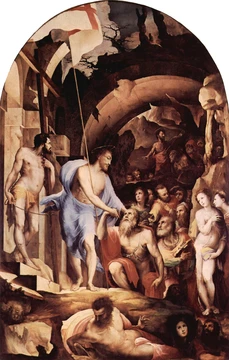
The game is set at the beginning of the Albigensian Crusade (1208) in southern France. The player controls Simon Lancroix, who must complete his dying father's wishes by finding a secret Coptic manuscript—the lost Gospel of Saint Jean—and delivering it to a friend named Petrus. The manuscript is passed among various characters, while Pope Innocent III orders the inquisitor Diego de Osma to retrieve it. Mystical creatures such as angels and demons also become involved. The first half of the game involves completing tasks for other characters; halfway through, the player meets Petrus, who reveals that the player's father was the leader of a fictional religious sect called 'The Tradition'. The game then explores symbolic and spiritual themes, ending in Limbo.
Reader's Guide
Pilgrim: Faith as a Weapon is significant as the debut title of Arxel Tribe and the first in a trilogy of adventure games. It represents an early example of an 'author game', a genre of video games produced by Anne Carriére Multimédia, a subsidiary of the French publisher of Paulo Coelho's work. The game's development involved high-profile creative talent, including Coelho and French comic artist Jean Giraud (Moebius), whose artistic direction was a major investment. The game's legacy lies in its attempt to adapt a literary work into an interactive experience, though its gameplay—a first-person point-and-click slideshow of pre-rendered 3D environments—was noted for its restrictive movement and potential for unwinnable states. The game's hint system and in-game Encyclopedia provided historical context, but the puzzles required reflection and patience. The project was a financially and creatively ambitious venture for Arxel Tribe, which had previously worked in advertising and architecture graphics.
Did You Know?
- The game was written by Paulo Coelho, based on his 1987 autobiographical novel The Pilgrimage.
- The artistic direction was handled by French comic artist Jean Giraud (Moebius), who had previously illustrated one of Coelho's books.
- The game includes two unwinnable states, one of which occurs if the player gives all their money to a beggar in Toulouse.
- The game's final puzzle has been described as 'no less than an exam about what you're supposed to have learned'.
More in Characters
Elsewhere in Limbo
Spotted an error? Know more?
Reader corrections go straight into our review queue. Suggest an edit · How this site is sourced