
Chonchon
A flying head from Mapuche and Chilean folklore.

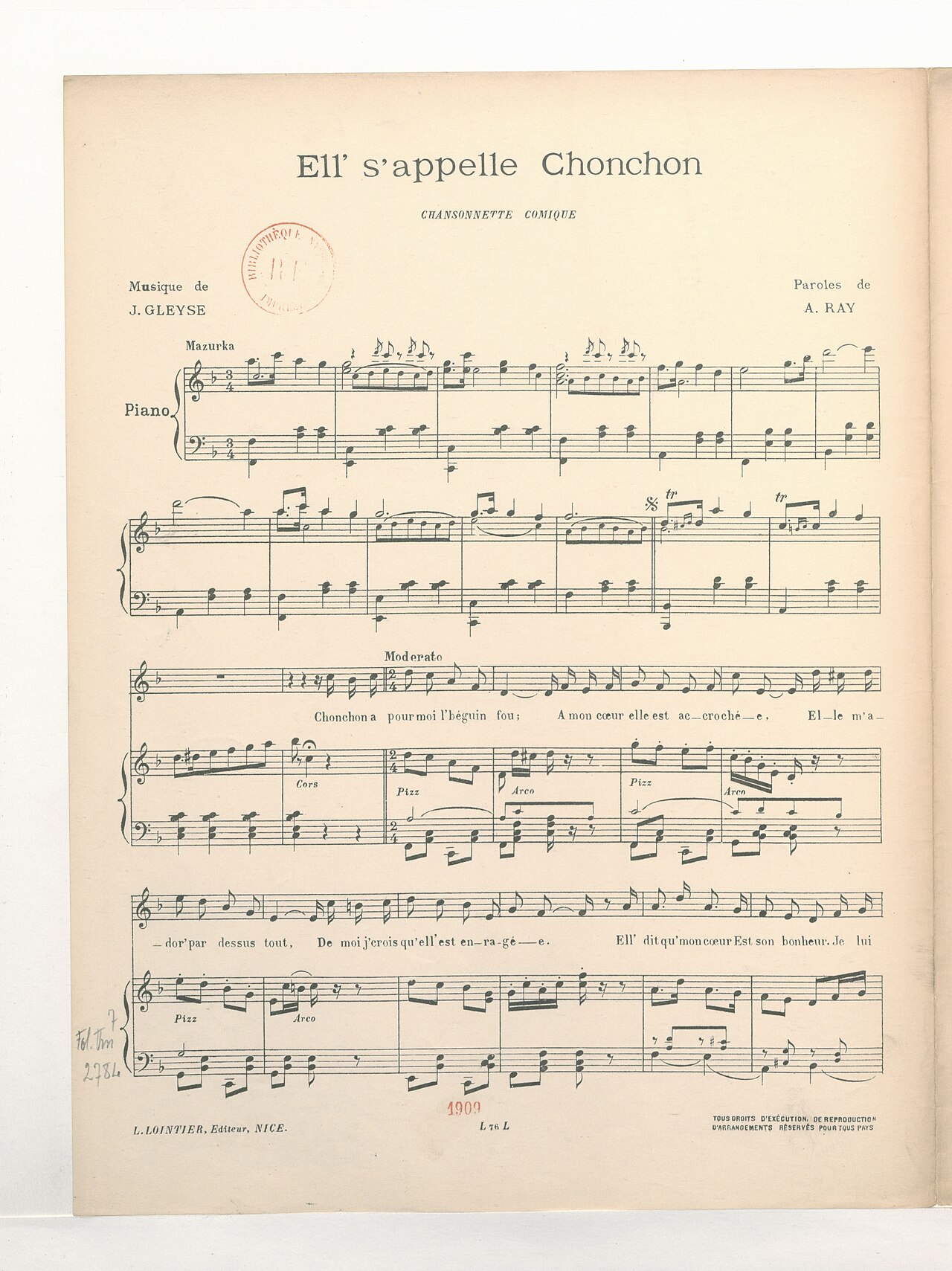
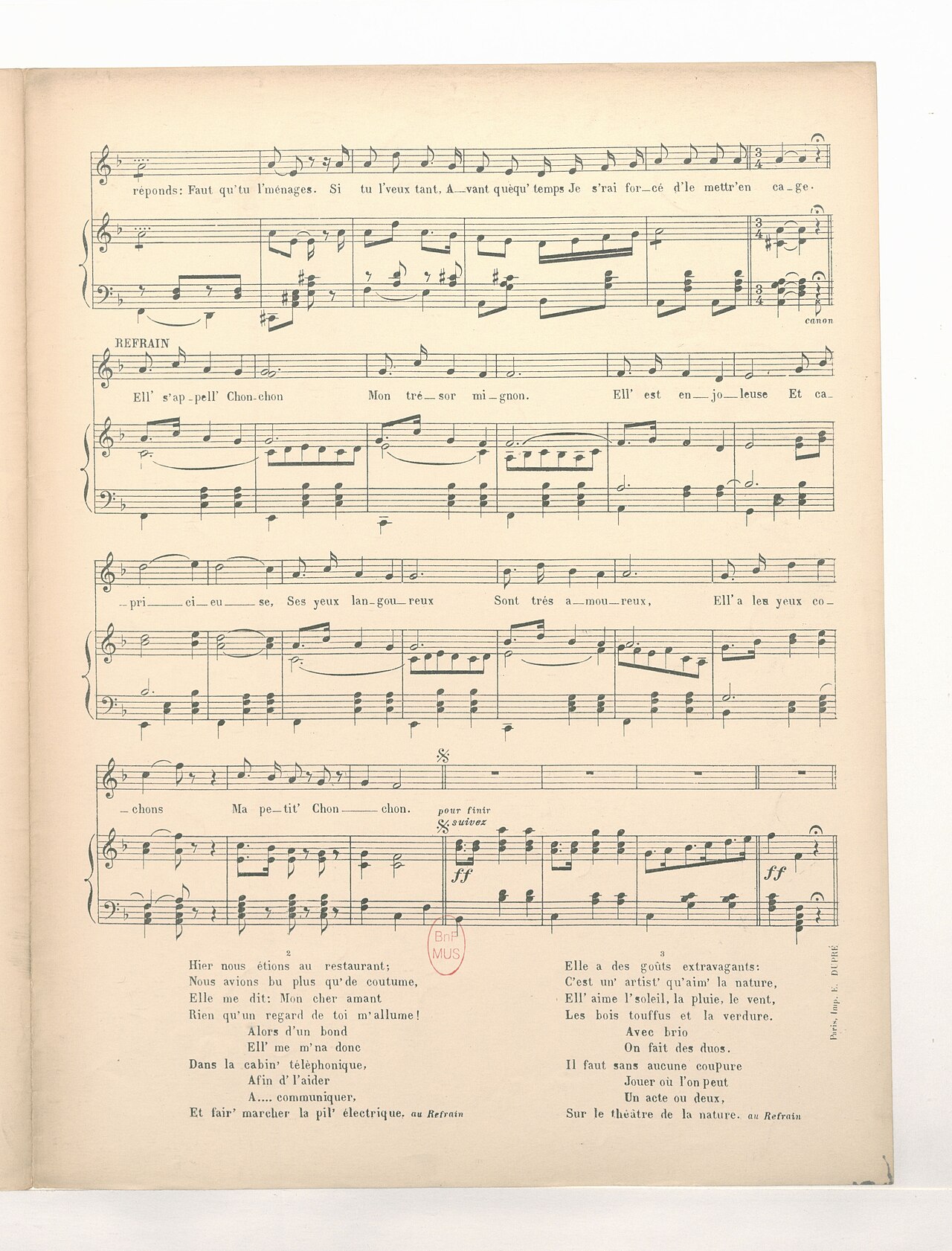
Gleyse, J.. Compositeur · Public domain
The Chonchon, also called the Tue-Tué, is a creature from Mapuche religion and the folklore of Chile and southern Argentina. It appears as a flying human head. According to Mapuche legend, this being usually originates when a woman makes a pact with a sorcerer (brujo). As a result, her head detaches at night, sprouts wings, and flies off, making birdlike calls. She is said to travel to a secret underground place called the reni, where she joins a coven for witchcraft or celebrations. There are stories of husbands waking to find their wives’ heads missing.
The creature is also linked to the kalku (an evil machi or witch) who serves an evil spirit (wekufe). The kalku may command the chonchon as a servant, or transform into it himself. Only the most powerful kalkus know how to perform this change. To become a chonchon, the kalku voluntarily anoints his throat with a magical cream, allowing his head to detach. The detached head then becomes the chonchon.
The chonchon looks like a human head covered in feathers and equipped with talons. Its large ears act as wings, letting it fly on moonless nights. It is believed to possess all the kalku’s magical powers and can only be seen by other sorcerers or those seeking such power. Sorcerers use this form to carry out evil acts, gaining extra abilities like drinking the blood of the sick or sleeping. Though invisible to ordinary people, its cry of “tue tue tue” can be heard. This sound is a bad omen, often foretelling the death of a loved one.
- type
- Mythical creature
- origin
- Mapuche religion, Chilean and southern Argentine folklore
- also_known_as
- Tue-Tué
- associated_with
- Kalku (witch), wekufe (evil spirit)
- form
- Human head with feathers, talons, and large ears functioning as wings
- cry
- "tue tue tue"
Lore & Background
According to Mapuche myth, the flying head is the result of someone, usually a woman, entering into a contract with a sorcerer or brujo; consequently her head detaches by night and sprouts wings, so that the chonchón takes off in flight. It makes nocturnal sounds similar to bird calls. There is supposedly a secret subterranean location called the reni, where she will fly to join her coven to practice witchcraft or enjoy festivities. There are said to be anecdotes of husbands who wake up in the night and find their wives' head missing.
Reader's Guide
The Chonchon is a significant figure in Mapuche and Chilean folk mythology, representing the malevolent power of sorcerers known as kalku. It is said that the kalku, who contracts with an evil spirit (wekufe), can transform into the flying head by anointing the throat with a magical cream, allowing the head to detach. Only the most powerful kalkus possess this knowledge. The chonchon takes the form of a human head adorned with feathers and talons, with unusually large ears functioning as wings for flight during moonless nights. It is believed to possess all the magical powers of a kalku and can only be seen by other sorcerers or those seeking such power. Sorcerers assume this form to engage in malevolent activities, including drinking the blood of the sick or sleeping. While invisible to the uninitiated, its distinctive cry of 'tue tue tue' is considered a dire omen, often predicting the impending death of a loved one.
Did You Know?
- The chonchon is also known as the Tue-Tué.
- Its unusually large ears function as wings for flight.
- Only the most powerful kalkus can perform the transformation into a chonchon.
- The chonchon's cry of 'tue tue tue' is considered a dire omen predicting death.
Cultural Roots & Linguistic Identity
The chonchon draws its name directly from the Mapudungun word chonchon, a linguistic thread that anchors the creature firmly within the indigenous Mapuche spiritual tradition. Beyond its Mapuche origins, the entity also goes by the name Tue-Tué, a designation that echoes the haunting cry it is said to produce. The creature occupies a place in both Mapuche religion and the broader folk mythologies of Chile and southern Argentina, making it a shared cultural symbol across the southern Andean and Patagonian regions. Within the Mapuche cosmological framework, the chonchon is not an independent spirit but rather a manifestation tied to human practitioners of dark magic. It is linked to the kalku, a figure synonymous with the machi witch, who contracts with an evil spirit known as the wekufe. The kalku commands various servants to carry out his will, and the chonchon serves among them—sometimes as an evil bird, sometimes as the very head of the kalku himself. This deep entanglement with sorcery positions the chonchon not as a random monster, but as an extension of human ambition and transgression within Mapuche belief.
The Ritual of Transformation
In the most common telling, the chonchon is born from a pact. A person, typically a woman, enters into a contract with a sorcerer or brujo, and as a consequence her head detaches from her body each night and sprouts wings, launching into the darkness. In the more esoteric version reserved for the kalku, the transformation is entirely voluntary and demands extraordinary mastery. Only the most powerful kalkus are said to possess the knowledge required to perform this transmutation. The process begins with the application of a magical cream to the throat, an anointing that loosens the bond between head and body. Once the head is freed, it becomes the chonchon, a winged entity capable of flight. The body remains behind, and folk anecdotes describe husbands awakening to find their wives' heads simply gone, leaving only the empty pillow. The kalku who undergoes this change gains access to a coven at a secret subterranean site called the reni, where witchcraft is practiced and festivities are held under cover of the underground dark.
Form, Flight, and Feeding
The chonchon presents as a human head decorated with feathers and talons, a grotesque fusion of the familiar and the bestial. Its most striking anatomical feature is a pair of unusually large ears that serve as wings, propelling the creature through the air on moonless nights. During its flights it produces a nocturnal sound resembling bird calls, a detail that blurs the line between the supernatural and the natural world. The chonchon is believed to carry the full magical power of the kalku who created it, granting it the ability to drain the blood of the sick or the sleeping. Crucially, the creature is invisible to ordinary people; only fellow sorcerers or those actively seeking such power can perceive its terrifying form. This selective visibility means that most encounters with the chonchon are auditory rather than visual. The creature's domain extends to the reni, a hidden underground gathering place where covens assemble to practice dark arts and celebrate. The combination of its blood-drinking purpose, its restricted visibility, and its subterranean social life makes the chonchon a deeply unsettling figure in Mapuche and South American folklore.
The Omen Cry and Global Echoes
For those who cannot see the chonchon, the only warning is its cry: tue tue tue. This distinctive call is regarded as a dire omen, traditionally interpreted as a prediction that a loved one is about to die. The cry thus transforms the chonchon from a mere monster into a harbinger, a supernatural messenger of mortality whose very presence is marked by sound rather than sight. The flying-head motif is not unique to the Mapuche world. Across the globe, similar creatures appear in diverse traditions: the Krasue of Southeast Asia, the Manananggal of the Philippines, the Penanggalan of Malay folklore, the Soucouyant of the Caribbean, the Tlahuelpuchi of Mexico, and the Flying Head of Haudenosaunee and Wyandot mythology. Even Japan's Rokurokubi, with its elongating neck, shares a thematic kinship. These parallels suggest a deep, cross-cultural fascination with the idea of a severed or mobile head as a vehicle for malevolent power, making the chonchon one node in a vast global network of dark mythological imagery.
Gallery



Frequently Asked Questions
What is the Chonchon?
The Chonchon, more widely known as the Tue-Tué, is a mythical creature rooted in Mapuche religion and the folklore of Chile and southern Argentina. It is depicted as a detached human head that takes to the skies under cover of darkness.
What does the Chonchon look like?
The creature takes the form of a human head equipped with feathers, talons, and notably large ears that serve as its wings. This gives it a distinctly avian silhouette despite its fundamentally human origin.
How is a Chonchon created?
According to Mapuche legend, the being comes into existence when a woman strikes a pact with a sorcerer, or brujo. After the deal is sealed, her head separates from her body each night, grows wings, and takes flight.
Where does the Chonchon travel at night?
The winged head flies to a hidden underground realm called the reni, where it joins a gathering for witchcraft rituals or celebrations. The creature is closely associated with the Kalku (witch) and the wekufe (evil spirit) within Mapuche cosmology.
What sound is the Chonchon known for?
The creature is identified by its distinctive birdlike cry, "tue tue tue," which is the origin of its alternate name, the Tue-Tué. This call is said to echo through the night as the head makes its flight.
More in Legendary birds 1-24
Spotted an error? Know more?
This is a living reference — every entry is fact-audited, and reader corrections feed straight into our audit queue. Suggest an edit · See this site's audit record