Tomás Masaryk
First president and founding father of Czechoslovakia.

via Wikipedia: Tomáš Masaryk · see source
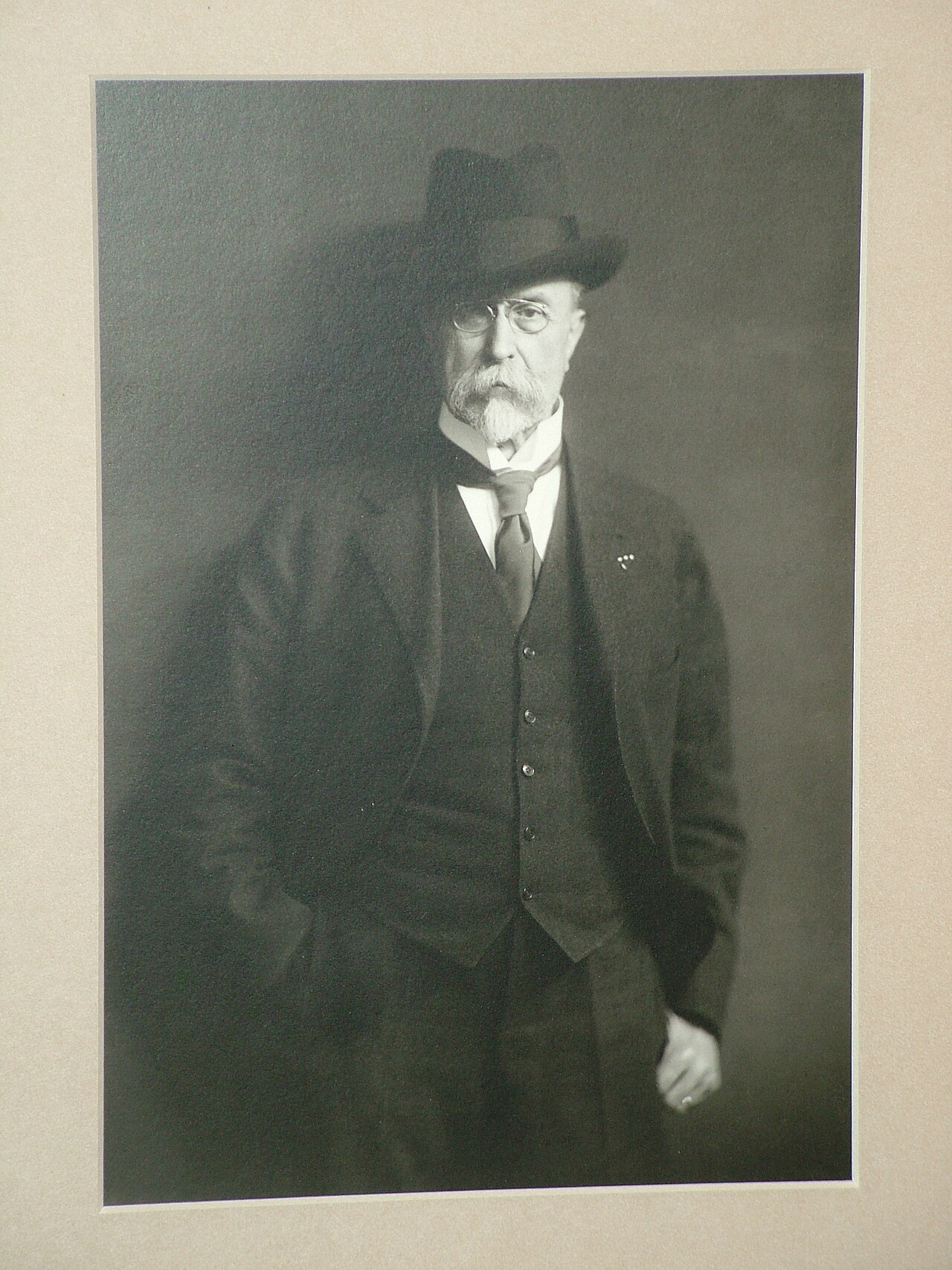
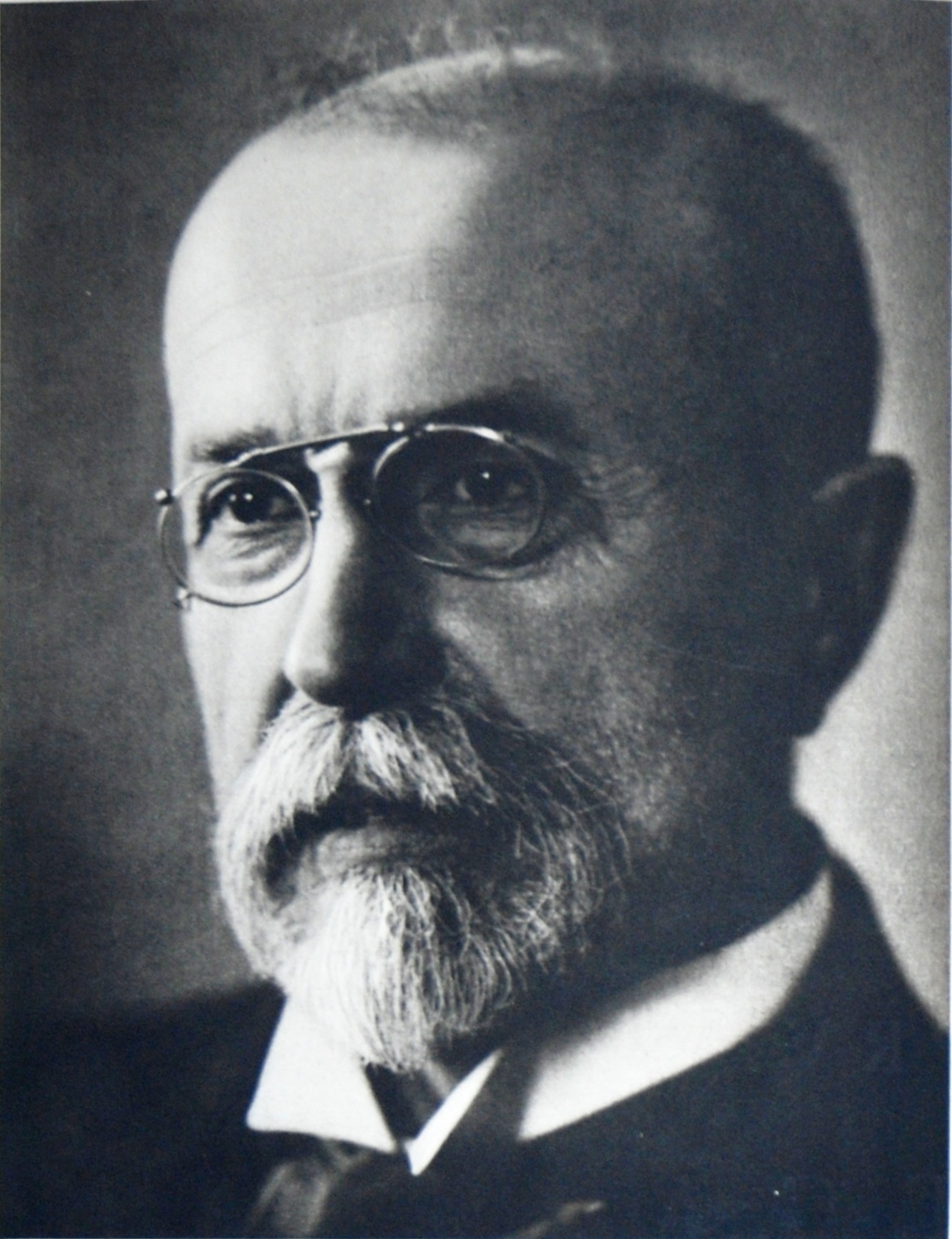
Tomáš Garrigue Masaryk (7 March 1850 – 14 September 1937) was a Czechoslovak statesman, political activist, and philosopher. He served as the first president of Czechoslovakia from 1918 to 1935 and is considered the country’s founding father.
Masaryk was born in Hodonín, Moravia, then part of the Austrian Empire. He earned a doctorate from the University of Vienna and later became a professor of philosophy at the Czech Charles-Ferdinand University in Prague. His political career began as a deputy in the Austrian Reichsrat, where he served from 1891 to 1893 and again from 1907 to 1914. Initially an advocate for restructuring the Austro-Hungarian Empire into a federation, he shifted to supporting full Czech and Slovak independence by the start of the First World War. He went into exile, traveling across Europe to promote the Czechoslovak cause, and played a key role in forming the Czechoslovak Legion, which fought against the Central Powers. In 1918, Masaryk, along with Edvard Beneš and Milan Rastislav Štefánik, traveled to the United States to gain support from President Woodrow Wilson and Secretary of State Robert Lansing. Their efforts led to the Washington Declaration, which proclaimed an independent Czechoslovak state.
After Austria-Hungary collapsed in late 1918, the Allied powers recognized the First Czechoslovak Republic, and Masaryk became head of its provisional government. He was formally elected president in November and was reelected three times. His leadership oversaw a period of stability, with Czechoslovakia emerging as a strong democracy. He resigned in 1935 due to old age, handing power to Beneš. Masaryk retired to the village of Lány and died two years later at age 87.
Masaryk came from a poor, working-class family in the predominantly Catholic city of Hodonín, in the Margraviate of Moravia (now part of the Czech Republic, then in the Austrian Empire). The nearby Slovak village of Kopčany, his father’s home, also claims to be his birthplace. He grew up in Čejkovice, South Moravia, before moving to Brno to study. His father, Jozef Masárik, was a Slovak carter and later a steward and coachman at an imperial estate. His mother, Teresie Masaryková, was a Moravian with a German education who worked as a cook at the estate; they married on 15 August 1849.
After grammar school in Brno and Vienna from 1865 to 1872, Masaryk studied at the University of Vienna under Franz Brentano. He earned his Ph.D. in 1876 and completed his habilitation thesis, *Suicide as a Social Mass Phenomenon of Modern Civilization*, in 1879. From 1876 to 1879, he studied in Leipzig with Wilhelm Wundt and Edmund Husserl. He married Charlotte Garrigue, whom he met in Leipzig, on 15 March 1878. They lived in Vienna until 1881, then moved to Prague. In 1882, he was appointed professor of philosophy at the Czech Charles-Ferdinand University. The following year, he founded *Athenaeum*, a magazine on Czech culture and science, first published on 15 October 1883. His students included Edvard Beneš.
Masaryk challenged the authenticity of the epic poems *Rukopisy královedvorský a zelenohorský*, which falsely promoted nationalistic Czech chauvinism. He also contested the Jewish blood libel during the 1899 Hilsner trial. Influenced by the 19th-century respect for scientific evidence, he believed social and political problems stemmed from ignorance and that a scientific approach could reveal solutions. He saw his role as an educator, enlightening the public.
In politics, Masaryk served in the Reichsrat with the Young Czech Party from 1891 to 1893 and with the Czech Progressive Party, which he founded in 1900, from 1907 to 1914. At that time, he did not campaign for independence. He helped Hinko Hinković defend the Croat-Serb Coalition during their 1909 Vienna trial, where members received sentences totaling over 150 years, including death sentences.
When World War I began in 1914, Masaryk concluded that independence from Austria-Hungary was the best path. He went into exile in December 1914 with his daughter Olga, staying in Western Europe, the Russian Empire, the United States, and Japan. He organized Czechs and Slovaks abroad, gave lectures, and wrote articles and memoranda supporting independence. He was pivotal in establishing the Czechoslovak Legion in Russia as an effective Allied fighting force, using a Serbian passport. In 1915, he became one of the first staff members of the School of Slavonic and East European Studies (now part of University College London), where a student society and senior common room are named after him. He also served as professor of Slavic Research at King's College London, lecturing on the problem of small nations.
- born
- 7 March 1850, Hodonín, Moravia (Austrian Empire)
- died
- 14 September 1937, Lány, Czechoslovakia
- field
- Politics, philosophy
- nationality
- Czechoslovak
- known_for
- First president of Czechoslovakia, founding father of the state
Verified Timeline
Quick Facts
- Birth Name
- Tomáš Masaryk
- Office
- President of Czechoslovakia
- Term Start
- 14 November 1918
- Term End
- 14 December 1935
- Predecessor
- Office established
- Successor
- Edvard Beneš
- Prime Minister
- Karel Kramář · Vlastimil Tusar · Jan Černý · Edvard Beneš · Antonín Švehla · František Udržal · Jan Malypetr · Milan Hodža
- Office1
- Member of the House of Deputies
- Term Start1
- 17 June 1907
- Term End1
- 25 September 1917
- Constituency1
- Moravia
- Term Start2
- 9 April 1891
Facts from the source article.
Lore & Background
Masaryk was born to a poor, working-class family in Hodonín, Moravia. His father Jozef Masárik was a Slovak carter and later steward and coachman; his mother Teresie was a Moravian cook. He studied at the University of Vienna under Franz Brentano, earning his Ph.D. in 1876 and completing his habilitation thesis on suicide in 1879. He married Charlotte Garrigue on 15 March 1878. In 1882 he was appointed professor of philosophy at the Czech Charles-Ferdinand University, and founded the magazine Athenaeum in 1883. He challenged the authenticity of the epic poems Rukopisy královedvorský a zelenohorský and contested the Jewish blood libel during the 1899 Hilsner trial. Masaryk served in the Reichsrat from 1891 to 1893 with the Young Czech Party and from 1907 to 1914 with the Czech Progressive Party, which he founded in 1900. He helped Hinko Hinković defend the Croat-Serb Coalition during their 1909 Vienna trial, where members received sentences totaling over 150 years in prison. At the outbreak of World War I in 1914, he concluded that independence was the best course and went into exile in December 1914 with his daughter Olga, traveling through Western Europe, Russia, the United States, and Japan.
Reader's Guide
Masaryk's significance lies in his role as the principal architect of Czechoslovak statehood. During exile, he was pivotal in establishing the Czechoslovak Legion in Russia as an effective fighting force on the Allied side, holding a Serbian passport. In 1915 he became professor of Slavic Research at King's College London, lecturing on the problem of small nations. In January 1917, supported by Norman Hapgood, he wrote the first memorandum to President Wilson concerning the need for an independent Czechoslovak state. In 1918, with Edvard Beneš and Milan Rastislav Štefánik, he traveled to the United States to obtain support from President Woodrow Wilson and Secretary of State Robert Lansing, resulting in the Washington Declaration. With the fall of Austria-Hungary in late 1918, Masaryk was recognized as head of the provisional government and formally elected president in November. He was reelected three times, presiding over a period of stability as Czechoslovakia emerged as a strong democratic state. He resigned in 1935 due to old age, was succeeded by Beneš, retired to the village of Lány, and died two years later at age 87.
Did You Know?
- Masaryk's father Jozef Masárik was a carter and later the steward and coachman at the imperial estate in Hodonín.
- Masaryk completed his habilitation thesis on suicide as a social mass phenomenon in 1879.
- He helped defend the Croat-Serb Coalition during their 1909 Vienna trial, where members received sentences totaling over 150 years in prison.
- During World War I, Masaryk held a Serbian passport while pivotal in establishing the Czechoslovak Legion in Russia.
- Masaryk's intelligence network, working with Emanuel Viktor Voska's American counterespionage network, was critical in uncovering the Hindu–German Conspiracy in San Francisco.
Philosophical Roots and the Educator's Vision
Masaryk's intellectual formation was shaped by the nineteenth-century respect for scientific evidence. After grammar school in Brno and Vienna from 1865 to 1872, he studied at the University of Vienna under Franz Brentano, earning his Ph.D. in 1876 and completing his habilitation thesis 'Der Selbstmord als soziale Massenerscheinung der modernen Civilisation' in 1879. From 1876 to 1879 he studied in Leipzig with Wilhelm Wundt and Edmund Husserl. Appointed professor of philosophy at the Czech Charles-Ferdinand University in 1882, he founded the magazine Athenaeum the following year. His philosophical convictions ran directly into his politics: he believed social problems and political conflicts were the results of ignorance, and that a proper scientific approach to studying underlying causes could yield correct solutions. This led him to see his role as an educator who would enlighten the public from ignorance and apathy. He applied this evidence-driven mindset to challenge the authenticity of the epic poems Rukopisy královedvorský a zelenohorský, which he viewed as presenting false nationalistic Czech chauvinism, and he publicly contested the Jewish blood libel during the 1899 Hilsner trial. His students included Edvard Beneš.
From Imperial Parliament to Exile
Masaryk entered the Austrian Reichsrat in 1891 with the Young Czech Party, serving until 1893, and returned from 1907 to 1914 with the Czech Progressive Party, which he had founded in 1900. During these years he was an advocate of restructuring the Austro-Hungarian Empire into a federal state, not yet campaigning for independence. He demonstrated his commitment to cross-ethnic solidarity by helping Hinko Hinković defend the Croat-Serb Coalition during their 1909 Vienna political trial, in which members were sentenced to a total of over 150 years in prison, with a number of death sentences. The outbreak of World War I in 1914 marked a decisive turning point. Masaryk concluded that the best course was to seek independence for Czechs and Slovaks from Austria-Hungary. He went into exile in December 1914 with his daughter Olga, staying in several places in Western Europe, the Russian Empire, the United States and Japan. During this period he delivered lectures and wrote several articles and memoranda supporting the Czechoslovak cause, and began organizing Czechs and Slovaks outside Austria-Hungary, establishing contacts crucial to Czechoslovak independence.
The Legion and the Washington Declaration
While in exile, Masaryk played a pivotal role in establishing the Czechoslovak Legion in Russia as an effective fighting force on the Allied side during World War I, when he held a Serbian passport. In 1915 he was one of the first staff members of the School of Slavonic and East European Studies (now part of University College London), and became professor of Slavic Research at King's College London, lecturing on the problem of small nations. On 19 October 1915 he gave the inaugural address at the newly opened School of Slavonic Studies at King's College London on 'The Problem of Small Nations in the European Crisis'. In January 1917, supported by Norman Hapgood, he wrote the first memorandum to President Wilson concerning the need for the creation of an independent Czechoslovak state. In 1918, Masaryk, along with his protégés Edvard Beneš and Milan Rastislav Štefánik, traveled to the United States to obtain support from President Woodrow Wilson and Secretary of State Robert Lansing. Their negotiations resulted in the Washington Declaration, which proclaimed the independence of a Czechoslovak state. During World War I and afterwards, Masaryk supported the unification of the Kingdom of Serbia with the Kingdom of Montenegro. He championed feminist causes, influenced by his wife Charlotte Garrigue, and his progressive ideas strongly influenced the Washington Declaration.
The Founding President and a Quiet Farewell
With the fall of Austria-Hungary in late 1918, the First Czechoslovak Republic received recognition from the Allied powers and Masaryk was recognized as head of its provisional government. He was formally elected president in November 1918, and was reelected three times subsequently. Masaryk presided over a period of stability as Czechoslovakia emerged as a strong democratic state. He resigned from office in 1935 due to old age, and was succeeded by Beneš. He retired to the village of Lány and died two years later at the age of 87.
Gallery
Frequently Asked Questions
Who is Tomáš Masaryk?
Tomáš Garrigue Masaryk was a Czechoslovak statesman, philosopher, and political activist best known as the first president of Czechoslovakia, a role he held from 1918 until 1935. He is widely celebrated as the founding father of the Czechoslovak nation.
What role did Tomáš Masaryk play in Czechoslovakia's independence?
By the time of the First World War, he had become a leading voice for Czech national self-determination and independence from the Habsburg rule. His political work culminated in him becoming the first president of the newly established Czechoslovak state in 1918.
How did Tomáš Masaryk's political career begin?
He first entered the political arena as a deputy in the Austrian Reichsrat, where he advocated for Czech interests within the empire. Over the following decades he grew into a broader champion of Czech independence and democratic governance.
Why is Tomáš Masaryk regarded as the founding father of Czechoslovakia?
As the first president, he helped establish the young republic's democratic institutions and national identity after it emerged from the collapse of the Austrian Empire in 1918. His philosophical and political vision shaped the country's early character and values.
When and where did Tomáš Masaryk die?
He passed away on 14 September 1937 in Lány, Czechoslovakia, at the age of 87. He had been born on 7 March 1850 in Hodonín, Moravia, then part of the Austrian Empire.
More in Leaders Of Revolution And Independence 1-20
Spotted an error? Know more?
This is a living reference — every entry is fact-audited, and reader corrections feed straight into our audit queue. Suggest an edit · See this site's audit record