
Chunhyangjeon
A classic Korean love story of fidelity and justice.

Taman Renyah · CC BY 3.0
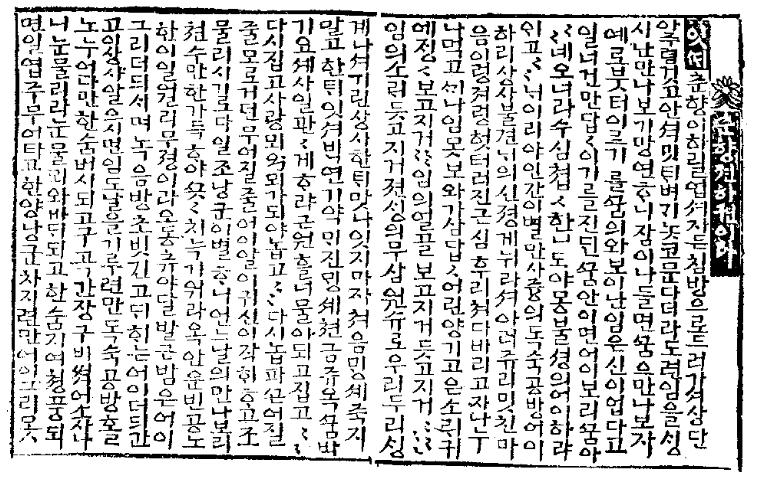
Chunhyangjeon (Korean: 춘향전; Hanja: 春香傳), also known as *The Story of Chunhyang* or *The Tale of Chunhyang*, is a classic Korean love story and folk tale. It originates from the pansori performance *Chunhyangga*, the most renowned of the five surviving pansori tales. Neither the author nor the exact date of composition is known, but the story reached its current form sometime between 1694 and 1834.
The main characters include Seong Chunhyang, the beautiful and talented daughter of a former gisaeng named Wolmae; Yi Mongryong, the intelligent and handsome son of a local magistrate; Hyangdan, Chunhyang’s loyal servant; Bangja, Mongryong’s servant; and Byeon Hakdo, the corrupt official who replaces Mongryong’s father.
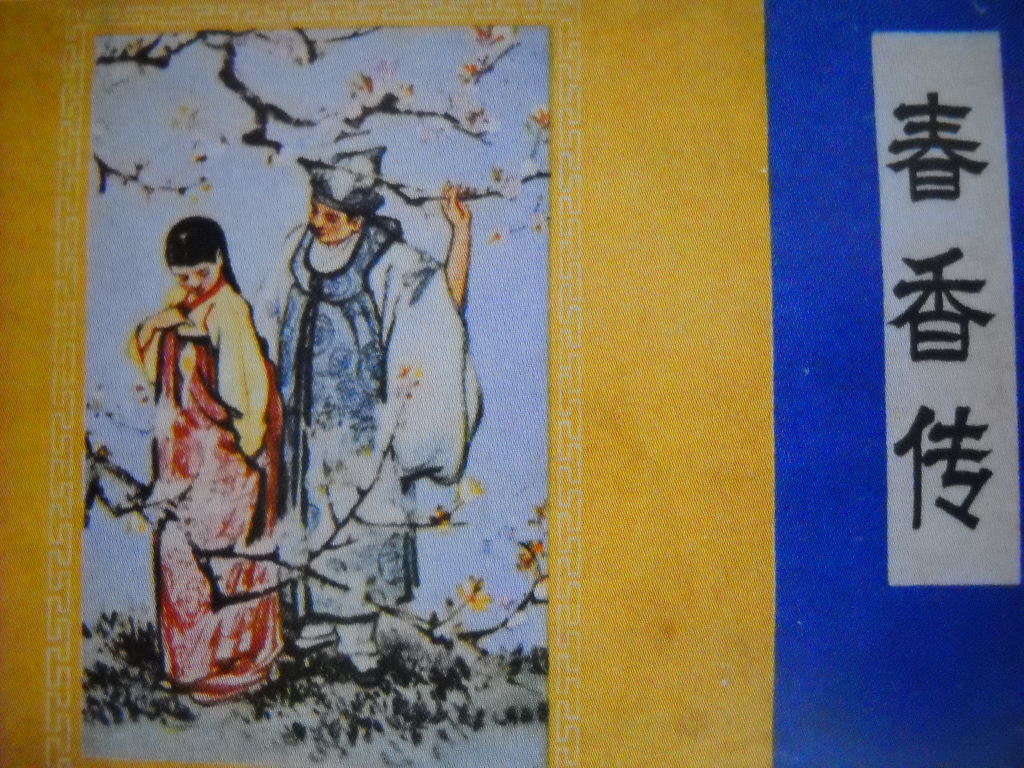
The plot begins when Yi Mongryong, while taking a break from studying, sees Chunhyang on a swing and falls in love at first sight. After she refuses his initial summons, he asks her mother, Wolmae, for permission to marry, and the two wed that same day. When Mongryong’s father is transferred to Hanyang (modern-day Seoul), Mongryong must leave Chunhyang behind. She gives him a ring as a token of her love and vows to remain faithful until his return.
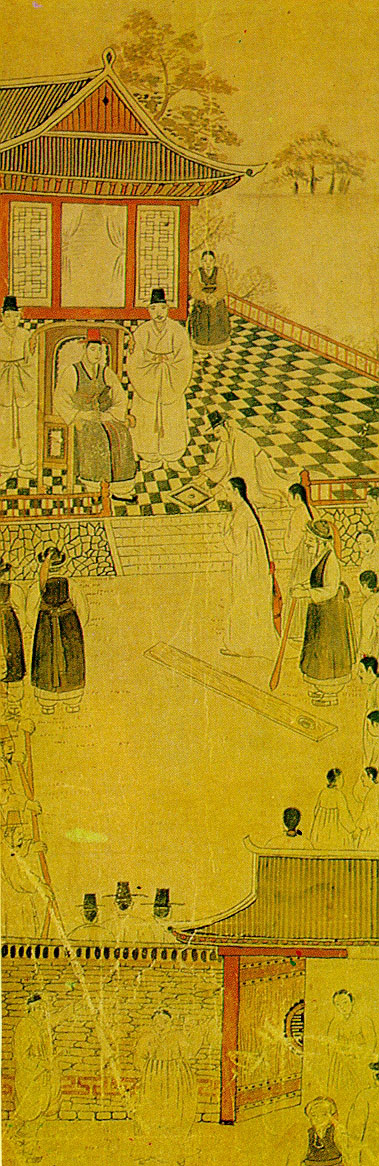
After Mongryong leaves, the new magistrate, Byeon Hakdo, arrives. Greedy and selfish, he wastes time with gisaengs and summons Chunhyang because of her beauty. Though she is not a gisaeng, Byeon treats her as one due to her mother’s past. When Chunhyang refuses to serve him, claiming she has one true love, Byeon imprisons her and plans to punish her on his birthday.
Meanwhile, Yi Mongryong wins first place in a state examination and becomes a secret royal inspector, or *amhaengeosa*, tasked with investigating corrupt officials. Disguised as a beggar, he returns to Chunhyang’s village and learns of Byeon’s abuses. Despite his shabby appearance, Chunhyang still loves him and asks her mother to care for him. Mongryong crashes Byeon’s birthday party, recites a satirical poem about his misconduct, and then reveals his true identity, punishing Byeon. When Chunhyang fails to recognize him, he tests her fidelity by asking her to become his gisaeng; she refuses again. Moved by her loyalty, he shows her the ring, and the two are reunited, living happily ever after.
- Field
- Korean folk tale / pansori
- Nationality
- Korean
- Known for
- Love story between a courtesan's daughter and a government official's son; punishment of a corrupt official; female integrity
- Date of composition
- Unknown; present form took shape between 1694 and 1834
Lore & Background
The tale centers on Seong Chunhyang, the beautiful and talented daughter of a former gisaeng, Wolmae, and Yi Mongryong, the intelligent and handsome son of a government magistrate. They fall in love at first sight when Mongryong sees Chunhyang on a swing, and they marry with Wolmae's permission. When Mongryong's father is transferred to Hanyang (Seoul), Mongryong must leave Chunhyang, who gives him a ring as a token and vows to remain faithful. After his departure, the corrupt replacement official Byeon Hakdo arrives, summons Chunhyang, and orders her to serve as a gisaeng. She refuses, citing her true love, and is imprisoned. Mongryong later wins first place in a state examination and becomes a secret royal inspector (Amhaengeosa). Disguised as a beggar, he returns, learns of Byeon's abuses, and crashes Byeon's birthday celebration. He reveals his identity, punishes Byeon, and tests Chunhyang's fidelity by asking her to become his gisaeng. When she refuses again, he shows her the ring, and they reunite happily.
Reader's Guide
Chunhyangjeon holds a significant place in Korean cultural history as one of the best known love stories and folk tales. Its origins in the pansori tradition, specifically Chunhyangga, link it to a vital form of Korean oral performance. The tale reflects its society by addressing class divisions—the love between a courtesan's daughter and a government official's son—and by providing vicarious pleasure to common people through the punishment of a greedy lord and the upholding of female integrity, a traditional Korean conservative moral. The unknown authorship and the long period of formation (1694–1834) suggest a collective, evolving narrative that resonated across social strata. Its enduring popularity underscores its role in shaping Korean literary and moral identity, emphasizing loyalty, justice, and the triumph of love over social barriers.
Did You Know?
- Chunhyangjeon is based on the pansori Chunhyangga, the most famous of the five surviving pansori tales.
- The date of composition and author are unknown; the present form took shape between 1694 and 1834.
- The main female character, Seong Chunhyang, is the daughter of a gisaeng named Wolmae.
- Yi Mongryong becomes a secret royal inspector (Amhaengeosa) after winning first place in a state examination.
Origins and the Pansori Tradition
Chunhyangjeon, rendered in Korean as 춘향전 and in Hanja as 春香傳, stands as one of the most beloved love narratives in Korean literary tradition. Its roots stretch back to Chunhyangga, a sung narrative work belonging to the pansori genre. Among the five pansori tales that have survived to the present day, Chunhyangga is widely regarded as the most celebrated, and the written tale we know today grew directly out of that oral performance tradition. What makes the work's origins particularly fascinating is the complete absence of a named author and a fixed date of composition. Scholars can only bracket the period during which the text assumed its current shape, placing that window somewhere between 1694 and 1834. This open-ended authorship actually reinforces the story's identity as a folk property rather than the product of a single literary mind. The tale belongs to the collective imagination of Korea, passed down, reshaped, and refined across generations until it crystallized into the form that continues to captivate readers and audiences to this day.
A Love That Defies Convention
The story opens with Yi Mongryong, a studious young man and son of a government magistrate, stepping outside for fresh air and catching sight of Chunhyang on a swing. The moment is electric: he is struck by her beauty and falls in love instantly. Yet Chunhyang, the daughter of the gisaeng Wolmae, is no passive object of desire. When his servant Bangja delivers a summons on his behalf, she flatly refuses. Mongryong must then approach her mother directly to seek permission for marriage, and once Wolmae consents, the couple wed that very day. Their happiness is short-lived. Mongryong's father is transferred to Hanyang, the capital, and he must leave his bride behind. Before departing, Chunhyang presses a ring into his hand as a pledge of her devotion, vowing to remain faithful and wait for his return. The tone shifts when Byeon Hakdo, a corrupt and self-indulgent replacement magistrate, arrives in the village. He summons Chunhyang, treating her as though she were a gisaeng simply because her mother once was, and when she defiantly refuses to serve him, he locks her in a cell and schedules her public punishment for his birthday.
The Beggar, the Birthday, and the Ring
Mongryong's triumph at the state examination earns him first place and a commission as an Amhaengeosa, a secret royal inspector tasked with investigating and prosecuting corrupt officials under the king's authority. Disguised as a destitute beggar, he returns to Chunhyang's village to uncover the full extent of Byeon's abuses. In a moment of extraordinary tenderness, Chunhyang, still unable to identify the ragged stranger before her, asks her mother to look after him with care. The story's climax arrives at Byeon's birthday celebration. Mongryong storms into the festivity uninvited and recites a biting satirical poem exposing the magistrate's misdeeds. Byeon, oblivious to the poem's true meaning, fails to grasp its import. Mongryong then reveals his true identity and delivers justice. In a final, deliberate test of her loyalty, he asks Chunhyang to become his gisaeng. She, still not recognizing him, refuses with the same unyielding resolve she showed against Byeon. Only when a servant produces the ring she had given him years earlier does the truth break through. The shock of recognition gives way to reunion, and the couple lives happily ever after.
A Mirror Held Up to Society
Beneath its romantic and dramatic surface, Chunhyangjeon functions as a pointed commentary on the social hierarchies of its era. The central pairing—a gisaeng's daughter wed to the son of a government official—immediately foregrounds the tension between class and personal worth. The tale's emotional payoff for ordinary audiences likely lay in watching two lovers transcend the rigid boundaries of social standing and in seeing a greedy, self-serving lord brought to account by the very system he exploited. Chunhyang's refusal to submit to Byeon, her insistence on a single true love, and her willingness to face imprisonment rather than compromise her integrity embody a conservative moral ideal that the text presents as the highest feminine virtue. The story also carries an implicit democratic resonance: although no single author is credited, the narrative seems to have been shaped by voices from across Korean society, giving common people a vehicle for vicarious satisfaction against the powerful. In this way, the tale endures not merely as a love story but as a cultural statement about justice, dignity, and the limits of authority.
Gallery
Frequently Asked Questions
What is Chunhyangjeon?
Chunhyangjeon is a classic Korean folk tale that follows the love between Seong Chunhyang, daughter of a former gisaeng, and Yi Mongryong, son of a local magistrate. It is best known through its performance as Chunhyangga, the most celebrated of the five surviving pansori epics.
What makes Chunhyang's character stand out in the story?
Chunhyang is defined by her fierce loyalty and moral integrity, choosing to endure a corrupt official's threats rather than abandon the man she loves. Her refusal to yield to social pressure and power makes her one of the most iconic heroines in Korean literature.
How does the story of Chunhyang end?
After surviving imprisonment and steadfastly rejecting the corrupt official's demands, Chunhyang is vindicated when Mongryong returns with official authority. The corrupt official is punished, and the couple is finally united in marriage.
Why is Chunhyangjeon important in Korean culture?
The tale is regarded as the pinnacle of the pansori tradition and embodies enduring themes of love, fidelity, and justice that cross social-class boundaries. Its present form crystallized between 1694 and 1834, and it continues to be performed, adapted, and studied to this day.
What is the original genre and source of Chunhyangjeon?
The story originates as a pansori narrative-singing performance called Chunhyangga, with no known single author or exact date of composition. It belongs to the oral storytelling tradition of Joseon-era Korea and is one of only five pansori tales that have survived to the present.
More in Korean folklore 1-24
Spotted an error? Know more?
Reader corrections go straight into our review queue. Suggest an edit · How this site is sourced