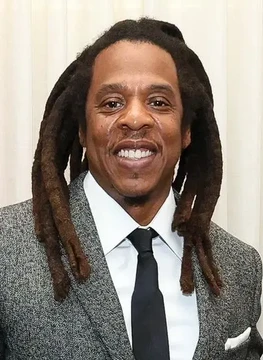
Missy Elliott
She made hip-hop wear the future and made the future rap back.

Together they bookend the creative peak of that decade—one the architect, the other the deconstructor.
Quick Facts
- Birth Name
- Melissa Arnette Elliott
- Alias
- Misdemeanor / Miss E
- Birth Date
- 1 July 1971
- Birth Place
- Portsmouth, Virginia, U.S.
- Years Active
- 1988–present
- Background
- solo_singer
- Occupations
- Rapper / singer / songwriter / record producer / music executive
- Genre
- Hip-hop / R&B / progressive rap / neo soul
- Discography
- Recording · production
- Label
- The Goldmind Inc. / East West / Elektra / Atlantic
- Past Member Of
- Swing Mob · Sista
Facts from the source article.
Lore & Background
Missy Elliott arrived in the hip-hop consciousness in the mid-1990s as a backup vocalist and songwriter, quietly building the architecture behind other artists' tracks before stepping into the spotlight. Her 1997 debut, Supa Dupa Fly, detonated across the culture: the title track's stuttering, chopped vocal production (crafted with Timbaland) and her platform-shoe, headgear-laden stage presence told the audience that rap was no longer a single lane. She wasn't performing a genre; she was expanding its perimeter. Through the 2000s, Missy kept pushing further into uncharted territory—collaborating with artists across R&B, pop, and electronic music, writing and producing for other stars, and refusing to let the industry box her into a single decade's sound. Her fashion became inseparable from her music: each single cycle introduced a new silhouette, a new texture, a new way of occupying space on a stage. In a genre where image was often secondary to the mic, she made the body itself an instrument. Her presence in the culture ensured that the late-'90s/early-'00s peak was not a monologue but a conversation, and that the conversation included someone who dressed like a satellite and rapped like a thunderclap.
Reader's Guide
In the constellation of the late-'90s and early-'00s hip-hop scene, Missy Elliott and Jay-Z orbit the same gravitational center without ever needing to collide. Their bond is less a duet than a shared declaration: that this era would be the most creatively restless period in the genre's history. While Jay-Z was building Roc-A-Fella into a label, sharpening his pen into a scalpel, and constructing the business machinery that would define a generation of rappers, Missy was doing something the industry had no playbook for—turning a rap performance into a full sensory event, where the beat, the fashion, the choreography, and the attitude were all authored by one person. Their intersection lives in the culture's collective memory rather than in a single shared track. They were contemporaries who raised the ceiling for each other by existing at full power simultaneously. When Jay-Z dropped a verse that dissected a city block, Missy was in the next venue making the audience feel like they'd been teleported to a planet where the beat was the weather. The pairing matters because it reminds fans that the era's golden age wasn't one voice—it was a chorus of radically different voices all insisting, in their own language, that hip-hop could be anything. It was a room full of geniuses, each one building a different wing of the same cathedral.
More in Band Members & Collaborators
Elsewhere in Jay-Z
Spotted an error? Know more?
Reader corrections go straight into our review queue. Suggest an edit · How this site is sourced