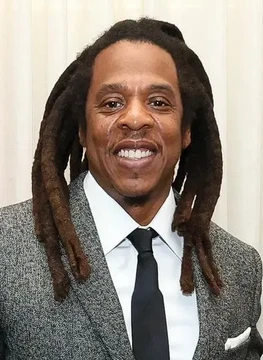
Akon
The voice that turned a Jay-Z bar into a stadium anthem.

Collision Conf · via Wikipedia: Akon · CC BY 2.0
Akon (born Aliaune Damala Badara Akon Thiam) is a Senegalese-American singer, songwriter, and performer whose instantly recognizable vocal timbre and high-energy stage persona made him one of the defining voices of mid-2000s hip-hop and R&B. Their intersection sits at the crossroads of two very different creative philosophies: Jay-Z's dense, bar-for-bar lyricism and Akon's instinctive, melody-first approach to vocal performance. When the two shared a record, the result was a collision of precision and raw charisma that captured the late-2000s moment when hip-hop was actively absorbing pop and R&B energy into its core.
Quick Facts
- Other names
- A-Kon, El Negreeto
- Birth name
- Aliaune Damala Bouga Time Puru Nacka Lu Lu Lu Badara Akon Thiam
- Born
- 16 April 1973
- Birthplace
- St. Louis, Missouri, U.S.
- Father
- Mor Thiam
- Occupation
- Singer
- songwriter
- record producer
- businessman
- philanthropist
- Organization
- Akon Lighting Africa
- Children
- 9
Facts from the source article.
Background
Akon arrived in the American music scene carrying a vocal identity so specific and immediate that listeners could identify him within two syllables. Born in St. Louis, Senegal, and raised in the United States, he brought a cross-continental energy to hip-hop that felt both familiar and startlingly fresh. His style—part call-and-response, part melodic chant, all swagger—gave producers a ready-made hook engine, and in the mid-2000s he was everywhere: on radio, in clubs, on the covers of magazines.
Within Jay-Z's orbit, Akon functioned less as a peer lyricist and more as a sonic catalyst. The Black Album era was when Jay-Z was pushing his sound toward sleeker, more production-driven territory, and Akon's vocal presence on 'U Don't Know' exemplified that shift. The track's architecture—Timbaland's layered beat, Jay-Z's rapid-fire delivery, then Akon stepping in with a singable, almost hypnotic refrain—showed how a single featured verse could reframe an entire song's emotional arc.
Culturally, the pairing mattered because it demonstrated that Jay-Z's catalog could accommodate a vocalist whose strength was pure, unapologetic groove rather than technical rapping. It opened a door for a generation of artists who understood that hip-hop's future wasn't just in the pen but in the pocket, the melody, the moment a crowd loses track of the words and just moves.
More in People
Elsewhere in Jay-Z
Spotted an error? Know more?
Reader corrections go straight into our review queue. Suggest an edit · How this site is sourced