Yamagata Prefecture
A prefecture in Tōhoku, Japan, known for cherries and Dewa Sanzan.

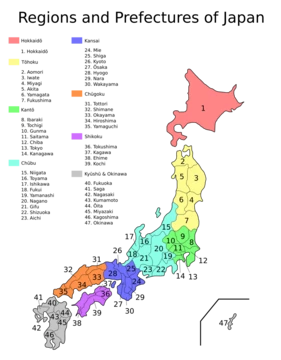
Yamagata Prefecture sits on the western coast of Honshu, in Japan’s Tōhoku region, facing the Sea of Japan. As of February 2025, its population is 1,005,926, spread across 9,325 square kilometers. The prefecture borders Akita to the north, Miyagi to the east, Fukushima to the south, and Niigata to the southwest. Its capital, Yamagata City, is the largest urban center, followed by Tsuruoka, Sakata, and Yonezawa. Historically, Yamagata made up the southern half of Dewa Province, alongside Akita. It is known for the Three Mountains of Dewa, which feature the Haguro Five-story Pagoda—a designated National Treasure. About 17 percent of the prefecture’s land falls within Natural Parks.
The area was originally home to the Ezo people. During the Heian period, the Fujiwara family held sway. In the Edo period, Yamagata City thrived as a castle town and post station, famed for beni, a red safflower dye used in silk production. The poet Matsuo Bashō visited in 1689 during his journey through northern Japan.
Mountain ranges mark all of Yamagata’s borders, with most residents living on a central plain. The climate brings long, humid summers and snowy winters; spring and autumn are brief. Winters can see heavy snow, especially at higher elevations—the Gassan mountains sometimes receive up to 3,000 centimeters of snow in a season. Summers often top 30°C, and typhoons may pass through from August to October.
The prefecture leads Japan in cherry and pear production, and also grows grapes, apples, peaches, melons, persimmons, and watermelons. The 2020 census recorded a population of 1,068,027. By October 2024, 10.4 percent of residents were under 15, 54.0 percent were between 15 and 64, and 35.6 percent were 65 or older. Population growth peaked after World War II, then slowed and began a steady decline. In May 2025, the prefectural government reported the estimated population had dropped below one million—the lowest since the 1920 census.
Yamagata City serves as the region’s hub, with shops, restaurants, and Western-style hotels near the main station. Bus and train lines connect it to surrounding towns. Nightlife centers on the station area and the Nanukamachi district downtown. Major festivals include the Yamagata Hanagasa Festival in early August, drawing up to 300,000 spectators, and the bi-annual Yamagata International Documentary Film Festival in October. In February, Yonezawa hosts a snow lantern festival at Uesugi Shrine, with hundreds of candles lighting paths carved into the snow.
Notable figures from Yamagata include daimyō Date Masamune, novelist Inoue Hisashi, singer-songwriter Kazunobu Mineta, politician Ogata Taketora, Olympic wrestler Shozo Sasahara, silent film actress Shizue Tatsuta, and manga artist Yoshihiro Togashi.
- population
- 1,005,926 (1 February 2025)
- area
- 9,325 km2 (3,600 sq mi)
- capital
- Yamagata
- major_cities
- Tsuruoka, Sakata, Yonezawa
- neighbors
- Akita, Miyagi, Fukushima, Niigata
- natural_parks_percentage
- 17%
Verified Timeline
Lore & Background
The aboriginal Ezo people once inhabited the area now known as Yamagata. Yamagata and Akita Prefecture were known as Dewa Province until the Meiji Restoration. During the Heian period (794–1185), the Fujiwara family ruled the area. Yamagata City flourished during the Edo period (1603–1867) due to its status as a castle town and post station, famous for beni (red safflower dye used in the production of handspun silk). In 1689, the famous haiku poet, Matsuo Bashō visited Yamagata during his five-month trip to the northern regions of Japan. Yamagata prefecture experienced its greatest growth period following the end of World War II, but then quickly began to slow down and eventually decline steadily. In May 2025, the Yamagata prefectural government announced that the estimated population had fallen below 1 million. This marks the lowest population level recorded in the prefecture since the 1920 census.
Reader's Guide
Yamagata Prefecture is located in the southwest corner of Tōhoku, facing the Sea of Japan. All of its boundaries are marked by mountains, with most of the population residing in a limited central plain. As of 31 March 2020, 17 percent of the total land area was designated as Natural Parks, namely the Bandai-Asahi National Park; Chōkai, Kurikoma, and Zaō Quasi-National Parks; and Goshōzan, Kabusan, Kennan, Mogamigawa, Shōnai Kaihin, and Tendō Kōgen Prefectural Natural Parks. The climate is characterized by long, hot, and humid summers and long, snowy winters. Yamagata Prefecture is the largest producer of cherries and pears in Japan. A large quantity of other kinds of fruits such as grapes, apples, peaches, melons, persimmons and watermelons are also produced. The largest festival is the Yamagata Hanagasa Festival which takes place in Yamagata City on the first weekend in August, when thousands of people perform the hanagasa dance and attracts up to 300,000 spectators. Yamagata City is the home of the bi-annual Yamagata International Documentary Film Festival in October. The prefecture is known for its local dialect Yamagata-ben, used for comedic purposes in the 2004 movie Swing Girls.
Did You Know?
- Yamagata Prefecture is the largest producer of cherries and pears in Japan.
- The Haguro Five-story Pagoda, located at the base of Mount Haguro, is a recognised National Treasure of Japan.
- The Yamagata Hanagasa Festival attracts up to 300,000 spectators each year.
- In May 2025, the estimated population of Yamagata Prefecture fell below 1 million, the lowest since the 1920 census.
- The 2004 film Swing Girls, set in Yamagata, uses the local dialect Yamagata-ben for comedic effect.
Frequently Asked Questions
What is Yamagata Prefecture?
Yamagata is a Tōhoku-region prefecture on Honshu's western Sea of Japan coast, occupying the southern half of the historic Dewa Province. Its administrative seat is the city of Yamagata, with Tsuruoka, Sakata, and Yonezawa as other major urban centers.
What is Yamagata Prefecture known for?
The prefecture is best recognized for its cherry and pear orchards, the sacred Three Mountains of Dewa (Dewa Sanzan), and the colorful Yamagata Hanagasa Festival held each summer.
Where is Yamagata Prefecture located?
It sits along the Sea of Japan coast in the Tōhoku region, bordered by Akita to the north, Miyagi and Fukushima to the south, and Niigata to the west.
What is the Haguro Five-story Pagoda?
It is a National Treasure perched within the Dewa Sanzan mountain complex, widely regarded as one of the most iconic religious landmarks in the prefecture.
What are Yamagata Prefecture's key stats?
As of early 2025, roughly 1.0 million people live across 9,325 km², with about 17% of the land set aside as natural parks.
More in Japanese Prefectures 1-24
Spotted an error? Know more?
This is a living reference — every entry is fact-audited, and reader corrections feed straight into our audit queue. Suggest an edit · See this site's audit record