Toyama Prefecture
Industrial prefecture on the Japan Sea coast with rare glaciers.

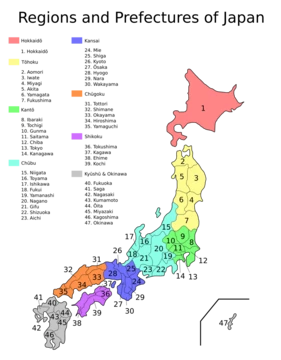
Toyama Prefecture (富山県, Toyama-ken) sits in the Chūbu region of Honshu, Japan, and is part of the historic Hokuriku area. Its capital and largest city is Toyama, with other major cities including Takaoka, Imizu, and Nanto. The prefecture covers 4,247.61 km² and, as of January 2025, has a population of 993,848. It borders Ishikawa to the west, Gifu to the south, Nagano to the east, and Niigata to the northeast.
Most of Toyama’s residents live along Toyama Bay, one of Japan’s largest bays. The prefecture is the leading industrial hub on the Sea of Japan coast, thanks to cheap electricity from abundant hydroelectric resources. It also holds the only known glaciers in East Asia outside of Russia, first identified in 2012. About 30% of its land is protected as national parks, including Chūbu-Sangaku and Hakusan National Parks, Noto Hantō Quasi-National Park, and six Prefectural Natural Parks.
Historically, Toyama was Etchū Province. After the han system was abolished in 1871, it became Niikawa Prefecture, though Imizu District was briefly part of Nanao Prefecture. In 1872, Imizu returned from what would become Ishikawa Prefecture. Niikawa was merged into Ishikawa in 1876, but the merger was reversed in 1881, re-establishing the area as Toyama Prefecture. The Itai-itai disease struck Toyama around 1950.
Toyama has the fewest municipalities of any Japanese prefecture—10 cities, 2 districts, 4 towns, and 1 village—following mergers in the 2000s. Its governors since 1947 include Tetsuji Tachi, Takekuni Takatsuji, Minoru Yoshida, Kōkichi Nakata, Yutaka Nakaoki, Takakazu Ishii, and Hachirō Nitta, who took office in November 2020.
Agriculture benefits from water sources originating from Mount Tate; in 2014, Toyama produced about 2.5% of Japan’s rice. Fisheries thrive along the Sea of Japan coast. Manufacturing is led by a historic pharmaceutical industry, followed by electronic parts and devices (including industrial robots and general machinery), and metal products like aluminum and copper. The Kurobe Dam on the Kurobe River generates electricity for Kansai Electric Power Company.
Demographically, Toyama’s population has remained relatively stable since 1950. Transportation includes the Hokuriku Shinkansen, several JR lines, the Ainokaze Toyama Railway, the Manyōsen tram system, and Toyama Airport, with domestic flights to Tokyo and Sapporo and international routes to Dalian and Shanghai.
Tourist sites include the Tateyama Kurobe Alpine Route, Kurobe Gorge Railway, Unazuki Onsen, Gokayama (a UNESCO World Heritage Site), and Mitsui Outlet Park. Cultural treasures include Zuiryū-ji Temple in Takaoka, a National Treasure of Japan. Festivals range from the All Japan Chindon Competition in spring to the Owara Kaze no Bon in fall. Regional foods include trout sushi, white shrimp, matured yellow tail, firefly squid, and fish paste. Local sake brands include Tateyama, Narimasa, Masuizumi, and Sanshoraku. Sports teams based in Toyama are Kataller Toyama (football), Toyama Grouses (basketball), Toyama Thunderbirds (baseball), and Takaoka Mariners (rugby union). Internationally, Toyama has sister-region ties with Liaoning Province, São Paulo State, Oregon State, Primorsky Region, Basel-Stadt, and Andhra Pradesh State.
- Population
- 993,848 (1 January 2025)
- Area
- 4,247.61 km²
- Capital
- Toyama
- Region
- Chūbu, Honshu
- Major Industries
- Pharmaceuticals, electronics, metal products
- Notable Feature
- Only known glaciers in East Asia outside Russia
Verified Timeline
Lore & Background
Toyama Prefecture occupies a geographic area of 4,247.61 square kilometers on the coast of the Sea of Japan, part of the historic Hokuriku region of Honshu. Its landscape is dominated by the Tateyama mountain range, and the prefecture is home to the only known glaciers in East Asia outside of Russia, first recognized in 2012. Thirty percent of the prefecture’s land is designated as national parks, including the Chūbu-Sangaku and Hakusan National Parks, as well as the Noto Hantō Quasi-National Park and six prefectural natural parks. The majority of the population lives along Toyama Bay, one of Japan’s largest bays. Toyama is the leading industrial prefecture on the Japan Sea coast, benefiting from cheap electricity generated by abundant hydroelectric resources, notably the Kurobe Dam on the Kurobe River. The prefecture is famous for its historical pharmaceutical industry, which remains a top manufacturing sector, followed by electronic parts and industrial robots, and metal products such as aluminum and copper. Agriculture relies on abundant water from Mount Tate, contributing about 2.5% of Japan’s rice production in 2014, while fisheries operate along the coastline. Toyama Prefecture borders Ishikawa to the west, Gifu to the south, Nagano to the east, and Niigata to the northeast. After the 2000s mergers, it has the fewest municipalities of any Japanese prefecture: ten cities, two districts, four towns, and one village.
Reader's Guide
Toyama Prefecture is the leading industrial prefecture on the Japan Sea coast, with cheap electricity from abundant hydroelectric resources. It contains the only known glaciers in East Asia outside of Russia, first recognized in 2012. 30% of the prefecture's area is designated as national parks, including Chūbu-Sangaku and Hakusan National Parks, Noto Hantō Quasi-National Park, and six Prefectural Natural Parks. The Kurobe Dam on the Kurobe River generates electricity for the Kansai Electric Power Company. Toyama is famous for its historical pharmaceutical industry, which remains a top manufacturing industry in terms of manufacturing shipment value, followed by electronic parts and devices and metal products. Culturally, Toyama features UNESCO World Heritage sites such as Gokayama (Nanto City) and National Treasures like Zuiryū-ji Temple (Takaoka City). Regional foods include trout sushi (masuzushi), white shrimp (shiro ebi), matured yellow tail (buri), firefly squid (hotaru ika), and fish paste (kamaboko). The prefecture has 10 cities, 2 districts, 4 towns, and 1 village, the fewest municipalities of any prefecture in Japan due to mergers in the 2000s.
Did You Know?
- Toyama Prefecture contains the only known glaciers in East Asia outside of Russia, first recognized in 2012.
- The Itai-itai disease occurred in Toyama around 1950.
- Toyama has the fewest municipalities of any prefecture in Japan, with 10 cities, 2 districts, 4 towns, and 1 village.
- The Kurobe Dam, located on the Kurobe River in Toyama, generates electricity for the Kansai Electric Power Company.
- Toyama Prefecture is part of the historic Hokuriku region, and the majority of its population lives on Toyama Bay, one of the largest bays in Japan.
Frequently Asked Questions
Who is Toyama Prefecture?
Toyama is a coastal prefecture in the Chūbu region of Honshu, administered from the city of Toyama. As of early 2025, roughly 994,000 residents live across its approximately 4,248 square kilometers of land.
What is Toyama Prefecture's role in Japan's economy?
It carries the distinction of being the leading industrial prefecture along the Japan Sea coastline, with pharmaceuticals, electronics, and metalworking forming the core of its manufacturing output.
What is Toyama Prefecture's most unique natural feature?
The prefecture shelters the only confirmed glaciers in all of East Asia that sit outside Russian territory, making it a singular alpine destination on the continent.
How does Toyama Prefecture's geography support its identity?
Its moderate 4,247.61 km² footprint is enough to host both dense industrial zones along the coast and the high mountain terrain that sustains its rare glaciers, giving it a striking dual character.
Why is Toyama Prefecture considered important in the broader Japanese context?
Its combination of top-tier Japan Sea industrial output and the sole non-Russian East Asian glaciers gives it both economic weight and natural-heritage significance that few other prefectures can match.
More in Japanese Prefectures 1-24
Spotted an error? Know more?
This is a living reference — every entry is fact-audited, and reader corrections feed straight into our audit queue. Suggest an edit · See this site's audit record