Shimane Prefecture
Second-least populous prefecture of Japan, rich in myth and history.

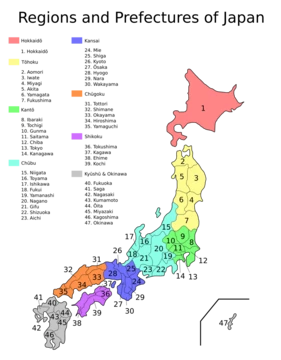
Shimane Prefecture (島根県, Shimane-ken) sits in the Chūgoku region on the island of Honshu, Japan. With a population of 665,205 as of February 1, 2021, it is the country’s second-least populous prefecture. Its area covers 6,708.26 square kilometers. To the southwest lies Yamaguchi Prefecture, Hiroshima Prefecture borders it on the south, and Tottori Prefecture lies to the east. The capital and largest city is Matsue, followed by Izumo, Hamada, and Masuda. The Lake Shinji-Nakaumi metropolitan area, centered on Matsue, holds roughly 600,000 people, making it Japan’s third-largest urban zone along the Sea of Japan coast, behind only Niigata and Greater Kanazawa. Shimane is known for Izumo-taisha, one of the oldest Shinto shrines, and the Tokugawa-era Matsue Castle.
Shimane’s history begins in Japanese mythology. The god Ōkuninushi was said to live in the old province of Izumo, now part of Shimane, and Izumo Shrine in the city of Izumo honors him. For centuries, the area was split into three provinces: Iwami, Izumo, and Oki. This arrangement lasted until the han system was abolished in 1871. During the Nara period, the poet Kakinomoto no Hitomaro wrote about Shimane’s nature while serving as royal governor. In the Kamakura period (1185–1333), the shogunate exiled emperors Go-Toba and Godaigo to Oki. Emperor Go-Daigo later escaped from Oki and gathered supporters, successfully rallying against the shogunate.
During the Muromachi period (1336–1573), the Kyōgoku clan controlled Izumo and Oki. After the Ōnin War, the Amago clan grew powerful from Gassantoda Castle, while the Masuda clan dominated Iwami Province. The Iwami Ginzan Silver Mine lay between their territories, sparking many battles over the silver. In 1566, Mōri Motonari conquered Izumo, Iwami, and Oki. After the Battle of Sekigahara in 1600, Horio Yoshiharu took over Izumo and Oki, as Mōri lost. Yoshiharu moved to build Matsue Castle instead of Gassan-Toda, and it was completed shortly after his death. In 1638, Matsudaira Naomasa, grandson of Tokugawa Ieyasu, became ruler when the Horio clan had no heir; his family governed until the han system ended. Iwami was split into three parts: the mining district under direct shogunate control, the Hamada clan region, and the Tsuwano clan region. The Iwami Ginzan, now a UNESCO World Heritage Site, was one of Japan’s largest silver mines by the early 1600s. In the Meiji Restoration, the Hamada clan sided with the shogunate, and its castle was burned down. The Tsuwano clan, then ruled by the Matsudaira, supported the emperor.
In 1871, the abolition of the han system placed the old Shimane and Hamada Provinces into the current Shimane Prefecture. Later that year, Oki became part of Tottori. In 1876, Hamada Prefecture merged into Shimane, and Tottori Prefecture was added as well. However, in 1881, the current Tottori Prefecture was separated, forming today’s borders.
Shimane lies on the Sea of Japan side of the Chūgoku region. Its mountainous terrain limits rice farming mostly to the Izumo plain, near the city of Izumo. Another major feature is the Shimane Peninsula, which stretches from Izumo to Sakaiminato in Tottori Prefecture. This peninsula creates two brackish lakes: Lake Shinji and Nakaumi, with Daikon Island located in Nakaumi. Off the main island of Honshu, the Oki Islands belong to Shimane and are part of the Daisen-Oki National Park. Shimane also claims the Liancourt Rocks (Takeshima), a territory disputed with South Korea. As of April 1, 2012, 6% of the prefecture’s land was designated as Natural Parks, including Daisen-Oki National Park, Hiba-Dōgo-Taishaku and Nishi-Chūgoku Sanchi Quasi-National Parks, and eleven Prefectural Natural Parks. Most major cities sit along the coast or a river.
Eight cities make up Shimane, with Matsue the largest and Gōtsu the smallest. Cities like Masuda, Unnan, Yasugi, and Gōtsu saw slight population increases due to mergers in the early 2000s. Towns and villages, though greatly reduced in number through mergers, still hold about one-third of the prefecture’s population.
Shimane has a subtropical climate. Winters are cloudy with light snow, and summers are humid. The average annual temperature is 14.6°C (58.3°F). The rainy season, from June to mid-July, brings rain nearly every day. August is the warmest month, averaging 26.3°C (79.3°F). Average annual precipitation is 1,799 millimeters (70.8 inches), higher than Tokyo’s 1,467 mm (57.8 in) and Obihiro’s 920 mm (36.2 in).
Three airports serve Shimane. Izumo Airport, in the city of Izumo, is the largest by passenger traffic and offers regular flights.
- Capital
- Matsue
- Population
- 665,205 (February 1, 2021)
- Area
- 6,708.26 km²
- Region
- Chūgoku region, Honshu
- Major Cities
- Matsue, Izumo, Hamada, Masuda
- Notable Sites
- Izumo-taisha, Matsue Castle, Iwami Ginzan Silver Mine
Verified Timeline
Lore & Background
The history of Shimane starts with Japanese mythology. The Shinto god Ōkuninushi was believed to live in Izumo, an old province in Shimane. Izumo Shrine, which is in the city of Izumo, honors the god. At that time, the current Shimane prefecture was divided into three parts: Iwami, Izumo, and Oki. That lasted until the abolition of the han system took place in 1871. During the Nara period, Kakinomoto no Hitomaro wrote a poem on Shimane's nature when he was sent as the Royal governor. Later on in the Kamakura period (1185–1333), the Kamakura shogunate forced emperors Go-Toba and Godaigo into exile in Oki. Emperor Go-Daigo later escaped from Oki and began rallying supporters against the shogunate, which proved successful. During the Muromachi period (1336–1573), Izumo and Oki were controlled by the Kyōgoku clan. However, after the Ōnin War, the Amago clan expanded power based in Gassantoda Castle and the Masuda clan dominated Iwami Province. The Iwami Ginzan Silver Mine was located between Amago territory and Masuda territory, and there were many battles between the clans for the silver. In 1566 Mōri Motonari conquered Izumo, Iwami, and Oki. In 1600, after over 30 years of Mori control, Horio Yoshiharu entered Izumo and Oki as the result of Battle of Sekigahara, which Mori lost. Following the change, Horio Yoshiharu decided to move to build Matsue Castle instead of Gassan-Toda, and soon after Yoshiharu's death the castle was completed. In 1638, the grandson of Tokugawa Ieyasu Matsudaira Naomasa became the ruler because the Horio clan had no heir, and his family ruled until the abolition of the han system. In 1871, the abolition of the han system placed the old Shimane and Hamada Provinces in the current area of Shimane Prefecture. Later that year, Oki became part of Tottori. In 1876, Hamada Prefecture was merged into Shimane Prefecture. Also, Tottori Prefecture was added in the same year. However, five years later, in 1881, the current portion of Tottori Prefecture was separated and the current border was formed. Shimane Prefecture governs the Oki Islands in the Sea of Japan which juridically includes the disputed Liancourt Rocks (竹島, Takeshima).
Reader's Guide
Shimane Prefecture holds significance as a repository of Japanese mythology and early history, being the legendary home of the god Ōkuninushi and site of Izumo-taisha. Its historical narrative includes imperial exiles, clan warfare over silver mines, and the construction of Matsue Castle. The prefecture's modern boundaries were shaped by the Meiji-era abolition of the han system and subsequent mergers. Economically, the retail industry is the largest employer, employing over 60,000 workers, followed by manufacturing with 49,000 workers. Companies based in Shimane include Izumo Murata Manufacturing, Mitsubishi Agricultural Machinery, and Shimane Fujitsu. Demographically, one-third of the prefecture's population is concentrated in the Izumo-Matsue area, and over two-thirds of the population is on the coastline. Matsue has the smallest population of all 47 prefectural capitals. Shimane also has the largest percentage of elderly people, and had an estimated 743 centenarians per million inhabitants in September 2010, the highest ratio in Japan. Its geography includes the Sea of Japan coastline on the north, the Chūgoku Mountains on the south, and the Oki Islands. The prefecture's legacy lies in its preservation of ancient shrines, castles, and a UNESCO World Heritage silver mine, alongside its role in Japan's regional identity.
Did You Know?
- Shimane Prefecture is the second-least populous prefecture of Japan at 665,205 (February 1, 2021).
- Matsue has the smallest population of all 47 prefectural capitals.
- Shimane had an estimated 743 centenarians per million inhabitants in September 2010, the highest ratio in Japan.
- The Iwami Ginzan Silver Mine is a UNESCO World Heritage Site.
- Shimane Prefecture juridically includes the disputed Liancourt Rocks (竹島, Takeshima).
Frequently Asked Questions
Who is Shimane Prefecture?
Shimane is a coastal prefecture on the western side of Honshu, sitting within the Chūgoku region. Its seat of government and biggest urban center is Matsue, and it ranks as the second-smallest prefecture in Japan by resident count.
What are Shimane Prefecture's powers/role?
The prefecture serves as a spiritual and historical anchor for Japan, hosting Izumo-taisha—one of the nation's most ancient Shinto shrines—alongside the Tokugawa-period Matsue Castle and the historic Iwami Ginzan silver-mining site.
How does Shimane Prefecture's story end?
There is no fixed ending; Shimane continues as a living region of roughly 665,000 people spread across about 6,708 square kilometres. Its ongoing narrative is shaped by tourism, local industry, and the preservation of its mythological heritage.
Why is Shimane Prefecture important?
It holds a unique place in Japanese culture because Izumo-taisha is deeply tied to the creation myths recorded in the Kojiki, making the area a pilgrimage destination for centuries. Beyond religion, the prefecture's silver-mining legacy and castle architecture give it a layered historical identity.
Where does Shimane Prefecture sit among its neighbours?
It occupies the northern shore of the Sea of Japan within the Chūgoku region, with key urban nodes at Matsue, Izumo, Hamada, and Masuda. Its geography bridges the mountainous interior of Honshu to the open coastline.
More in Japanese Prefectures 1-24
Spotted an error? Know more?
This is a living reference — every entry is fact-audited, and reader corrections feed straight into our audit queue. Suggest an edit · See this site's audit record