
New Caledonia
French Pacific territory with a unique legal status and Kanak heritage.
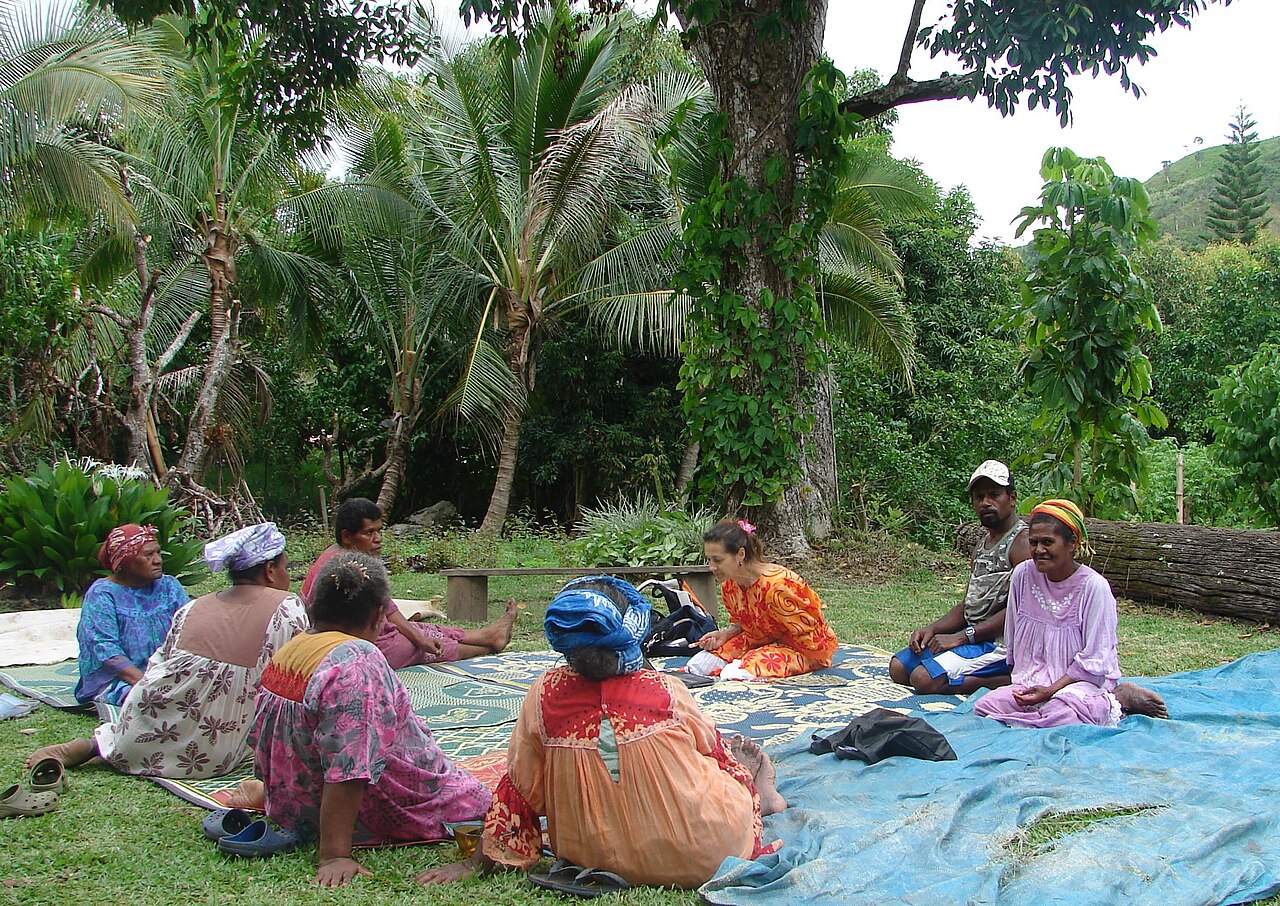
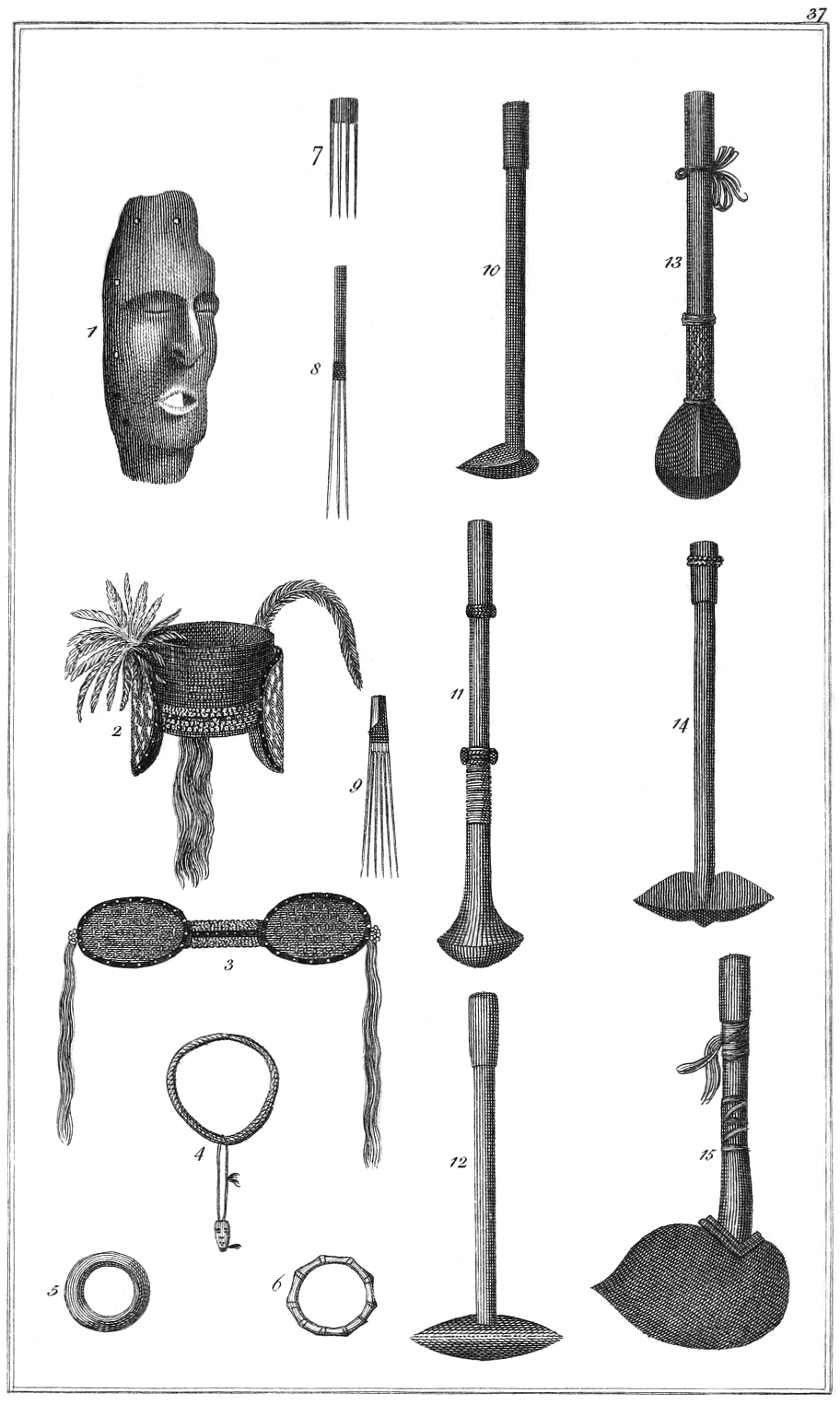
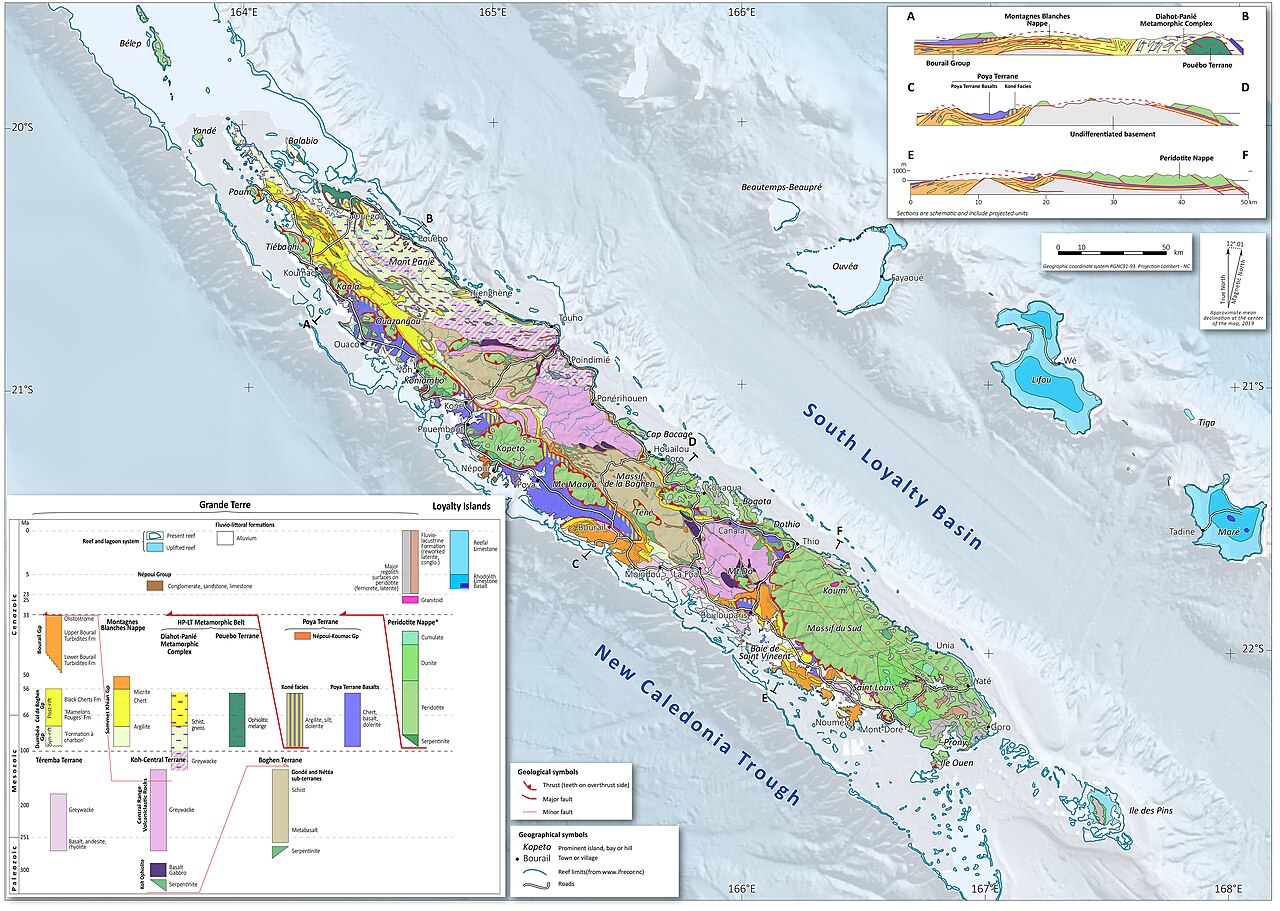
New Caledonia is a French overseas collectivity with a unique legal status, located in the southwest Pacific Ocean about 220 kilometers southwest of Vanuatu and 1,210 kilometers east of Australia, and some 16,100 kilometers from Metropolitan France. The archipelago, part of the Melanesia subregion, comprises the main island of Grande Terre, the Loyalty Islands, the Chesterfield Islands in the Coral Sea, the Belep archipelago, the Isle of Pines, and several remote islets. Grande Terre is often referred to locally by a nickname, while pro-independence Kanak parties use a term derived from the indigenous Melanesian Kanak people, who make up 41% of the population. The territory’s land area of 18,575 square kilometers is divided into three provinces: the North and South Provinces on the mainland, and the Loyalty Islands Province, which includes the inhabited islands of Ouvéa, Lifou, Tiga, and Maré. The capital is Nouméa. New Caledonia’s population of 264,596 (April 2025 census) is diverse; Kanaks predominate in the North and Loyalty Islands Provinces, while the wealthier South Province contains significant European populations (Caldoches and metropolitan French), Kanaks, Wallisians, and smaller groups from Southeast Asia, North Africa, and elsewhere. Geologically, the islands were once part of the submerged continent Zealandia, which separated from Gondwana tens of millions of years ago. Human settlement began with the Lapita culture, skilled navigators and agriculturists, whose first coastal settlements date from around 1100 BC to AD 200. British explorer James Cook sighted the main island in 1774, naming it after Scotland. European contact increased in the 1840s due to sandalwood trade, followed by the exploitative practice of blackbirding, which involved coercing Melanesian islanders into forced labor on plantations and in mines. French colonization began in 1853, and Nouméa was founded the following year. From 1864 to 1897, France used New Caledonia as a penal colony, sending some 22,000 criminals and political prisoners, including participants in the 1871 Paris Commune.
- population
- 271,407 (2019 census)
Quick Facts
- Native Name
- fr · Nouvelle-Calédonie
- Flag Size
- 175
- Flag Type
- Flags
- Flag Link
- Flags of New Caledonia
- Blank Emblem Size
- 60
- Blank Emblem Type
- Emblem
- Blank Emblem Link
- Emblem of New Caledonia
- Motto
- "Terre de parole, terre de partage" / Land of speech, land of sharing
- Map Alt
- Location of New Caledonia
- Map Size
- 290px
- Subdivision Type
- Sovereign state
- Subdivision Name
- France
Facts from the source article.
Lore & Background
In 1988, following widespread political violence between Caldoches and indigenous Kanaks — a period referred to as 'the Events' (French: Les Événements) — the Matignon Agreements were signed, establishing a transition to its current large autonomy as a sui generis collectivity within the French state. This was followed in 1998 by the Nouméa Accord. As part of the Accord, New Caledonia was allowed to hold three referendums to decide on the future status of the territory, with voting rights restricted to indigenous Kanak and other inhabitants living in New Caledonia before 1998. The so-called 'frozen electorate' consists only of those who were already living in New Caledonia in 1998 as well as their children, provided they maintained uninterrupted residence for ten years prior to each election. This deprived later immigrants, whether European or Polynesian, of voting rights. The number of excluded voters increased from 8,000 in 1999 to 18,000 in 2009 and to 42,000 in 2023, by which time almost one national voter out of five was excluded from participating in provincial elections (of 220,000 national voters only 178,000 were eligible).
Reader's Guide
New Caledonia then had three consecutive independence referendums (in 2018, 2020 and 2021). Results of the 2018 and 2020 referendums were 56.6% and 53.2% in favor of remaining part of France with 81% and 85.7% turnout respectively. With 46.7% of the vote in favor of independence and roughly 10,000 votes (of 155,000 participants) separating the two camps at the second referendum, the push for independence was stronger than expected. The Kanak boycotted the 2021 referendum, resulting in a 96.5% victory for the anti-independence camp with 43.9% turnout. In May 2024, protests and riots broke out following a controversial voting reform aiming to change existing conditions which prevent up to one-fifth of the population from voting in provincial elections. The violent protests led to at least 13 deaths, the declaration of a state of emergency on 16 May, deployment of the French army, and the block of the social network TikTok. President Emmanuel Macron visited the island on 22 May and asked local representatives to reach a comprehensive agreement within a month. The state of emergency ended on 28 May. In October 2024, then-French Prime Minister Michel Barnier scrapped the bill, citing the need to restore calm. On 2 December 2024, curfew was officially lifted as the riots were over.
Did You Know?
- The 'frozen electorate' excluded 42,000 voters by 2023, meaning almost one national voter out of five could not participate in provincial elections.
- The 2021 independence referendum was boycotted by most independence supporters, leading to a 96.5% vote to remain part of France with only 43.9% turnout.
- The European Court of Human Rights ruled in 2005 that the restricted electorate did not infringe the right to free elections, as it was part of a 'transitional phase' and 'provisional'.
- President Emmanuel Macron visited New Caledonia on 22 May 2024 and asked local representatives to reach a comprehensive agreement within a month.
- The French government's proposed reform would allow roughly 60% of those currently prevented from voting to join the electorate.
Gallery
More in Islands And Archipelagos 1-24
Spotted an error? Know more?
This is a living reference — every entry is fact-audited, and reader corrections feed straight into our audit queue. Suggest an edit · See this site's audit record