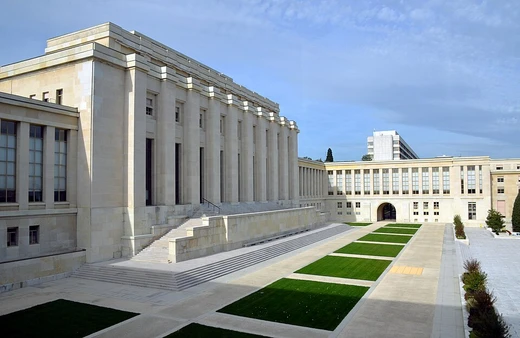
International Red Cross and Red Crescent Movement
Humanitarian movement founded to alleviate suffering and protect human life.
The International Red Cross and Red Crescent Movement originated from the efforts of Swiss businessman Jean-Henri Dunant after the Battle of Solferino in 1859.[1]
Quick Facts
- Abbreviation
- ICRC and IFRC
- Members
- UN (United Nations General Assembly: both ICRC and IFRC)
- Founders
- Henry Dunant
- Gustave Moynier
- Théodore Maunoir
- Guillaume Henri Dufour
- Louis Appia
- Location
- Geneva, Switzerland
- Origins
- Geneva
- Region served
- Worldwide
- Focus
- Humanitarianism
- Method
- Aid
Facts from the source article.
Key facts and history
Before the mid-nineteenth century, there were no organized army nursing systems or protected institutions for battlefield casualties.[1] An international conference in Geneva from 26 to 29 October 1863 adopted resolutions including the foundation of national relief societies and a white armlet bearing a red cross as a protective symbol.[2][3] On 22 August 1864, the First Geneva Convention established legally binding rules guaranteeing neutrality for wounded soldiers and medical personnel.[4][5] The Turkish Red Crescent was founded in the Ottoman Empire in 1868, partly due to disease causing more deaths than battle in the Crimean War.[6]
During World War I, the ICRC monitored compliance with the Geneva Conventions and protested the use of chemical weapons.[7] In World War II, ICRC delegate Friedrich Born saved approximately 11,000 to 15,000 Jewish people in Hungary.[8][9] The ICRC received its third Nobel Peace Prize in 1963 in celebration of its centennial.[10]
What the cited sources add
An ICRC webpage states that Friedrich Born worked with Lutheran pastor Gábor Sztehlo to establish 60 homes for over 7,000 children needing protection, with food and medical care provided by the ICRC until December 1944.[9] The same source notes that at the ICRC president's request in July 1944, the Hungarian government halted deportations, saving an estimated 15,000 lives.[9]
References
- Wikipedia, "International Red Cross and Red Crescent Movement" (CC BY-SA 4.0), which cites: Young Hoyland 2016, p. 354 (original not read by us) en.wikipedia.org
- Wikipedia, "International Red Cross and Red Crescent Movement" (CC BY-SA 4.0), which cites: Dunant 1863, p. 2 (original not read by us) en.wikipedia.org
- Wikipedia, "International Red Cross and Red Crescent Movement" (CC BY-SA 4.0), which cites: "Resoluciones y votos de la Conferencia Internacional de Ginebra, 26-29 de octubre de 1863 – CICR", 29 October 1863 (original not read by us) en.wikipedia.org
- Wikipedia, "International Red Cross and Red Crescent Movement" (CC BY-SA 4.0), which cites: "Convention for the Amelioration of the Condition of the Wounded in Armies in the Field. Geneva, 22 August 1864", International Committee of the Red Cross ICRC (original not read by us) en.wikipedia.org
- Wikipedia, "International Red Cross and Red Crescent Movement" (CC BY-SA 4.0), which cites: Telò 2014 (original not read by us) en.wikipedia.org
- Wikipedia, "International Red Cross and Red Crescent Movement" (CC BY-SA 4.0), which cites: Kölnische Zeitung, 23rd April 1877. https://www.deutsche-digitale-bibliothek.de/newspaper/item/727YRCQ57WWAOYRLAKKFZSLKMIUN7OP4?query=Halbmond&issuepage=5 (original not read by us) en.wikipedia.org
- Wikipedia, "International Red Cross and Red Crescent Movement" (CC BY-SA 4.0), which cites: "Understanding the Hague Convention", US Department of State (original not read by us) en.wikipedia.org
- Wikipedia, "International Red Cross and Red Crescent Movement" (CC BY-SA 4.0), which cites: "Friedrich Born, the Red Cross worker who saved thousands in Hungary during WWII International Committee of the Red Cross", www.icrc.org, 2024-05-02 (we also read that source) en.wikipedia.org
- "Friedrich Born, the Red Cross worker who saved thousands in Hungary during WWII International Committee of the Red Cross", www.icrc.org, 2024-05-02. facts only, no text reused. icrc.org
- Wikipedia, "International Red Cross and Red Crescent Movement" (CC BY-SA 4.0), which cites: "Peace Prize Laureate for the Third Time", NobelPrize.org (original not read by us) en.wikipedia.org
Each numbered sentence above was checked against the source it cites before publication. Sentences citing Wikipedia adapt text from the English Wikipedia article International Red Cross and Red Crescent Movement (contributors), used under CC BY-SA 4.0; this entry is available under the same licence. Other sources were used for facts only; no text or images are copied from them.
More in International Organizations And Agreements
Spotted an error? Know more?
Reader corrections go straight into our review queue. Suggest an edit · How this site is sourced