General Agreement on Tariffs and Trade
The multilateral trade treaty that reduced tariffs and paved the way for the WTO.
The General Agreement on Tariffs and Trade (GATT) is a multinational treaty designed to boost international commerce by cutting or removing barriers like tariffs and quotas. Its preamble states the goal was to achieve "substantial reduction of tariffs and other trade barriers and the elimination of preferences, on a reciprocal and mutually advantageous basis." The agreement emerged from the United Nations Conference on Trade and Employment, after efforts to create an International Trade Organization (ITO) fell through. Signed by 23 countries in Geneva on October 30, 1947, it took effect provisionally on January 1, 1948, and stayed in force until January 1, 1995. On that date, the World Trade Organization (WTO) replaced it, following an agreement by 123 nations in Marrakesh on April 15, 1994, as part of the Uruguay Round. The WTO is GATT’s successor, and the original 1947 GATT text remains active under the WTO, updated as GATT 1994. Countries not party to GATT by 1995 must meet specific conditions to join; as of September 2019, 36 nations were on that list. GATT and the WTO have significantly lowered tariffs: average rates for major participants fell from about 22% in 1947 to 5% after the Uruguay Round in 1999, with experts crediting these agreements for much of the change.
The GATT is a trade treaty that underwent nine rounds of negotiations between 1947 and 1995. Its main intellectual architects were GATT lawyer Ernst-Ulrich Petersmann, economist Jan Tumlir, and U.S. law professor John Jackson. The WTO largely took over its role in 1995. In the 1940s, the United States pushed for post-war multilateral institutions, including one for world trade. By 1945–1946, it proposed a conference to draft a trade organization’s charter. The GATT was first envisioned at the 1947 United Nations Conference on Trade and Employment, where the ITO was also suggested, intended to work alongside the World Bank and IMF. Over 50 nations negotiated the ITO charter, but the U.S. withdrew, causing the talks to collapse.
The first round began with preparatory sessions at the UNCTE. On October 30, 1947, 23 nations signed the GATT in Geneva, and it entered force on January 1, 1948. Government procurement was excluded from the start. The second round, in Annecy, France, in 1949, involved 13 countries and focused on about 5,000 tariff reductions. The third round, in Torquay, England, in 1951, included 38 countries and yielded 8,700 tariff concessions, cutting remaining tariffs to three-quarters of 1948 levels. The U.S. rejection of the Havana Charter at this time cemented GATT as a global governing body. The fourth round returned to Geneva from 1955 to May 1956, with 26 countries eliminating or reducing $2.5 billion in tariffs. The fifth round, also in Geneva from 1960 to 1962, was named after U.S. Treasury Secretary Douglas Dillon, who proposed it. Twenty-six countries participated, cutting over $4.9 billion in tariffs and sparking discussions on the European Economic Community (EEC). The sixth round, the Kennedy Round from 1964 to 1967, was named for President John F. Kennedy, whose support led to the Trade Expansion Act of 1962, granting the president broad negotiating power. The Dillon Round’s slow, item-by-item approach showed the need for a broader strategy, especially with the EEC, EFTA, and Europe’s growing trade role. Japan’s rising exports were noted, but the U.S.–EEC relationship was central. Some Americans saw the round as a step toward a transatlantic economic community, a view partly shared in Europe, though European unification caused tensions—like France’s 1963 veto of UK membership and the 1965 internal crisis resolved by the Luxembourg Compromise. Preparations were also affected by the Chicken War, highlighting issues with variable levies under the Common Agricultural Policy.
Quick Facts
- Date signed
- 30 October 1947
- Location signed
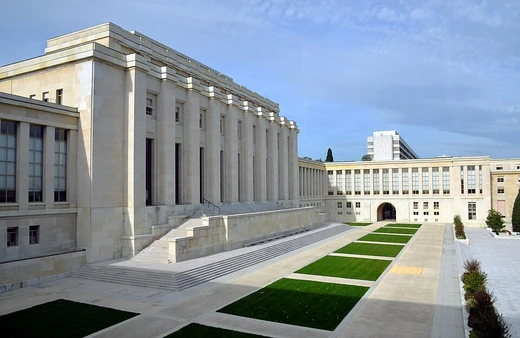
- Geneva, Switzerland
- Condition effective
- ratification by territories representing 85% of trade of signatories
- Provisional application
- 1 January 1948
- Depositor
- Executive Secretary to the Contracting Parties
- Languages
- English and French
Facts from the source article.
Lore & Background
The GATT was first conceived at the 1947 United Nations Conference on Trade and Employment (UNCTE), at which the International Trade Organization (ITO) was one of the ideas proposed. More than 50 nations negotiated ITO and its founding charter, but after the withdrawal of the United States these negotiations collapsed. The GATT's major intellectual architects were the GATT lawyer Ernst-Ulrich Petersmann, Jan Tumlir, an economics professor at the Geneva Graduate Institute, and the U.S. law professor John Jackson. The GATT has been updated in a series of global trade negotiations consisting of nine rounds between 1947 and 1995.
Reader's Guide
The GATT rounds included: the initial round in Geneva (1947), the Annecy Round (1949), the Torquay Round (1951), the Geneva Round (1955–1956), the Dillon Round (1960–1962), the Kennedy Round (1964–1967), and others. The Uruguay Round (1986–1994) was the final round, leading to the establishment of the WTO.
From the Ashes of the ITO: GATT's Reluctant Birth
In the aftermath of World War II, the United States championed the creation of a new multilateral architecture for global economic governance. Between 1945 and 1946, Washington took concrete steps toward establishing a dedicated trade body, proposing an international conference to draft a charter for such an organization. That ambition crystallized at the 1947 United Nations Conference on Trade and Employment, where the International Trade Organization was envisioned as a permanent institution operating alongside the World Bank and the International Monetary Fund. More than fifty nations participated in drafting the ITO's founding charter, but the entire project collapsed when the United States withdrew its support. The GATT emerged directly from this failure. Preparatory sessions ran in parallel at the same conference, and on 30 October 1947, twenty-three nations signed the agreement in Geneva. Rather than establishing a full-fledged organization, the signatories applied the text on a provisional basis beginning 1 January 1948. Notably, government procurement was carved out of the agreement's scope from the very start, limiting its reach even as it set the stage for decades of trade liberalization.
Nine Rounds of Progressive Liberalization
Between 1947 and 1995, the GATT framework was refined through nine successive rounds of multilateral negotiation, each expanding participation and deepening tariff cuts. The second round in Annecy, France, in 1949 drew thirteen countries and produced roughly five thousand individual tariff reductions. By the Torquay Round of 1951 in England, thirty-eight nations had joined the process, securing 8,700 tariff concessions that brought remaining duties down to three-quarters of their 1948 levels. The contemporaneous U.S. rejection of the Havana Charter cemented the GATT's position as the de facto governing body for world trade. The Geneva Round of 1955–56 eliminated or reduced two and a half billion dollars in tariffs among twenty-six participants. The Dillon Round (1960–1962), named for U.S. Treasury Secretary Douglas Dillon, cut over four and a half billion dollars in duties and opened discussions tied to the emerging European Economic Community. The Kennedy Round (1964–1967), honoring President John F. Kennedy's Trade Expansion Act of 1962, shifted focus toward the broader structural challenges posed by European integration and Japan's rising export power.
Measurable Impact: The Tariff Story
The central promise of the GATT was straightforward: lower the walls between markets. Its preamble committed signatories to the substantial reduction of tariffs and other trade barriers, the elimination of preferential treatment, and a reciprocal and mutually advantageous approach to these goals. The results speak in concrete numbers. When the agreement was first signed in 1947, average tariff levels among major participants stood at approximately 22 percent. Through successive rounds of negotiation and the eventual Uruguay Round, that figure had fallen to roughly 5 percent by 1999. Trade experts widely attribute a significant share of this dramatic decline to the institutional framework that GATT and its successor the WTO provided. The agreement's design—targeting both tariffs and quotas, insisting on reciprocity, and building in mechanisms for periodic renegotiation—created a self-reinforcing cycle in which each round of concessions set a lower baseline for the next. What began as a provisional stopgap in 1948 thus became, over nearly five decades, the primary engine driving the global reduction of trade barriers.
From Provisional Agreement to Permanent Institution
The GATT operated on a provisional basis for nearly four decades before being formally absorbed into a more robust institutional structure. On 15 April 1994, one hundred and twenty-three nations reached agreement in Marrakesh, and on 1 January 1995 the World Trade Organization came into existence as the direct successor to the GATT, established as part of the Uruguay Round Agreements. Crucially, the original 1947 GATT text did not simply vanish; it remains in force under the WTO framework, though it is now subject to the modifications introduced by GATT 1994. For nations that were not parties to the GATT in 1995, accession to the WTO requires meeting minimum conditions laid out in specific documents. As of September 2019, thirty-six nations remained on the list of those still working through that process. The intellectual architecture of the GATT system is credited to several key figures, including the GATT lawyer Ernst-Ulrich Petersmann, economics professor Jan Tumlir at the Geneva Graduate Institute, and U.S. law professor John Jackson, whose collective work shaped the legal and economic foundations that continue to underpin global trade governance.
More in International Organizations And Agreements
Spotted an error? Know more?
Reader corrections go straight into our review queue. Suggest an edit · How this site is sourced