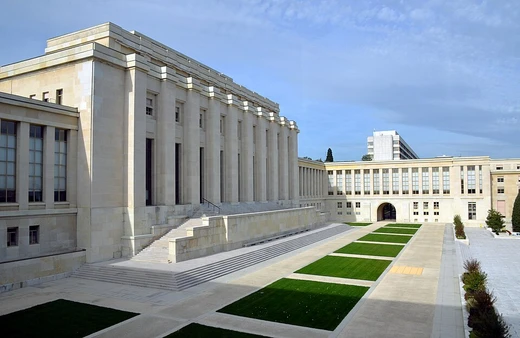
International Criminal Tribunal for the former Yugoslavia
UN ad hoc tribunal prosecuting Yugoslav Wars war crimes.
The International Criminal Tribunal for the former Yugoslavia was a United Nations court established to prosecute serious violations of international humanitarian law committed in the former Yugoslavia since 1991.[1] Residual functions, including sentence oversight and appeals initiated after 1 July 2013, were transferred to the International Residual Mechanism for Criminal Tribunals.[2] Between 1997 and 2004, the tribunal brought charges against 161 people, and its official dissolution occurred on 31 December 2017.[3][4]
Quick Facts
- Court name
- International Criminal Tribunal; for the former Yugoslavia
- Established
- 25 May 1993
- Dissolved
- 31 December 2017
- Location
- The Hague, Netherlands
- Terms
- Four years
- Positions
- 16 permanent; 12 ad litem
Facts from the source article.
Key facts and history
United Nations Security Council Resolution 808 of 22 February 1993 decided that an international tribunal should be established.[1] The ICTY established its offices in the Aegon Insurance Building in The Hague and detention facilities in Scheveningen in 1994–1995.[5] During 1993, the foundational administrative and physical structures for the ICTY were put into place.[6] Within the initial twelve months, the inaugural group of ICTY judges created and approved the complete set of procedural rules for the court.[7]
Dragan Nikolić, a commander of a Bosnian-Serb concentration camp, was the subject of the initial indictment, which was issued in 1994.[8] The first trial conducted by the tribunal concerned Duško Tadić, who was taken into custody by German authorities in Munich during 1994.[9] On 20 July 2011, Goran Hadžić, the last remaining fugitive, was captured.[3][10] The court delivered its ultimate verdict on 29 November 2017.[3]
What the cited sources add
Carla Del Ponte, who served as Prosecutor from 1999 to 2007, signed the tribunal's final indictments in 2004 as part of its completion strategy.[11] Louise Arbour, Prosecutor from 1996 to 1999, introduced the use of sealed indictments and persuaded international agencies to start arresting indictees.[11] Richard Goldstone, who took office in August 1994, signed the tribunal's first indictments, including those against Radovan Karadžić and Ratko Mladić for the Srebrenica genocide.[11] Graham Blewitt, then Deputy Prosecutor, stepped in as temporary Prosecutor until Richard Goldstone's appointment in July 1994.[11]
In June 1998, Slovko Dokmanovic, a former Serb officer, hanged himself with his tie from a wardrobe door in the detention unit.[12] The BBC News report noted that inmates at the Scheveningen jail were carefully segregated.[12] Ramon Escovar Salom was selected as ICTY Prosecutor in October 1993, with his term scheduled to begin in February 1994.[11]
References
- Wikipedia, "International Criminal Tribunal for the former Yugoslavia" (CC BY-SA 4.0), which cites: United Nations High Commissioner for Refugees, "Report of the Secretary-General Pursuant to Paragraph 2 of Security Council Resolution 808 (1993) [Contains text of the Statute of the International Tribunal for the Prosec (original not read by us) en.wikipedia.org
- Wikipedia, "International Criminal Tribunal for the former Yugoslavia" (CC BY-SA 4.0), which cites: "UNSC Resolution 1966" (original not read by us) en.wikipedia.org
- Wikipedia, "International Criminal Tribunal for the former Yugoslavia" (CC BY-SA 4.0), which cites: "History | International Criminal Tribunal for the former Yugoslavia", www.icty.org; Serbia's last war crimes fugitive arrested, Al Jazeera.net, 20 July 2011.; "The ICTY renders its final judgement in the Prlić et al. appeal case", International Criminal Tribunal for the Former Yugoslavia, 29 November 2017; "ICTY President Agius delivers final address to UN General Assembly", International Criminal Tribunal for the Former Yugoslavia (original not read by us) en.wikipedia.org
- Wikipedia, "International Criminal Tribunal for the former Yugoslavia" (CC BY-SA 4.0), which cites: "Infographic: ICTY Facts & Figures", International Criminal Tribunal for the former Yugoslavia, February 2016; "Key Figures of ICTY Cases", ICTY official site, November 2017 (original not read by us) en.wikipedia.org
- Wikipedia, "International Criminal Tribunal for the former Yugoslavia" (CC BY-SA 4.0), which cites: Vohrah, "Some Insights into the Early Years", Journal of International Criminal Justice, 2004, p. 388 (original not read by us) en.wikipedia.org
- Wikipedia, "International Criminal Tribunal for the former Yugoslavia" (CC BY-SA 4.0), which cites: "Enforcement of Sentences" (original not read by us) en.wikipedia.org
- Wikipedia, "International Criminal Tribunal for the former Yugoslavia" (CC BY-SA 4.0), which cites: Rachel S. Taylor, "Tribunal Law Made Simple: What is the ICTY, How Was It Established, and What Types of Cases Can it Hear?", Global Policy Forum (original not read by us) en.wikipedia.org
- Wikipedia, "International Criminal Tribunal for the former Yugoslavia" (CC BY-SA 4.0), which cites: Pronk, E. The ICTY and the people from the former Yugoslavia – a reserved relationship. (original not read by us) en.wikipedia.org
- Wikipedia, "International Criminal Tribunal for the former Yugoslavia" (CC BY-SA 4.0), which cites: "First Defendant Faces Tribunal on War Crimes / Bosnian Serb pleads not guilty", SFGate (original not read by us) en.wikipedia.org
- Wikipedia, "International Criminal Tribunal for the former Yugoslavia" (CC BY-SA 4.0), which cites: Serbia's last war crimes fugitive arrested, Al Jazeera.net, 20 July 2011. (original not read by us) en.wikipedia.org
- "The former Prosecutors' section of ICTY website". facts only, no text reused. icty.org
- Stephen, "Milosevic jail under scrutiny", BBC News, 13 March 2006. facts only, no text reused. news.bbc.co.uk
Each numbered sentence above was checked against the source it cites before publication. Sentences citing Wikipedia adapt text from the English Wikipedia article International Criminal Tribunal for the former Yugoslavia (contributors), used under CC BY-SA 4.0; this entry is available under the same licence. Other sources were used for facts only; no text or images are copied from them.
More in International Organizations And Agreements
Spotted an error? Know more?
Reader corrections go straight into our review queue. Suggest an edit · How this site is sourced