Great man theory
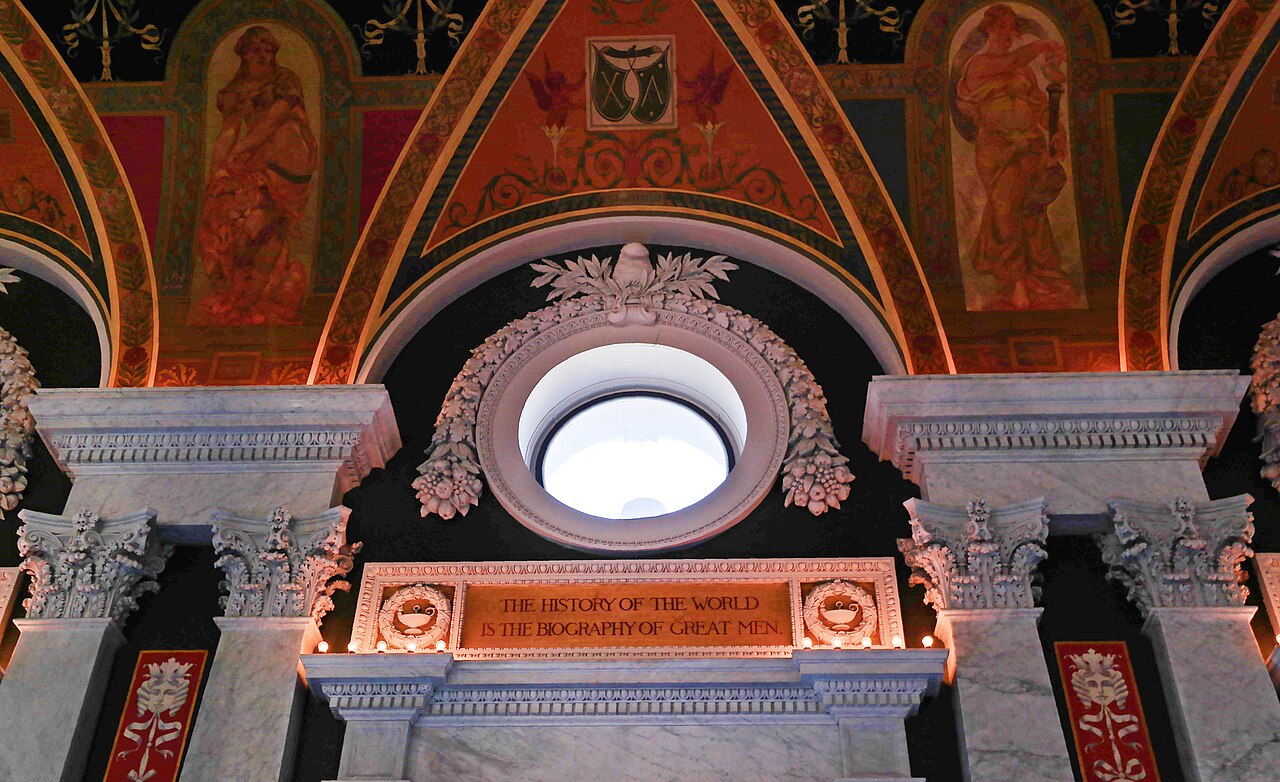
History as the biography of great men

Hendrik Lorentz · Public domain
The great man theory is an approach to the study of history popularised in the 19th century. According to it, history can be largely explained by the impact of great men, or heroes: highly influential and unique individuals who, due to their natural attributes, such as superior intellect, heroic courage, extraordinary leadership abilities or divine inspiration, have a decisive historical effect. The theory is primarily attributed to the Scottish essayist, historian and philosopher Thomas Carlyle, who gave a series of lectures on heroism in 1840, later published as On Heroes, Hero-Worship, & the Heroic in History.
Quick Facts
- Field
- Historiography
- Primary proponent
- Thomas Carlyle
- Contrasted with
- People's history, historical materialism
Facts from the source article.
Lore & Background
Carlyle stated that 'The History of the world is but the Biography of great men', reflecting his belief that heroes shape history through both their personal attributes and divine inspiration. In his book Heroes and Hero-Worship, Carlyle saw history as having turned on the decisions, works, ideas and characters of 'heroes', giving detailed analysis of six types: The hero as divinity (such as Odin), prophet (such as Muhammad), poet (such as William Shakespeare), priest (such as Martin Luther), man of letters (such as Jean-Jacques Rousseau), and king (such as Napoleon). Carlyle also argued that the study of great men was 'profitable' to one's own heroic side; that by examining the lives led by such heroes, one could not help but uncover something about one's own true nature.
Reader's Guide
The great man theory, popularized in the nineteenth century, holds that history is primarily shaped by exceptional individuals—heroes with superior intellect, courage, leadership, or divine inspiration. Scottish thinker Thomas Carlyle, who lectured on heroism in 1840, is its main proponent. He argued that "The History of the world is but the Biography of great men," and that studying these figures reveals something about one's own nature. Carlyle analyzed six hero types: divinity (Odin), prophet (Muhammad), poet (Shakespeare), priest (Martin Luther), man of letters (Rousseau), and king (Napoleon). A common misunderstanding, noted by Sidney Hook, is that the theory dismisses all other historical factors; Carlyle instead saw great men as the decisive element due to their unique genius. Hook illustrated this by asking how many battalions equal Napoleon, or how many minor poets produce a Shakespeare. Frederick Adams Woods supported the theory by studying 386 Western European rulers from the twelfth century to the French Revolution. The approach was most popular among professional historians in the nineteenth century, exemplified by the 1911 Encyclopædia Britannica, which featured detailed biographies but little social history—for instance, covering the post-Roman Migration Period only under Attila the Hun. Philosophers like Léon Bloy, Søren Kierkegaard, Oswald Spengler, and Max Weber endorsed this heroic view. Hegel, from a providentialist perspective, saw world-historical individuals as agents of the World-Spirit, uncovering an inevitable future rather than creating it. Friedrich Nietzsche, in Untimely Meditations, wrote that humanity's goal lies in its highest specimens, though he explicitly rejected Carlyle's hero worship. The theory assumes that great leaders are born with innate traits and that a pressing need allows these traits to emerge, making them natural authorities. Critics include Herbert Spencer, who argued that so-called great men are products of their social environment. William James defended Carlyle, contending that an individual's unique physiology makes the great man, who then uniquely transforms his environment.
Carlyle's Heroic Architecture
The Great Man theory emerged as a dominant lens for understanding the past during the nineteenth century, and its most articulate champion was the Scottish essayist, historian, and philosopher Thomas Carlyle. In 1840, Carlyle delivered a series of public lectures on heroism that were subsequently published under the title On Heroes, Hero-Worship, & the Heroic in History. The central thesis was bold: the totality of human accomplishment is, at its root, the story of extraordinary individuals whose superior intellect, courageous spirit, or even divine inspiration produced decisive shifts in the course of events. Carlyle went further than simply naming a few famous figures. He constructed a taxonomy of six heroic archetypes, assigning each a representative exemplar. The divine hero was embodied by Odin, the prophetic hero by Muhammad, the poetic hero by Shakespeare, the priestly hero by Martin Luther, the literary hero by Rousseau, and the kingly hero by Napoleon. Beyond mere classification, Carlyle argued that studying these lives was personally enriching, believing that tracing the footsteps of such figures would inevitably reveal something of the reader's own latent heroic nature.
Philosophical Alliances and Nineteenth-Century Dominance
The Great Man approach attracted a wide circle of philosophical allies and became the prevailing mode of professional historical writing throughout the nineteenth century. Georg Wilhelm Friedrich Hegel, working from a providentialist framework, positioned great historical figures as instruments of the World-Spirit, arguing that their personal ambitions coincided with the unfolding of a larger, inevitable destiny. Friedrich Nietzsche, in Untimely Meditations, echoed a similar sentiment by declaring that humanity's purpose resides in its most exceptional specimens, though he later repudiated Carlyle's specific cult of heroism in Ecce Homo. Thinkers such as Søren Kierkegaard, Oswald Spengler, Léon Bloy, and Max Weber also lent their intellectual weight to the heroic interpretation of the past. The theory's dominance was visible in major reference works: the 1911 Encyclopædia Britannica Eleventh Edition devoted extensive entries to individual great men while offering scant treatment of broader social histories, even filing the entire post-Roman Migrations Period under the biography of Attila the Hun. Sidney Hook later clarified a common misreading, stressing that Carlyle's claim was not that everything else in history was trivial, but that the unique genius of figures like Napoleon, Shakespeare, or Einstein constituted a decisive factor no number of lesser talents could replicate.
The Spencer-James Controversy
A pointed intellectual challenge to Carlyle's framework came from Herbert Spencer, who regarded the attribution of historical change to individual decisions as unscientific. In Spencer's view, the men Carlyle celebrated as great were themselves products of long, complex social and racial influences; a society must first shape the individual before that individual can reshape the society. This environmentalist reading stood in opposition to the theory's core assumption that leaders are born with an innate set of traits—superior intellect, heroic courage, extraordinary leadership capacity—that predispose them to rise above their peers. The theory further held that a pressing historical need would activate those latent qualities, producing figures who overcame rivals and inspired followers. This born-rather-than-made logic carried a political implication: those who held power were, by the theory's own reasoning, naturally suited to authority and therefore not subject to easy questioning. William James entered the fray in 1880 with his Atlantic Monthly lecture "Great Men, Great Thoughts, and the Environment," where he defended Carlyle against what he called Spencer's impudent, vague, and dogmatic reasoning. James argued that the unique physiological makeup of the individual was the decisive variable, and that this singular person, in turn, was the decisive force transforming the environment.
Empirical Testing and Contrasting Histories
Not all supporters of the Great Man approach relied on philosophical argument; some sought empirical evidence. The American scholar Frederick Adams Woods, in his work The Influence of Monarchs: Steps in a New Science of History, examined 386 rulers in Western Europe spanning from the twelfth century through the French Revolution at the close of the eighteenth century, attempting to measure their influence on the trajectory of events. This quantitative ambition set the theory apart from speculative hero-worship. Yet the Great Man framework has always existed in tension with rival schools of historical interpretation. People's history, for instance, flips the explanatory priority: rather than masses being swept along by the decisions of a few, it is the overwhelming accumulation of smaller, collective events that generates the currents which carry leaders along. Historical materialism offers yet another contrasting lens, grounding historical change in economic structures and class relations rather than in the singular genius of individuals. The Great Man theory, by contrast, insists that the decisive variable is the person—born with a specific constellation of attributes that make them uniquely suited to leadership, authority, and power, and who, when the historical moment demands it, rise against the odds to reshape the world around them.
Gallery


More in Historiography & Methods
Spotted an error? Know more?
Reader corrections go straight into our review queue. Suggest an edit · How this site is sourced