
Foreign policy
A state's strategies for interacting with other states and entities.

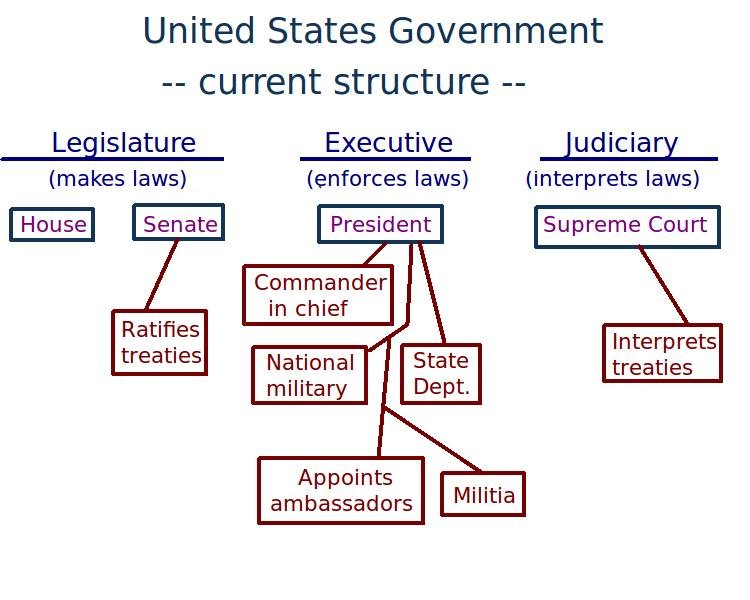
U.S. Department of State · Public domain
Foreign policy—sometimes called external policy—refers to the plans and actions a country uses when dealing with other nations, unions, and international bodies. These strategies cover a broad mix of goals: protecting the country from attack, boosting economic interests, and offering humanitarian help. What shapes a state's foreign policy includes domestic politics, how other countries behave, and larger geopolitical calculations. Over time, foreign policy has shifted from handling immediate crises to managing ongoing international relationships, and professional diplomats have been key to that change.
The aims of foreign policy are varied and linked, forming a unified approach for each country. Security and defense often come first, leading states to build military alliances or use soft power to counter threats. Economic goals—like trade deals and foreign aid—help define a nation's place in the global economy. Many countries also run humanitarian programs based on the idea of a responsibility to protect, offering support to weaker states. Scholars study foreign policy to understand why and how countries interact, with think tanks and universities providing research and analysis to guide decisions.
**History**
The idea of managing relationships over the long term grew alongside professional diplomatic corps, which handled diplomacy. In the 1700s, European diplomacy was so chaotic and conflict-ridden that it often focused on isolated problems, called "affairs." So, while domestic issues were labeled civil affairs (like peasant uprisings, budget shortfalls, or court plots), the term foreign affairs referred to handling temporary matters outside a ruler's territory. This term stayed common in English-speaking countries into the 1900s and still names the departments that manage foreign relations in several states. Though originally meant for short-term issues, these departments now handle both daily and long-term international relations. Governments sometimes hire think tanks to research and advocate for foreign policy proposals, offer alternatives, or analyze shifting relationships.
**Objectives**
Several goals can drive a government's foreign policy. It may focus on defense and security, economic gain, or aid to countries in need. All these objectives are connected and together form a single, comprehensive foreign policy for each state.
- Field
- International relations and statecraft
- Known for
- Guiding state interactions through defense, economic, and humanitarian objectives
- Key concept
- Set of strategies and actions for external relations
- Influences
- Domestic considerations, behavior of other states, geopolitical strategies
- Study approaches
- Rational actor model, government bargaining model, organizational process model
Lore & Background
The idea of long-term management of relationships followed the development of professional diplomatic corps that managed diplomacy. In the 18th century, due to extreme turbulence in European diplomacy and ongoing conflicts, the practice of diplomacy was often fragmented by the necessity to deal with isolated issues, termed 'affairs'. Domestic management of such issues was called civil affairs, while the term foreign affairs was applied to the management of temporary issues outside the sovereign realm. This term remained in widespread use in English-speaking states into the 20th century and remains the name of departments in several states that manage foreign relations. Although originally intended to describe short-term management of a specific concern, these departments now manage all day-to-day and long-term international relations among states.
Several objectives may motivate a government's foreign policy, including defense and security, economic benefit, or assistance to states that need it. All foreign policy objectives are interconnected and contribute to a single, comprehensive foreign policy for each state. Unlike domestic policy, foreign policy issues often arise suddenly in response to developments and major events in foreign countries. The objectives of foreign policy can be aligned with the median voter preferences. Think tanks are occasionally employed by government foreign relations organizations to provide research and advocacy in the development of foreign policy proposals, alternatives to existing policy, or to provide analytical assessments of evolving relationships.
Reader's Guide
Foreign policy is central to a country's role within the world economy and international trade, encompassing trade agreements, foreign aid, and management of imports and exports. Defensive foreign policy ensures national security through military alliances, soft power, isolation, or war, and in the 21st century has expanded to address global terrorism. Many states have developed humanitarian programs under the responsibility to protect, with liberal internationalists believing stronger countries should assist less powerful ones. The study of foreign policy considers why and how states interact, with schools of thought including the rational actor model, government bargaining model, and organizational process model. Think tanks such as the Council on Foreign Relations and Chatham House study foreign policy specifically. The influence of power and national capabilities shapes foreign policy: superpowers project influence globally, great and middle powers have moderate influence, and small powers often support multilateral organizations due to fewer resources. Political institutions also play a role—democracies are influenced by public opinion and are believed less likely to fight one another, while autocratic states may depend heavily on a dictator's preferences and be less predictable.
Did You Know?
- The term 'foreign affairs' originally described short-term management of temporary issues outside the sovereign realm in the 18th century.
- Small powers are more likely to support international and multilateral organizations due to fewer economic and military resources.
The Realist Blueprint and the Donroe Doctrine
The second Trump administration anchored its foreign policy in a realist "America First" philosophy that Stephen Miller, the deputy chief of staff, summarized bluntly: the United States is a superpower and would conduct itself as one. This framework drew a deliberate parallel to the expansive reading of the Monroe Doctrine, which Trump himself branded the "Donroe Doctrine," signaling a renewed assertion of dominance over the Western Hemisphere. Observers noted a striking resemblance to the foreign policy of William McKinley, a nineteenth-century president whose expansionist instincts echoed in the administration's rhetoric. The approach was labeled imperialist and interventionist in the Americas and the Middle East, yet simultaneously isolationist toward Europe and Africa. Rather than building coalitions or nurturing alliances through shared values, the administration treated the global stage as a marketplace of power, where the United States would leverage its military and economic weight to extract concessions and reshape regional hierarchies on its own terms.
Dismantling the Post-War Order and the Soft Power Retreat
The administration's most consequential structural shift was its systematic withdrawal from the multilateral architecture that had defined American leadership since 1945. Organizations long credited with projecting U.S. soft power—USAID, Voice of America, and similar bodies—were shuttered or stripped of funding, a move foreign policy experts warned would hollow out America's global influence and hand a strategic opening to Russia and China. The decision to rename the Department of Defense the "Department of War" was read by analysts as a deliberate signal that diplomacy had been subordinated to coercion, a framing that played directly into foreign narratives portraying the United States as an aggressive actor. General opposition to international cooperation on climate, health, and economics further isolated Washington from its traditional partners. The cumulative effect was a measurable collapse in global public opinion: polling showed large swings of worldwide sentiment favoring China as the stabilizing great power, while tariff threats directed at treaty allies deepened doubts about whether American commitments could be trusted.
Hemispheric Dominance and the Spheres-of-Influence Strategy
In September 2025, Pentagon leadership released a draft National Defense Strategy that marked a stark departure from prior doctrine: instead of centering on countering Russia and China, the document prioritized domestic and regional missions, redirecting American military focus squarely onto the Western Hemisphere. Special envoy for Latin America Mauricio Claver-Carone stated openly that the overarching aim was to reassert American dominance over the Americas, with Latin America as the principal theater. Analysts such as international relations scholar Monica Toft interpreted the pivot as an effort to partition the world into competing spheres of influence among the United States, Russia, and China—a reading that Defense Secretary Pete Hegseth later confirmed in his own words. On the ground, the strategy manifested as a large-scale naval deployment in the Caribbean, military strikes on vessels identified as drug boats, and the designation of multiple drug gangs as foreign terrorist organizations, a classification experts disputed on the grounds that criminal organizations driven by profit do not fit the ideological definition of terrorism. The broader pattern was widely characterized by Reuters and BBC correspondents as a return to gunboat diplomacy.
Loyalty Over Expertise and the Transactional Diplomat
The New York Times observed that the administration's foreign policy machinery operated on personal loyalty and what Trump called "common sense and hard-nosed savvy" rather than on institutional expertise or diplomatic protocol. A telling example was the appointment of Steven Witkoff, a longtime friend and New York real estate developer, as a special envoy; Witkoff himself framed his inexperience as an advantage that brought fresh eyes to intractable conflicts, while Trump's inner circle dismissed career military, intelligence, and diplomatic officers as lacking the boldness of private-sector operators. Trump reportedly interpreted flattery from foreign leaders as a signal that they were prepared to compromise their own national interests, a reading that shaped his transactional posture toward both allies and adversaries. Relations with traditional partners ranged from indifference to open animosity, while he simultaneously courted friendly ties with certain U.S. adversaries. In the Ukraine crisis, the administration offered concessions to Russia and publicly suggested Ukraine bore partial responsibility for the invasion—moves that drew sharp criticism from most American allies and numerous international institutions. Trump also pursued a realignment with Vladimir Putin, a longtime adversary, further unsettling the transatlantic community.
Gallery


Frequently Asked Questions
What is foreign policy in government and public administration?
Foreign policy is the full set of strategies a nation employs when engaging with other countries, international organizations, and global unions. It spans military defense, trade negotiations, and humanitarian assistance, serving as the bridge between a state's internal government and the wider world.
What are the core objectives of a state's foreign policy?
The primary goals typically include safeguarding national security from external threats, advancing the country's economic interests abroad, and providing humanitarian assistance to other nations. These three pillars guide most diplomatic and strategic decision-making.
What factors influence how a country shapes its foreign policy?
Domestic political dynamics, the actions and postures of other nations, and broader geopolitical calculations all play significant roles. No single factor dominates; states must balance internal pressures with external realities when crafting their external strategies.
How has the nature of foreign policy changed over time?
Historically, foreign policy focused on responding to immediate crises and conflicts. In more recent decades, the emphasis has shifted toward sustaining long-term international relationships, with professional diplomats playing a central role in that ongoing engagement.
What analytical models are used to study foreign policy?
Scholars commonly apply the rational actor model, the government bargaining model, and the organizational process model to explain state behavior. Each framework highlights a different mechanism—individual decision-making, internal political negotiation, or institutional routines—behind a nation's external actions.
More in Government & Public Administration 1-24
Spotted an error? Know more?
Reader corrections go straight into our review queue. Suggest an edit · How this site is sourced