
Baidaphon
Leading Arabic record label of the 1920s–1930s.

Unknown author · Public domain
Baidaphon (also written as Baïdaphone) was a record label and distribution business founded in Berlin early in the 20th century by the Baida family, who originally came from Beirut. By signing well-liked Arabic singers and setting up branch offices across the Middle East and North Africa, it grew into one of the most successful recording companies in the Arab world during the 1920s and 1930s.
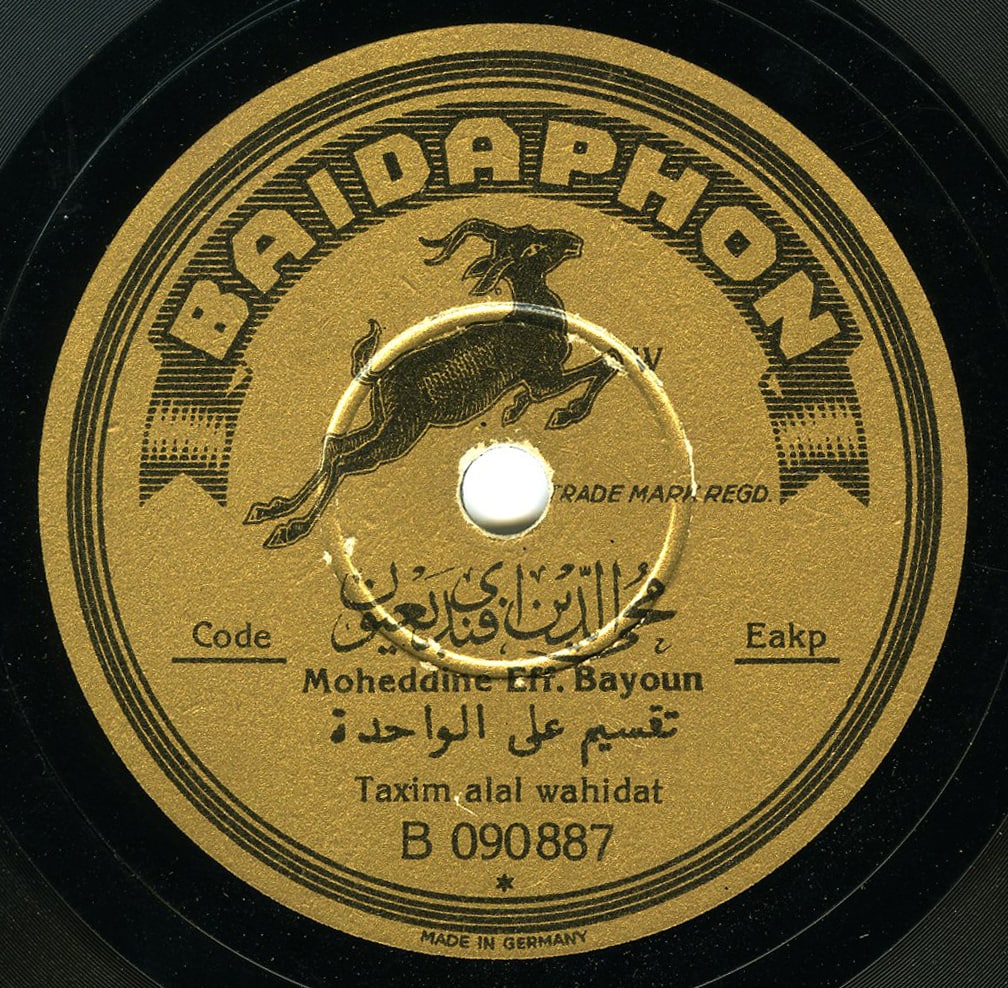
The company began in 1906 as a way for the Baida family to record and distribute songs by the singer Farajallah Baida, but it soon expanded into a major label for Arabic-language music. Early on, Baidaphon worked with the German firm Lyrophon, which manufactured and distributed its records. After Lyrophon was bought by Carl Lindström AG, Baidaphon kept operating under the new arrangement and registered its trademark—featuring a gazelle logo—in 1912. Following World War I, the Baida family continued to run the company, and its records were still pressed in Germany.
During the 1920s and 1930s, Baidaphon built a recording network throughout the Arab world. Its teams traveled to Algeria, Lebanon, Iraq, Kuwait, and other Gulf states to make recordings, and it opened branch offices in Beirut, Damascus, Baghdad, and Cairo. The label also sold records internationally by mail order from Berlin, reaching Arab diaspora communities in Europe, the Americas, and beyond. By the interwar period, Baidaphon had become a leading producer of commercial Arabic recordings. It hired top singers and traditional musicians from across the Middle East and North Africa, helping to grow the regional recording industry. The spread of its records caught the attention of French colonial authorities in the Maghreb, who worried that Arabic music could stir pan-Arab and nationalist feelings.
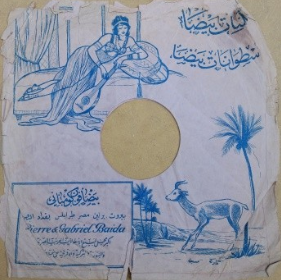
In the late 1920s, Baidaphon signed Egyptian singer and composer Mohammed Abdel Wahab and produced special record sleeves for him. After Pierre Baida died in the early 1930s, the company reorganized and launched subsidiary labels for specific markets. Its Cairo branch was renamed Cairophon, and a separate label, Tahaphone, was set up in Yemen. Baidaphon kept issuing records in the Levant and North Africa, with strong sales through the 1920s and 1930s. German writer Armin Wegner, who knew the Middle East from his travels, noted that the label "has provided the entire East with records of Arabic songs [...] has recr
- founded
- 1906
- founders
- Members of the Baida family
- headquarters
- Berlin
- field
- Record label and distribution
- known_for
- Arabic-language music recordings; signing Mohammed Abdel Wahab and Umm Kulthum; gazelle logo trademarked in 1912
Quick Facts
- Founded
- 1906
- Founder
- Baida family from Beirut
- Genre
- Arabic music, Middle Eastern music
- Country
- Germany
- Location
- Berlin, Beirut
Facts from the source article.
Lore & Background
Founded in 1906 by members of the Baida family, the company initially served as a vehicle for recording and distributing the songs of the singer Farajallah Baida before expanding into one of the leading record companies specializing in Arabic-language music. In the beginning, Baidaphon collaborated with the German record company Lyrophon, which manufactured and distributed Baidaphon's recordings. Following Lyrophon's acquisition by Carl Lindström AG, Baidaphon continued their activities under the new partnership, registering the Baidaphon trademark in 1912 together with its distinctive gazelle logo. After the First World War, the company remained under the management of members of the Baida family while its phonograph records continued to be pressed in Germany.
During the 1920s and 1930s, Baidaphon developed their recording network throughout the Arab world. Recording expeditions were conducted in countries including Algeria, Lebanon, Iraq, Kuwait, and other Gulf states, while branch offices were established in Beirut, Damascus, Baghdad, and Cairo. The label also distributed their recordings internationally through mail order sales from Berlin, serving Arab diaspora communities in Europe, the Americas, and elsewhere. By the interwar period, Baidaphon had become one of the successful producers of Arabic commercial recordings. Recruiting leading singers and traditional musicians from across the Middle East and North Africa, Baidaphon contributed to the growth of the regional recording industry. The circulation of their recordings also attracted the attention of French colonial authorities in the Maghreb, who viewed the dissemination of Arabic-language music as a possible vehicle for pan-Arab and nationalist sentiment.
In the late 1920s, Baidaphon signed the Egyptian singer and composer Mohammed Abdel Wahab, for whom it produced specially designed record sleeves. Following the death of Pierre Baida in the early 1930s, the company reorganized its operations and introduced subsidiary labels for particular markets. In Egypt, the Cairo branch was rebranded as Cairophon, while a separate label, Tahaphone, was established in Yemen. Baidaphon continued issuing recordings in the Levant and North Africa, with major sales during the 1920s and 1930s. After the rise of the Nazi regime in Germany, the company ceased manufacturing records there and transferred production to facilities in France by Pathé, Switzerland, and other European countries. Baidaphon remained active into the 1940s, but following the restructuring of its Egyptian operations into Cairophon and the disruptions of the Second World War, the company gradually disappeared from the recording industry. The exact date of its dissolution is unknown.
Reader's Guide
Baidaphon's significance lies in its role as a pioneering force in the early 20th-century Arabic recording industry. By establishing branch offices across the Middle East and North Africa and conducting recording expeditions in Algeria, Lebanon, Iraq, Kuwait, and other Gulf states, the label created a vast network that brought Arabic music to a wide audience. Its roster included many of the era's leading artists, such as Mohammed Abdel Wahab, Umm Kulthum, and Asmahan, and its recordings reflected the linguistic and cultural diversity of the region, including Greek Orthodox liturgical music, Turkish instrumental works, and songs in Armenian, Assyrian, Kurdish, Azerbaijani, and Hebrew. The label's international distribution through mail order from Berlin served Arab diaspora communities in Europe, the Americas, and elsewhere. The circulation of its recordings also drew the attention of French colonial authorities in the Maghreb, who saw Arabic-language music as a possible vehicle for pan-Arab and nationalist sentiment. Today, archives such as the Centre des Musiques Arabes et Mediterranéenes in Tunisia (with over 600 records), the Berlin Phonogram Archive (nearly 200 records), and the French National Library (about 250 records) preserve Baidaphon's legacy. The destruction of its Beirut office during the Lebanese civil war in 1987 underscores the fragility of this cultural heritage.
Did You Know?
- Baidaphon's trademark, featuring a distinctive gazelle logo, was registered in 1912.
- The label produced specially designed record sleeves for Egyptian singer Mohammed Abdel Wahab.
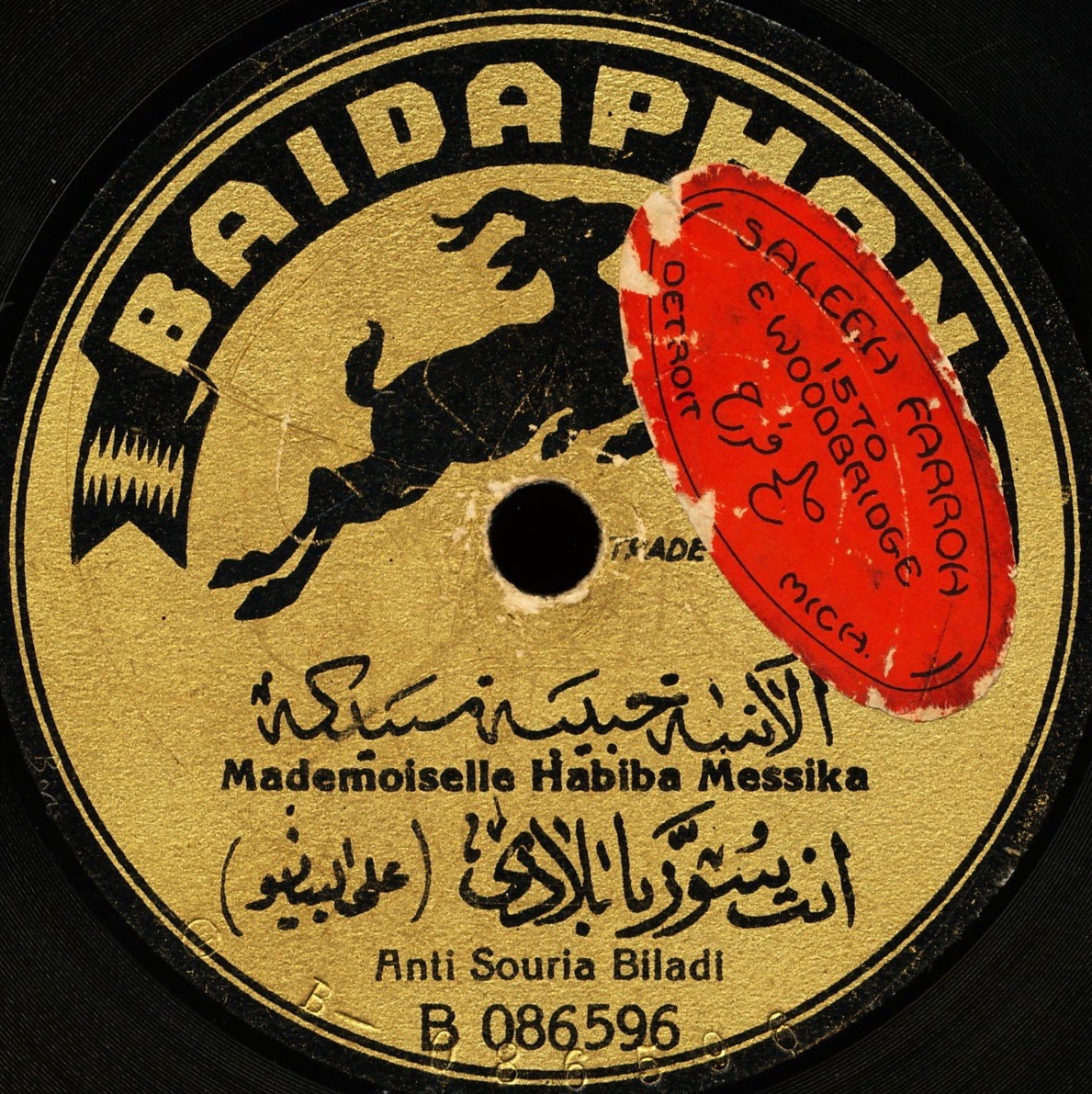
- Habiba Msika recorded the song 'Anti Souria Biladi' ('You are my country, Syria') for Baidaphon in Berlin in 1928, using the absence of French colonial supervision in her native Tunisia.
- The exact date of Baidaphon's dissolution is unknown.
Gallery
Frequently Asked Questions
What is Baidaphon?
Baidaphon (sometimes spelled Baïdaphone) was a Berlin-based record label and distribution company that became one of the dominant forces in Arabic-language music during the 1920s and 1930s. It was established by the Baida family, a Beirut-origin family that settled in Germany.
Who started Baidaphon and why?
Members of the Baida family founded the label in 1906, initially to record and distribute the songs of Farajallah Baida. What began as a family project for a single singer quickly expanded into a full-scale recording enterprise for the broader Arabic-speaking world.
Which artists made Baidaphon famous?
The label is best known for signing two of the most iconic voices in Arabic music history: Mohammed Abdel Wahab and Umm Kulthum. Their recordings, pushed through Baidaphon's network of branch offices across the Middle East and North Africa, made the company a household name in the Arab world.
What is Baidaphon's logo?
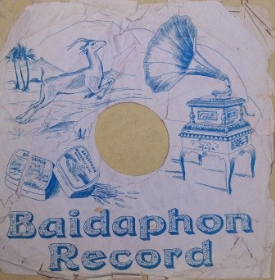
Baidaphon's trademark is a gazelle, which the company registered in 1912. This distinctive mark appeared on their records and helped the brand stand out in a crowded market of early recording companies.
How did Baidaphon grow from a small family project into a major label?
After launching in 1906 to document one singer's work, the Baida family broadened their roster to include popular Arabic vocalists and built a distribution network with offices throughout the Middle East and North Africa. By the 1920s and 1930s, this combination of star signings and regional reach had made Baidaphon one of the most commercially successful recording companies serving the Arab world.
More in German record labels 1-24
Spotted an error? Know more?
This is a living reference — every entry is fact-audited, and reader corrections feed straight into our audit queue. Suggest an edit · See this site's audit record