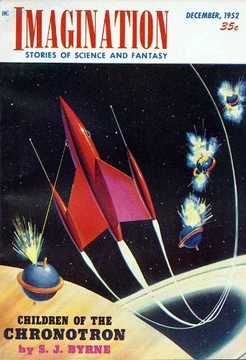
Les Animaux dénaturés
Novel about defining humanity through a missing link population.

Les animaux dénaturés is a 1952 novel by Jean Bruller, writing under the pseudonym Vercors. The novel explores the ethical and legal boundaries of humanity through a fictional discovery of ape-like creatures in New Guinea. It was adapted into a play and a motion picture, and its English editions appeared under several titles.
Quick Facts
- Author
- Jean Bruller
- Pub Date
- 1952
- Language
- French
Facts from the source article.
Lore & Background
The plot follows anthropologists who travel to New Guinea and discover a living population of ape-like creatures, named Paranthropus greamiensis after the discoverer and dubbed Tropis. A businessman, Vancruysen, proposes using them as unpaid labor. The scientists grapple with whether the Tropis are human, avoiding a definitive answer due to the sorites paradox. They attempt to use interfertility as a criterion, but Tropi females can be impregnated only by human sperm, not by ape sperm, leaving the question unresolved until offspring reach reproductive age. To force a legal decision, one scientist deliberately kills a baby born from a Tropi female impregnated by his own sperm, so that a trial will determine if he committed murder (making the Tropis human) or killed an animal.
Reader's Guide
Les animaux dénaturés is significant for its philosophical and ethical examination of what defines humanity, using a fictional missing link to challenge legal and moral categories. The novel's reception highlights its originality and the weight of its themes: Groff Conklin found it 'uniquely original' with 'tremendous' moral implications; P. Schuyler Miller praised its quiet handling of the subject; The Calgary Herald called it 'the best novel of 1953' and 'a fine, ironic commentary'; Time magazine deemed it a 'pungent' satire but faulted its love story and concluded it was 'more a polemic than a novel.' The work's legacy includes its adaptation into a play and a 1970 film starring Burt Reynolds and Susan Clark, and its continued relevance to debates on personhood and rights.
Did You Know?
- The novel was published in 1952 under the pseudonym Vercors.
- English editions appeared under the titles You Shall Know Them, The Murder of the Missing Link, and Borderline.
- The author adapted the novel into a play titled Zoo ou l'Assassin philanthrope.
- The novel was adapted into the 1970 motion picture Skullduggery, starring Burt Reynolds and Susan Clark.
The Ethical Labyrinth at the Novel's Heart
Anthropologists journey to New Guinea expecting to uncover a fossil that would bridge the gap in human evolution. Instead, they encounter a living population of ape-like beings, whom they name Paranthropus greamiensis after their discoverer and colloquially call Tropis. The story's true engine, however, is not the discovery itself but the question it detonates: are the Tropis human? A businessman named Vancruysen immediately sees them as a source of free, rights-less labor, forcing the scientists to confront a classification they had long avoided, reasoning that drawing a fixed line between human and non-human resembles the sorites paradox of the heap. They attempt to resolve the matter through interfertility, only to discover that Tropi females can be impregnated by both human and ape sperm, rendering any verdict impossible until offspring reach reproductive age. In a desperate gambit to compel authorities to issue a binding legal ruling—one that would grant the Tropis protection either as animals or as citizens—a scientist deliberately kills a baby born from a Tropi female impregnated by his own sperm. The resulting trial becomes the novel's crucible: a murder charge would confirm the Tropis as human; an animal-killing charge would deny them.
From Page to Stage to Silver Screen
Vercors's 1952 novel proved to be a work that refused to stay confined to the printed page. The author himself adapted the story into a theatrical piece titled Zoo ou l'Assassin philanthrope, translating the novel's philosophical tensions into the language of live performance. Nearly two decades later, the material found its way to the cinema in the form of the 1970 motion picture Skullduggery, which brought the narrative to a wide English-speaking audience through the stars Burt Reynolds and Susan Clark. The novel's journey across media and languages is further reflected in its English-language publication history, where it appeared under no fewer than three distinct titles: You Shall Know Them, The Murder of the Missing Link, and Borderline. Each title foregrounds a different facet of the story—the moral imperative of recognition, the violent act at the plot's center, and the liminal status of the Tropis themselves. Together, these adaptations and re-titlings testify to the novel's enduring capacity to provoke discussion about where the boundary of personhood lies, a question that has clearly outlived its original 1952 context.
A Critical Divide
The novel's reception among English-language reviewers was notably fractured, reflecting the difficulty of categorizing a work that blends philosophical inquiry with narrative drama. Groff Conklin, writing on the first American edition, hailed the book as uniquely original, calling it shocking and fascinating while emphasizing that its moral and ethical implications were tremendous. P. Schuyler Miller also responded favorably, distinguishing the novel from more familiar genre treatments of similar subjects by noting that it handled its theme more quietly, less emotionally, and less melodramatically. The Calgary Herald went further still, declaring it the best novel of 1953 and praising it as a fine, ironic commentary on human affairs. Time magazine offered a more ambivalent verdict, labeling the work a pungent satire that was more supple than subtle. The publication faulted what it called a halfhearted love story and ultimately concluded that the book was more a polemic than a novel. This spread of responses—from unqualified praise to the suggestion that the work is essentially an argument dressed as fiction—captures how the novel sits at the intersection of literature and philosophy.
A Pseudonym's Unlikely Satire
The novel arrived in 1952 under the pseudonym Vercors, the pen name of Jean Bruller. The French original, Les animaux dénaturés, was followed by an English-language edition in 1953, translated by Rita Barisse and published by Little, Brown in Boston under the title You Shall Know Them. The book's English-language life, however, was marked by a remarkable instability of naming: it also circulated under the titles The Murder of the Missing Link and Borderline, each reframing the reader's expectations before the first page is turned. The choice of a pseudonym for a work so deeply concerned with identity, classification, and the arbitrary lines we draw between categories of being is itself a kind of authorial commentary. Bruller, writing as Vercors, seems to enact the very problem his characters face: the difficulty of pinning down a fixed, essential self behind a name. The novel's subject matter—whether a creature is human or not, whether a killing is murder or merely the destruction of an animal—resonates with the author's own decision to publish under a borrowed identity, making the act of writing the book as much a statement about personhood as the story within it.
Frequently Asked Questions
Who is the author of Les Animaux dénaturés and when was it published?
The novel was written by Jean Bruller, who released it in 1952 under his well-known pseudonym Vercors. It is a French work that blends sharp satire with speculative science fiction.
What is the plot of Les Animaux dénaturés about?
The story centers on a fictional discovery of ape-like beings in New Guinea who appear to represent a missing link in human evolution. The narrative then follows the heated ethical, legal, and political debates over whether these creatures should be classified as humans or treated as animals.
What is the central theme of Les Animaux dénaturés?
Vercors uses the hypothetical missing-link population to interrogate how societies draw the boundary between human and non-human. The novel satirizes the ways scientific, legal, and moral arguments can be weaponized to protect a narrow, self-serving definition of humanity.
Was Les Animaux dénaturés adapted into a film or a play?
Yes—the novel was adapted into a stage play titled Zoo ou l'Assassin philanthrope and into a 1970 motion picture called Skullduggery. English-language editions of the book also circulated under several different titles.
Why is Les Animaux dénaturés considered important in French science fiction?
It stands out as a philosophical satire that uses a speculative premise to challenge the very foundations of human identity and personhood. Its probing of ethical boundaries has kept it relevant in ongoing discussions about animal rights and the definition of sentience.
More in French science fiction novels 1-24
Spotted an error? Know more?
Reader corrections go straight into our review queue. Suggest an edit · How this site is sourced