Selex ES
Italian-British electronics and information technology subsidiary of Finmeccanica.
Last updated

Alberto-g-rovi · CC BY 3.0
Selex ES was a subsidiary of Finmeccanica, active in the electronics and information technology business, based in Italy and the UK, and formed in January 2013, following Finmeccanica's decision to combine its existing SELEX Elsag and SELEX Sistemi Integrati businesses into SELEX Galileo, the immediate predecessor of Selex ES.
Lore & Background
Selex ES was created on 1 January 2013 when SELEX Galileo merged with its sister companies SELEX Sistemi Integrati and SELEX Elsag. The combined business had a global workforce of approximately 17,000 and total revenues in excess of €3.5 billion. Alongside its core domestic operations in Italy and the UK, the company had an established industrial and commercial footprint in the United States, Germany, Turkey, Romania, Brazil, Saudi Arabia and India. The company's history traces back through a series of joint ventures and acquisitions.
In July 2003 Finmeccanica and BAE Systems signed a joint venture agreement with the intention of merging their avionics, C4ISR and communications businesses under the name Eurosystems, but difficulties led to a revised agreement signed on 27 January 2005. On 3 May 2005 the Eurosystems Transaction was finalized, bringing together the avionics business of Finmeccanica and the majority of BAE Systems Avionics to form SELEX Sensors and Airborne Systems (SELEX S&AS), a joint venture held 75% by Finmeccanica and 25% by BAE Systems. BAE Systems sold its 25% share to Finmeccanica in March 2007.
From January 2008, SELEX S&AS and its Italian counterpart Galileo Avionica S.p.A. began operating under the common brand SELEX Galileo, and in January 2010 the legal names were aligned to that brand. In 2009 SELEX Sistemi Integrati purchased Vega Group PLC, forming SELEX Systems Integration Ltd and Vega Consulting Services Ltd in the UK. In 2011 SELEX Communications merged with Elsag Datamat to establish SELEX Elsag. From 1 January 2016, the activities of Selex ES merged into Leonardo-Finmeccanica's Electronics, Defence and Security Systems Sector, becoming Leonardo S.p.A.
Origins: From Joint Venture to Unified Entity
Selex ES did not spring from a single founding act but from a layered sequence of European defence partnerships. In 2003, Finmeccanica and BAE Systems agreed to fold their avionics, C4ISR, and communications operations into a three-part Eurosystems structure. Integration proved far more difficult than anticipated, and BAE's own 2004 annual report conceded the complexity, prompting a simpler revised deal signed in January 2005. The May 2005 finalisation split the assets: Finmeccanica's avionics merged with most of BAE's to create SELEX Sensors and Airborne Systems at a 75/25 split, BAE absorbed the UK side of Alenia Marconi Systems into its new Insyte division, and the Italian AMS operations became SELEX Sistemi Integrati.
Communications assets went to Selenia, later renamed SELEX Communications. By 2007, BAE sold its remaining 25% stake in the avionics venture to Finmeccanica for €400 million, and in 2008 the two Italian entities began trading under the unified SELEX Galileo brand. Further consolidations followed—SELEX Sistemi Integrati acquired Vega Group in 2009, and SELEX Communications merged with Elsag Datamat in 2011 to form SELEX Elsag. On 1 January 2013, all three SELEX entities merged into the single Selex ES.
Three Divisions, One Portfolio
By the close of 2015, Selex ES channelled its work through three international divisions, each covering a distinct operational domain. The Air and Space Systems division encompassed the full spectrum of airborne and orbital capabilities: unmanned aerial systems, integrated mission systems, radar, electronic warfare hardware, avionics, simulation platforms, target drones, and space sensors and payloads.
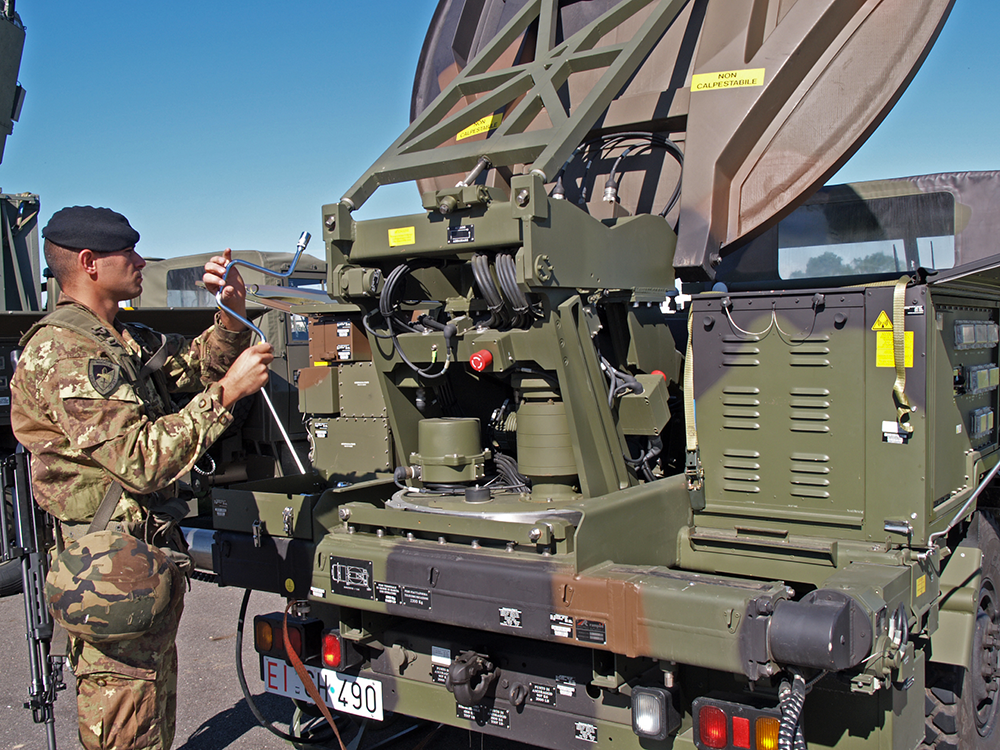
The Land and Naval Systems division handled ground and maritime defence electronics, spanning complex system architecture design, tactical integrated systems, naval combat management, land and naval radar, situational awareness sensors, and military communications infrastructure. The Security and Information Systems division focused on network infrastructure and systems architecture for homeland protection, complex urban environments, and air and vessel traffic management. Together these three pillars gave the company a remarkably broad portfolio, reaching from satellite payloads to personal role radios and from Eurofighter radar to urban surveillance networks.
Global Footprint and Notable Contracts
At its peak, Selex ES employed approximately 17,000 people and generated revenues exceeding €3.5 billion, with a commercial and industrial presence extending well beyond its home markets in Italy and the United Kingdom. The company maintained operations in the United States, Germany, Turkey, Romania, Brazil, Saudi Arabia, and India. Its UK sites were spread across Basildon (headquarters, electro-optics, land systems, homeland security), Bristol (training, simulation, cybersecurity), Edinburgh (airborne radar, laser systems, microelectronics), and Luton (electronic warfare and ISTAR).
On the contract side, Selex ES delivered an unarmed surveillance drone to the United Nations in August 2013 for deployment in the Democratic Republic of Congo to monitor armed groups and protect civilians. In 2015 it won a cybersecurity contract with NATO, and in 2016 it secured an Angola deal covering equipment, replacement components, and services for the nation's emerging maritime surveillance centres. The company's history also carried a darker note: in 2012 reports surfaced that a predecessor entity had supplied TETRA trunked radio hardware to the Assad regime and continued expanding that contract even as sanctions were in place during the Syrian Civil War.
Product Legacy and the Leonardo Transition
Selex ES's catalogue of products reflected the breadth of its three divisions. Among its most notable offerings were the AULOS passive radar, the Picosar AESA radar, the Raven ES-05 AESA radar fitted to the Gripen, the CAPTOR Euroradar for the Eurofighter, and the Skyward-G and Pirate IRST systems also serving on the Eurofighter. The company developed the Falco UAV, the SkyISTAR system for the P.1HH HammerHead unmanned aerial platform, the Miysis DIRCM, the NA-25X fire-control system, and the HIDAS suite for the AgustaWestland Apache.
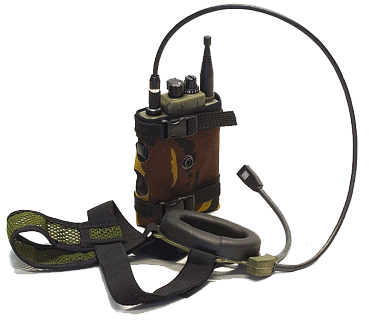
It also produced the BriteCloud system for the Gripen, the SLX Hawk infrared camera, the EMPAR, ATOS, Mirach 26 and 150, the Personal Role Radio, and the Selex RAN-40L and RAT-31DL. Selex ES also contributed to the Main Operating Centre for Expo 2015. The company's independent existence ended on 1 January 2016, when its activities were absorbed into Leonardo-Finmeccanica's Electronics, Defence and Security Systems Sector, and the entity became part of Leonardo S.p.A.
Reader's Guide
Selex ES was notable as a major European defense electronics company formed through the consolidation of several Finmeccanica subsidiaries. Its significance lies in its broad portfolio spanning airborne, land, naval, and security systems, including radar, electronic warfare, avionics, UAVs, and space sensors. The company supplied avionics for the Eurofighter Typhoon and produced systems such as the Euroradar CAPTOR, Pirate IRST, and the Falco UAV. Its legacy includes contributions to international programs like the Gripen fighter (BriteCloud, Raven ES-05 radar, Skyward-G IRST) and the provision of an unarmed surveillance drone to the United Nations for deployment in the Democratic Republic of Congo.
The company also secured a cybersecurity contract with NATO in 2015 and a contract with Angola in 2016 for equipment and services for maritime surveillance centers. Selex ES operated major sites in the UK (Basildon, Edinburgh, Luton, among others) and Italy (Rome, Nerviano, Caselle, Florence), with international subsidiaries including SELEX ES Inc. in the USA and SELEX ES GmbH in Germany. The company's corporate social responsibility included the IGNITE programme in India and the Selex ES 'A. Tiezzi' Museum of Science near Florence, which traces the history of Italian radar.
Frequently Asked Questions
How was Selex ES created?
It came into existence in January 2013 when Finmeccanica folded its two existing units, SELEX Elsag and SELEX Sistemi Integrati, into the entity SELEX Galileo, which then became Selex ES. The move was part of a wider corporate restructuring under the Finmeccanica umbrella.
What business areas did Selex ES cover?
The company was organised into three main divisions: Airborne and Space Systems, Land and Naval Defence Electronics, and Security and Information Systems. That structure made it a key player in both military avionics and civilian IT infrastructure.
More in Flight Instruments and Avionics
Sources
Compiled from Wikipedia and the sources listed below. Text from Wikipedia is available under CC BY-SA 4.0; this entry is adapted from it.
- Wikipedia: Selex ES (CC BY-SA 4.0).
- Currency conversion: European Central Bank euro reference rates, rates of 1 October 2026.
Spotted an error? Know more?
Reader corrections go straight into our review queue. Suggest an edit · How this site is sourced