Transponder (aeronautics)
An aircraft transponder replies to radar interrogation for identification and altitude.
Last updated

Rainmaker47 · CC BY-SA 3.0
A transponder—short for transmitter-responder, also abbreviated XPDR, XPNDR, TPDR, or TP—is an electronic device that replies when it receives a radio-frequency interrogation. In aviation, transponders help air traffic control radar identify aircraft, and they also support collision avoidance systems that detect potential mid-air conflicts.
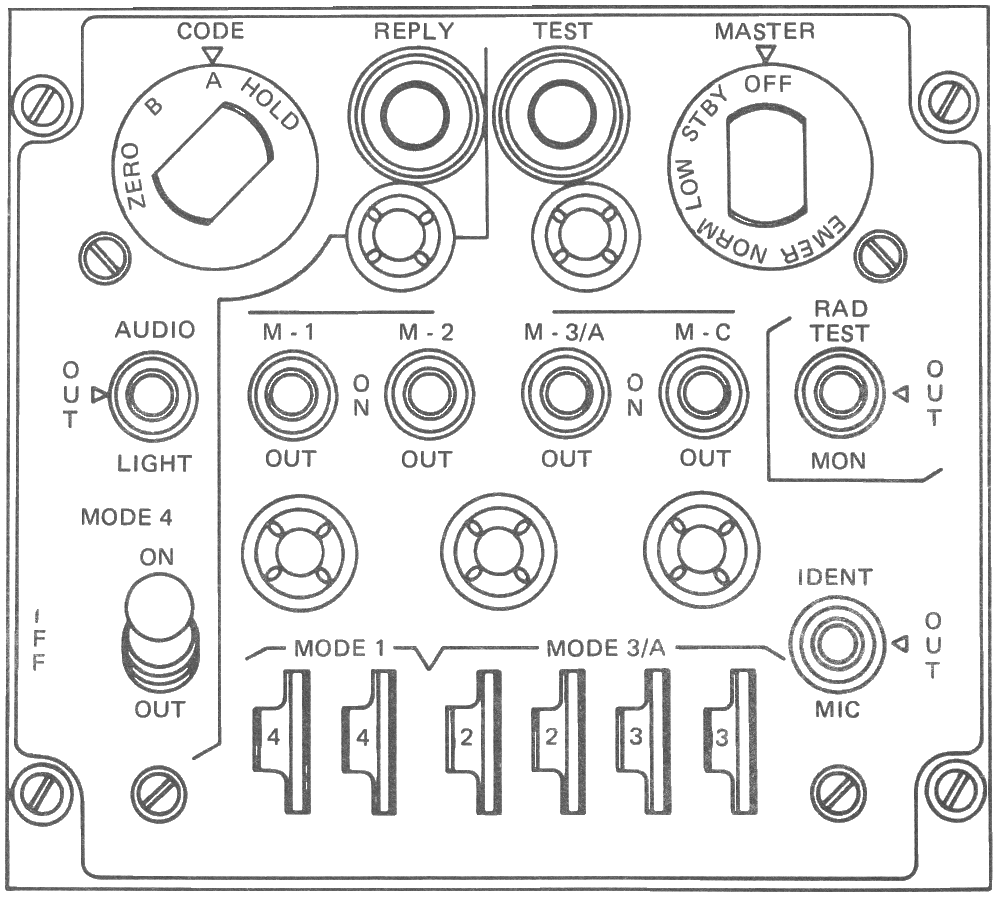
Transponder codes
Air traffic controllers use the word "squawk" when assigning a transponder code, as in "Squawk 7421." "Squawk" means "select this transponder code," and "squawking xxxx" means the pilot has set that code. The transponder receives interrogations from secondary surveillance radar on 1030 MHz and replies on 1090 MHz.
Secondary surveillance radar
Secondary surveillance radar (SSR) is called "secondary" to distinguish it from primary radar, which works by reflecting a signal off the aircraft's skin. Primary radar gives range and bearing accurately but cannot reliably determine altitude except at close range. SSR uses an active transponder to reply to a secondary radar interrogation, typically sending the aircraft's pressure altitude and a four-digit octal identifier.
Operation
When a controller requests a code over the radio—for example, "Cessna 123AB, squawk 0363"—the pilot selects that code, and the aircraft's track on the controller's radar screen becomes correctly linked to its identity. Primary radar lacks altitude information, so mode C and mode S transponders also report pressure altitude. Mode C altitude data comes from the pilot's altimeter and is transmitted using a modified Gray code called Gillham code. If the altimeter lacks an altitude encoder, a blind encoder (which does not display altitude) connects to the transponder.
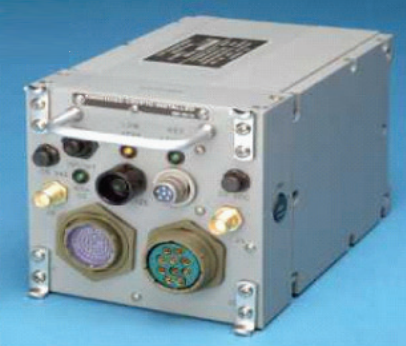
Busy airspace often requires altitude-reporting mode C or mode S transponders; in the United States, this is called a Mode C veil. Mode S transponders can transmit mode C signals, report in 25-foot increments, receive GPS data, and transmit location and speed. Without pressure altitude reporting, controllers have no accurate altitude display and must rely on the pilot's radio reports. Traffic collision avoidance systems (TCAS) also need altitude information from transponder signals.
IDENT
All mode A, C, and S transponders have an "IDENT" switch that activates a special thirteenth bit on the mode A reply, short for "identify." When ground radar receives this bit, the aircraft's blip "blossoms" on the scope.
Quick Facts
- Interrogation frequency
- 1030 MHz
- Reply frequency
- 1090 MHz
- Code format
- four octal digits (0–7 per digit)
- Maximum codes
- 4096
- Common vfr code europe
- 7000
Facts from the source article.
Lore & Background
The transponder receives interrogation from secondary surveillance radar on 1030 MHz and replies on 1090 MHz. Secondary surveillance radar (SSR) is referred to as 'secondary' to distinguish it from primary radar, which works by reflecting a radio signal off the skin of the aircraft. SSR uses an active transponder to transmit a response that most often includes the aircraft's pressure altitude and a 4-digit octal identifier.
The use of the word 'squawk' comes from the system's origin in the World War II identification friend or foe (IFF) system, which was code-named 'Parrot'. Air traffic control units use the term 'squawk' when assigning a transponder code, e.g., 'Squawk 7421'. All mode A, C, and S transponders include an 'IDENT' switch that activates a special thirteenth bit on the mode A reply, causing the aircraft's blip to 'blossom' on the radar scope.
The Heart of Secondary Surveillance
A transponder—short for transmitter-responder, and occasionally abbreviated as XPDR, XPNDR, TPDR, or simply TP—is an electronic device that generates a reply whenever it receives a radio-frequency interrogation. In aviation, this small beacon plays a critical role: it lets air traffic control radar identify aircraft with precision. The system works in a simple call-and-response pattern. A secondary surveillance radar station fires an interrogation signal at 1030 MHz toward the aircraft.
The transponder aboard picks up that signal and immediately transmits a reply on 1090 MHz. The term "secondary" distinguishes this active, cooperative method from primary radar, which merely bounces a radio wave off the aircraft's skin. Primary radar can determine range and bearing with reasonable accuracy, but it struggles to read altitude reliably except at very close range. By contrast, the SSR response typically carries the aircraft's pressure altitude along with a four-digit octal identifier, giving controllers a far richer picture of what is in the sky.
The Language of Squawk
The word "squawk" has become the standard ATC vocabulary for assigning and confirming a transponder code. When a controller says "Squawk 7421," they are instructing the pilot to select that specific code on the transponder panel; the pilot's reply "Squawking 7421" confirms the selection is complete. The code itself is a four-digit number drawn from the octal system, where each dial ranges from zero to seven. That yields a total pool of 4,096 possible combinations, which is why the hardware is often called a "4096 code transponder." The origin of the word traces back to World War II, when the identification friend-or-foe system was code-named "Parrot." In modern operations, ATC units are allocated non-overlapping blocks of codes to avoid confusion.
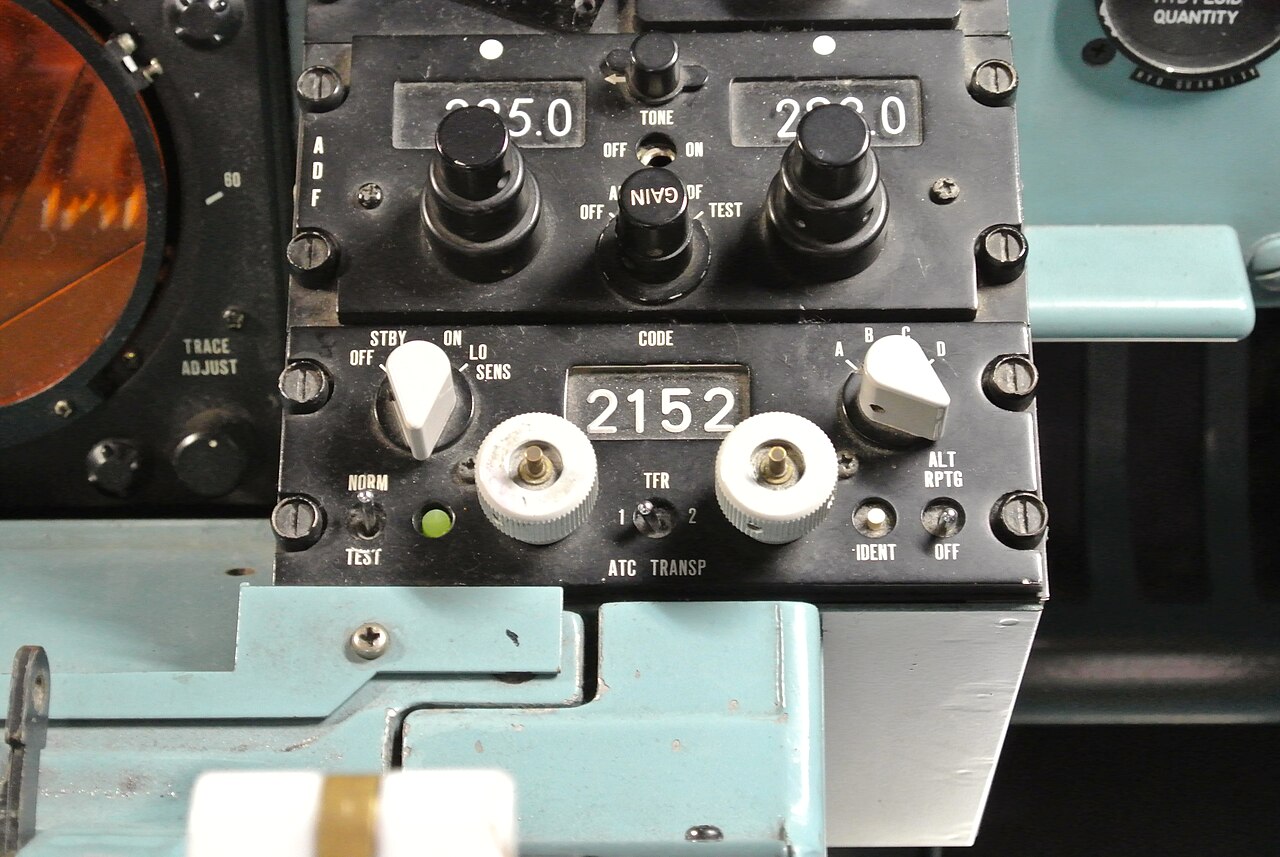
For IFR flights, the squawk code is usually handed out in the departure clearance and remains fixed for the entire journey. VFR pilots in uncontrolled airspace use designated codes—1200 in the United States and Canada, 7000 in Europe—and are instructed to "squawk VFR" again whenever they re-enter controlled airspace or switch to a new ATC frequency. Even non-radar units like London Information assign a code (1177) so that radar-equipped controllers know the aircraft is listening on a particular frequency.
Altitude Reporting and the Mode C Veil
One of the most consequential capabilities of modern transponders is altitude reporting. Mode C transponders transmit pressure altitude derived from the pilot's altimeter, encoded using a modified Gray code known as the Gillham code. When the altimeter lacks a built-in altitude encoder, a separate blind encoder—so called because it does not display altitude to the pilot—is wired directly to the transponder. Mode S transponders go further: they are backward-compatible with the Mode C signal, can report altitude in 25-foot (7.5-meter) increments, pull data from a GPS receiver, and additionally broadcast location and speed.
Around congested airspace, regulations often mandate that every aircraft carry at least a Mode C or Mode S unit. In the United States this requirement is colloquially called the "Mode C veil." Without altitude data from the transponder, a controller has no reliable altitude display and must fall back on the pilot's verbal reports over the radio. The traffic collision avoidance system, or TCAS, installed on many aircraft to warn pilots of imminent mid-air collisions, also depends on the altitude information embedded in transponder replies to function correctly.
IDENT and the Cost of Misidentification
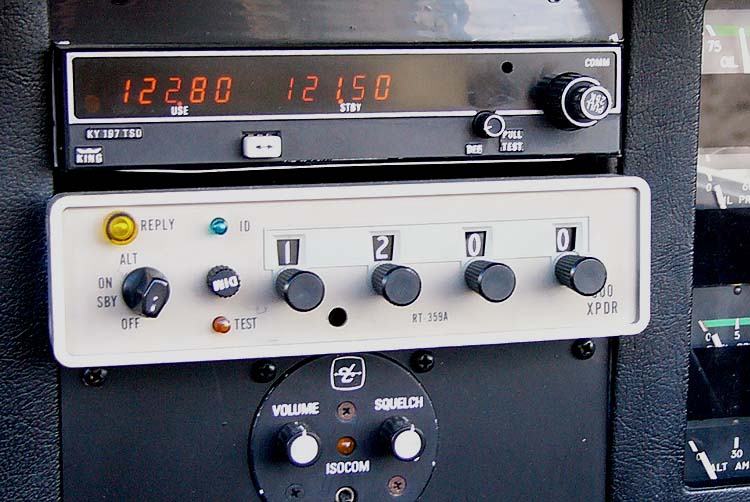
Every Mode A, C, and S transponder carries an IDENT switch that activates a special thirteenth bit in the Mode A reply. When ground radar equipment detects that bit, the aircraft's blip on the scope "blossoms"—a visual flare that lets a controller instantly pick out one target among a crowded sector. A typical instruction might read, "Cessna 123AB, squawk 0363 and ident." Beyond routine identification, the IDENT function serves as a diagnostic tool during suspected radio failures: a controller can ask, "If you read, squawk ident," to determine whether the pilot can still receive or transmit, or both. The stakes of transponder-related errors, however, can be catastrophic.
Aeroméxico Flight 498 in August 1986 involved an aircraft equipped with a Mode A but not a Mode C transponder. Iran Air Flight 655, shot down on July 3, 1988, was partly a tragedy of an incorrectly interpreted transponder code that contributed to mistaken identity. Proteus Airlines Flight 706, a mid-air collision on July 30, 1998, also involved transponder factors. These incidents underscore how a small electronic reply, when misread or absent, can have devastating consequences.
Reader's Guide
Transponders are fundamental to modern air traffic control and collision avoidance. Mode C and mode S transponders report pressure altitude, which is essential because primary radar generally lacks altitude information. Mode C altitude information conventionally comes from the pilot's altimeter and is transmitted using a modified Gray code called Gillham code; where the altimeter lacks an encoder, a blind encoder is connected. Around busy airspace, regulatory requirements often mandate altitude-reporting mode C or mode S transponders—in the United States, this is known as a Mode C veil.
Mode S transponders are compatible with mode C signals, can report in 25 ft increments, and receive information from a GPS receiver to transmit location and speed. Without pressure altitude reporting, air traffic controllers have no display of accurate altitude and must rely on pilot-reported altitude via radio. The traffic collision avoidance system (TCAS) also needs altitude information supplied by transponder signals.
Transponder codes are four-digit octal numbers; discrete codes assigned by ATC uniquely identify an aircraft in a flight information region. Some codes, called conspicuity codes in the UK, can be selected by the pilot without ATC permission. Emergency codes are applicable worldwide. Transponder-related incidents have included mid-air collisions where transponders were switched off or lacked altitude reporting, and mistaken identity cases involving incorrect interpretation of transponder codes.
More in Flight Instruments and Avionics
Sources
Compiled from Wikipedia and the sources listed below. Text from Wikipedia is available under CC BY-SA 4.0; this entry is adapted from it.
- Wikipedia: Transponder (aeronautics) (CC BY-SA 4.0).
Spotted an error? Know more?
Reader corrections go straight into our review queue. Suggest an edit · How this site is sourced