Julidochromis
Small cichlids endemic to Lake Tanganyika, with complex taxonomy and breeding behavior.

Julidochromis is a genus of cichlids in the subfamily Pseudocrenilabrinae, commonly called julies, endemic to Lake Tanganyika in eastern Africa. The genus includes six formally described species, with several local variants of uncertain taxonomic status, and further taxonomic work is required to determine how many species exist.
- Size range
- 7–15 cm (2.8–5.9 in)
- Number of formally described species
- 6
- Type species examples
- Julidochromis dickfeldi, Julidochromis marksmithi, Julidochromis marlieri, Julidochromis ornatus, Julidochromis regani, Julidochromis transcriptus
- Described by
- Staeck (1975), W. E. Burgess (2014), Poll (1956), Boulenger (1898), Poll (1942), Matthes (1959)
- Water parameters for aquarium
- pH 8.5–9.0, hardness 12–14 kH
- Minimum aquarium size
- 60–80 litres (13–18 imp gal; 16–21 US gal)
Lore & Background
Julidochromis species are ray-finned fish with a yellowish background color and black lengthwise stripes or a checkerboard pattern. Their systematics are hard to resolve with certainty; the closely related Chalinochromis is sometimes included in this genus, and hybridization with Chalinochromis and Telmatochromis makes molecular phylogenetic analysis difficult. Some evidence suggests Julidochromis might need to be split into two lineages, or that it is monophyletic and includes Chalinochromis.
These fish are secretive biparental substrate spawners, retreating to caves or rock crevices. Pairs are largely monogamous, but the largest male may maintain harems (polygyny) and the largest females may mate with multiple males at multiple nesting sites (polyandry). If a pair-bond breaks, the larger fish drives the smaller out of the territory, sometimes killing it. In some species, such as Julidochromis marlieri, females are substantially larger than males and often dominate males larger than themselves.
Julidochromis species have two spawning rhythms: depositing a large number of eggs (up to several hundred) every four to six weeks, or spawning sequentially with a small number of eggs every few days, resulting in fry of different ages in the same nest. Both parents tend the eggs by mouthing them to remove algae and fanning them to increase oxygen flow, with the smaller fish doing most of the parental care.
Reader's Guide
Julidochromis are small-growing dwarf cichlids that are easy to spawn and care for if their basic needs are fulfilled. Like all Lake Tanganyika cichlids, they are best maintained in hard alkaline water with a pH of 8.5–9.0 and a hardness of 12–14 kH, in aquaria no smaller than 60–80 litres. Only one species of Julidochromis should be kept per aquarium, as species within the genus tend to hybridize easily; hybridization with Chalinochromis and Telmatochromis is also suspected, so it is best to avoid keeping more than one species of the tribe Lamprologini per tank.
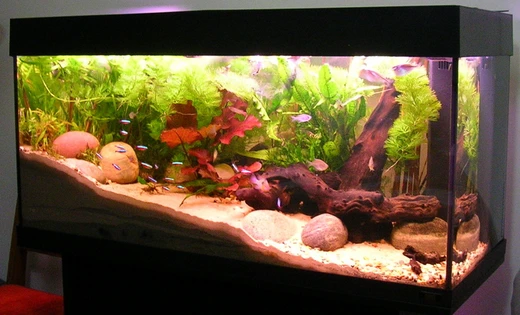
The tank should be decorated with rocks to form caves and passageways as shelter, as these fish are territorial and somewhat aggressive. However, they can be shy, and the use of dither fish may reduce their tendency to remain hidden. They are best kept with other cichlids rather than general tropical fish. Pair bonds can break, and hostilities may result in the death of the smaller fish; if a pair splits in an aquarium, it is often best to separate them. Fry can be maintained with the parents and should be fed protein-rich foods such as baby brine shrimp.
Taxonomy & Evolutionary Origins
The convict julie, scientifically designated Julidochromis regani, is a ray-finned cichlid belonging to the subfamily Pseudocrenilabrinae. Its range is restricted entirely to Lake Tanganyika, meaning it can be encountered in the waters shared by Burundi, the Democratic Republic of the Congo, Tanzania, and Zambia. The species bears the name of Charles Tate Regan, honoring his contributions to fish taxonomy. What makes this small fish particularly fascinating to evolutionary biologists is its suspected origin through an ancient hybridization event. Julidochromis regani is closely related to its congener J. marlieri, and researchers hypothesize that a male common ancestor of these two lineages mated with a female belonging to the genus Telmatochromis at some point in the past. This cross-lineage pairing would have blended genetic material from two distinct cichlid lineages, producing a hybrid that eventually gave rise to the convict julie as we know it today. Such a scenario underscores the extraordinary creative power of hybridization in the cichlid radiations of the African Rift Valley lakes.
Physical Appearance & Regional Variation
At a maximum total length of roughly thirteen centimetres, Julidochromis regani is a compact, slender fish whose body takes on a pale to golden-yellow hue. The most striking visual feature is the set of black stripes adorning its flanks. Every individual carries four slender lateral stripes running the full length of the body, yet the precise pattern shifts from one region of Lake Tanganyika to another. In some populations the fourth stripe is confined to the head rather than extending along the body. On the dorsal fin these markings appear as vertical bars, and the trailing edges of the caudal, dorsal, and anal fins are trimmed in white, while the pectoral fins retain a yellow coloration. Determining the sex of a convict julie is notoriously tricky. Males possess a small genital papilla, and females tend to appear noticeably plumper, but these cues are subtle and easily missed. The combination of the bold black-and-yellow livery, the regional stripe variation, and the difficulty of sexing makes this species a rewarding subject for careful observation whether in the wild or under glass.
Ecology & Breeding Behavior
In the wild, Julidochromis regani is an omnivorous forager, taking a mixed diet of animal and plant matter. Socially, the species is best described as a largely monogamous pair-bonder, yet the picture is not entirely rigid. Instances of polyandry—where a single female mates with more than one male—have been documented both in natural Tanganyikan habitats and in the controlled environment of home aquaria, suggesting a degree of reproductive flexibility. Reproduction follows a secretive, biparental strategy. Pairs select a sheltered site, typically a cave or a narrow rock crevice, where the female lays her eggs on the substrate. Both parents then guard the clutch and the emerging young within that protected microhabitat. This reliance on hard-structured refuges for both shelter and breeding explains why the species is so tightly associated with the rocky shores and submerged boulder fields of Lake Tanganyika. The combination of cautious, cave-oriented breeding and the occasional departure from strict monogamy paints a portrait of a small cichlid that balances social stability with pragmatic flexibility.
Aquarium Keeping & Hybridization Risks
For hobbyists, the convict julie is a rewarding yet demanding dwarf cichlid. It thrives in hard, alkaline water—ideally a pH between 8.5 and 9.0 with a carbonate hardness of 12 to 14 kH—and requires a tank of at least sixty to eighty litres. The aquarium should be heavily structured with rockwork forming caves and passageways, mirroring the species' natural reliance on crevices. Because these fish are territorial and can be rowdy, keeping them alongside other cichlid species helps diffuse aggression. A critical caution: only one Julidochromis species should ever share a single tank. Members of this genus hybridize readily, and cross-breeding with Chalinochromis and Telmatochromis has been suspected. In the broader Lamprologini tribe, such hybridization is common enough that experienced keepers limit themselves to a single species per aquarium. Breeding is most reliably achieved by raising a group of juveniles together until natural pair-bonds form. Fry remain with their parents and should be offered protein-rich foods like baby brine shrimp, and observers may occasionally see adults leading their young in a loose procession through the tank.
Frequently Asked Questions
What is Julidochromis?
Julidochromis is a small genus of cichlid fish found only in Lake Tanganyika in East Africa, and hobbyists usually just call them julies. They sit within the subfamily Pseudocrenilabrinae and are prized for their bright colours and lively courtship displays.
How big do julies typically grow?
Adults across the genus generally land somewhere between 7 and 15 centimetres (about 2.8 to 5.9 inches), with the exact size varying by species and water quality.
What water parameters do Julidochromis need in a tank?
These Tanganyikan specialists do best in alkaline, moderately hard water, targeting a pH of roughly 8.5 to 9.0 and a carbonate hardness of 12 to 14 dKH. Mimicking the mineral profile of their native lake is the single most important factor for keeping them healthy and vividly coloured.
How many species of Julidochromis are officially recognised?
Six species have been formally described so far, but several local colour and pattern variants of uncertain status still exist in the wild. Taxonomists agree that further field and genetic work is needed before we can say with confidence how many true species the genus actually contains.
What is the minimum aquarium size for keeping julies?
A tank of at least 60 to 80 litres (roughly 13 to 21 US gallons) is the usual recommendation for a small group or a single-species display. Because julies can become quite territorial around spawning cavities, generous rockwork and multiple hiding spots go a long way toward reducing aggression.
More in Fishkeeping, Part 3 1-24
Spotted an error? Know more?
Reader corrections go straight into our review queue. Suggest an edit · How this site is sourced