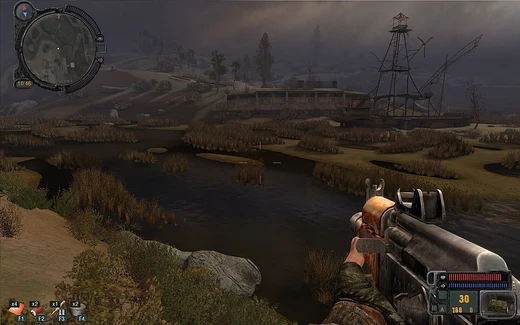
Deadly Dozen
A squad-based WWII shooter inspired by The Dirty Dozen.

Deadly Dozen is a squad-based first-person shooter set during World War II, released in 2001 and developed by nFusion Interactive. Its name is a nod to the classic war film *The Dirty Dozen*, and like that movie, it follows a group of military convicts—soldiers under death sentences or long prison terms—who are offered a shot at redemption through hazardous missions.
The game features twelve characters, each with a distinct specialty, such as sniper or demolition expert. For each mission, players choose four of these operatives to deploy in the European theater.
Upon release, Deadly Dozen received mixed reviews. On Metacritic, it earned a score of 56 out of 100 from seven reviews, categorized as "mixed or average." GameRankings gave it a 61.33% based on twelve reviews.
In July 2013, Tommo acquired the rights to Deadly Dozen, along with many other assets, during Atari’s bankruptcy sale. Tommo later re-released the game on Steam under its "Retroism" label in 2015. By March 2020, ownership of Deadly Dozen and other Retroism titles transferred to the newly formed Ziggurat Interactive, which currently publishes the game.
In January 2022, Ziggurat Interactive announced *Deadly Dozen Reloaded*, a remaster of the original for PCs and consoles. It launched on PC via Steam and GOG.com in April 2022, with versions for Nintendo Switch, PlayStation 4, and Xbox One following later that year.
Quick Facts
- Title
- Deadly Dozen
- Developer
- nFusion Interactive
- Publisher
- Infogrames (original) / Ziggurat Interactive (Reloaded)
- Genre
- Tactical shooter
- Modes
- Single-player
- Platforms
- Windows · Nintendo Switch · PlayStation 4 · Xbox One
Facts from the source article.
Lore & Background
Deadly Dozen was released in 2001 and developed by nFusion Interactive. Its title and premise draw directly from the film The Dirty Dozen, featuring military misfits sentenced to death or long term imprisonment who are given dangerous missions to redeem themselves. The game's twelve characters each have different specializations, such as sniper and demolition expert, and for every mission the player selects four of them from the European theater.
The game received mixed reviews upon release, holding a score of 56/100 on Metacritic and 61.33% on GameRankings. It was followed by a sequel titled Deadly Dozen: Pacific Theater.
In July 2013, Tommo purchased many assets from Atari during their bankruptcy sale, including Deadly Dozen. The company later re-released it on Steam under their 'Retroism' brand in 2015. By March 2020, ownership of the title was transferred to Ziggurat Interactive, who currently publish the game. In January 2022, Ziggurat Interactive announced Deadly Dozen Reloaded, a remaster for PCs and consoles, released for PC via Steam and GOG.com in April 2022, with Nintendo Switch, PlayStation 4 and Xbox One versions released later that year.
Reader's Guide
Deadly Dozen is notable as a squad-based first-person shooter set in World War II, drawing its narrative structure from the classic film The Dirty Dozen. Its mixed critical reception, reflected in a Metacritic score of 56/100 and a GameRankings score of 61.33%, indicates a game that was neither widely praised nor condemned. The game's legacy includes a sequel, Deadly Dozen: Pacific Theater, and a later remaster titled Deadly Dozen Reloaded, released in 2022. The title's ownership history is also significant: after Atari's bankruptcy sale in July 2013, Tommo acquired the rights and re-released it on Steam in 2015 under the Retroism brand. In March 2020, ownership transferred to Ziggurat Interactive, who currently publish the game and produced the remaster. This chain of ownership and re-release highlights the game's enduring, if niche, presence in the shooter genre.
Did You Know?
- The game's title refers to the famous World War II film The Dirty Dozen.
- A remaster, Deadly Dozen Reloaded, was released for PC in April 2022 and for consoles later that year.
The Drive-Through Attack
At approximately 2:29 in the afternoon on August 1, 2026, the first emergency calls reached Twin Falls police, reporting an active shooter at a newly opened In-N-Out Burger. Twenty-four-year-old Chad Williams had pulled his vehicle to the payment window and killed employee Ashley Garibay with a handgun. He then advanced down the drive-through lane and fatally shot Christopher Claunch, who had been sitting in a separate car. A former officer and state trooper, Austin Scott James, rushed toward the scene and was shot and wounded before bystanders pulled him back. Williams returned to the window, firing at staff who were tending to Garibay, until his pistol jammed. He retrieved a rifle from his car, and the confrontation with off-duty trooper Steve McClain escalated into a brief exchange of gunfire. After striking a bystander in the abdomen and sweeping toward Blue Lakes Boulevard North, Williams opened fire on cars stopped at a red light, wounding two sisters-in-law—one in the face, the other six months pregnant. He then ran to a Tesla charging station, where he fatally shot Dale Schultz and injured Schultz's wife inside a parked vehicle.
Ordinary People in the Line of Fire
The hours around the Twin Falls shooting were shaped as much by the actions of untrained civilians as by the gunman himself. Steve McClain, an off-duty Idaho state trooper who happened to be inside the restaurant, moved past panicking employees to confront Williams at the payment window, trading shots until the attacker retreated. Jordan Salinas, who had arrived with his girlfriend after the gunfire began, spotted Williams near the drive-through and fired with a suppressed FN Five-seven pistol—action police later credited with preventing further casualties. At the visitor center, tour guide Gabrielle Burton initially mistook the shots for fireworks, then quickly herded roughly three dozen guests away from windows and into a locked back hallway. On Canyon Rim Trail, seventeen-year-old Dick's Sporting Goods employee Braxton Stuebe, who had just evacuated patrons through the store's rear, approached Williams and pleaded with him to stop, even invoking his own family. Each of these individuals acted without training or authority, and each intervention altered the trajectory of the attack.
A New Restaurant in a Regional Hub
The In-N-Out Burger at the center of the August 2026 attack had been open for exactly one week. The company's 441st restaurant and fourth location in Idaho, it occupied a former Outback Steakhouse site in Twin Falls' north-side commercial corridor, an area dense with hotels, chain stores, and eateries drawing both locals and travelers. The Twin Falls City Council had approved the building permits in the fall of 2024, and construction took place during 2025 as part of In-N-Out's broader push into the state. Twin Falls itself sits roughly 130 miles southeast of Boise and functions as a commercial and social anchor for much of southern Idaho. The combination of a brand-new establishment, a high-traffic retail strip, and the city's role as a regional destination meant the restaurant was already drawing a steady stream of customers on the day of the shooting. Authorities have not yet determined a motive, and the investigation into why Williams targeted that specific location remains ongoing.
The Canyon Trail and the End
After killing Dale Schultz and wounding his wife at the Tesla charging station, Williams walked toward the Twin Falls Visitor Center, where about three dozen people were sheltering. Tour guide Gabrielle Burton had already secured the building's back hallway, and Williams passed a stagecoach where one person was hiding without spotting them. At the rear wall he found an emergency exit opening onto Canyon Rim Trail and slipped outside. There he ran into two Dick's Sporting Goods employees, including seventeen-year-old Braxton Stuebe, who had been evacuating customers. Stuebe tried to talk Williams down, begging him to stop and referencing his family. A confrontation with an employee from a nearby store followed, and Williams was eventually located by responding officers while hiding near the rim of a canyon along the walking trail. There, he took his own life. The first officer on scene had been directed to Williams' position by McClain, and the pursuit that closed the gap between the restaurant and the trail edge lasted only minutes. Three lives were lost that afternoon; seven more were wounded.
Frequently Asked Questions
What is Deadly Dozen and who made it?
Deadly Dozen is a squad-based first-person shooter set in World War II, developed by nFusion Interactive and released in 2001. Its title is a direct homage to the classic film The Dirty Dozen, and the game channels that same spirit of an unlikely team thrown into dangerous operations.
How does the squad-selection mechanic work in Deadly Dozen?
The game gives you a roster of twelve operatives, each with a unique specialty ranging from sniping to demolition. Before every mission in the European theater, you pick four of those twelve to form your active squad, so the tactical mix changes from one operation to the next.
What is the story premise of Deadly Dozen?
The narrative follows a group of military convicts—soldiers facing death sentences or lengthy prison terms—who are handed a chance at redemption by being assigned to high-risk combat missions. Rather than a single protagonist, the story is told through the collective experiences of this mismatched unit.
How did critics and players rate Deadly Dozen?
Reviews were mixed overall: Metacritic logged a 56 out of 100 based on seven critic reviews, while Game Rankings aggregated a 61.33 percent score from twelve user reviews. Fans of squad-based combat tend to rate it more favorably than its aggregate scores suggest.
Is there a sequel to Deadly Dozen?
Yes—nFusion Interactive followed up with Deadly Dozen: Pacific Theater, which shifts the setting from the European front to the Pacific theater while keeping the same squad-based, convict-redemption framework.
More in First-Person Shooters of the 2000s, Part 1 1-24
Spotted an error? Know more?
Reader corrections go straight into our review queue. Suggest an edit · How this site is sourced