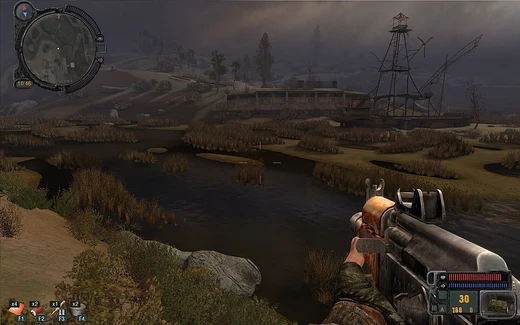
Call of Juarez: Bound in Blood
A prequel Western shooter focusing on the McCall brothers.

Call of Juarez: Bound in Blood is a 2009 Western-themed first-person shooter developed by Techland and published by Ubisoft. It is the second game in the Call of Juarez series, though narratively it serves as a prequel to the first game, and was released for PlayStation 3, Windows, and Xbox 360.
Quick Facts
- Title
- Call of Juarez: Bound in Blood
- Developer
- Techland
- Publisher
- Ubisoft
- Producer
- Paweł Zawodny
- Designer
- Paweł Marchewka · Jakub Klarowicz
- Programmer
- Bartosz Bień · Grzegorz Świstowski · Marcin Żygadło
- Artist
- Paweł Selinger
- Writer
- Paweł Selinger · Haris Orkin
- Composer
- Paweł Błaszczak
- Series
- Call of Juarez
- Engine
- Chrome Engine 4
- Platforms
- PlayStation 3 · Windows · Xbox 360
Facts from the source article.
Lore & Background
The majority of the story takes place eighteen years prior to the first game, following the McCall brothers Ray and Thomas during the American Civil War. In August 1864, they abandon their post to save their family home, becoming labeled deserters. They go on the run with their younger brother William, a trainee priest. Two years later in Mexico, they meet bandit Juan 'Juarez' Mendoza and his girlfriend Marisa, and first encounter the legend of the Gold of Juarez. With their army commander still pursuing them, they form a dangerous alliance with Mendoza and an Apache tribe to find the gold, while both brothers fall in love with Marisa. Techland removed the stealth and platforming elements criticized in the first game, drawing inspiration from Spaghetti Westerns and classical Hollywood westerns. The script touches on psychological effects of the Civil War, Mexican banditry, racism, and white suppression of Native Americans.
Reader's Guide
Bound in Blood received mainly positive reviews, with most critics finding it better than the original. Praise was given to the plot, shooting mechanics, authentic western tone, voice acting, and multiplayer. Criticism focused on poor enemy AI, repetitive level design, and the lack of a co-op mode. The game was a commercial success, selling over one million units worldwide across all three systems, considerably more than the first game. It was made available on the PlayStation Store and Xbox Games Store in December 2011, added to Microsoft's backward compatibility program in November 2018, and released on GOG.com in September 2019. The game features two playable protagonists with distinct gameplay styles, a choice of character in most levels, and various multiplayer modes including Shootout, Posse, Wanted, Manhunt, and Wild West Legends.
Did You Know?
- The game is a prequel to the first Call of Juarez, with the story set eighteen years earlier.
- Ray McCall can dual wield six-shooters and use a dismountable gatling gun and dynamite.
- Thomas McCall can use a lasso, bow, and throwing knives, and his bow allows slow-motion aiming.
- The game sold over one million units worldwide, considerably more than the first game.
Seeds of Violence: Migration, Media, and the Birth of Belizean Gangs
In the 1960s, Hurricane Hattie devastated Belize City's economy, pushing many Belizeans to seek new lives in American cities such as Chicago, Los Angeles, and New York. Those who settled in Los Angeles found themselves drawn into the emerging Bloods and Crips street gangs. During holiday visits home or upon deportation back to Belize, these emigrants carried that gang culture with them. Local youths, already primed by American media, latched onto the idea quickly. The 1970s screening of The Wild Bunch was credited by Home Affairs officials as the country's first real exposure to gang culture, with impressionable teenagers reportedly imitating what they saw on screen and naming themselves after the film. The arrival of television in the 1980s, alongside the premiere of the movie Colors, further fueled this fascination. Simultaneously, a wave of US deportees from Los Angeles arrived in Belize, and these individuals are credited with founding the country's first formal Bloods chapter on George Street and its first Crips chapter on Majestic Alley. By the late 1980s, young people were openly fighting over colors and territory, marking the point at which gangs had taken firm root in the nation.
Escalation: From Sporadic Violence to Sustained Bloodshed
The turning point toward open gang warfare arrived in 1992 with the killing of Derek Itza Brown, a Crips leader, at the National Stadium in Belize City, followed by the retaliatory murder of Lyndon Tunan Arnold, a Bloods leader, in New York City. These twin killings shattered whatever fragile restraint had existed and set off a prolonged cycle of retaliatory violence. The 2000s brought a dramatic intensification driven by shifting drug-trade dynamics: as enforcement in Colombia and other regions successfully disrupted maritime cocaine routes through the Caribbean, Central America, including Belize, became the primary remaining corridor for shipments destined for the United States. Gang activity surged in direct response. In 2008 alone, two landmark incidents occurred: the Putt Putt mass shooting, which produced the highest single-event casualty count in the country's gang history, and the Mayflower grenade attack, the first of its kind. By 2009, Belize's murder rate had doubled from an already staggering sixteen per hundred thousand recorded in 2000, underscoring how the convergence of trafficking economics and entrenched rivalry had transformed localized disputes into a national crisis.
The State's Struggle: Denial, Intervention, and Persistent Failure
For years, Belizean authorities maintained an official position of dismissal, insisting that self-identified Bloods and Crips members were merely name-adopters rather than genuine gang participants. This denialism collapsed under the weight of escalating violence. The 1990 muggings and beatings of schoolchildren who had refused to pay protection money triggered increased police patrols and periodic sweeps, though operations like Operation Thunder drew criticism on civil-rights grounds for their questionable legality. The 1991 drive-by shooting that killed a student at Excelsior High in Port Loyola, alongside other high-profile crimes, finally compelled a joint police-military operation to reclaim the streets, marking the first deployment of the Belize Defence Force for domestic law enforcement, and the establishment of a Crimes Commission. The 1992 murders prompted the Crime Control and Criminal Justice Act, the nation's earliest parliamentary gang legislation, and a 1995 truce known as the Bird's Isle agreement. Yet despite subsequent truces, rehabilitative programs, policing reforms, and judicial measures, the violence never truly abated. By 2023, comprehensive long-term intervention still eluded both public and private actors.
Transformation: From Coordinated Factions to a Fragmented Ecosystem
The earliest street groups in Belize were small, loosely organized crews of lower- and working-class Creole youths who claimed street corners, alleyways, and playgrounds in Belize City for cannabis use and petty crime. The arrival of the Bloods and Crips consolidated these disparate groups into two larger, more structured organizations, each composed of experienced members and aspiring recruits. By the early 1990s, foreign drug traffickers had co-opted these gangs as transshipment networks for cocaine bound for America, paying in weapons and a share of the cargo for local crack production and sale. Extortion, including protection-money demands from schoolchildren, alongside assaults, kidnappings, and homicides, became routine. Allegations also surfaced linking gang operations to the illicit interests of corrupt local politicians. However, as the first generation of gangs began to splinter, the rigid Bloods-versus-Crips rivalry eroded. A new generation of groups emerged in the 2000s bearing only nominal ties to either American faction. By the 2010s, these newer gangs drew their identity less from US gangsta culture and more from Jamaican rude boy aesthetics and music, signaling a fundamental shift in the character of organized violence in the country.
Frequently Asked Questions
What is Call of Juarez: Bound in Blood?
It is a 2009 Western-themed first-person shooter developed by Techland and published by Ubisoft, following the McCall brothers through a revenge-driven campaign. The game is the second entry in the Call of Juarez franchise and is set during the American Civil War era.
How does Bound in Blood relate to the original Call of Juarez?
Despite being the second title released, Bound in Blood serves as a narrative prequel to the first game. Its plot events unfold before the original's story, providing backstory on the McCall family and the roots of their conflict.
What platforms was Call of Juarez: Bound in Blood released on?
The game shipped for PlayStation 3, Xbox 360, and Windows PC. North American players received it in June 2009, while Australian and European audiences got it the following month in July 2009.
Who are the main characters in Bound in Blood?
The campaign centers on the McCall brothers, two outlaws whose personal vendetta and rivalry drive the entire story. Their shared history and clashing motivations form the emotional backbone of the prequel narrative.
Why is Bound in Blood notable among 2000s first-person shooters?
It distinguished itself by pairing standard FPS gunplay with a deeply personal Western revenge plot rather than a generic military or sci-fi setting. Techland's emphasis on character-driven storytelling and the Civil War-era backdrop gave the game a unique identity within the genre.
More in First-Person Shooters of the 2000s, Part 1 1-24
Spotted an error? Know more?
Reader corrections go straight into our review queue. Suggest an edit · How this site is sourced