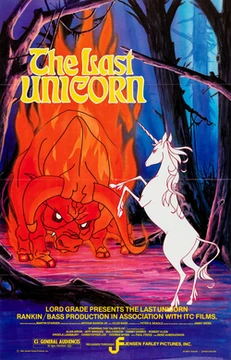
The Little Unicorn
A 2001 South African direct-to-video fantasy adventure film.

Mooshuu from San Diego · CC BY-SA 2.0
The Little Unicorn is a 2001 fantasy adventure film from South Africa, released directly to video. It was written, co-produced, and directed by Paul Matthews. The plot centers on Polly Regan and her grandfather, who must save a young unicorn after it is taken by the owners of a circus.
The cast includes Brittney Bomann as Polly Regan, Byron Taylor as Toby Cooper, Emma Samms as Lucy Regan, David Warner as Ted Regan, Mick Walter as Mighty, Joe Penny as Tiny, George Hamilton as The Great Allonso, and Christopher Atkins as PC Sid Edwards.
Critical reception was poor. Vince Leo of Qwipster's Movie Reviews gave the film one and a half stars out of five, criticizing it harshly. He found no redeeming qualities in the production, stating that unless a viewer is a young child obsessed with unicorns, there is nothing to recommend. He described the film as derivative, with an ugly undercurrent unsuitable for a supposedly heartwarming story, and called it boring, noisy, and an agonizing 80 minutes. He noted that Matthews later made a similar film, *The Last Leprechaun*, with much of the same cast, and declared he would never review it, having given *The Little Unicorn* the alternate title "THE LAST PAUL MATTHEWS FILM I'LL EVER SEE."
In 2017, RiffTrax released a downloadable version of the film featuring a comedic commentary track.
Quick Facts
- Writer
- Paul Matthews
- Starring
- Brittney Bomann / Byron Taylor / Emma Samms / David Warner / Mick Walter
- Producer
- Elizabeth Matthews / Paul Matthews
- Cinematography
- Vincent G. Cox
- Editing
- Peter H. Matthews
- Music
- Mark Thomas
- Studio
- Peakviewing Transatlantic PLC
- Distributor
- Aquarius TV / Edel Media & Entertainment / Moviemax Family / SBP / Top Tape
- Released
- 21 August 2001 (USA)
- Runtime
- 92 minutes
- Country
- South Africa
- Language
- English
Facts from the source article.
Reader's Guide
The Little Unicorn received a negative review from Vince Leo of Qwipster's Movie Reviews, who gave it one and a half out of five stars. Leo criticized the film as derivative, boring, and noisy, stating that it had an undercurrent of ugliness out of place in a heartwarming tale. He noted that writer-director Paul Matthews followed this film with another similar work, The Last Leprechaun, featuring much of the same cast. In 2017, RiffTrax released a downloadable version of The Little Unicorn with a comedic commentary track. The film's significance lies primarily in its status as a low-budget South African direct-to-video release and its subsequent mockery by RiffTrax.
Did You Know?
- In 2017, RiffTrax released a downloadable version with a comedic commentary track.
- Paul Matthews followed this film with The Last Leprechaun, using much of the same cast.
Ancient Roots in the Indus Valley
The earliest known artistic depictions of a one-horned creature appear on soapstone stamp seals from the Bronze Age Indus Valley civilization, dating to roughly 2000 BC. These seals portray a bovine-bodied animal with a curved horn that sweeps forward and then angles upward at its tip, always rendered in strict profile. A mysterious feature hangs from the front of its back, possibly a harness or some covering. The creature typically faces a vertical two-staged object interpreted variously as a ritual offering stand, an incense burner, or a manger. Scholars believe the unicorn served as the emblem of a powerful clan or merchant community, though it may also have carried religious significance. Small terracotta figurines, likely toys, confirm the single-horn reading and rule out the idea that a second horn is simply hidden in the profile view. After the Indus Valley period, the unicorn vanishes from South Asian art entirely. While Jonathan Mark Kenoyer argues there is no direct link between this ancient motif and later one-horned creatures elsewhere, some scholars still entertain the possibility that it seeded broader West Asian myths of fantastical horned beasts.
The Greek Naturalists' Quest
Greek writers of classical antiquity did not place the unicorn within their mythological framework; instead, they treated it as a real animal inhabiting the distant, wondrous land of India. Ctesias, writing from Persia, provided the earliest known description in his work Indika, portraying the creature as a fleet-footed wild ass bearing a horn roughly seventy centimeters long, colored in patches of white, red, and black, and possessing meat so bitter it was inedible. Aristotle, likely drawing on Ctesias, referenced both an oryx and an Indian ass as one-horned animals. Strabo described one-horned horses with stag-like heads in the Caucasus region. Pliny the Elder offered a more elaborate account of the monoceros, a fierce beast combining the head of a stag, feet of an elephant, tail of a boar, and the body of a horse, crowned by a single black horn nearly ninety centimeters long. Aelian, quoting Ctesias, noted the animal was sometimes called cartazonos, possibly a Greek rendering of the Arabic word for rhinoceros. Even Cosmas Indicopleustes, a sixth-century traveler, recorded descriptions based on bronze figures in an Ethiopian palace, where the unicorn was said to survive a fatal fall by somersaulting so its horn absorbed the impact.
Medieval Allegory and the Narwhal Deception
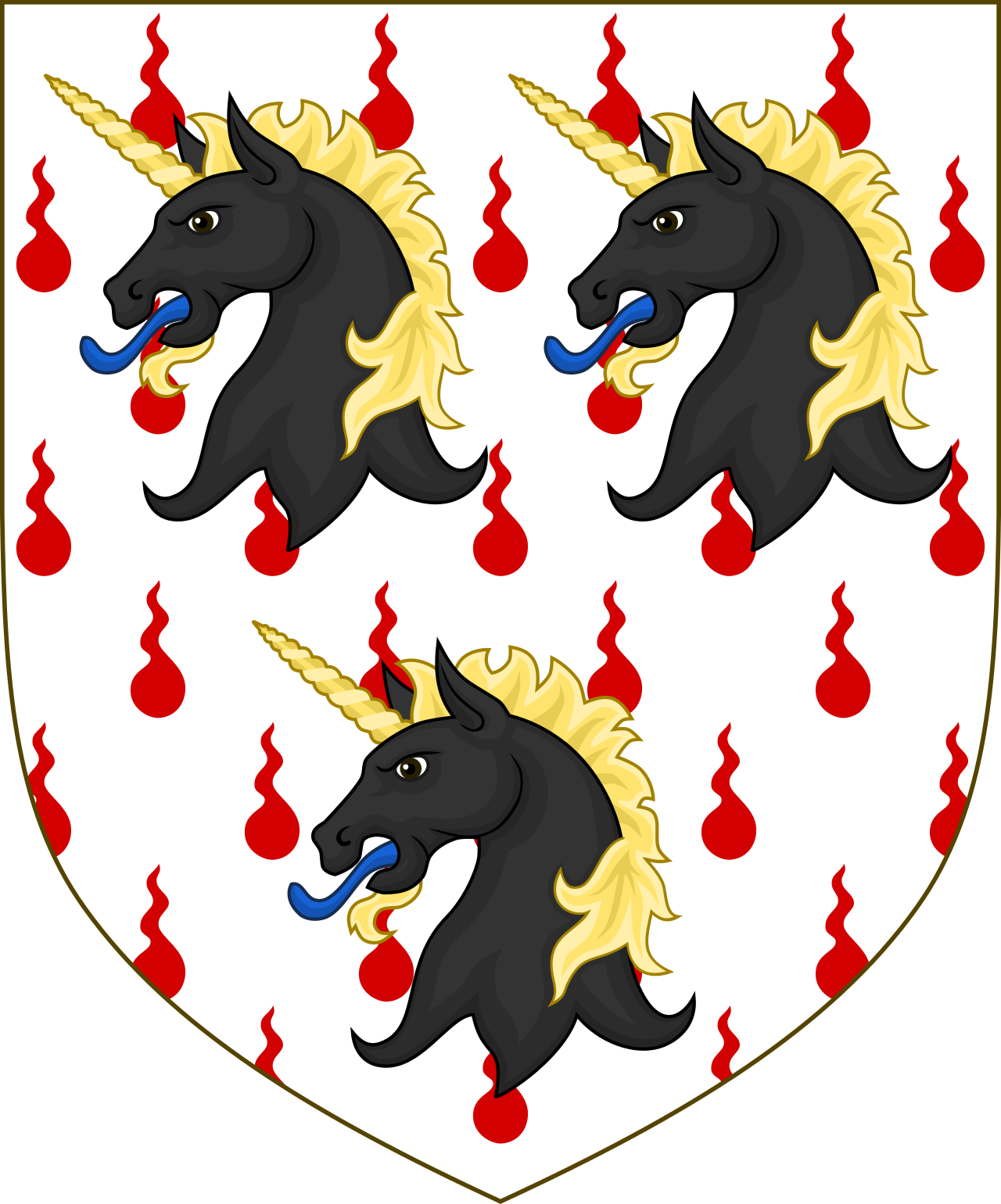
For roughly a millennium, European art and literature settled on a consistent image: a white, horse- or goat-like creature with a long spiraling horn, cloven hooves, and occasionally a goat's beard. In the Middle Ages and Renaissance, the unicorn was cast as an impossibly wild woodland beast, a living emblem of purity and grace that no hunter could subdue except a virgin. The Physiologus, a Late Antiquity text that preceded the medieval bestiary, cemented this narrative into Christian allegory: the unicorn, trapped by a maiden, laid its head on her lap and fell asleep, a scene later read as a prefiguration of the Incarnation and Christ's relationship with the Virgin Mary. This emblematic framework justified the unicorn's presence in both sacred and secular art, often shown in hunts that echoed the vulnerability of virgins and the suffering of Christ. Encyclopedic writers of the period also attributed miraculous properties to the horn, claiming it could purify poisoned water and cure illness. In practice, the tusk of the narwhal was frequently marketed as a genuine unicorn horn, a commercial fraud that persisted well into the early modern era.
Enduring Presence in Modern Culture
The unicorn's journey from ancient seal stones to contemporary symbolism spans more than four millennia, yet its cultural resonance shows no sign of fading. Across the Hebrew Bible, the word re'em, appearing in passages such as Psalm 92:11 and Deuteronomy 33:17, is rendered by some translators as unicorn, embedding the creature in one of the world's oldest sacred texts. In the modern era, the unicorn has shed much of its medieval religious allegory and now functions primarily as a shorthand for fantasy, rarity, and the extraordinary. It permeates branding, children's literature, and digital media as an instantly recognizable icon of the impossible made tangible. A notable shift arrived in the twenty-first century, when the image was adopted as a visible symbol within LGBTQ communities, adding a layer of identity and solidarity to its already rich symbolic vocabulary. From the bovine stamps of the Indus Valley to the neon signage of contemporary cities, the one-horned creature continues to adapt, absorbing new meanings while retaining the core image of a singular, spiraling horn that sets it apart from every other animal in the human imagination.
Gallery



Frequently Asked Questions
What is The Little Unicorn?
The Little Unicorn is a 2001 South African fantasy adventure film that was released directly to video rather than in theaters. It runs 80 minutes and was written, co-produced, and directed by Paul Matthews.
What is the plot of The Little Unicorn?
The story follows Polly Regan and her grandfather as they try to rescue a young unicorn that has been captured by circus owners. Their adventure unfolds as they work to free the creature from the circus's control.
Who stars in The Little Unicorn?
Brittney Bomann plays the lead role of Polly Regan, alongside Byron Taylor as Toby Cooper, Emma Samms as Lucy Regan, and David Warner as Ted Regan. The circus cast is portrayed by Joe Penny, George Hamilton, and Christopher Atkins, among others.
Who directed The Little Unicorn?
Paul Matthews handled both the writing and the direction of the film, while also serving as a co-producer. It was a South African production released straight to home video in 2001.
How was The Little Unicorn received by critics?
Critical reception was largely negative, with reviewers pointing out weaknesses in the film's execution. It is generally regarded as a low-budget direct-to-video effort that did not gain significant fan traction beyond its initial release.
More in Films about unicorns 1-22
Spotted an error? Know more?
Reader corrections go straight into our review queue. Suggest an edit · How this site is sourced