The Good, the Bad and the Ugly
Three gunslingers seek Confederate gold amid the Civil War.

JockeyColours · CC BY-SA 4.0
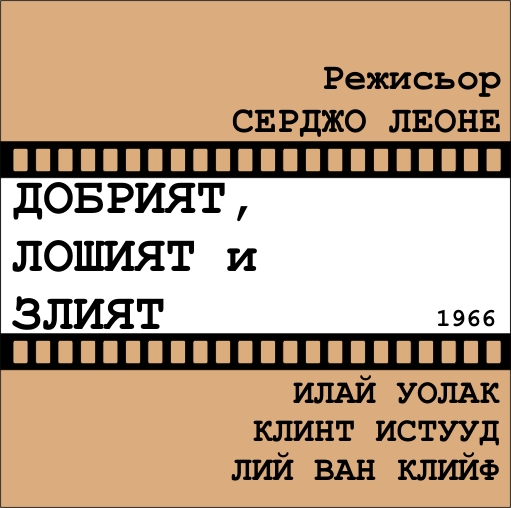
The 1966 Italian epic spaghetti Western *The Good, the Bad and the Ugly* (original Italian title *Il buono, il brutto, il cattivo*) was directed by Sergio Leone. Clint Eastwood plays "the Good," Lee Van Cleef plays "the Bad," and Eli Wallach plays "the Ugly." The screenplay was a collaboration between Age & Scarpelli, Luciano Vincenzoni, and Leone, working from a story by Vincenzoni and Leone. Cinematographer Tonino Delli Colli shot the film in sweeping Techniscope, and Ennio Morricone wrote the score. Leone’s signature style is on full display, mixing vast wide shots with extreme close-ups and treating violence, tension, and gunfights in a highly stylized way.
Though an Italian production, most of the filming took place in Spain—specifically the Tabernas Desert in Almería, the Arlanza River valley near Hortigüela, and the purpose-built Sad Hill Cemetery near Santo Domingo de Silos. The story unfolds during the American Civil War, following three gunslingers whose shifting alliances and betrayals revolve around a buried cache of Confederate gold. This was Leone’s third film with Eastwood and his second with Van Cleef.
Released in Italy on December 23, 1966, the movie was later marketed internationally and in the United States as the third and final part of the Dollars Trilogy, following *A Fistful of Dollars* (1964) and *For a Few Dollars More* (1965). The three films share thematic connections rather than a continuous story. Riding the wave of Leone and Eastwood’s growing global popularity, the film was a major commercial hit, earning over $38 million worldwide against a budget of roughly $1.2 million, making it one of the most financially successful European Westerns of its era.
Initial critical reactions were mixed in some markets, reflecting the general skepticism toward the spaghetti Western genre at the time, which was often criticized for its stylization, violence, and moral ambiguity compared to traditional Hollywood Westerns. Over the years, however, the film underwent a major critical reassessment and built a strong cult following, helped by TV broadcasts, home video releases, and later restoration work. It is now widely praised for its operatic scope, visual composition, editing, and Morricone’s iconic score. Frequently ranked among the greatest and most influential Westerns ever made, it has left a lasting mark on filmmakers and has been referenced and parodied across films, television, comic books, and video games.
**Plot**
In the American Southwest during the Civil War, a mercenary called "Angel Eyes" interrogates a former Confederate soldier named Stevens to learn the alias of a man who stole a stash of Confederate gold. Stevens gives the alias "Bill Carson" and tries to bribe Angel Eyes to kill his employer before drawing on him. Angel Eyes kills Stevens, then returns to the employer and kills him too.
Mexican bandit Tuco Ramírez is fleeing bounty hunters when he’s captured by an unnamed drifter Tuco calls "Blondie." Blondie hands him over to a sheriff for the bounty. As Tuco is about to be hanged, Blondie severs the noose with a rifle shot, and the two escape to split the money. They repeat the scheme in another town, but Blondie gets tired of Tuco’s complaints, keeps the cash, and leaves Tuco stranded in the desert.
Seeking revenge, Tuco reassembles his gang and tracks Blondie to a hotel. He captures him and prepares to hang him, though the gang is killed in an ambush. An artillery shell destroys the room, letting Blondie escape. After a long chase, Tuco recaptures Blondie and forces him on a desert march until he collapses from dehydration. A runaway ambulance arrives with dead Confederate soldiers and a barely alive Bill Carson. Dying, Carson begs Tuco for help, offering $200,000 in gold buried in Sad Hill Cemetery. When Tuco returns with water, Carson has died—but he revealed the exact grave to Blondie.
The two reluctantly team up, each refusing to share what they know about the gold’s location. They pose as Confederate soldiers at a mission while Blondie recovers, and Tuco reunites with his brother, a priest who rejects him. Leaving the mission, they’re captured by Union cavalry. Tuco gives the name Bill Carson, which alerts Angel Eyes, now a Union sergeant in the prison camp. Tuco is tortured into revealing the cemetery’s name and is sent to be hanged. Knowing torture won’t work on Blondie, Angel Eyes allies with him. Tuco escapes and tracks Angel Eyes’ gang to a ghost town.
Distrusting Angel Eyes, Blondie finds Tuco and kills the gang members, but Angel Eyes gets away. Tuco and Blondie witness a battle over a strategic bridge they need to cross. They blow it up to scatter the armies and clear their path. While wiring the bridge with explosives, Tuco suggests they exchange secrets in case one dies. Tuco reveals the cemetery’s name, and Blondie says "Arch Stanton" is on the grave.
After the bridge is destroyed, Tuco races to Sad Hill to claim the gold alone. Blondie catches up as he digs, and Angel Eyes appears. Blondie reveals there’s no gold in that grave—he lied about the name. He places a stone in the middle of the cemetery pavement, saying the true name is written there. The three face off in a Mexican stand-off. They all draw, but Blondie shoots Angel Eyes dead before he can fire, while Tuco finds his gun was unloaded by Blondie earlier. Blondie reveals the gold is in the grave marked by the stone.
- country_of_origin
- Italy
- director
- Sergio Leone
- screenplay_by
- Age & Scarpelli, Luciano Vincenzoni, and Leone
- starring
- Clint Eastwood, Lee Van Cleef, Eli Wallach
- budget
- approximately $1.2 million
- worldwide_gross
- over $38 million
Verified Timeline
Lore & Background
Screenwriter Luciano Vincenzoni pitched an idea about 'a film about three rogues who are looking for some treasure at the time of the American Civil War'. An agreement was struck with United Artists for a million-dollar budget, with the studio advancing $500,000 up front and 50% of the box-office takings outside of Italy. The total budget was eventually increased to $1.2 million. The screenplay was written by Age & Scarpelli, Luciano Vincenzoni, and Leone, based on a story by Vincenzoni and Leone. Sergio Donati contributed additional screenplay material and dialogue, although he did not receive screen credit. Tonino Delli Colli handled cinematography, and Ennio Morricone composed the score. Although an Italian production, it was filmed primarily in Spain, particularly in the Tabernas Desert in Almería, the Arlanza River valley near Hortigüela, and at the purpose-built Sad Hill Cemetery near Santo Domingo de Silos. The film marked Leone's third collaboration with Eastwood and his second with Van Cleef. The film's working title was I due magnifici straccioni (The Two Magnificent Tramps). It was changed just before shooting began, when Vincenzoni thought of Il buono, il brutto, il cattivo (The Good, the Ugly, the Bad), which Leone loved. In the United States, United Artists considered using the original Italian translation, River of Dollars, or The Man With No Name, but decided on The Good, the Bad and the Ugly.
Reader's Guide
Released in Italy on December 23, 1966, the film was subsequently distributed internationally and promoted in the United States as the third and final installment of the Dollars Trilogy, following A Fistful of Dollars (1964) and For a Few Dollars More (1965), although the three films are connected thematically rather than through a continuous narrative. Building on the growing international popularity of Leone and Eastwood, the film achieved major commercial success, grossing over $38 million worldwide against a production budget of approximately $1.2 million and becoming one of the most financially successful European Westerns of its time. Initial critical reception in some markets was mixed, reflecting the broader skepticism then directed toward the spaghetti Western genre, which was often criticized for its stylisation, violence, and moral ambiguity in contrast to traditional Hollywood Westerns. Over time, however, the film underwent extensive critical re-evaluation and developed a strong cult following, aided by television screenings, home media releases, and later restoration efforts. It has since been widely recognized for its operatic scale, visual composition, editing, and the iconic score by Morricone. Frequently cited as one of the greatest and most influential Western films of all time, it has had a lasting impact on filmmakers and has been referenced and parodied across popular culture, including in films, television, comic books, and video games.
Did You Know?
- The film's working title was I due magnifici straccioni (The Two Magnificent Tramps), changed just before shooting began when Vincenzoni thought of Il buono, il brutto, il cattivo.
- The film was shot primarily in Spain, including the Tabernas Desert in Almería, the Arlanza River valley near Hortigüela, and the purpose-built Sad Hill Cemetery near Santo Domingo de Silos.
- The total budget was eventually increased to $1.2 million, with United Artists advancing $500,000 up front and 50% of the box-office takings outside of Italy.
- Sergio Donati contributed additional screenplay material and dialogue, although he did not receive screen credit.
- The film was promoted in the United States as the third and final installment of the Dollars Trilogy, though the three films are connected thematically rather than through a continuous narrative.
A Language of Frames: Leone's Visual Grammar
Few directors have shaped the grammar of cinema quite as deliberately as Sergio Leone did in this 1966 epic. Working with director of photography Tonino Delli Colli, whose sweeping Techniscope cinematography gave the film its vast, sun-scorched texture, Leone built a visual language defined by stark contrast. Expansive wide shots that dwarf the characters against the Spanish landscape cut abruptly into extreme close-ups that trap the audience inside a character's eyes. This rhythmic interplay of scale—vast desert suddenly collapsing into a single twitching finger on a trigger—became the film's signature. Violence, tension, and gunfights are treated not as action set-pieces but as choreographed, almost operatic sequences where silence and anticipation carry as much weight as the discharge itself. The locations reinforce this: the bleached expanse of the Tabernas Desert in Almería, the river valley near Hortigüela, and the purpose-built Sad Hill Cemetery near Santo Domingo de Silos all serve as stages for Leone's compositions. The result is a Western that feels less like a genre picture and more like a visual symphony, one that would go on to influence generations of filmmakers who learned to think in terms of framing, rhythm, and scale rather than dialogue.
Three Gunslingers, One Grave: The Story's Architecture
Set against the chaos of the American Civil War, the narrative follows three men whose alliances shift and fracture as they hunt a buried cache of Confederate gold. Clint Eastwood plays the unnamed drifter nicknamed Blondie, Lee Van Cleef embodies the ruthless mercenary Angel Eyes, and Eli Wallach brings volcanic energy to Tuco Ramírez, a Mexican bandit whose brother is a priest who rejects him. The story's engine is deception: each man holds a fragment of the gold's location, and no one trusts anyone else. Tuco and Blondie are forced into an uneasy partnership after a dying Confederate soldier reveals the cemetery's name to one and the grave's name to the other. Their journey through the Southwest—prison camps, a ghost town, a desperate bridge explosion to clear a path—builds toward the film's legendary Mexican stand-off at Sad Hill Cemetery. In the climax, Blondie reveals the gold is actually in the adjacent grave marked 'Unknown,' and after collecting his half, he drops the bound Tuco face-first onto the remaining bags. The structure is deliberately operatic, each betrayal and alliance a movement in a larger composition.
From Spanish Deserts to Global Box Office
Though it is an Italian production, the film was shot primarily in Spain, with key sequences filmed in the Tabernas Desert in Almería, the Arlanza River valley near Hortigüela, and at a purpose-built cemetery set near Santo Domingo de Silos. The screenplay was a collaborative effort by Age & Scarpelli, Luciano Vincenzoni, and Leone himself, building on a story conceived by Vincenzoni and Leone. For Leone, it represented his third collaboration with Eastwood and his second with Van Cleef, a pairing that had been generating momentum since the earlier Dollars films. Released in Italy on December 23, 1966, the picture was then distributed internationally and marketed in the United States as the capstone of the Dollars Trilogy, following A Fistful of Dollars and For a Few Dollars More—though the three films are linked thematically rather than through a continuous plot. The commercial results were extraordinary: against a production budget of roughly $1.2 million, the film grossed over $38 million worldwide, cementing its status as one of the most financially successful European Westerns of its era and proving that a non-Hollywood production could dominate global audiences on its own terms.
From Skepticism to Canon: A Critical Reckoning
When the film first reached audiences, critical responses in several markets were decidedly mixed. Much of the skepticism reflected a broader cultural resistance to the spaghetti Western as a genre—its stylisation, its unflinching violence, and its moral ambiguity stood in sharp contrast to the cleaner narratives of traditional Hollywood Westerns. Yet over the following decades, that initial resistance gave way to a thorough re-evaluation. Television broadcasts, home video releases, and later restoration projects introduced the film to successive generations of viewers, and a devoted cult following took root. Critics began to recognize the work's operatic scale, its meticulous visual composition and editing, and the iconic score composed by Ennio Morricone as achievements that transcended genre boundaries. Today the film is frequently cited among the greatest and most influential Westerns ever made. Its fingerprints are visible across popular culture—referenced and parodied in films, television series, comic books, and video games—while its visual and narrative DNA continues to shape filmmakers who approach the Western, or any genre, with an eye for scale, rhythm, and moral complexity.
Gallery



Frequently Asked Questions
Who plays the three titular characters?
Clint Eastwood portrays 'the Good' (Blondie), Lee Van Cleef plays 'the Bad' (Angel Eyes), and Eli Wallach takes on 'the Ugly' (Tuco). Each actor anchors a distinct personality within the film's three-way rivalry.
Who composed the iconic score?
Ennio Morricone wrote the soundtrack, which features his signature whistling motif, percussive rhythms, and operatic tension. The music has become one of the most instantly recognizable film scores in cinema history.
What is the plot of The Good, the Bad and the Ugly?
Blondie, Tuco, and Angel Eyes each pursue a hidden stash of Confederate gold through the Civil War, forming uneasy alliances and betrayals along the way. Their competing schemes culminate in the film's legendary final three-way standoff.
Why is The Good, the Bad and the Ugly considered important to film history?
With a screenplay shared among Age & Scarpelli, Luciano Vincenzoni, and Leone, the film redefined Western storytelling through extreme close-ups, operatic pacing, and morally gray protagonists. Its visual and musical language continues to influence Western and action filmmaking decades later.
More in Film History 1-16
Spotted an error? Know more?
This is a living reference — every entry is fact-audited, and reader corrections feed straight into our audit queue. Suggest an edit · See this site's audit record