The Birth of a Nation
A landmark film, both technically innovative and deeply controversial.

PunkToad from oakland, us · CC BY 2.0
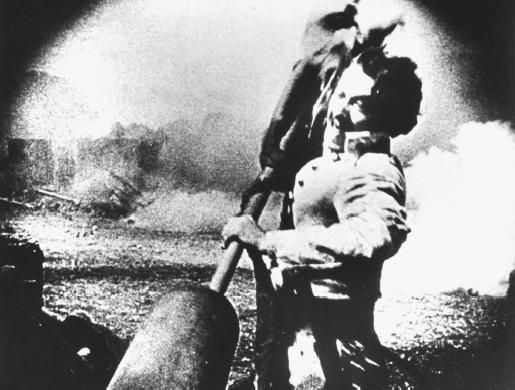
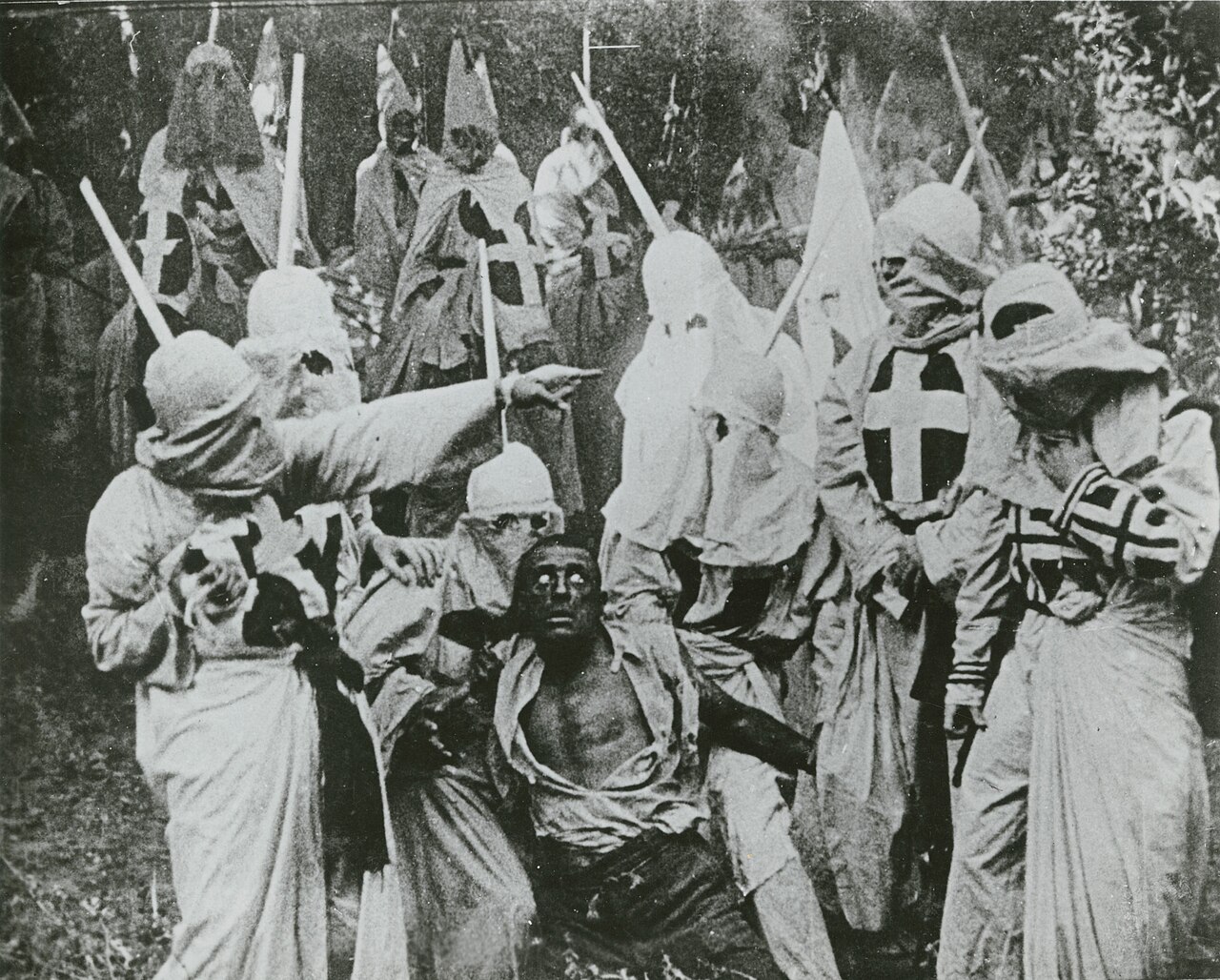
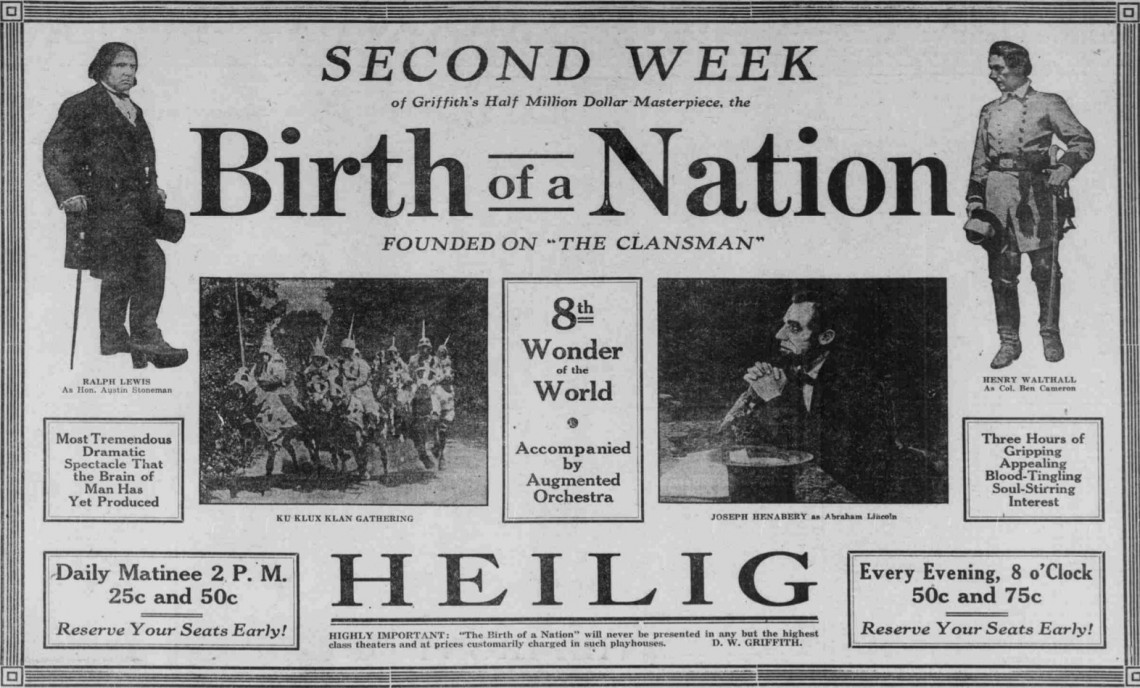
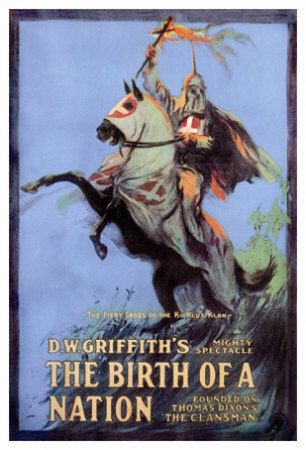
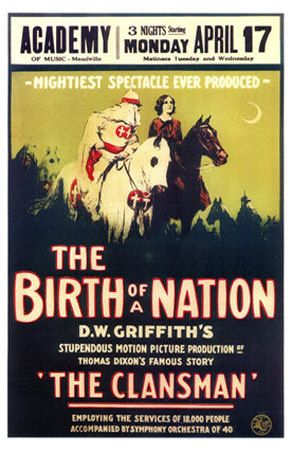
Released in 1915, *The Birth of a Nation* is an American silent epic drama directed by D. W. Griffith, with Lillian Gish in the lead role. Its screenplay, co-written by Griffith and Frank E. Woods, adapts Thomas Dixon Jr.’s 1905 novel and play *The Clansman: A Historical Romance of the Ku Klux Klan*. Griffith also produced the film alongside Harry Aitken. The film is a milestone in cinema, praised for its technical achievements. It was the first non-serial American movie to run 12 reels. Its story, blending fiction with historical events, follows two families—the Northern, pro-Union Stonemans and the Southern, pro-Confederacy Camerons—across the Civil War and Reconstruction eras, and includes the assassination of Abraham Lincoln by John Wilkes Booth. Originally shown in two parts with an intermission, it was the first American film to feature an orchestral score. It pioneered techniques like closeups and fadeouts, and includes a battle scene with hundreds of extras arranged to appear as thousands. A 13-page souvenir program accompanied its release, and it was screened at the White House for President Woodrow Wilson. Even before its debut, the film sparked controversy, and that debate has never faded. It has been described as both “the most controversial film ever made in the United States” and “the most reprehensibly racist film in Hollywood history.” Critics have condemned its racist portrayal of African Americans. Black characters—many played by white actors in blackface—are shown as unintelligent and sexually aggressive toward white women, while a mixed-race politician is a central villain. The Ku Klux Klan, a white supremacist hate group, is depicted as a heroic force protecting white women and upholding white supremacy. Widely popular with white audiences nationwide, the film’s success both reflected and fueled racial segregation across the country. In response to its depictions of Black people and Civil War history, African Americans organized protests. In Boston and elsewhere, Black leaders and the NAACP led an unsuccessful push to ban the film, arguing it inflamed racial tensions and could provoke violence. It was denied release in Ohio and in cities including Chicago, Denver, Pittsburgh, St. Louis, and Minneapolis. Griffith’s anger over censorship efforts led him to make *Intolerance* the following year. Commercially, *The Birth of a Nation* was a massive hit, grossing far more than any previous film, and it remains one of the highest-grossing movies ever when adjusted for inflation. Its influence on the film industry and American culture was profound. It has been credited with inspiring the revival of the Ku Klux Klan, which occurred just months after its release. In 1992, the Library of Congress deemed it “culturally, historically, or aesthetically significant” and selected it for preservation in the National Film Registry. **Plot**
**Part 1: Civil War of the United States**
Phil Stoneman, the older son of a Northern family, falls in love with Margaret Cameron, daughter of a Southern family, while visiting the Cameron estate in South Carolina. There, Margaret’s brother Ben admires a picture of Phil’s sister, Elsie Stoneman. When the Civil War begins, the young men of both families join their respective armies. The younger Stoneman and two Cameron brothers die in battle. A Black militia attacks the Cameron home but is driven off by Confederate soldiers, who save the Cameron women. Leading a final charge at the Siege of Petersburg, Ben Cameron earns the nickname “the Little Colonel,” but is wounded and captured. He is taken to a Union military hospital in Washington, D.C. There, he learns he will be hanged. Working as a nurse is Elsie Stoneman, whose picture he carries. Elsie helps Ben’s mother, who has traveled to tend her son and to see Abraham Lincoln. Mrs. Cameron persuades Lincoln to pardon Ben. After Lincoln’s assassination, his conciliatory postwar policy ends. Elsie’s father and other Radical Republicans are determined to punish the South. **Part 2: Reconstruction**
Stoneman and his protégé Silas Lynch, a malevolent mixed-race man, go to South Carolina to oversee Reconstruction policies. During an election, Black people stuff ballot boxes while many white people are denied the vote, and Lynch is elected lieutenant governor. The newly elected South Carolina legislature is mostly Black. Ben fights back by forming the Ku Klux Klan, causing Elsie to break up with him. While fetching water alone in the woods, Flora Cameron is followed by Gus, a freedman now a captain. Gus says he wants to marry Flora. She refuses, but he persists. Frightened, she flees into the forest, pursued by Gus. Trapped on a cliff, Flora threatens to jump if he comes closer. When he does, she leaps to her death. Ben sees Flora jump while searching for her. He holds her as she dies and carries her body home. Gus hides in a saloon, where Jeff the blacksmith enters. A fight breaks out, and Gus shoots Jeff before fleeing. The Klan hunts down Gus, tries him, finds him guilty, lynches him, and delivers his corpse to Silas Lynch’s house. After discovering Gus’s murder, Lynch orders a crackdown on the Klan and secures legislation allowing mixed-race marriages. Dr. Cameron is arrested for possessing Ben’s Klan regalia, now a capital crime. He is rescued by Phil Stoneman and some of his Black servants. Together with Margaret Cameron, they flee.
- Release Year
- 1915
- Director
- D. W. Griffith
- Starring
- Lillian Gish
- Genre
- Silent epic drama
- Based On
- Thomas Dixon Jr.'s novel and play The Clansman
- Notable For
- First non-serial American 12-reel film; first American film with an orchestral score; helped pioneer closeups and fadeouts
Lore & Background
The Birth of a Nation chronicles the relationship of two families in the American Civil War and Reconstruction eras—the pro-Union Stonemans and the pro-Confederacy Camerons—and depicts the assassination of Abraham Lincoln by John Wilkes Booth. It was originally shown in two parts separated by an intermission, and it was the first American-made film to have a musical score for an orchestra. It helped to pioneer closeups and fadeouts, and includes a carefully staged battle sequence with hundreds of extras made to look like thousands. The film came with a 13-page Souvenir Program and was screened inside the White House, where it was watched by President Woodrow Wilson. The film was controversial even before its release and has remained so since. It has been denounced for its racist depiction of African Americans. Its black characters (many played by white actors in blackface) are portrayed as unintelligent and sexually aggressive toward white women, while a mulatto politician serves as one of the main villains. The Ku Klux Klan is portrayed as a heroic force that protects white women and maintains white supremacy. Popular among white audiences nationwide upon its release, the film's success was both a consequence of and a contributor to racial segregation throughout the U.S. African Americans across the U.S. organized and protested, and the NAACP spearheaded an unsuccessful campaign to have it banned. It was denied release in the state of Ohio and the cities of Chicago, Denver, Pittsburgh, St. Louis, and Minneapolis. Griffith's indignation at efforts to censor or ban the film motivated him to produce Intolerance the following year.
Reader's Guide
The Birth of a Nation was a massive commercial success across the nation, grossing far more than any previous motion picture, and it profoundly influenced both the film industry and American culture. Adjusted for inflation, the film remains one of the highest-grossing films ever made. It has been acknowledged as an inspiration for the rebirth of the Ku Klux Klan, which took place only a few months after its release. The film's legacy is deeply divided: it is celebrated for its technical innovations—pioneering closeups, fadeouts, and a full orchestral score—while simultaneously condemned for its virulent racism and its role in reviving the Ku Klux Klan. It remains a key text for understanding the intersection of film history, racial politics, and American cultural memory.
Did You Know?
- The Birth of a Nation was the first non-serial American 12-reel film ever made.
- It was the first American-made film to have a musical score for an orchestra.
- The film was screened inside the White House and watched by President Woodrow Wilson.
- Griffith's indignation at efforts to censor or ban the film motivated him to produce Intolerance the following year.
A First-Timer's Ambitious Debut
Nate Parker stepped into both the writer's and director's chairs for this 2016 historical drama, making it his directorial debut. The film dramatizes the 1831 slave rebellion led by Nat Turner in Southampton County, Virginia, and Parker cast himself in the title role. Around him, a substantial ensemble includes Armie Hammer, Mark Boone Jr., Colman Domingo, Aunjanue Ellis, Dwight Henry, Aja Naomi King, Esther Scott, Roger Guenveur Smith, Gabrielle Union, Penelope Ann Miller, and Jackie Earle Haley. Funding the project was no small feat for a first-time filmmaker; Parker personally petitioned potential financiers until he secured an $8.5 million production budget. Principal photography kicked off in May 2015 on locations across the state of Georgia. The result was a sweeping period piece that tackled one of the most violent uprisings in American history, blending intimate family drama with the political and religious dimensions of slavery in the antebellum South.
Sundance Triumph and Box Office
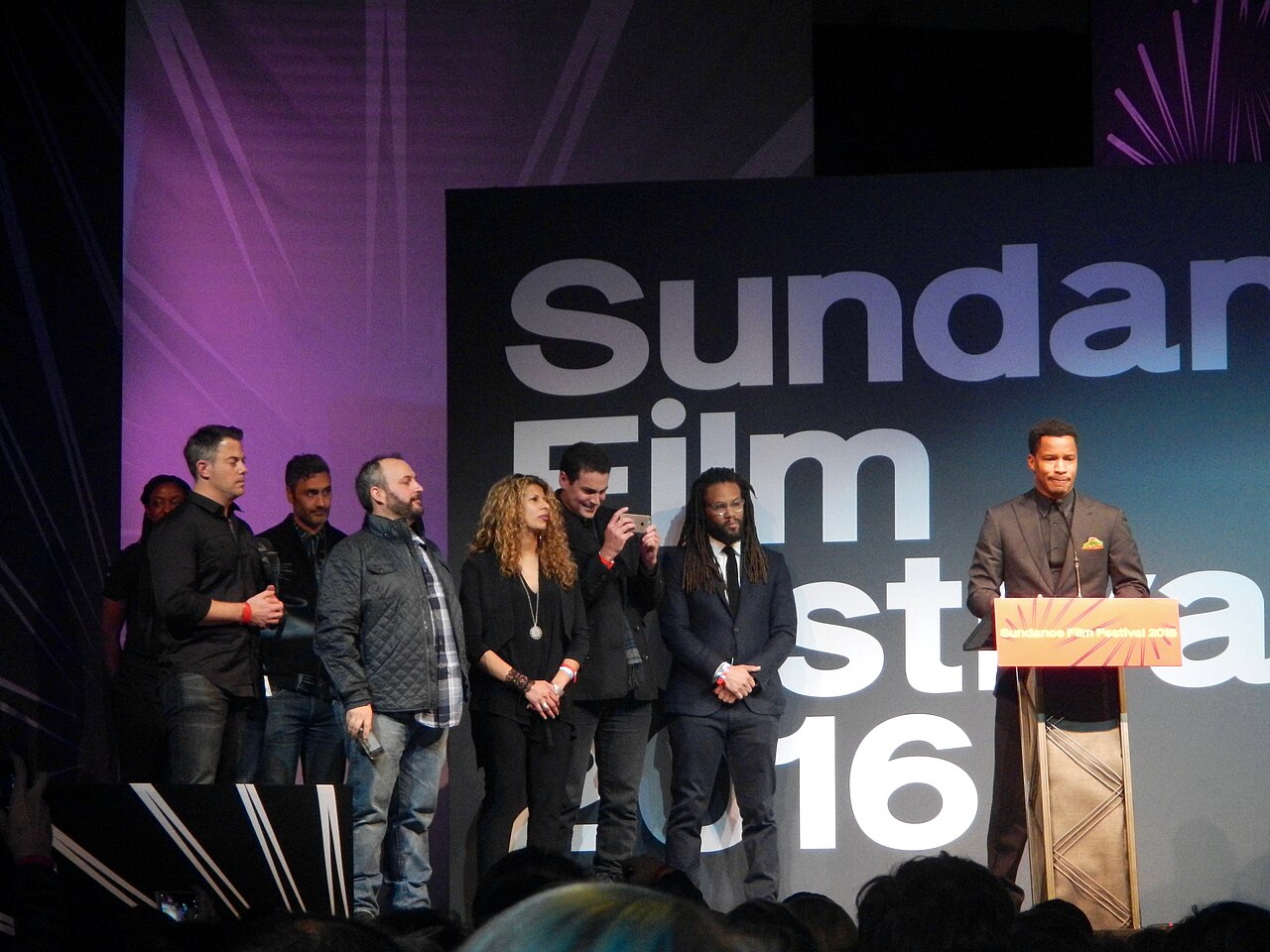
The film entered the 2016 Sundance Film Festival as a competitive entry in the U.S. Dramatic category and left with both the Audience Award and the Grand Jury Prize. The buzz from that run proved commercially significant: Fox Searchlight Pictures acquired worldwide distribution rights in a $17.5 million deal, which at the time represented the largest purchase ever made at the festival. The theatrical release followed on October 7, 2016, and the picture ultimately collected $16 million at the domestic box office. Critics responded warmly, singling out Parker's direction, the ensemble's performances, the film's soundtrack, and its cinematography as particular strengths. For a debut feature from a first-time director who had to personally lobby investors for funding, the combination of festival accolades, a major studio acquisition, and solid critical reception marked a remarkably successful launch.
The Controversy That Followed
As the film gained visibility through its festival run, a separate story from 1999 resurfaced in the press. Parker and co-story writer Jean McGianni Celestin had been accused of a rape that the accuser alleged occurred in that year. The accuser took her own life in 2012, a fact that added a layer of gravity to the renewed coverage. Legally, Parker was ultimately acquitted of the charges, while Celestin's earlier conviction was overturned on appeal and no retrial was pursued. Nevertheless, the intense media scrutiny, combined with Parker's initial public responses to the allegations, cast a long shadow over the film's reception. The controversy became inseparable from the film's public conversation, complicating what had otherwise been a well-received debut and turning the director's personal history into a central thread of the discourse surrounding the picture.
A Deliberate Title and a Story of Resistance
Parker chose the title as a pointed, ironic echo of D. W. Griffith's 1915 silent film, a work that relied heavily on racist propaganda to evoke fear and solidify white supremacy. In a conversation with Filmmaker magazine, Parker explained that the shared title was ironic but entirely intentional, a deliberate act of reclamation. The narrative itself traces Nat Turner from a young boy on a Virginia plantation in 1809, where his father Isaac is killed after stealing food, through his education in the Bible under Elizabeth Turner, his marriage to Cherry, and his work as an itinerant preacher. After the death of his grandmother, Nat organizes a secret rebellion. The uprising sees him and his followers kill plantation owners, march on the town of Jerusalem seeking weapons, and confront slave-catcher Raymond Cobb. Betrayed by a young boy, the rebels are nearly annihilated. Nat surrenders, is hanged, and the film closes on the face of that same boy, now an adult Union soldier.
Gallery
Frequently Asked Questions
What is The Birth of a Nation?
It is a 1915 American silent epic drama directed by D. W. Griffith and starring Lillian Gish. The film is recognized as a landmark of cinema history, praised for its technical innovation while also being deeply controversial.
Who directed The Birth of a Nation and who is in the cast?
D. W. Griffith directed the picture, with Lillian Gish in a starring role. Griffith co-wrote the screenplay with Frank E. Woods and produced the project alongside Harry Aitken.
What technical firsts does The Birth of a Nation hold?
It was the first non-serial American 12-reel film and the first American movie to use a full orchestral score. The picture also helped pioneer the closeup shot and the fadeout transition.
Why is The Birth of a Nation so controversial?
The screenplay adapts Thomas Dixon Jr.'s 1905 novel and play The Clansman, which romanticizes the Ku Klux Klan. The film has been called both the most controversial and the most reprehensibly racist film ever produced in the United States.
What source material is The Birth of a Nation based on?
It is adapted from Thomas Dixon Jr.'s 1905 novel and stage play The Clansman: A Historical Romance of the Ku Klux Klan. Griffith and Frank E. Woods collaborated to reshape that literary source into a feature-length screen script.
More in Film History 1-16
Spotted an error? Know more?
This is a living reference — every entry is fact-audited, and reader corrections feed straight into our audit queue. Suggest an edit · See this site's audit record