Silent film
Silent films conveyed narrative and emotion visually, with live musical accompaniment.

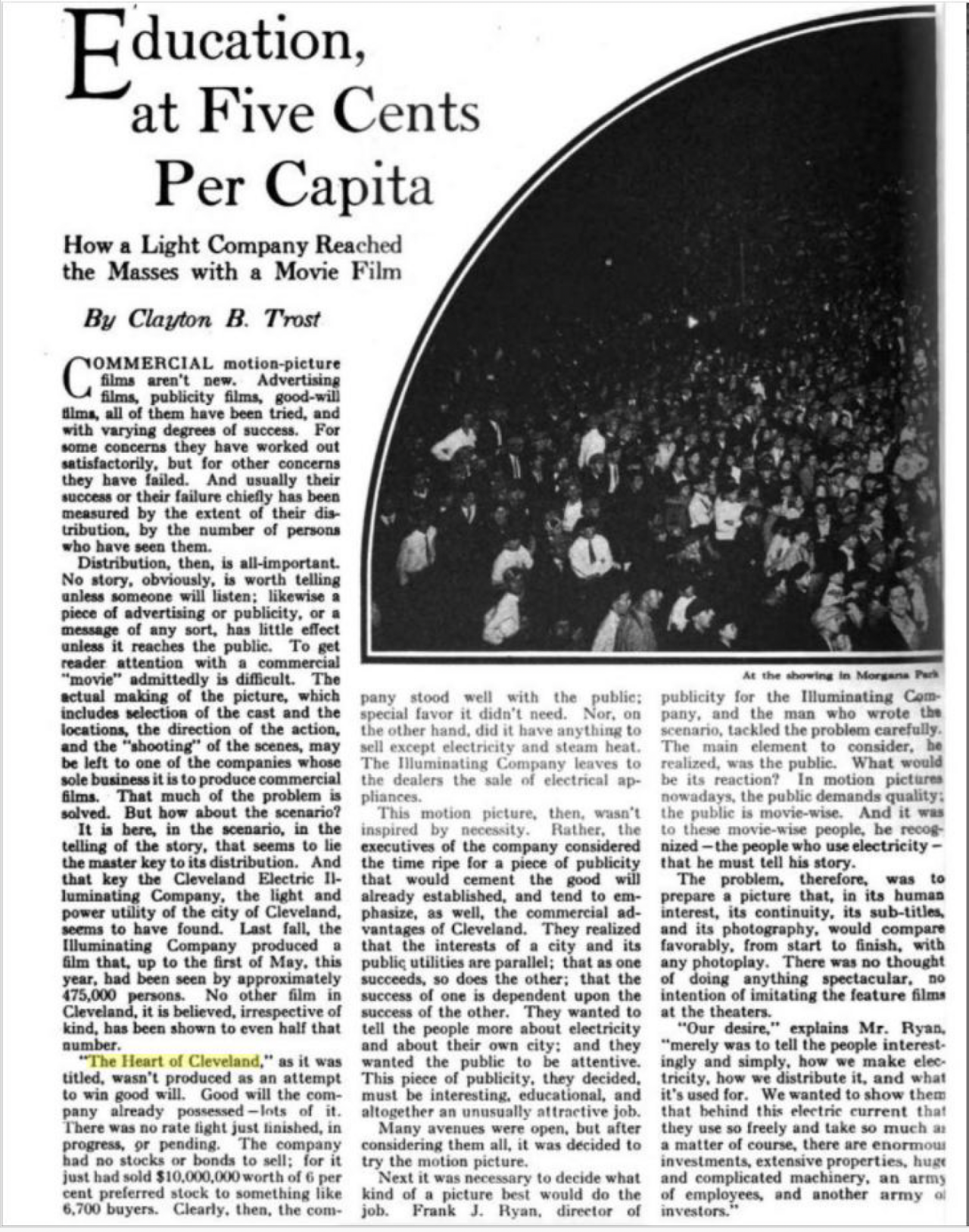
Illuminating Company (Cleveland, Ohio) Publicity Department · Public domain
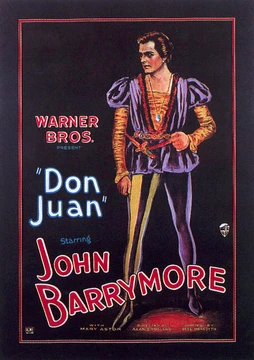
A silent film is a motion picture that lacks synchronized recorded sound, most notably any audible spoken dialogue. However, the label "silent film" is somewhat misleading, because these movies were nearly always shown with live musical accompaniment—often from a pianist, theater organist, or even a full orchestra in larger cities—and sometimes a narrator would read the intertitle cards aloud for the audience. Music was considered essential to the experience, even though the technology to sync sound with the image did not yet exist. The term is primarily historical, referring to the era of cinema from the 1890s through the 1920s, but it also applies to later sound-era films like *City Lights* and *Modern Times*, which feature a synchronized music-only track instead of spoken dialogue.
"Silent film" is a retronym, coined after the arrival of synchronized sound to distinguish earlier works from later developments. Early sound films, beginning with *The Jazz Singer* in 1927, were called "talkies," "sound films," or "talking pictures." The concept of combining moving images with recorded sound predates film itself—it was suggested soon after Edison introduced the phonograph in 1877—and some early experiments required a projectionist to manually adjust the frame rate to match the audio. However, technical hurdles meant that synchronized dialogue only became practical in the late 1920s, following the perfection of the Audion amplifier tube and the Vitaphone system. Within a decade, silent film production for popular entertainment had largely ceased, and the industry had fully transitioned to sound films with synchronized dialogue, music, and effects.
Most early motion pictures are now considered lost due to the physical decay of the unstable and highly flammable nitrate filmstock used at the time. Many were also destroyed because they had little remaining financial value. It is often claimed that around 75 percent of silent films produced in the United States have been lost, though the accuracy of this estimate is uncertain due to a lack of reliable numerical data.
The roots of film projection lie in magic lantern shows, where hand-painted glass slides were projected onto a wall or screen, and later, still photographs were used after the advent of photography in the 19th century. A showman’s narration was crucial for spectacular entertainment and essential in the lecturing circuit. The principle of stroboscopic animation had been known since the phenakistiscope appeared in 1833, but the development of cinematography was held back by the long exposure times required for photographic emulsions. This changed when Eadweard Muybridge recorded a chronophotographic sequence in 1878. After others animated his pictures in zoetropes, Muybridge began lecturing with his own zoopraxiscope animation projector in 1880. The work of other chronophotographers, such as Étienne-Jules Marey and Ottomar Anschütz, advanced the creation of motion picture cameras, projectors, and transparent celluloid film. Thomas Edison, though eager to develop a film system synchronized with his phonograph, eventually introduced the kinetoscope as a silent motion picture viewer in 1893, and later "kinetophone" versions were unsuccessful.
The art of motion pictures reached full maturity during the silent era, spanning from 1894 to 1929. Its peak, from the early 1910s to the late 1920s, was a period of intense artistic innovation, giving rise to Classical Hollywood, French Impressionism, German Expressionism, and Soviet Montage. Silent filmmakers pioneered nearly every style and genre that would define 20th- and 21st-century cinema. Technically, the silent era was also groundbreaking: three-point lighting, the close-up, the long shot, panning, and continuity editing all became standard long before talkies replaced silent films in the late 1920s. Some scholars argue that the artistic quality of cinema declined for a few years in the early 1930s, until directors, actors, and crews fully adapted to sound around the mid-1930s.
The visual quality of silent movies—especially those from the 1920s—was often high, yet a widespread misconception persists that they were primitive or unwatchable by modern standards. This misunderstanding stems from public unfamiliarity with the medium and from industry neglect. Most silent films are poorly preserved, leading to deterioration, and well-preserved prints are often shown at the wrong speed, suffer from censorship cuts, or are missing frames and scenes, which creates the impression of poor editing. Many silent films survive only as second- or third-generation copies, made from already damaged and neglected stock. Early screenings were also plagued by screen flicker, caused when the stroboscopic interruptions between frames fell below the critical flicker frequency. This problem was solved by introducing a three-bladed shutter.
- era
- 1890s to 1920s (silent era); also applies to sound-era films of the 1920s and 1930s with music-only soundtracks
- field
- Cinema
- known_for
- Visual storytelling without synchronized dialogue; use of intertitles; live musical accompaniment; pioneering techniques such as three-point lighting, close-ups, and continuity editing
- key_technical_feature
- No synchronized recorded sound; intertitles conveyed dialogue and plot elements
- accompaniment
- Live music by pianist, organist, or orchestra; sometimes narration
Lore & Background
The height of the silent era, from the early 1910s to the late 1920s, was particularly fruitful, with film movements such as Classical Hollywood, French Impressionism, German Expressionism, and Soviet Montage beginning in this period. Silent filmmakers pioneered techniques including three-point lighting, the close-up, long shot, panning, and continuity editing long before the advent of synchronized sound.
Reader's Guide
The term 'silent film' is a retronym, created to distinguish earlier films from later sound films, which were called 'talkies' or 'talking pictures.' Though the technology to synchronize sound with film did not exist during the silent era, music was considered essential to the viewing experience. The introduction of synchronized dialogue became practical only in the late 1920s with the perfection of the Audion amplifier tube and the Vitaphone system. Within a decade, widespread production of silent films for popular entertainment had ceased. Most early motion pictures are considered lost due to the instability and flammability of nitrate filmstock; it has often been claimed that around 75 percent of silent films produced in the US have been lost, though the accuracy of this estimate cannot be determined due to a lack of numerical data. A common misconception is that silent films were primitive or lacked color; in fact, by the early 1920s, 80 percent of movies could be seen in some form of color, such as tinting, toning, or hand coloring.
Did You Know?
- Silent films were almost always accompanied by live music, often from a pianist, organist, or orchestra.
- Tinting and hand-coloring were used selectively in silent films, but the vast majority remained black-and-white.
- It has often been claimed that around 75 percent of silent films produced in the US have been lost, though the accuracy of this estimate is uncertain.
- The term 'silent film' is a retronym, created to distinguish earlier films from later 'talkies.'
Origins & Production
Christophe Gans spent five years attempting to secure the film rights to Konami's Silent Hill video game series before finally breaking through. His persistence paid off when he sent Konami a video interview articulating his vision for the adaptation and expressing how deeply the games meant to him personally. That gesture convinced the studio to hand him the rights. Gans then teamed up with screenwriter Roger Avary, and the two began developing the script in 2004. Avary drew inspiration for the town's aesthetic from Centralia, Pennsylvania, a real community plagued by a decades-long underground coal fire. Principal photography kicked off in April 2005 and ran for roughly three months, with an estimated budget of fifty million dollars. The production was a hybrid of sound-stage work and location shooting across Ontario, Canada. A notable production choice was the decision to have most of the film's monstrous creatures performed by professional dancers rather than relying entirely on computer-generated imagery, reserving CGI for only a minority of the on-screen threats.
Plot & Narrative Structure
The film centers on Rose Da Silva, a mother whose adopted daughter Sharon suffers from disturbing sleepwalking episodes and recurring nightmares about a town called Silent Hill. When Sharon vanishes after entering the town, Rose plunges into a fog-enshrouded alternate dimension where the landscape can abruptly shift into a nightmarish realm teeming with inhuman creatures, including the terrifying Red Pyramid. As Rose searches for her child, she uncovers the town's dark history: in 1974, a fanatical Manichean sect called the Brethren, led by the high priestess Christabella, burned a young girl named Alessa as a witch. The ritual went catastrophically wrong, igniting the coal seam fire that eventually forced the town's abandonment. Alessa's immense rage fractured her soul, with one half becoming the dark force that warps the town's dimensions and the other half manifesting as innocent Sharon in the real world. The narrative weaves together Rose's desperate rescue mission, the Brethren's ongoing persecution, and the eventual reuniting of Alessa's split self.
Reception & Legacy
Silent Hill hit Canadian theaters on April 21, 2006, through Alliance Atlantis, and French screens five days later via Metropolitan Filmexport. Despite gathering over one hundred million dollars at the global box office, the film drew largely negative critical reviews at the time of its release. However, its reputation has steadily improved in the years since, with retrospective assessments tending to be considerably more generous. The movie has cultivated a devoted cult following among horror and video-game adaptation fans. Its success as a franchise entry paved the way for a sequel, Silent Hill: Revelation, which arrived in October 2012. The franchise's longevity was further confirmed when a third installment, Return to Silent Hill, was released in January 2026, with Christophe Gans returning to the director's chair and taking on the writing duties as well. This trajectory—from initial critical dismissal to sustained fan devotion and a multi-film series spanning two decades—marks Silent Hill as one of the more enduring video-game-to-film adaptations in the horror genre.
Cast & Character Dynamics
Radha Mitchell anchors the film as Rose Da Silva, a mother driven to desperate lengths to cure her daughter's nightmaric sleepwalking by traveling to the ghost town. Sean Bean plays her husband Christopher, who resists the journey but ultimately searches the real-world version of Silent Hill alongside local officer Thomas Gucci, played by Kim Coates. Laurie Holden brings intensity to Cybil Bennett, a motorcycle cop from the fictional city of Brahams who grows suspicious of Rose and follows her into the town, becoming an unlikely ally in the foggy dimension. Deborah Kara Unger portrays Dahlia Gillespie, Alessa's guilt-ridden mother who wanders the streets as penance for her role in her daughter's suffering. Notably, the film recasts Dahlia as a far more sympathetic figure than her counterpart in the original video game. The ensemble is rounded out by Alice Krige as the fanatical Christabella, Tanya Allen in a supporting role, and Jodelle Ferland as the young Alessa, whose backstory drives the entire supernatural conflict.
Gallery

Frequently Asked Questions
What exactly is a silent film?
A silent film is a motion picture that lacks synchronized recorded sound and spoken dialogue. It tells its story through visual performance, intertitle cards, and was almost always screened with live musical accompaniment.
Were silent films actually silent in the theater?
No—audiences heard live music from pianists, organists, or full orchestras, and sometimes a live narrator. The term 'silent' refers only to the absence of recorded sound on the film strip itself.
How did silent filmmakers convey dialogue and plot to the audience?
They inserted intertitle cards between shots to deliver lines and exposition, while actors carried emotion and narrative through physical performance, facial expression, and careful staging.
Why is silent film considered foundational to modern cinema?
Pioneers of the era developed core techniques—three-point lighting, the close-up, continuity editing—that remain standard tools in filmmaking today. Nearly every visual style and genre convention in 20th- and 21st-century film traces its roots to innovations made during that period.
More in Film History 1-16
Spotted an error? Know more?
This is a living reference — every entry is fact-audited, and reader corrections feed straight into our audit queue. Suggest an edit · See this site's audit record