Dorian Gray (character)
Victorian aristocrat who traded his soul for eternal youth.
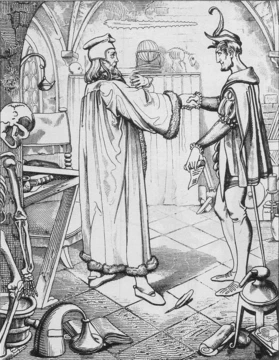
Dorian Gray is the anti-hero of Oscar Wilde's 1890 novel The Picture of Dorian Gray. He is an aristocratic Victorian man who makes a pact with the devil, trading his soul for eternal youth while a portrait ages in his place. The character has become a lasting symbol of vanity and moral decay.
Quick Facts
- First major
- The Picture of Dorian Gray
- Creator
- Oscar Wilde
- Family
- Lord Kelso (grandfather), Lady Margaret Devereux (mother)
- Partner
- Sibyl Vane, Hetty Merton
- Relatives
- Philip Herbert
- Lady Elizabeth Devereux
- George Willoughby
- Lord Beckenham II
- Nationality
- English
Facts from the source article.
Fictional character biography
Dorian Gray was raised by his grandfather, the late Lord Kelso, after a tragic family history. His mother, Lady Margaret Devereux, was a beautiful aristocrat who married a junior military officer beneath her class without her father's permission. Lord Kelso arranged for a man to provoke the officer into a duel, which killed him. Margaret returned to her father's home but died shortly afterward. Lord Kelso and Dorian disliked each other throughout the boy's upbringing. The story opens on a summer day in Victorian England. Lord Henry Wotton watches the artist Basil Hallward paint Dorian's portrait. While sitting for the painting, Dorian hears Lord Henry's hedonistic ideas and comes to believe that pleasure is life's only goal. He then wishes the portrait would age instead of him. Dorian meets and courts the actress Sibyl Vane, proposing marriage. She calls him "Prince Charming," and her brother James warns that he will kill Dorian if he harms her. Dorian brings Basil and Lord Henry to see Sibyl perform, but she acts poorly because she is too in love with him. Humiliated, Dorian rejects her, saying her acting was her beauty and without it she no longer interests him. When he returns home, he sees the portrait has changed, now showing a subtle sneer of cruelty.
Depictions on screen and stage
Dorian Gray has been portrayed in numerous screen and stage adaptations. In 1910, Axel Strøm directed Dorian Grays Portræt, starring Valdemar Psilander. Phillips Smalley directed a 1913 version with Wallace Reid. Eugene Moore directed a 1915 adaptation. Vsevolod Meyerhold and Mikhail Doronin co-directed a 1916 film. Fred W Durrant directed another 1916 version, with Henry Victor as Dorian Gray. Richard Oswald wrote and directed Das Bildnis des Dorian Gray in 1917, starring Bernd Aldor. Alfréd Deésy directed Az Élet királya in 1918, with Norbert Dán. Albert Lewin wrote and directed a version starring Hurd Hatfield. Charles Jarrott directed a 1961 made-for-television Armchair Theatre episode with Jeremy Brett. Paul Bogart directed a 1961 Golden Showcase episode starring John Fraser. Wilhelm Semmelroth directed a 1961 German television adaptation with Sebastian Fischer. Televisa produced a 1969 telenovela, El Retrato de Dorian Gray, directed by Ernesto Alonso and starring Enrique Álvarez Félix. Massimo Dallamano directed a 1970 film, also known as The Evils of Dorian Gray or The Secret of Dorian Gray, starring Helmut Berger. Glenn Jordan directed a 1973 television adaptation with Shane Briant. John Gorrie directed a 1976 television version starring Peter Firth. Pierre Boutron directed a 1977 French adaptation with Patrice Alexsandre. Tony Maylam directed a 1983 television film, The Sins of Dorian Gray, with Belinda Bauer as a female Dorian Gray, where she is an actress and photographic model who becomes immortal while an audition tape ages for her. Ulrike Ottinger wrote and directed Dorian Gray in the Mirror of the Yellow Press in 1984, starring Veruschka von Lehndorff as a female Dorian Gray and Delphine Seyrig as Frau Dr. Mabuse.
More in Fictional Characters Who Have Made Pacts with Devils
Spotted an error? Know more?
Reader corrections go straight into our review queue. Suggest an edit · How this site is sourced