
Leif Erikson
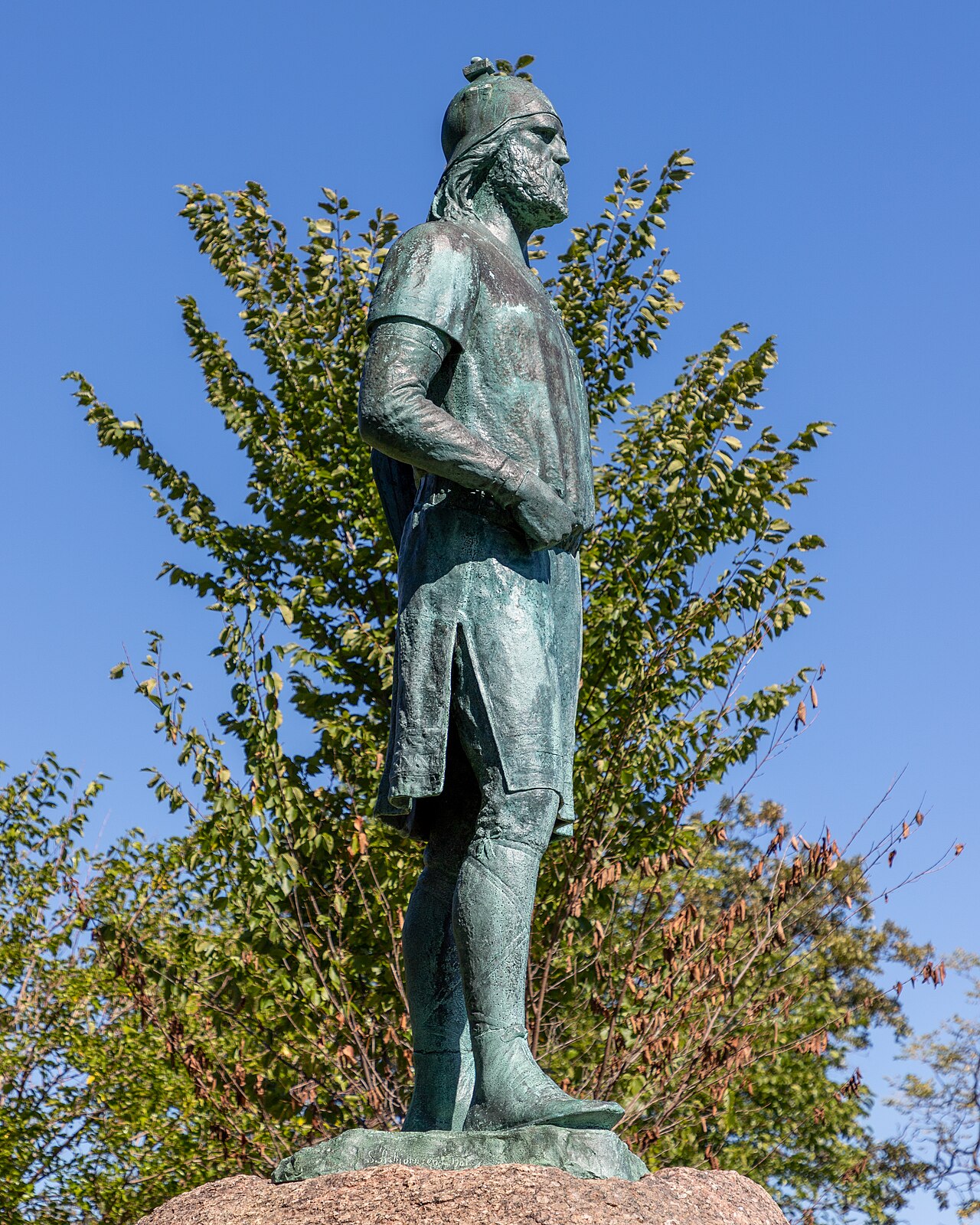
Norse explorer who reached North America centuries before Columbus.

Paul R. Burley · CC BY-SA 4.0
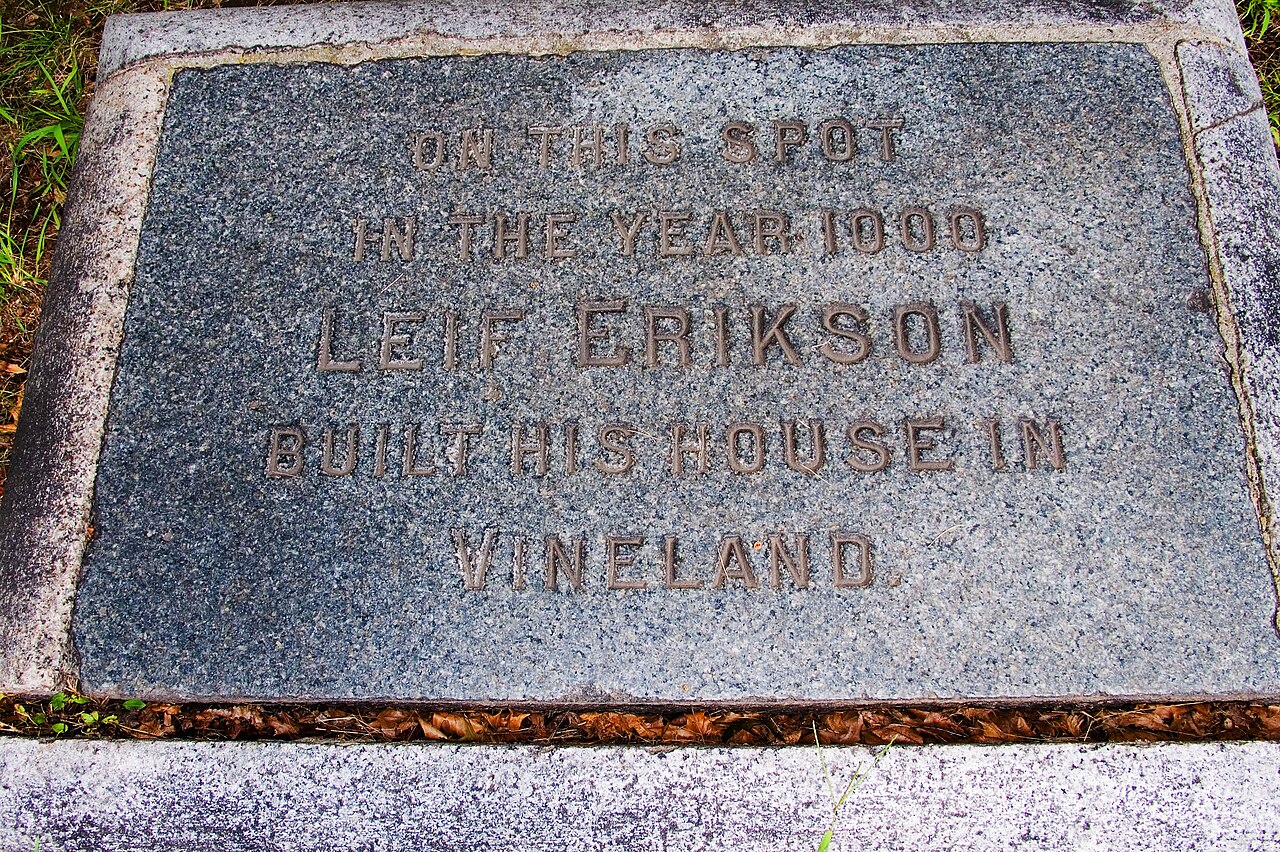
Leif Erikson, called Leif the Lucky, lived from roughly the 970s to sometime between 1018 and 1025. He was a Norse explorer believed to be the first European to reach the mainland of America, doing so about five hundred years before Columbus. The Icelandic sagas say he founded a Norse settlement in a place they called Vinland, which scholars generally think was somewhere along the coast of North America. Some think this settlement might be the same as the Norse ruins found at L'Anse aux Meadows in Newfoundland, Canada, which were occupied about a thousand years ago.
No one knows exactly where Leif was born, but it was probably in Iceland. His father, Erik the Red, started the first Norse colony in Greenland, and Leif grew up there. After his trip to Vinland and his father's death, Leif became the leader of the Greenland settlement. He had two known sons: Thorgils, born in the Hebrides, and Thorkell, who took over as Greenland's chieftain after him.
Leif's parents were Erik the Red and Thjodhild. On his father's side, his grandfather was Thorvald Ásvaldsson. When Erik was young, his own father was banished from Norway for killing someone, so the family moved to Iceland, which Norsemen—mostly from Norway—had been settling for about a century before Leif was born. Leif was also a distant cousin of Naddodd, the man who discovered Iceland.
Leif was probably born in the 970s. The sagas don't say where, but it was likely in Iceland, where his parents met—possibly near Breiðafjörður or in the Haukadalur Valley, where his mother's family lived. Around 970, Erik cleared land in that valley and built a farm called Eiríksstaðir. Later, Erik was banished from Iceland and sailed west to a place he named Greenland. He went back to Iceland briefly to get his family and other settlers, then returned to Greenland to establish its first permanent settlement in 986. Leif grew up at the family estate, Brattahlíð, in Greenland's Eastern Settlement. He had two brothers, Thorstein and Thorvald, and a sister named Freydís. A thrall of Erik's named Tyrker was trusted to look after Erik's children, and Leif later called him his "foster father."
The two main sources for Leif's discovery of Vinland are *The Saga of Erik the Red* and *The Saga of the Greenlanders*, both written around 1200. They give detailed but sometimes conflicting accounts of the voyages to Vinland, which is usually thought to be coastal North America. Scholars see these sagas more as literature than pure history and debate how accurate they are. The only strictly historical mentions of Vinland are brief ones: in Adam of Bremen's treatise from about 1075 and in Ari the Wise's *Book of Icelanders* from about 1122.
According to *The Saga of Erik the Red*, Leif found Vinland by accident. He was sailing from Norway to Greenland to introduce Christianity, having converted at the court of King Olaf Tryggvesson of Norway. A storm blew him off course, and he landed on an unknown shore. His crew explored and found wild grapes, self-sown wheat, and maple trees. They loaded their ship with samples and sailed back east to Greenland, rescuing some shipwrecked sailors along the way. For this rescue and for converting the Greenlanders to Christianity, Leif earned the nickname "Leif the Lucky." He never returned to Vinland, though others from Greenland and Iceland, like Thorfinn Karlsefni, did.
*The Saga of the Greenlanders* tells a different story. It says Leif wasn't the first European to see Vinland. Instead, a man named Bjarni Herjólfsson, sailing from Iceland to Greenland, got lost in fog and wind, missed Greenland's southern tip, and spotted an unknown coast. He didn't land but kept sailing, found two more unfamiliar coasts, and eventually made it back to Greenland, where he told others about what he'd seen. About fifteen years later, Leif bought Bjarni's ship, gathered a crew of thirty-five, and set out to find the lands Bjarni had described. Leif's father Erik planned to join but backed out after falling from his horse on the way to the ship, which was seen as a bad omen. Leif followed Bjarni's route in reverse. He first landed on a rocky, barren place he called Helluland (Flat-Rock Land), likely Baffin Island or northern Labrador. Sailing on, he reached a forested area he named Markland (Forest Land), probably near Cape Porcupine, Labrador. After two more days at sea, he landed on an island to the north (maybe Belle Isle), then returned to the mainland, passed a cape on the north side (possibly Cape Bauld), and sailed west of it to a lush area with a mild climate and plenty of salmon. As winter approached, he decided to camp there and sent out exploring parties. During one of these, Tyrker discovered vines and grapes. Leif named the land Vinland ('Wineland'). He and his crew built a small settlement there, later called Leifsbudir (Leif's Booths) by other Greenlanders. After wintering in Vinland, Leif sailed back to Greenland in the spring with a cargo.
- born
- c. 970s (likely Iceland)
- died
- c. 1018 to 1025
- field
- Exploration
- nationality
- Norse (Greenland settler)
- known_for
- First European to reach continental North America; founding Vinland settlement
Lore & Background
Leif was the son of Erik the Red and Thjodhild, and grandson of Thorvald Ásvaldsson. His father founded the first Norse settlement in Greenland, where Leif was raised. Leif had two brothers, Thorstein and Thorvald, and a sister, Freydís. Tyrker, a thrall, was his foster father. Leif's year of birth is often estimated in the c. 970s, and though his birthplace is unknown, it is likely he was born in Iceland, possibly at Haukadalur Valley. According to the Saga of the Greenlanders, Leif learned of lands west of Greenland from Bjarni Herjólfsson, purchased his ship, and mounted an expedition with 35 men. He landed first at Helluland (possibly Baffin Island), then Markland (possibly Labrador), and finally at a verdant area he named Vinland for its wild grapes. There he built a settlement called Leifsbudir. The Saga of Erik the Red instead states Leif discovered Vinland after being blown off course while returning from Norway to introduce Christianity. Both sagas agree he never returned to Vinland, but others from Greenland and Iceland did. Leif converted to Christianity at the court of Norwegian King Olaf Tryggvesson. After his voyage, he rescued a shipwrecked crew, earning the nickname 'Leif the Lucky.' Following his father's death, Leif became chief of the Greenland settlement. He had two known sons: Thorgils, born in the Hebrides, and Thorkell, who succeeded him as Greenland's chieftain.
Reader's Guide
Leif Erikson's significance lies in his role as the first European known to have set foot on continental North America, predating Christopher Columbus by about 500 years. The sagas recounting his voyages, though debated for historical accuracy, provide the earliest literary descriptions of North American exploration. Archaeological evidence at L'Anse aux Meadows, carbon-dated to around 1000 CE, strongly supports Norse presence in Newfoundland, though whether it is Leifsbudir remains speculative. Leif's voyages opened a brief period of Norse exploration and attempted settlement in Vinland, which included later expeditions by Thorfinn Karlsefni and others. His legacy endures as a symbol of pre-Columbian transatlantic contact, challenging traditional narratives of European discovery. The ongoing scholarly debate over the sagas' reliability and the exact location of Vinland underscores the complexity of interpreting medieval sources. Leif's conversion to Christianity and his role in spreading the faith in Greenland also mark him as a figure of religious and cultural transition in the Norse world.
Did You Know?
- Leif earned the nickname 'Leif the Lucky' after rescuing a shipwrecked crew and converting Norse Greenland to Christianity.
- The only strictly historical mentions of Vinland before the sagas appear in Adam of Bremen's treatise (c. 1075) and Ari the Wise's Book of Icelanders (c. 1122).
- Leif's father Erik the Red founded the first Norse settlement in Greenland in 986.
- Archaeological evidence at L'Anse aux Meadows has been carbon-dated to 990–1050 CE, with tree-ring analysis pinpointing the year 1021.
- Leif had two known sons: Thorgils, born in the Hebrides, and Thorkell, who succeeded him as Greenland's chieftain.
Origins in Exile: A Family Shaped by Banishment
Leif Erikson entered the world in the 970s, most likely on the Icelandic coast near Breiðafjörður or in the Haukadalur Valley, where his mother's family held land. His origins were defined by displacement: his grandfather Thorvald Ásvaldsson had been banished from Norway for manslaughter, forcing the family into Icelandic exile during a century when Norse settlers from Norway were colonizing the island. Leif's father, Erik the Red, cleared land and built the farmstead Eiríksstaðir around 970, but his own troubles soon drove him westward to Greenland, where he established the first permanent Norse settlement in 986. Leif grew up at the family estate Brattahlíð in the Eastern Settlement, alongside his brothers Thorstein and Thorvald and his sister Freydís. A trusted thrall named Tyrker, whom Leif later called his "foster father," helped raise the children. Through his paternal line, Leif also claimed distant kinship with Naddodd, the Norseman credited with discovering Iceland itself. A family defined by banishment and reinvention produced one of history's most consequential explorers.
Two Sagas, One Voyage to the Unknown Shore
The Norse sagas preserve two narratives of how Leif reached the coast of what we now call North America. In the Saga of Erik the Red, he was en route from Norway to Greenland, carrying the mission of spreading Christianity after his conversion at the court of King Olaf Tryggvesson, when a storm drove his vessel off course. The crew found a shore abundant with wild grapes, self-sown wheat, and maple trees, loaded samples aboard, and sailed home, rescuing shipwrecked sailors along the way. The Saga of the Greenlanders offers a different sequence: Bjarni Herjólfsson, lost in fog and wind, sighted an unfamiliar coastline roughly fifteen years earlier without stepping ashore. Leif later purchased Bjarni's ship, assembled a crew of thirty-five, and retraced the route in reverse. His father Erik was to join but fell from his horse—an omen the crew read as ill. Leif landed first in a barren, rocky stretch he called Helluland, then in a forested region he named Markland, before reaching a verdant shore where his foster father Tyrker spotted thickets of vines and grapes. Leif named the place Vinland, built an encampment called Leifsbudir, and wintered there before sailing home with timber and fruit.
Between Literature and History: The Evidence for Vinland
The two primary sources for Leif's voyage—the Saga of Erik the Red and the Saga of the Greenlanders—were composed around 1200, roughly two centuries after the events they describe. Scholars generally regard them as works of literature rather than purely historical accounts, and their narratives sometimes conflict with one another. The strictly historical mentions of Vinland are far more modest: Adam of Bremen's treatise (c. 1075) and Ari the Wise's Book of Icelanders (c. 1122) each reference the name only in passing, offering no extended narrative. It was not until the early 1960s that Norwegian explorer Helge Ingstad and his wife, archaeologist Anne Stine Ingstad, identified a Norse settlement at L'Anse aux Meadows on the coast of Newfoundland, Canada. The site, occupied approximately a millennium ago, is widely speculated to correspond to the place Leif and his crew called Vinland. Yet the identification remains a matter of ongoing debate, and the sagas' literary character means that even their most vivid details are subject to scholarly questioning.
Chief of Greenland and the Aftermath
After his father Erik the Red died, Leif assumed leadership of the Norse settlement in Greenland, a role that placed him at the head of the community in the Eastern Settlement. His tenure as chieftain is not richly documented in the surviving sources, but his family's continuity in the region is clear: he fathered two sons, Thorgils—born in the Hebrides—and Thorkell, who ultimately succeeded him as Greenland's chieftain. Leif himself never returned to Vinland after his initial voyage. The small settlement he and his crew had built, known to later visitors as Leifsbudir, was revisited by other Norsemen from Greenland and Iceland, most notably Thorfinn Karlsefni. Leif's life ended sometime between 1018 and 1025, and with his death the direct line of leadership in the Eastern Settlement passed to his son Thorkell. His legacy, however, extends far beyond his own lifetime: roughly five centuries before Columbus, a Norseman raised on a Greenland farmstead had set foot on the shores of continental America, and the sagas preserved that extraordinary fact for posterity.
Common Misconceptions (Editorial)
- Some believe Leif Erikson named Vinland after finding grapes there, but the sagas are not consistent on this point; while one saga mentions wild grapes, the other attributes his discovery to being blown off course, so the exact reason for the name remains debated in the sources. - A common misconception is that Leif discovered Vinland by accident, but the Saga of the Greenlanders states he deliberately planned an expedition after learning of lands west of Greenland from Bjarni Herjólfsson. - It is often incorrectly assumed that Leif returned to Vinland multiple times, but both sagas agree he never returned after establishing the settlement.
Why It Matters (Editorial)
Leif Erikson endures as a symbol of pre-Columbian European exploration, challenging the long-held narrative that Columbus was the first to reach the Americas. His story, preserved in medieval sagas and supported by archaeological evidence at L'Anse aux Meadows, reminds us that history is layered with discoveries made centuries apart, each shaping our understanding of human migration and cultural contact.
Gallery
Frequently Asked Questions
Who is Leif Erikson?
Leif Erikson was a Norse explorer from the late 10th and early 11th centuries, born most likely in Iceland and later a settler in Greenland. He is best remembered as the first known European to set foot on the North American continent.
What is Leif Erikson famous for?
He is credited with reaching continental North America roughly five centuries before Columbus, founding a Norse colony in a region the sagas call Vinland. The L'Anse aux Meadows archaeological site in Newfoundland, Canada, is widely regarded as the physical remains of that settlement.
When was Leif Erikson born and when did he die?
He was born sometime in the 970s and died around 1018 to 1025. Exact dates remain uncertain because the medieval Icelandic sagas that preserve his story do not record precise years.
Where was Vinland and where is it located today?
Vinland is the name the Norse sagas give to the land Leif explored and settled, generally understood to be along the coast of present-day North America. The most widely accepted identification is the site at L'Anse aux Meadows in Newfoundland, Canada.
Why does Leif Erikson matter in the history of exploration?
His voyage predates Columbus's 1492 crossing by about five hundred years, proving that Europeans had reached the Americas far earlier than long assumed. He also represents one of the earliest recorded attempts by a non-indigenous group to establish a colony in the New World.
More in Great Explorers 1-22
Spotted an error? Know more?
This is a living reference — every entry is fact-audited, and reader corrections feed straight into our audit queue. Suggest an edit · See this site's audit record