B Centauri b
A super-Jupiter orbiting the most massive stellar system known to host a planet.
Last updated

Merikanto · CC0
b Centauri b, also known as b Centauri (AB)b, is a circumbinary planet that orbits the two stars of the b Centauri system in the southern constellation Centaurus. It is a super-Jupiter, with a mass about 10.9 times that of Jupiter.
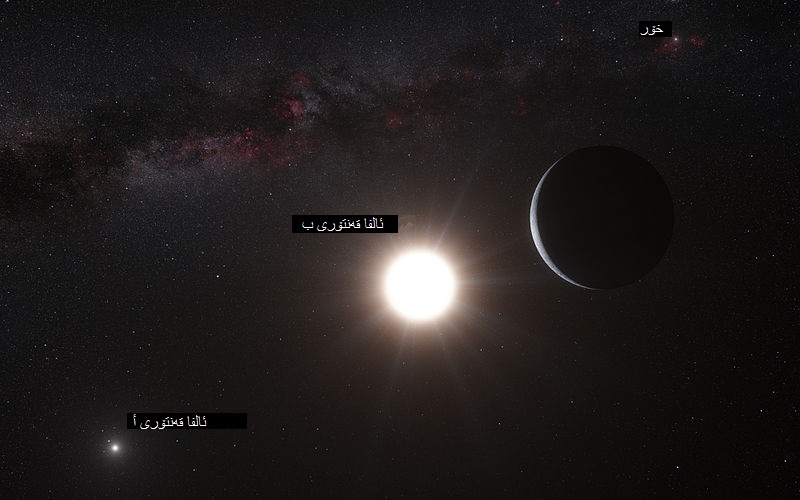
The planet was discovered through the BEAST survey, which uses the SPHERE instrument on the Very Large Telescope to directly image exoplanets around B-type stars in the Scorpius–Centaurus association. SPHERE blocks starlight with a coronagraph to reveal nearby planets. The system was first observed in 2019, revealing an object at a certain separation with infrared colors matching a massive planet. A follow-up observation in 2021 confirmed that the object shares common proper motion with b Centauri, proving it is gravitationally bound.
The discovery team also found that the planet had been imaged earlier, in 2000, by the ESO 3.6 m Telescope, but was then dismissed as a background star. The host binary has a total mass making it the most massive system around which a planet has been found; previously, the most massive star with a known planet was less massive. The discovery was published in Nature in December 2021, led by Markus Janson of Stockholm University.
Designated b Centauri (AB)b, the planet orbits the stellar pair at a projected separation. Observations from three epochs show signs of orbital motion, but the orbit remains poorly constrained. The data are consistent with an orbital period between 2,650 and 7,170 years, an inclination between 128 and 157 degrees, and an eccentricity below 0.4.
SPHERE images indicate the planet has about 0.01% of the Sun's luminosity, a remnant of its recent formation. Using this luminosity and the system's age, cooling models estimate its mass at roughly 11 Jupiter masses. The mass ratio between the planet and the central binary is 0.10–0.17%, similar to the Sun–Jupiter ratio and consistent with the trend that more massive stars tend to host more massive planets.
Formation
The planet's formation is uncertain. Most giant planets are thought to form via core accretion, where a rocky core grows and then rapidly pulls in surrounding gas. This mechanism cannot explain b Centauri (AB)b because core accretion becomes inefficient at large distances, and massive stars like b Centauri A cause their disks to dissipate quickly.
Lore & Background
The planet was discovered as part of the BEAST survey using the SPHERE instrument on the Very Large Telescope. First observed in 2019, it appeared as an object with infrared colors consistent with a massive planet at a projected separation from the binary. A follow-up observation in 2021 confirmed common proper motion with b Centauri, proving it is physically bound. Archival images from the ESO 3.6 m Telescope in 2000 had already captured the planet but it was then dismissed as a background star.
b Centauri b has a mass of about 11 Jupiter masses, inferred from its luminosity (0.01% solar luminosity) and cooling models. Its mass ratio to the central binary is 0.10–0.17%, similar to the Sun–Jupiter ratio. The orbit is poorly constrained but consistent with a period between 2650 and 7170 years, an inclination of 128–157°, and an eccentricity below 0.4.
The planet's formation mechanism is uncertain. Core accretion is considered unlikely because it becomes inefficient at large separations and because massive stars like b Centauri A dissipate their circumstellar disks quickly. Gravitational instability—direct collapse of the circumstellar gas—is a more probable explanation. Formation closer in followed by ejection is disfavored by the lack of other detected planets and the planet's low eccentricity.
Orbital Profile & Physical Characteristics
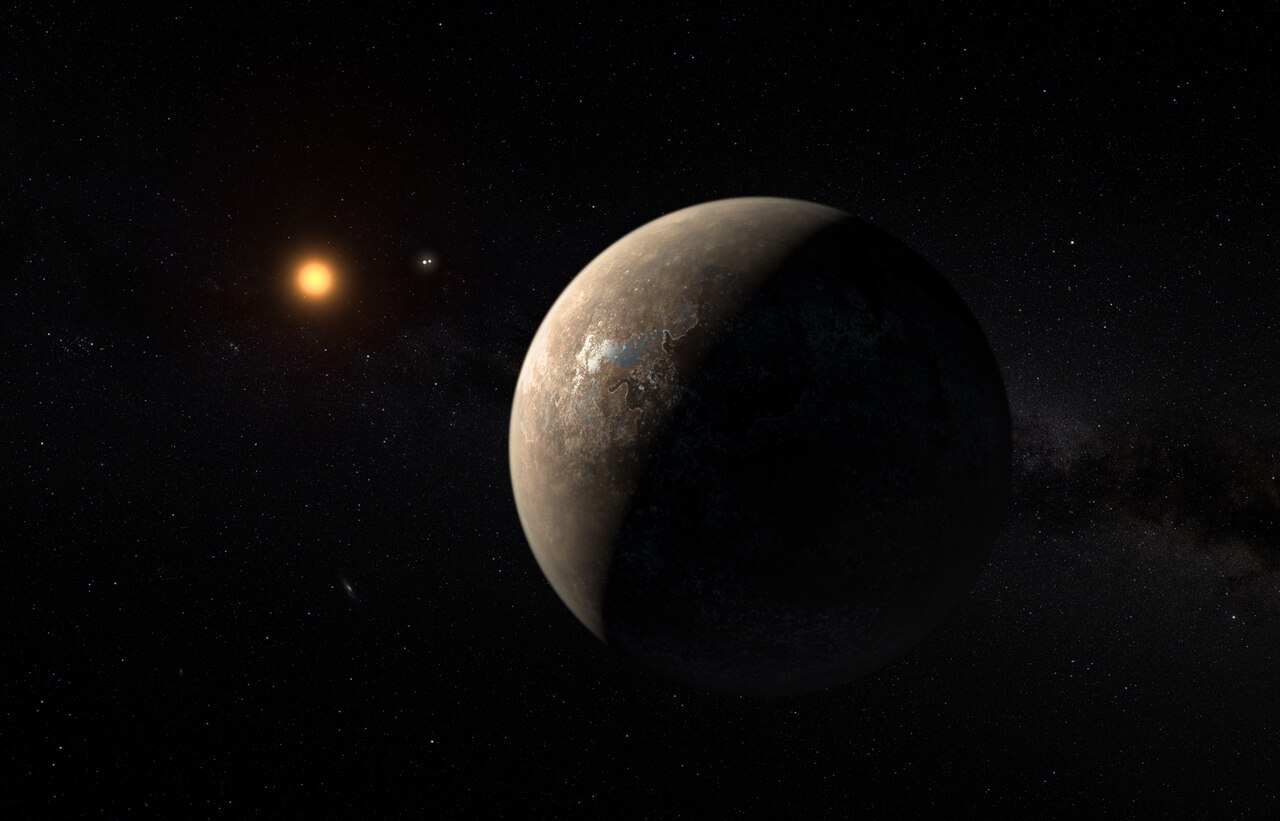
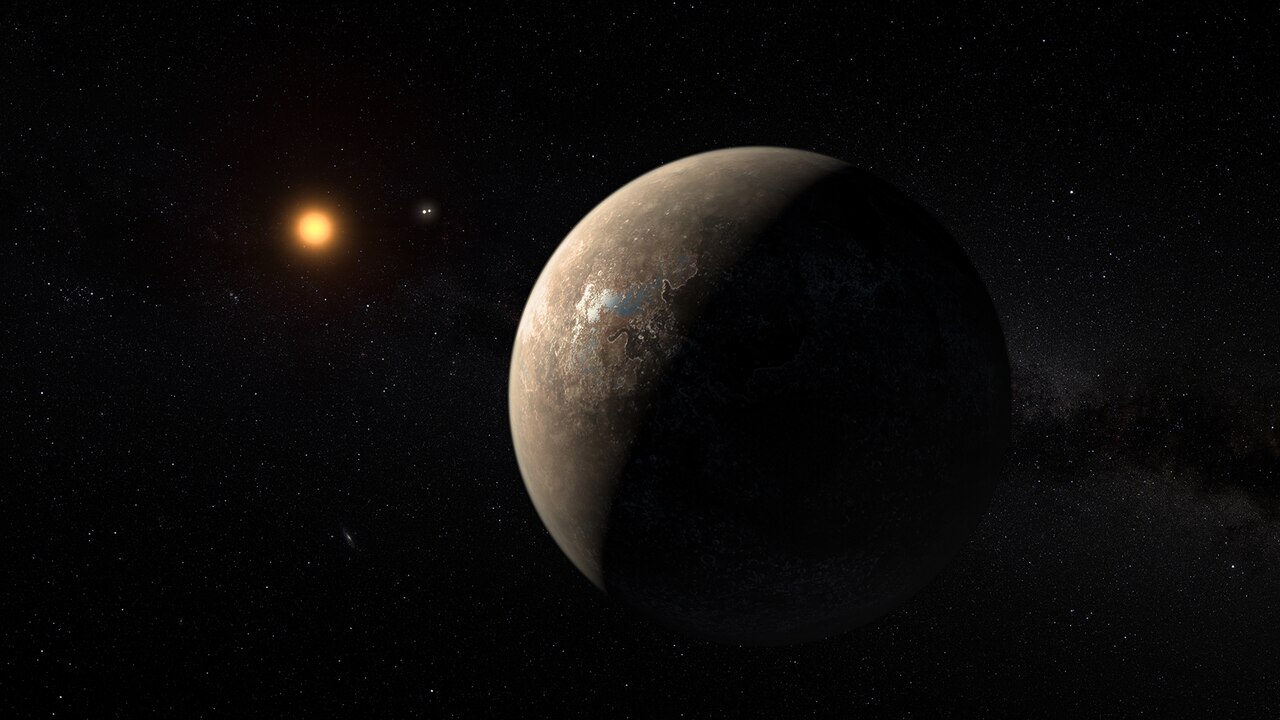
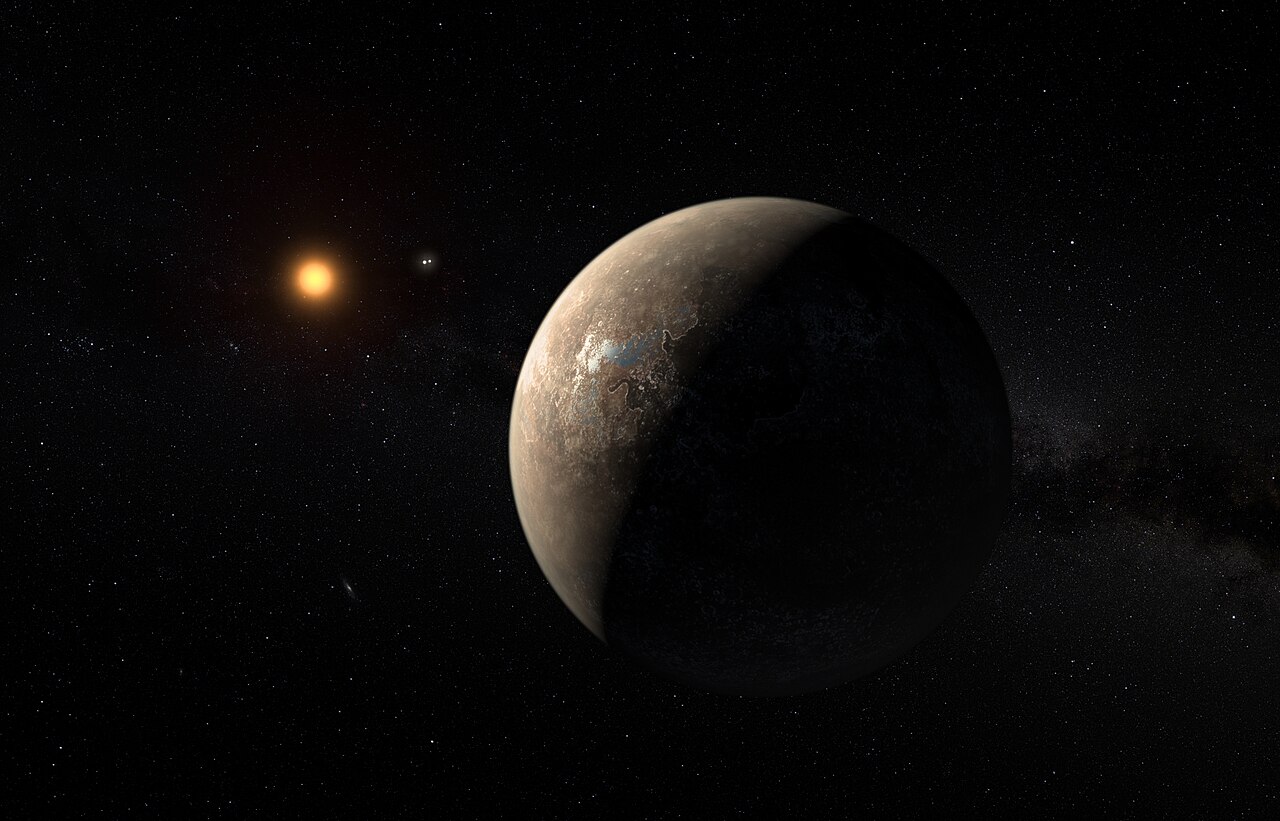
Proxima Centauri b is a terrestrial-mass world circling the closest star to our own solar system. It traces its orbit at a distance of roughly 0.05 astronomical units—about 7.5 million kilometres—from its parent star, completing one full revolution in approximately 11.2 Earth days.
Its estimated mass stands at a minimum of 1.06 times that of Earth, placing it firmly in the super-Earth or Earth-mass category. Because it orbits so close to its host, the planet experiences a year barely longer than two of our weeks. As one of only two confirmed exoplanets in the Proxima Centauri system (the other being the smaller sub-Earth Proxima d), it occupies a unique position as the more massive of the pair and the one situated far enough from the star to potentially fall within the temperate band where liquid water could persist on a surface.
The Habitable-Zone Promise
The most tantalising fact about Proxima Centauri b is its placement squarely within the habitable zone of its parent star. This is the orbital band where temperatures are theoretically right for liquid water to exist on a planet's surface—a prerequisite, as far as we know, for life.
For a star whose total luminosity is just 0.16% that of the Sun, and whose visible-light output is a mere 0.0056% of solar, the habitable zone is compressed into a very tight ring hugging the star. Proxima b's 0.05 AU orbit sits precisely in that ring, making it the closest known exoplanet to Earth that could, in principle, host surface oceans. No other confirmed world in the Alpha Centauri system—neither the sub-Earth Proxima d at 0.028 AU nor the disputed sub-Neptune Proxima c at 1.5 AU—shares this particular orbital sweet spot, giving Proxima b a singular claim on the title of nearest potentially temperate world.
The Flare Problem & Habitability Uncertainty
Yet the same stellar physics that defines Proxima Centauri also casts a long shadow over its planet's prospects. The star is a violent flare star: magnetic energy generated by convection throughout its fully convective interior is released at the surface in sudden, dramatic bursts that can last as little as ten seconds. These flares can grow as large as the star itself and reach temperatures of 27 million kelvin, radiating intense X-rays.
Even during quiescent periods, Proxima Centauri's X-ray luminosity is comparable to that of the much larger Sun, and roughly 88% of its surface may be magnetically active—far exceeding even the Sun at the peak of its cycle. For a planet orbiting at just 7.5 million kilometres, the cumulative radiation environment is far more hostile than anything Earth endures. This is why, despite its favourable orbital position, Proxima b's habitability remains highly uncertain; the very flares that make the star fascinating may strip or scorch any atmosphere the planet once possessed.
A Place in the Alpha Centauri Family
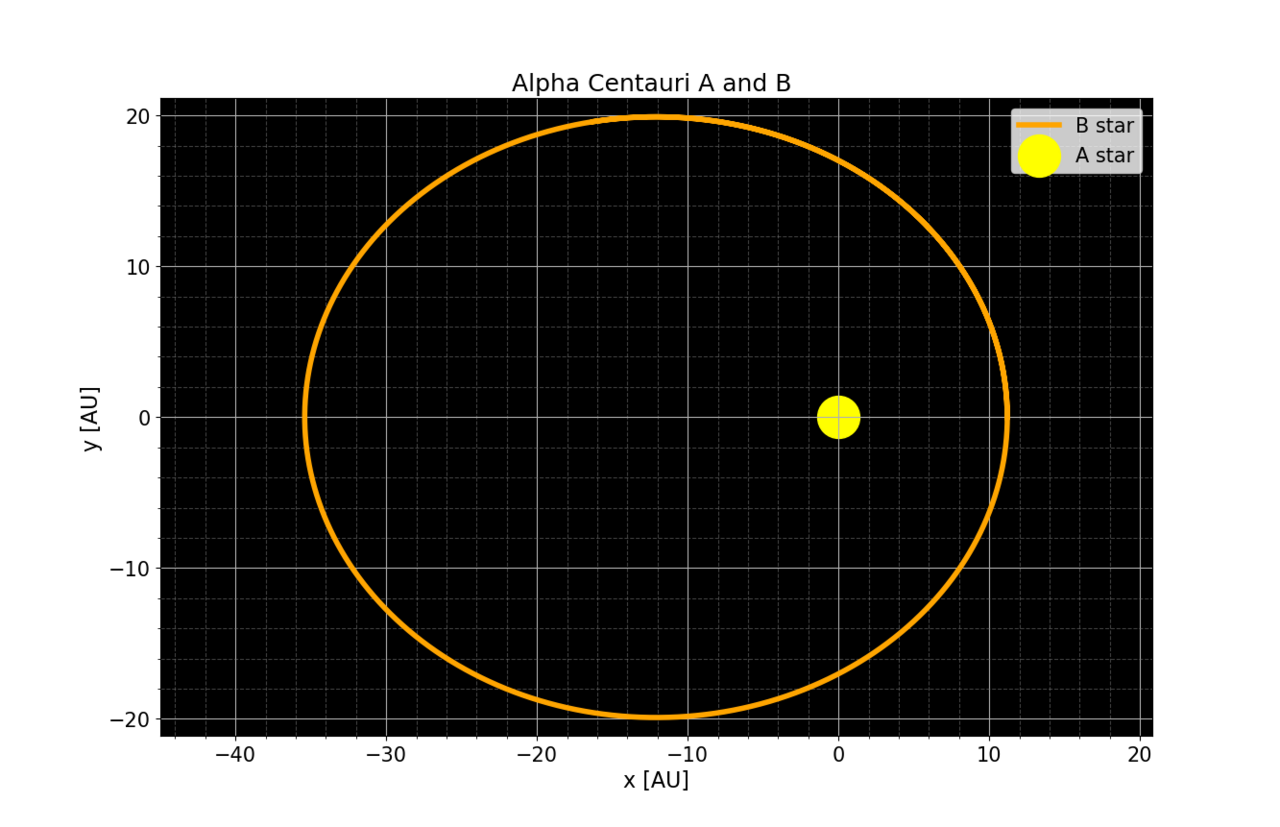
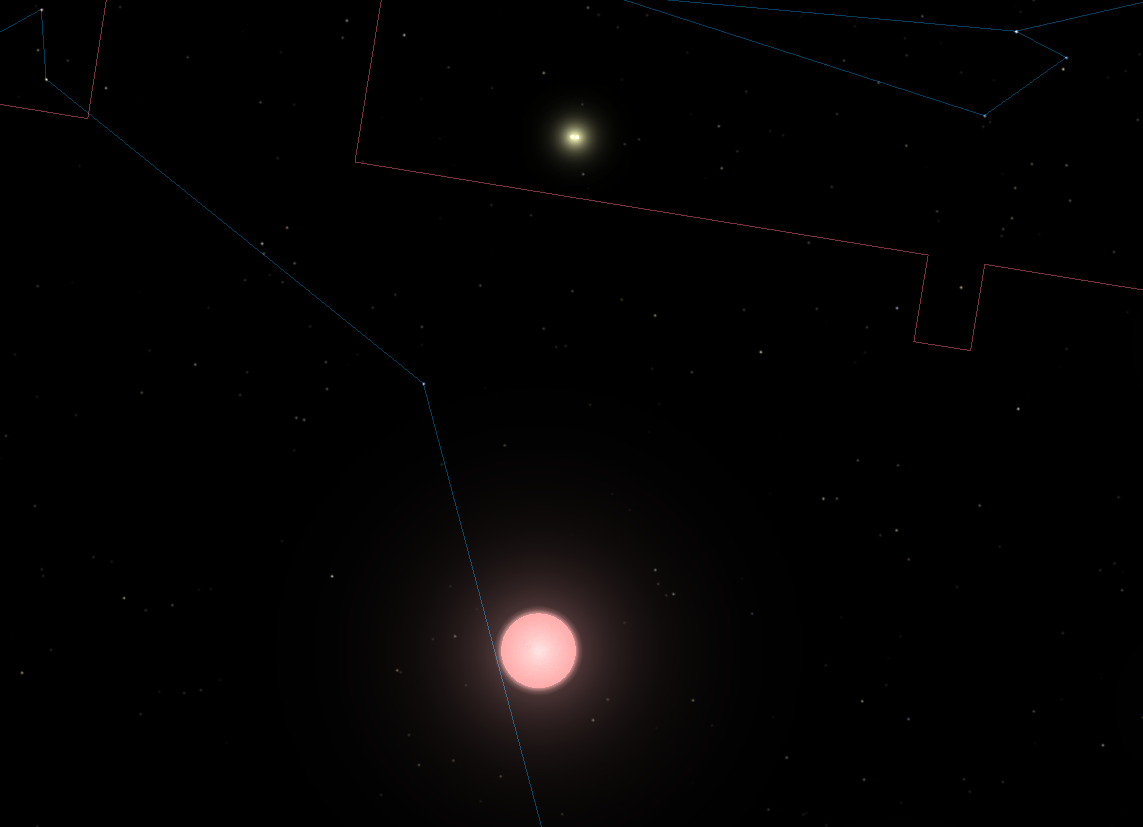
Proxima Centauri b does not exist in isolation. Its host star, designated Alpha Centauri C, is a member of the broader Alpha Centauri triple system, sitting 2.18 degrees southwest of the brighter Alpha Centauri AB pair and currently 12,950 AU (0.2 light-years) from them, orbiting that pair with a period of roughly 550,000 years.
The star itself is a small M5.5 red dwarf with a mass of about 12.5% of the Sun's and a diameter roughly one-seventh of the Sun's—about 1.5 times Jupiter's. Its Latin name, Proxima Centauri, simply means 'the nearest [star] of Centaurus,' a fitting title for a world that is the closest potentially habitable exoplanet to our own. Discovered by Robert Innes in 1915, the star is too faint for the naked eye at magnitude 11.13, yet it anchors a planetary system that includes the sub-Earth Proxima d and the disputed sub-Neptune Proxima c, making Proxima b the most massive and most habitable-zone-adjacent member of this remarkably close stellar family.
Reader's Guide
The discovery of b Centauri b demonstrated that planets can exist around very massive stars, a population previously thought unlikely to host planets. Earlier studies using radial velocity surveys had found that planet occurrence rates drop sharply for stars above 2 solar masses and approach zero at 3 solar masses, but those results applied only to close-in planets. The discoverers argued that the short-lived circumstellar disks around massive stars may prevent planets from migrating inward, yet still allow the formation of distant planets like b Centauri b via gravitational instability.
This finding expands the known range of planetary system architectures and suggests that massive stars, despite their harsh environments, can host long-period giant planets. The planet's mass ratio to its host stars mirrors that of Jupiter to the Sun, supporting the idea that more massive stars tend to produce more massive planets. The discovery was published in Nature in December 2021, led by Markus Janson of Stockholm University.
Frequently Asked Questions
What is b Centauri b?
b Centauri b (also catalogued as b Centauri (AB)b) is a super-Jupiter-class planet that circles both stars of the b Centauri binary in the southern constellation Centaurus. At roughly 10.9 Jupiter masses, it stands as one of the heaviest confirmed exoplanets in the catalog.
How was b Centauri b discovered?
The planet was confirmed in 2021 as part of the BEAST survey, which targets B-type stars in the Scorpius–Centaurus association. Astronomers used the SPHERE instrument on the Very Large Telescope, relying on a coronagraph to suppress the glare of the host stars so the planet could be directly imaged in infrared light.
More in Exoplanets Found by Imaging and Microlensing
Sources
Compiled from Wikipedia and the sources listed below. Text from Wikipedia is available under CC BY-SA 4.0; this entry is adapted from it.
- Wikipedia: B Centauri b (CC BY-SA 4.0).
- Word definitions: the Codexery glossary, each quoted from its Wikipedia article.
Spotted an error? Know more?
Reader corrections go straight into our review queue. Suggest an edit · How this site is sourced