OGLE-2005-BLG-390Lb
A distant super-Earth ice world discovered via gravitational microlensing.
Last updated

ESO · CC BY 3.0
OGLE-2005-BLG-390Lb is a super-Earth ice exoplanet orbiting the star OGLE-2005-BLG-390L, located approximately 21,500 light-years from Earth near the center of the Milky Way. It is one of the most distant planets known. The planet does not appear to meet conditions presumed necessary to support life.
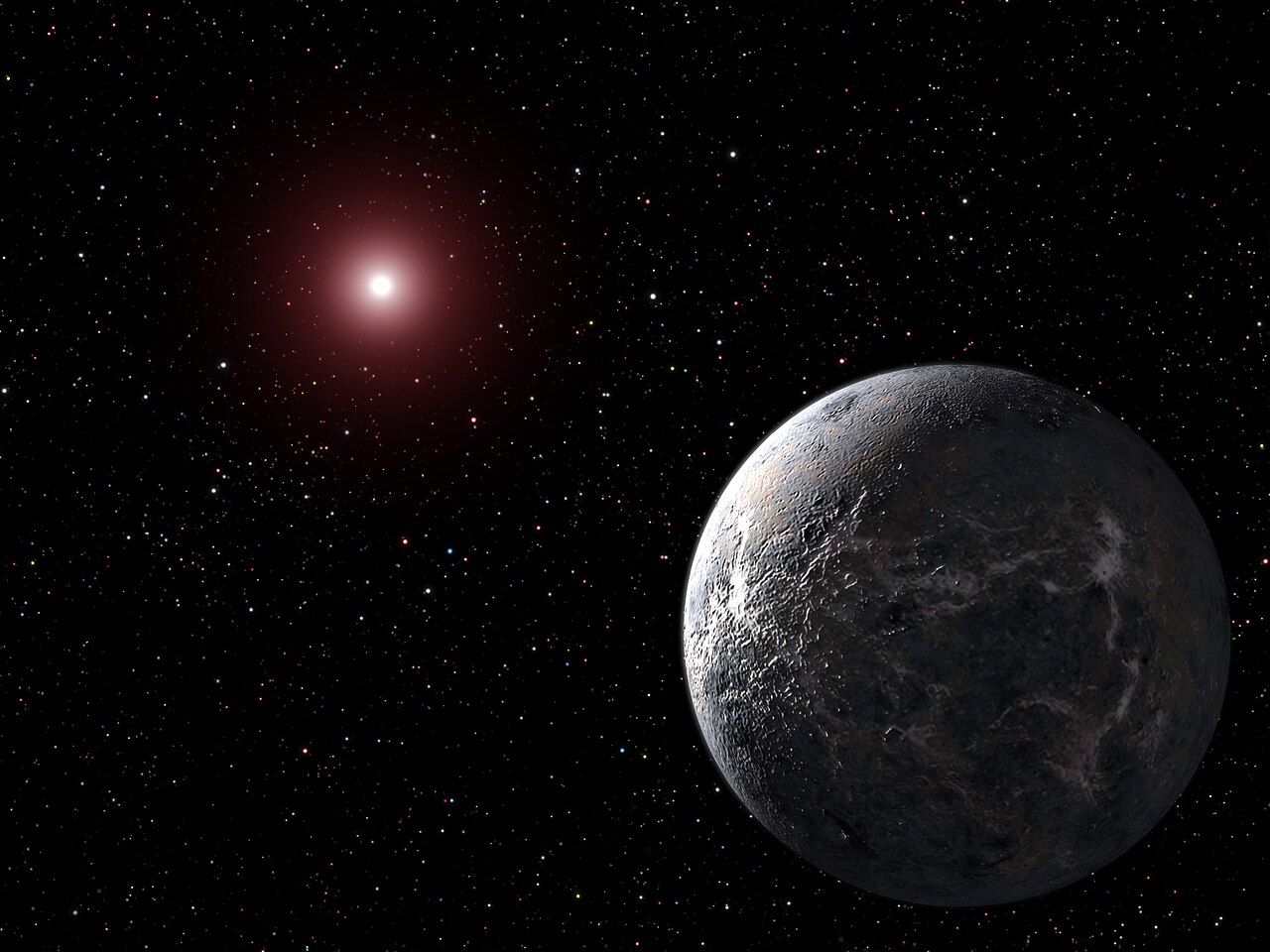
Lore & Background
OGLE-2005-BLG-390Lb was discovered through a joint announcement on January 25, 2006, by the PLANET/RoboNet, OGLE, and MOA collaborations. Its signature was first detected at the Danish 1.54-m telescope at ESO La Silla Observatory in Chile, with follow-up data from a 0.6-m telescope at Perth Observatory in Australia. The planet was found via gravitational microlensing: a 15% spike in brightness lasting about 12 hours during a microlensing event revealed its presence.
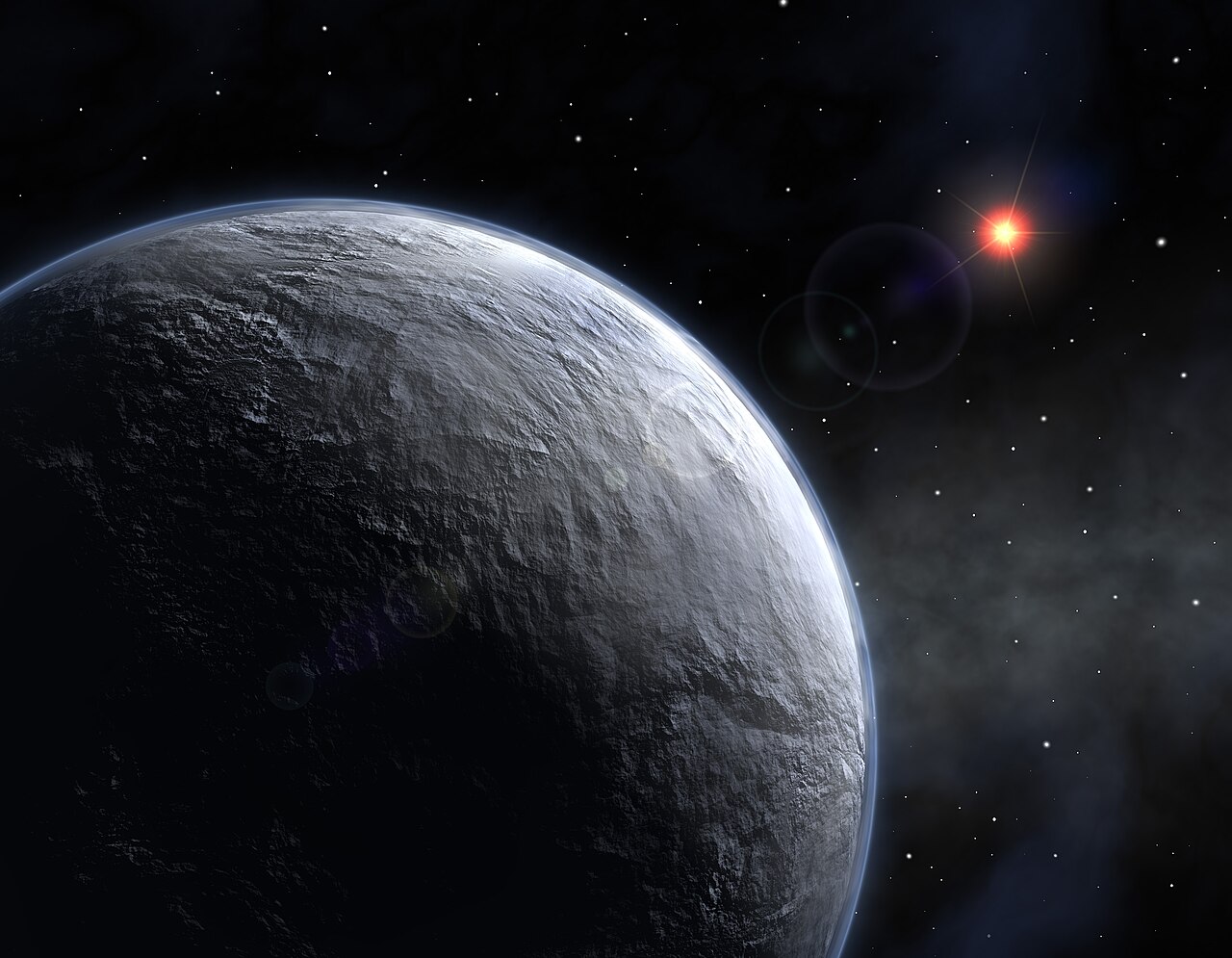
The planet is estimated to be about five times Earth's mass. Some astronomers speculate it may have a rocky core with a thin atmosphere.
Its likely surface temperature of around 50 K would make frozen volatiles such as water, ammonia, methane, and nitrogen solid if it is rocky. If not rocky, it would more closely resemble a small icy gas planet like Uranus. At the time of its discovery, it replaced Gliese 876 d as the lowest-mass exoplanet found orbiting a main sequence star.
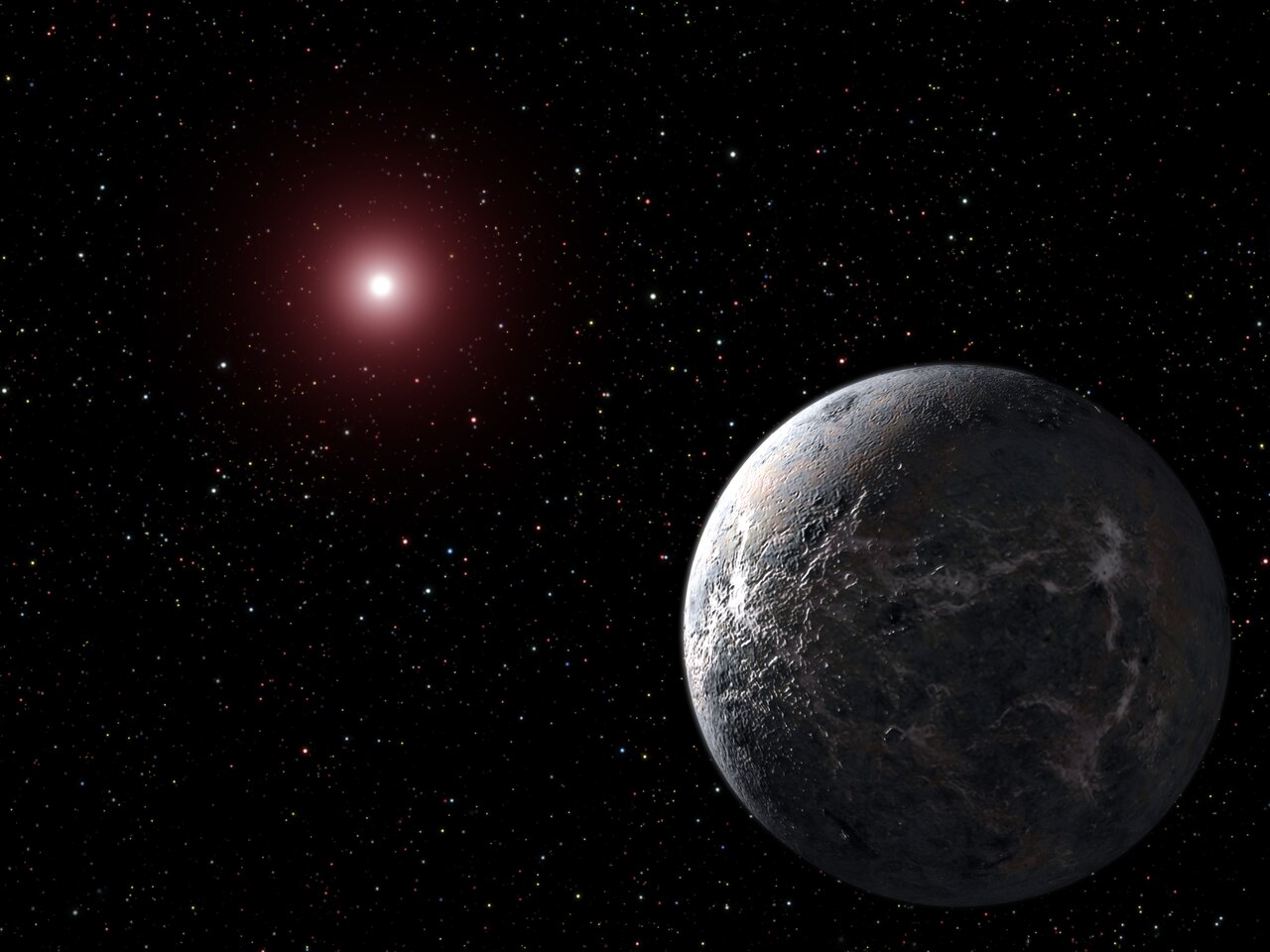
The host star, OGLE-2005-BLG-390L, is thought to likely be a cool red dwarf (95% probability) or a white dwarf (4% probability), with a very slight chance of being a neutron star or black hole. Its radiant energy output is significantly less than that of the Sun. The planet orbits every 3,500 days at an average distance of 2.0 to 4.1 AU, an orbit that would fall between Mars and Jupiter in the Solar System.
Discovery Through a Fleeting Brightening
On January 25, 2006, a joint announcement from three international collaborations—PLANET/RoboNet, OGLE, and MOA—revealed a new world lurking near the heart of the Milky Way. The detection relied on gravitational microlensing, a phenomenon in which the gravity of a foreground star bends and amplifies the light of a more distant background star. When a planet accompanies that foreground star, it can produce a brief, subtle brightening as it drifts between the two. OGLE first flagged the microlensing event produced by the host star, and the PLANET team then mounted intensive follow-up observations over roughly two weeks.
Their primary instrument was the Danish 1.54-metre telescope at ESO La Silla in Chile, supplemented by a 0.6-metre telescope at Perth Observatory in Western Australia. During that window, the team recorded a 15 per cent intensity spike lasting about twelve hours. By analysing the magnitude and duration of that spike, the astronomers extracted the planet's mass and its rough separation from the star. The resulting paper, submitted to Nature, carried the names of every member across all three surveys.
A Frozen Super-Earth Named Hoth
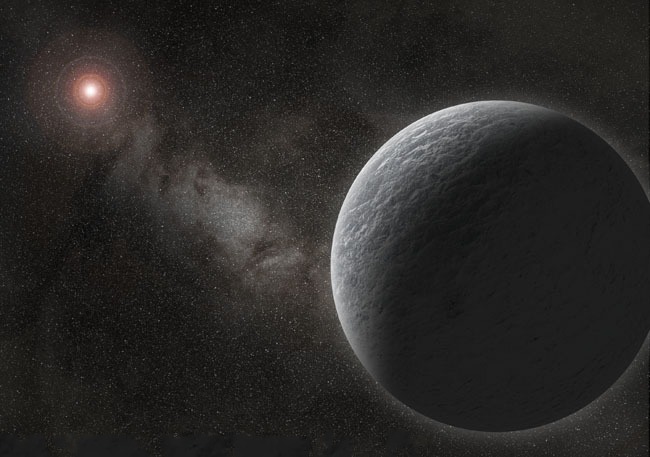
Estimated at roughly five Earth masses, OGLE-2005-BLG-390Lb is a super-Earth whose environment would be instantly lethal to any Earth-based biology. Its likely surface temperature hovers near 50 kelvin—about minus 220 degrees Celsius—placing it among the coldest worlds ever catalogued. If the planet possesses a rocky core with a thin atmosphere, as some astronomers have suggested, then every volatile substance familiar to us—water, ammonia, methane, nitrogen—would be locked in a solid state across its surface, producing a landscape of frozen ices stretching to the horizon.
Alternatively, if it lacks a true rocky interior, it would more closely resemble a shrunken version of Uranus, an icy gas world. NASA informally dubbed it Hoth, drawing a parallel to the frozen planet from the Star Wars films. At a distance of approximately 21,500 light-years from Earth, it also ranks among the most remote planets ever identified, and it clearly does not satisfy the conditions generally considered necessary for life.
An Orbit That Broke the Distance Barrier
Perhaps the most striking aspect of OGLE-2005-BLG-390Lb is where it sits relative to its star. It completes one orbit every 3,500 days—roughly a decade—and maintains an average separation between 2.0 and 4.1 astronomical units, a range that would place it squarely between the orbits of Mars and Jupiter in our own Solar System. That distance range reflects the uncertainty in measurement rather than any known orbital eccentricity, since the full set of orbital elements remains undetermined.
Before this discovery, no small exoplanet had ever been detected beyond 0.15 AU from a main-sequence star, meaning most known small worlds, such as Gliese 876 d with its sub-two-day orbit, huddled tightly against their hosts. OGLE-2005-BLG-390Lb shattered that pattern, demonstrating that a planet of only about five Earth masses could occupy a wide, leisurely orbit. At the time of its announcement, with 160 exoplanets already in the catalogue, it dethroned the 7.5-Earth-mass Gliese 876 d as the lightest exoplanet found around a main-sequence star.
An Ancient, Dim Anchor at the Galaxy's Core
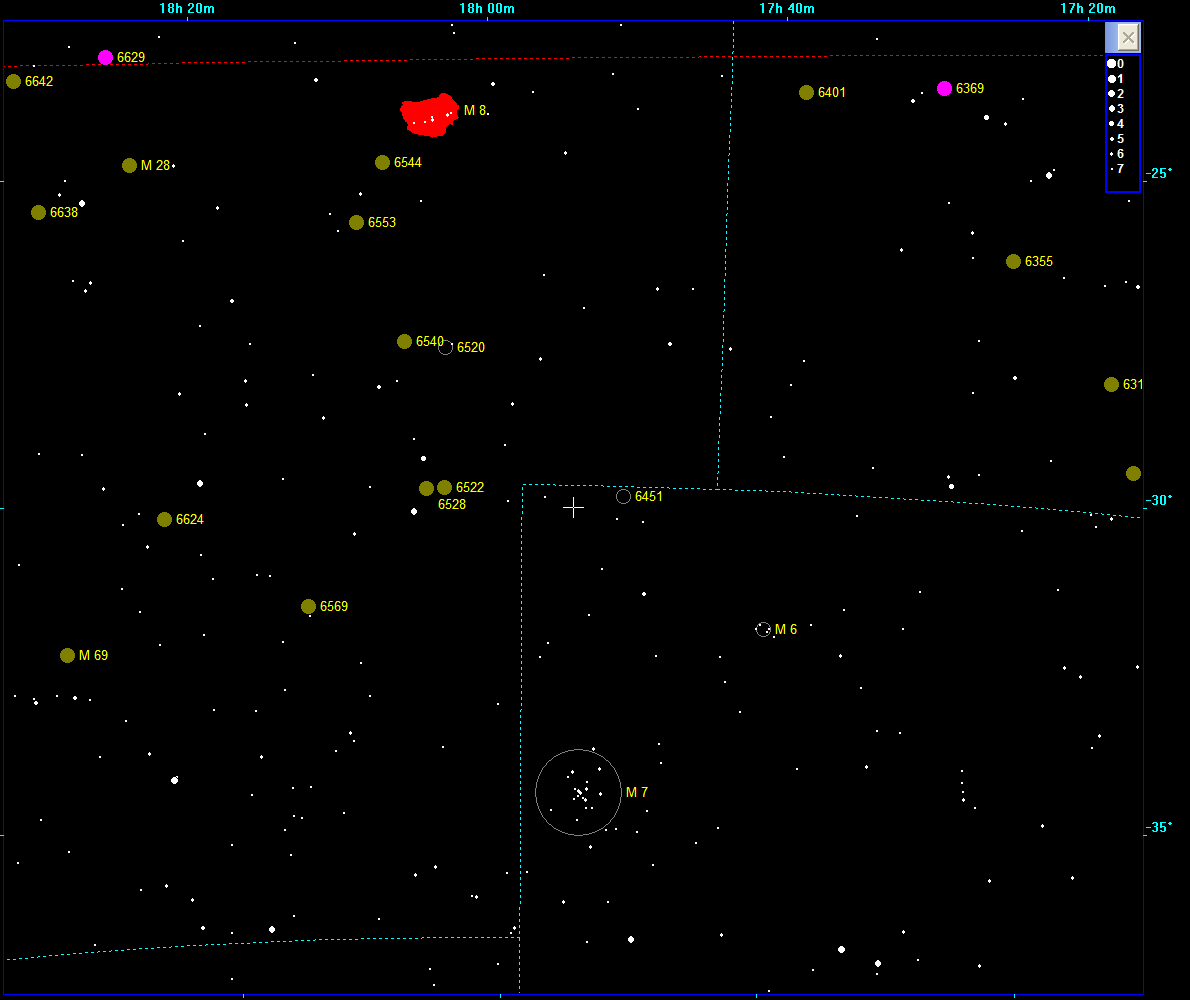
The star that anchors this frozen system, OGLE-2005-BLG-390L, is itself a remarkable object. Located in the constellation Scorpius at a distance of roughly 6,600 parsecs from Earth, it sits near the dense central region of the Milky Way. Its identity is not entirely certain: current models assign a 95 per cent probability that it is a cool red dwarf, a 4 per cent chance that it is a white dwarf, and less than 1 per cent that it could be a neutron star or even a black hole.
Whichever classification proves correct, its luminosity would be far below that of the Sun. The star's mass is estimated at 0.22 solar masses, and if it is indeed a red dwarf, its radius would be approximately 0.17 times that of the Sun. Its age is estimated at around 9.6 billion years, making it an ancient companion to a planet that has been circling in the dark for most of the galaxy's history.
Reader's Guide
OGLE-2005-BLG-390Lb is notable for being one of the most distant exoplanets known, located about 21,500 light-years away near the center of the Milky Way. Its discovery demonstrated the power of gravitational microlensing to find small planets at large orbital distances, a regime inaccessible to other detection methods at the time. Prior to this, small exoplanets like Gliese 876 d were found very close to their stars; OGLE-2005-BLG-390Lb showed a combination of size and orbit that would not be out of place in the Solar System.
At the time of its discovery, 160 exoplanets had been found, and this planet became the lowest-mass exoplanet known orbiting a main sequence star. The planet has been given the unofficial name Hoth by NASA due to its resemblance to the Star Wars planet. Its legacy includes paving the way for the detection of other cold, distant worlds via microlensing.
Frequently Asked Questions
What is OGLE-2005-BLG-390Lb?
It is a super-Earth ice world that circles the faint red dwarf star OGLE-2005-BLG-390L. The planet weighs roughly 5.5 times as much as Earth and sits so far from its host star that its surface temperature hovers around 50 kelvin.
How far away is OGLE-2005-BLG-390Lb?
The system resides about 21,500 light-years from Earth, nestled near the galactic center of the Milky Way. That makes it one of the most remote confirmed planets we know of.
How was OGLE-2005-BLG-390Lb discovered?
Astronomers detected it through gravitational microlensing, a technique that relies on the bending of background starlight by a foreground star-planet system. The lensing event was catalogued in 2005 by the OGLE survey.
What is OGLE-2005-BLG-390Lb's orbit like?
The planet takes roughly 3,500 days—about ten Earth years—to complete one lap around its host star. Its orbital distance is estimated between 2.0 and 4.1 astronomical units, placing it well beyond the habitable zone of its dim 0.22-solar-mass star.
More in Exoplanets Found by Imaging and Microlensing
Sources
Compiled from Wikipedia and the sources listed below. Text from Wikipedia is available under CC BY-SA 4.0; this entry is adapted from it.
- Wikipedia: OGLE-2005-BLG-390Lb (CC BY-SA 4.0).
- Word definitions: the Codexery glossary, each quoted from its Wikipedia article.
Spotted an error? Know more?
Reader corrections go straight into our review queue. Suggest an edit · How this site is sourced