Disco 2000 (band)
British pop side project of The KLF, 1987–1989.

Babewyn · CC BY-SA 4.0
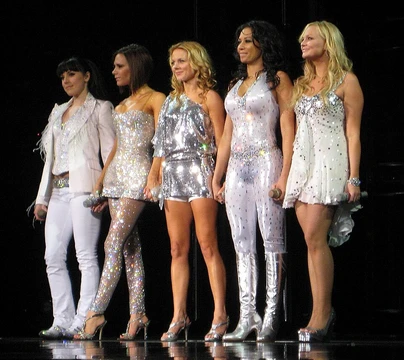
Disco 2000 was a British pop side project of The KLF, active from 1987 to 1989. The group featured two vocalists: Cress (Cressida Cauty, née Bowyer), who was married to KLF co-founder Jimmy Cauty at the time, and Mo (June Montana), who had previously sung in the band Brilliant, of which Jimmy Cauty was a member. The duo released three singles on the KLF Communications label, but none reached the top 75 of the UK Singles Chart.
The project emerged from earlier connections. Cressida Bowyer and Jimmy Cauty had performed together in a band called The Angels (though the specific name and year are not reliably documented as 'Angels 1–5' in 1981) and later married. In 1987, Jimmy Cauty formed The Justified Ancients of Mu Mu (The JAMs) with Bill Drummond, and together they set up the independent label KLF Communications. As a side venture, they created Disco 2000, with Cress and Mo handling vocals. The debut single, “I Gotta CD,” came out on 30 October 1987, followed by “One Love Nation” in 1988—neither charted. A third single, “Uptight (Everything’s Alright),” a cover of Stevie Wonder’s song, was released in 1989 and peaked at number 86 in the UK chart. Music videos were made for “One Love Nation” and “Uptight.” The group also contributed a track called “Feel This” to the 1989 *Eternity Project One* LP, compiled by Martin Glover (known as Youth), under the name Discotec 2000.
As The KLF took priority, Cressida Cauty took on organizational duties for KLF Communications, along with design and choreography work for The KLF, while continuing her own art. She and Jimmy Cauty lived in a squat that housed the label’s recording studio, Trancentral.
Reviews of Disco 2000 were mixed. In 1988, NME’s Barbara Ellen described a gig by the duo as featuring “two raucous, wicked, hideously beautiful she-cats with diamonds for brains,” adding that for men, the performance was “like sex without the draggy chat-up scenario.” In November 1987, NME’s James Brown called the single “I Gotta CD” a “captivating KLF offshoot” full of slogans, metal solos, and addictive choruses. Later, he noted the increasing “accessibility” and “dance-awareness” of KLF Communications releases including that track.
Quick Facts
- Origin
- London, England
- Genre
- Pop
- Years Active
- 1987–1989
- Label
- KLF Communications
- Associated Acts
- The KLF
Facts from the source article.
Lore & Background
Disco 2000 originated as a side project of The Justified Ancients of Mu Mu (The JAMs), the duo of Jimmy Cauty and Bill Drummond. Cressida Bowyer and Jimmy Cauty had previously performed together in a band called The Angels (though the specific name and year are not reliably documented as 'Angels 1–5' in 1981) and later married. The group's debut single, 'I Gotta CD', was released on 30 October 1987. Neither this nor its follow-up 'One Love Nation' (1988) entered the UK Singles Chart. A third single, 'Uptight (Everything's Alright)' (1989), peaked at #86 in the UK chart. Music videos were filmed for 'One Love Nation' and 'Uptight'. A track entitled 'Feel This' was contributed by the group to the 1989 Eternity Project One LP under the name 'Discotec 2000'.
Cressida and Jimmy Cauty later set up home in a squat that also housed the KLF Communications recording studio, Trancentral.
Reader's Guide
Disco 2000 represents a brief, commercially unsuccessful pop experiment by the otherwise influential and iconoclastic KLF collective. The group's significance lies in its role as a side project that showcased the vocal talents of Cressida Cauty and June Montana, and in its connection to the broader KLF Communications output of the late 1980s. While none of its singles charted in the UK top 75, the band attracted attention from music press: NME writers offered both vivid descriptions of live performances and positive reviews of the debut single. However, the group's legacy is mixed; in 2005, International DJ magazine ranked 'Uptight (Everything's Alright)' among the twenty worst cover versions in dance music history, while Trouser Press retrospectively called the same track 'entertaining' and likened it to 'Bananarama on a rap tip'. The band's work remains a footnote in the history of The KLF, illustrating the duo's willingness to explore pop formats outside their main project.
Did You Know?
- NME writer Barbara Ellen described Mo and Cress as 'two raucous, wicked, hideously beautiful she-cats with diamonds for brains'.
- In 2005, International DJ magazine ranked Disco 2000's cover of Stevie Wonder's 'Uptight' among the twenty worst cover versions in dance music history.
The Real Deborah Behind the Song
Disco 2000 draws its emotional core from a genuine childhood experience of Jarvis Cocker. The song centers on a girl named Deborah, based on his real-life friend Deborah Bone, who was born in the same hospital as Cocker—approximately three hours apart, a detail he noted was too long to fit into the song's rhythm. Growing up in Sheffield, Cocker harbored a long-standing crush on Deborah, but as she matured into adolescence and other boys took notice, he felt completely out of his depth. He would occasionally loiter outside her home, a small act of longing that he later wove into the lyrics. Deborah Bone eventually moved from Sheffield to Letchworth at the age of ten, and as the song's narrative implies, she went on to marry and raise children. She later reflected on her connection to the track, acknowledging she likely inspired the "Deborah" character, though she added with wry humor that she and Cocker never actually met up at the Goodwin Fountain on Fargate, the meeting spot referenced in the song. Cocker himself confirmed that nearly every detail was autobiographical, with the sole exception being the woodchip wallpaper.
Disco Roots and Sonic Identity
The track's sonic identity is firmly rooted in the disco and dance-pop traditions of the late 1970s and early 1980s. Martin Aston of Attitude captured this by noting the song carries the energy of Elton John's "Saturday Night's Alright For Fighting," the glittering guitar work associated with Marc Bolan, the sweeping dance rhythms of ABBA, and a pronounced nod to Laura Branigan's high-energy "Gloria." Drummer Nick Banks openly embraced the influence, explaining that the band had absorbed disco sensibilities throughout the late 1980s and early rave era, which gave their music a more pronounced four-on-the-floor thump. He described himself as perpetually drawn to disco. Critics picked up on this lineage: Barry Walters of Spin observed that while Pulp had referenced disco riffs before, the way "Disco 2000" channels Branigan's "Gloria" riff edged toward genius. Stephen Thomas Erlewine of AllMusic summed up the result as a "glitzy, gaudy stomp," while a Music Week reviewer noted the bouncing disco beat paired with Cocker's characteristic spoken-word delivery. The production thus sits at the intersection of Pulp's art-rock sensibility and unapologetic pop-dance energy.
Chart Runs and the 2000 Sync Ban
Island Records issued "Disco 2000" as the third single from Different Class on 27 November 1995. It climbed to number seven on the UK Singles Chart, making it the album's third top-10 entry after "Common People" and the "Mis-Shapes" / "Sorted for E's & Wizz" double A-side, both of which peaked at number two. The single also found audiences across Austria, Finland, Hungary, Iceland, and Ireland, and marked Pulp's sole top-50 placement in Australia. On 7 October 1996, the band followed up with a distinctive orange 7-inch vinyl pressing in the UK. One of the most unusual aspects of the song's afterlife was a deliberate licensing decision: because the track's title and subject matter revolved around the year 2000, Pulp revoked its synchronisation licence, effectively preventing the song from appearing in television or radio trailers during 1999 and 2000. This move underscored the band's awareness of the song's cultural timing and their desire to control how it was experienced in the public sphere.
Critical Acclaim and Enduring Legacy
"Disco 2000" has consistently been regarded as one of Pulp's finest achievements, earning praise from both critics and fans. Simon Price of Melody Maker named it Single of the Week, arguing that beneath Cocker's apparent bitterness lay a profound romanticism, comparing the song's fantasy of reuniting with an old flame to The Human League's "Louise" and Hot Chocolate's "It Started with a Kiss." David Fricke of Rolling Stone highlighted Cocker's gift for "hapless pining and geeky self-obsession," while Elvis Costello, in a 1996 interview, singled out the specificity of the woodchip wallpaper lyric as evidence of a genuine memory. Adrien Begrand of PopMatters called it a "fabulous single," and Gina Morris of Smash Hits awarded it a perfect five and named it Best New Single. In fan communities, NME readers voted it Pulp's third-best song, Stereogum's Ryan Leas ranked it second, and Orange County Weekly recommended it as the essential starting point for new listeners. Leas noted that the song's power lies in its perspective: a man in his early thirties looking back at youth and romance, a tension that elevates it into classic pop territory.
Gallery
Frequently Asked Questions
Who is Disco 2000?
Disco 2000 was a short-lived British pop duo that operated as a side project under The KLF between 1987 and 1989. The group consisted of two female vocalists and functioned as a vehicle for the KLF's more accessible pop material.
Who were the members of Disco 2000?
The duo was made up of Cress (Cressida Cauty, born Bowyer) and Mo (June Montana). Cressida was married to KLF co-founder Jimmy Cauty during the project's run, while June Montana had previously shared a stage with Cauty in the band Brilliant.
What singles did Disco 2000 release?
The pair put out three singles during their brief career, all issued on the KLF Communications imprint. Despite the backing of The KLF's infrastructure, none of the tracks managed to crack the UK Singles Chart's top 75.
Why was Disco 2000 created?
The project grew out of pre-existing personal and musical ties between the two singers and Jimmy Cauty, who had collaborated with both women in earlier bands. It served as a way for The KLF to explore a more straightforward pop sound through a female-fronted act.
How long was Disco 2000 active?
The group existed for roughly two years, from 1987 until 1989, after which the project was quietly wound down. Their entire output consists of just those three KLF Communications singles.
More in English pop girl groups 1-24
Spotted an error? Know more?
Reader corrections go straight into our review queue. Suggest an edit · How this site is sourced