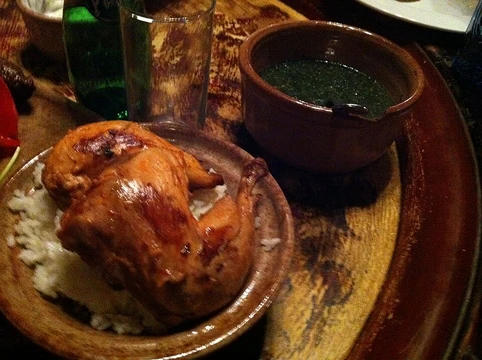
Koshary
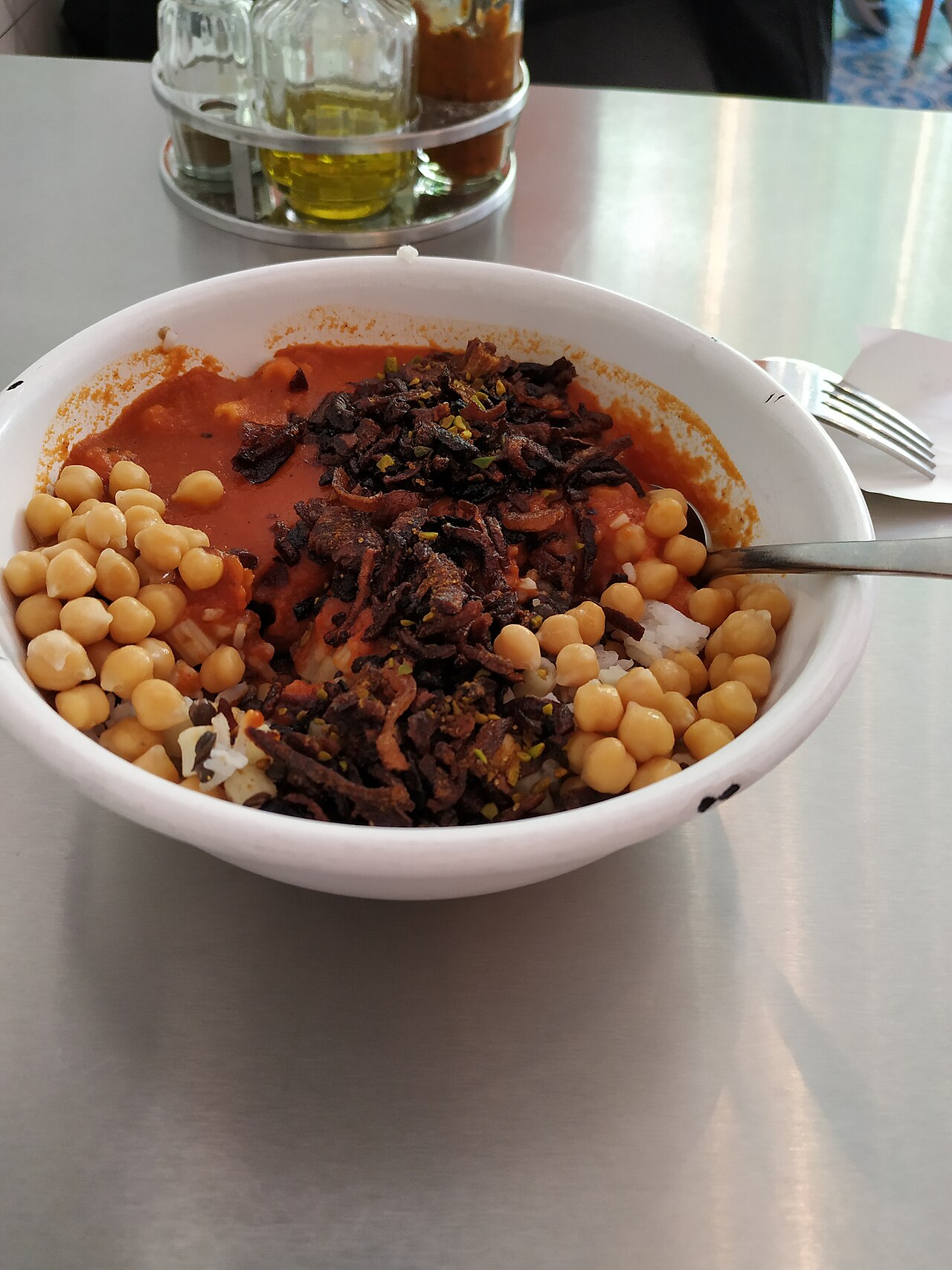
Egypt's national dish, a street food of lentils, rice, and pasta.

Miwie · CC BY-SA 4.0
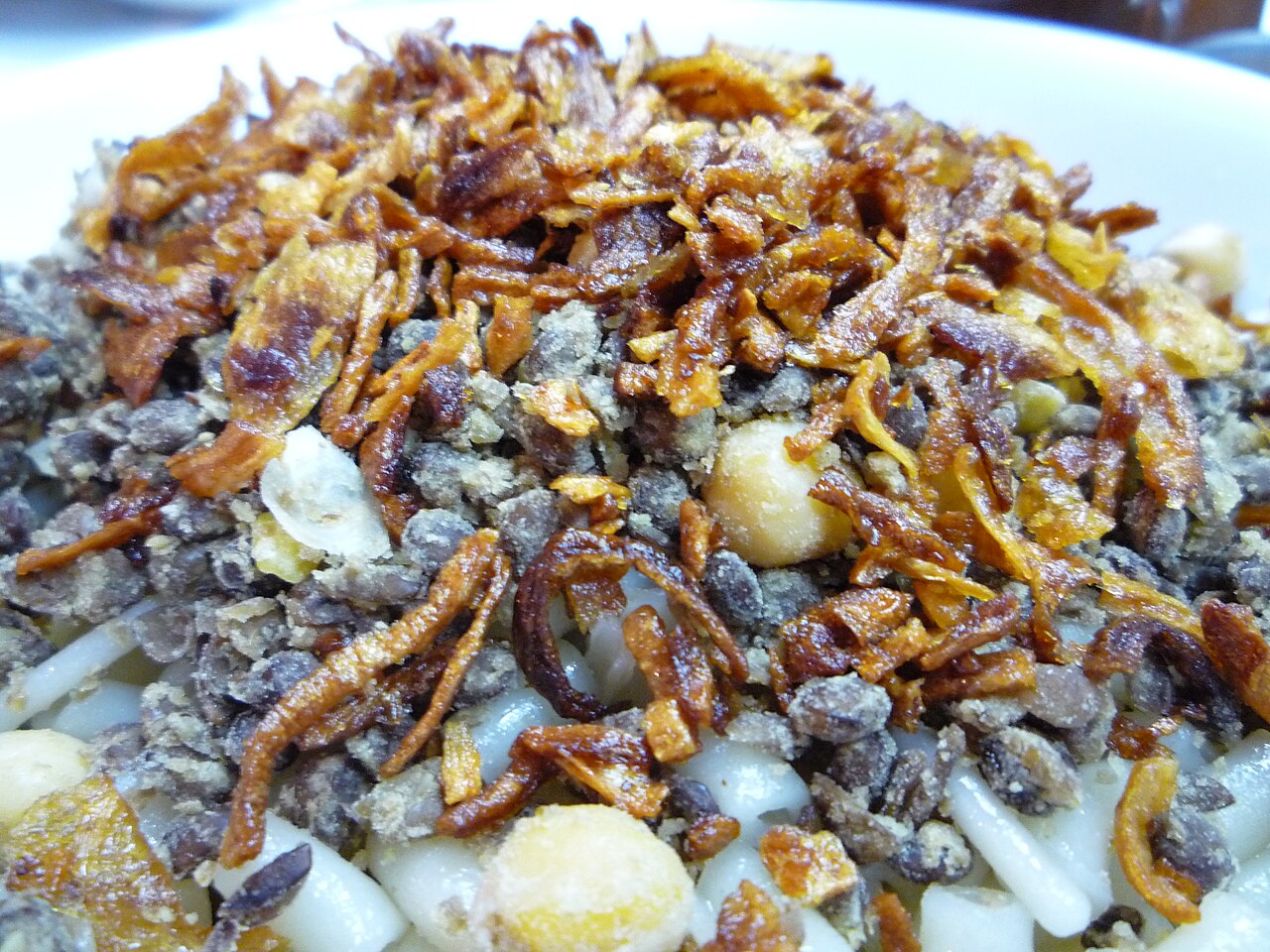
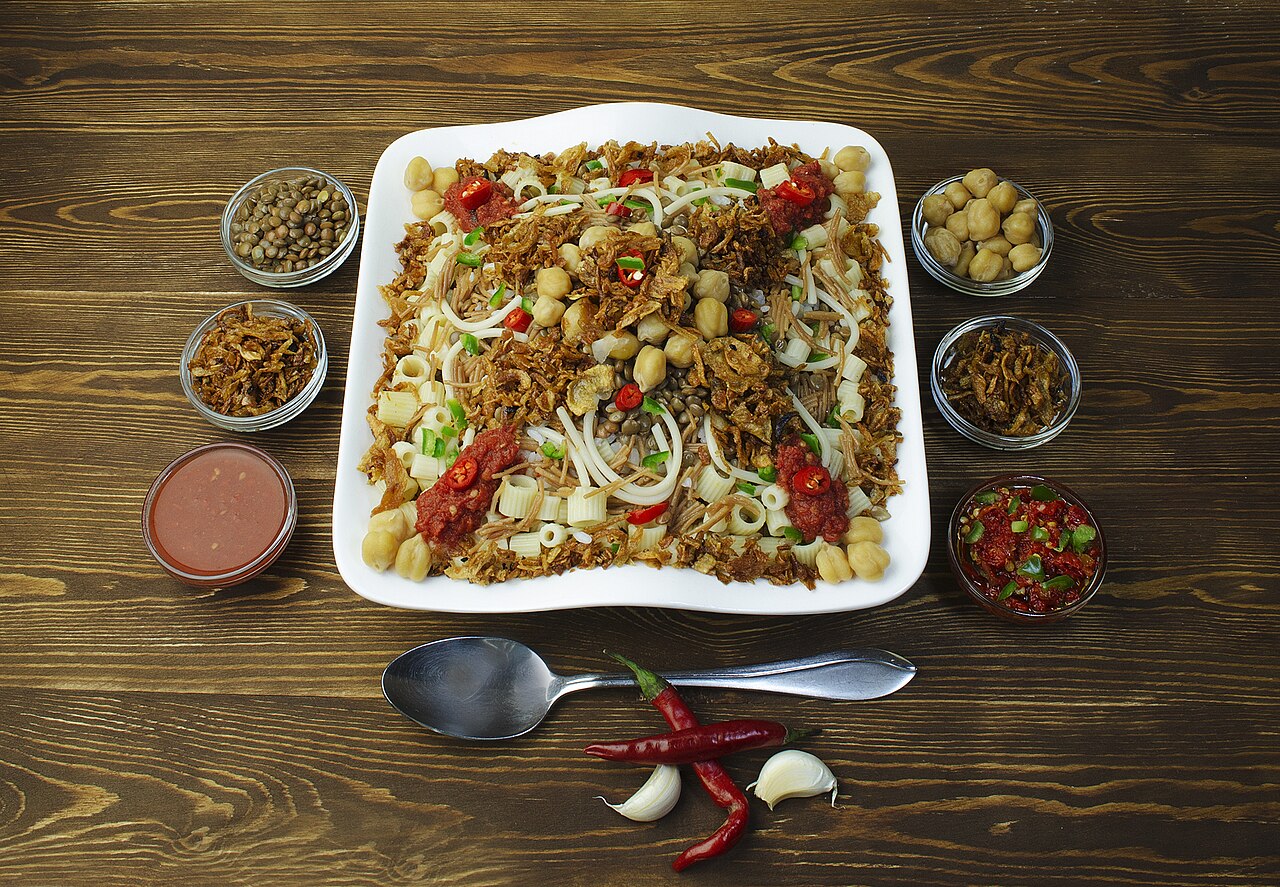
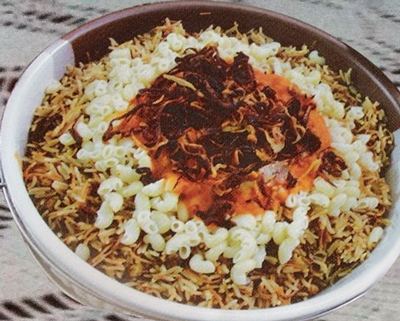
Koshary—also spelled Kushari or Koshari—is Egypt’s national dish and a common street food. This traditional staple combines pasta, Egyptian fried rice, vermicelli, and brown lentils, then gets topped with chickpeas, a garlicky tomato sauce, garlic vinegar, and crispy fried onions. Extra garlic vinegar and hot sauce can be added to taste.
The dish has deep roots. In the Egyptian Books of Genesis, the ancient term “Koshir” meant “Food of the rites of the Gods,” and it was a breakfast of lentils, wheat, chickpeas, garlic, and onions cooked in clay pots. This account is said to trace back to Manetho, though his surviving works contain no mention of Koshir. A priest from Heliopolis described it as a meal eaten after fasting on the 11th day of Pachons, an ancient Egyptian month. Known as “the food of the poor,” koshary features fried onions, lentils, rice, macaroni, and a red sauce. While related to Mediterranean cuisine, the Egyptian version stands apart due to its local lemon sauce, which gives the dish its distinctive flavor.
The earliest known English-language reference appears in Richard Burton’s 1853 book *Journey to Egypt and the Hijaz*, where he recorded koshary as the breakfast of Suez’s people, made with Egyptian lentils, rice, butter, onions, and pickled lemons. Initially sold from food carts, koshary later moved into restaurants. It is especially popular among workers and laborers, suits large events like conferences, and is made at home as well as sold at roadside stalls and restaurants across Egypt. Some eateries specialize solely in koshary, while others offer it as one item among many. Because traditional preparation uses no animal products, it is vegan as long as frying is done with vegetable oil. In 2025, UNESCO recognized koshary as intangible cultural heritage.
Variants exist. Alexandrian koshary differs notably in taste and form: it uses yellow lentils and rice, with curry and cumin giving the rice a uniform color, and includes Egyptian fried eggs (boiled then fried in butter), lightly pickled tomatoes instead of tomato sauce, and French fries on the side. Outside Egypt, koshary has grown popular in Eastern Arabia and Yemen, where regional versions might add grilled vegetables, use basmati rice (white or yellow), or include other macaroni shapes. Some recipes incorporate chicken, bringing them closer to kabsa.
Quick Facts
- Country
- Egypt
- Course
- Main course
- Served
- Warm or Hot
- Main Ingredient
- Rice, lentils, macaroni, Vermicelli, tomato sauce, vegetable oil, onions, cumin, coriander
- Variations
- Chickpeas, Hot sauce, Garlic juice, Vinegar, Short spaghetti
Facts from the source article.
Lore & Background
In the Egyptian Books of Genesis, the Ancient Egyptian term 'Koshir' meant 'Food of the rites of the Gods' and was a breakfast dish of lentils, wheat, chickpeas, garlic, and onions cooked in clay pots. It has been claimed that the original account goes back to Manetho, though no mention of Koshir could be found in his collected works. A priest from Heliopolis described it as a food to eat after fasting on the 11th day of Pachons. Koshary is known as 'The food of the Poor' and consists of fried onions, lentils, rice, macaroni, and a red sauce, with a unique taste from the local Egyptian lemon sauce.
In 1853, explorer Richard Burton documented koshary as the breakfast meal of the people of Suez, consisting of Egyptian lentils, rice, butter, onions, and pickled lemons—the earliest known English-language written reference. Koshary was sold on food carts in its early years and later introduced to restaurants. It is widely popular among workers and laborers and is well-suited to mass catering events. As traditionally prepared without animal products, it can be considered vegan if all frying uses vegetable oil.
Reader's Guide
Koshary is Egypt's national dish and a staple street food, deeply rooted in the country's culinary identity. The article notes its ancient origins, with the term 'Koshir' appearing in the Egyptian Books of Genesis, though the connection to Manetho is disputed. It gained documented recognition in 1853 through Richard Burton's travel account. The dish is known as 'the food of the poor' and is widely consumed by workers and laborers, sold from food carts, roadside stalls, and restaurants across Egypt. Its vegan-friendly nature (when fried in vegetable oil) adds to its broad appeal. In 2025, UNESCO recognized koshary as intangible cultural heritage. Variants exist, such as Alexandrian koshary with yellow lentils, curry, cumin, fried eggs, and pickled tomatoes, and adaptations in Eastern Arabia, Yemen, and Japan with nontraditional ingredients. An instant dry version appeared in Egypt in 2020, akin to instant noodles. The dish's legacy lies in its status as a unifying, affordable, and adaptable national food.
Did You Know?
- Koshary is Egypt's national dish and a widely popular street food.
- The earliest known English-language written reference to koshary is from 1853 in Richard Burton's 'Journey to Egypt and the Hijaz'.
- In 2025, koshary was recognized as intangible cultural heritage by UNESCO.
- An instant koshary, requiring hot water and 5 to 10 minutes to prepare, started appearing in Egypt in 2020.
Ancient Roots and Early Documentation
The story of koshary stretches back to the earliest layers of Egyptian civilization. In the Egyptian Books of Genesis, the ancient term "Koshir" carried the meaning "Food of the rites of the Gods," describing a breakfast preparation of lentils, wheat, chickpeas, garlic, and onions cooked together in clay vessels. Some scholars have linked this account to the Greek historian Manetho, though a search through his surviving collected works turns up no reference to the dish. A priest from Heliopolis is recorded as having described koshir as the meal consumed after a fast on the eleventh day of Pachons, a month in the ancient Egyptian calendar. The dish's first appearance in English-language writing came in 1853, when explorer Richard Burton, in his book Journey to Egypt and the Hijaz, recorded koshary as the customary breakfast of the people of Suez. His description listed Egyptian lentils, rice, butter, onions, and pickled lemons, and this passage is generally regarded as the earliest known English-language documentation of the dish.
Composition and Culinary Identity
At its core, koshary is a layered assembly of carbohydrates and legumes. The base combines pasta, Egyptian fried rice, vermicelli, and brown lentils, creating a hearty foundation. This is then crowned with chickpeas, a garlicky tomato sauce, a garlicky vinegar dressing, and a generous scattering of crispy fried onions. Diners may optionally add extra garlic vinegar or a dash of hot sauce to their liking. While the dish shares a broad Mediterranean lineage, it distinguishes itself through specific local ingredients and flavor profiles, most notably the Egyptian lemon sauce that gives koshary its signature tang and sets it apart from similar preparations elsewhere. Historically labeled "The Food of the Poor," the dish has always been defined by its accessibility and heartiness. Notably, traditional koshary contains no animal products whatsoever, making it inherently vegan provided that vegetable oil is used for all frying. This combination of affordability, plant-based composition, and bold flavor has cemented its status as a true national staple.
Social Role and Cultural Recognition
Koshary has always occupied a central place in the daily food life of ordinary Egyptians. In its earliest commercial incarnation, the dish was sold from mobile food carts, a format that made it accessible to workers and laborers who needed a filling, affordable meal. Over time, it migrated into restaurant kitchens, where it found a permanent home. Today, one can encounter koshary prepared in private homes, served at roadside stalls, or featured on restaurant menus across the country. Some establishments dedicate their entire menu to koshary and its variations, while others include it as one option among a broader selection. The dish's practicality makes it especially well suited to mass catering scenarios such as conferences and large gatherings, where feeding many people efficiently is essential. In 2025, the cultural significance of koshary received formal international acknowledgment when UNESCO recognized it as intangible cultural heritage, a designation that underscores its deep roots in Egyptian identity and its role as a shared culinary tradition passed down through generations.
Regional Variations and Global Reach
Beyond the classic Egyptian preparation, koshary has spawned a rich tapestry of regional and international adaptations. In Alexandria, the recipe diverges significantly: yellow lentils and rice are seasoned with curry and cumin, producing a uniform golden color throughout. The dish is served with Egyptian fried eggs—first boiled, then fried in butter—alongside lightly pickled tomatoes in place of the standard tomato sauce, and a side of French fries. In Eastern Arabia and Yemen, local cooks incorporate grilled vegetables, basmati rice prepared white or yellow, alternative pasta shapes, and even chicken, pushing the dish closer to kabsa in character. Japan has seen the emergence of restaurants offering koshary with distinctly non-Egyptian additions such as basil chicken, raw tomatoes, sour cream, Cheddar sauce, avocado slices, and a jalapeño-spiced powder. Back in Egypt itself, 2020 brought a dry instant version packaged like instant noodles, requiring only hot water and five to ten minutes to prepare.
Gallery


Frequently Asked Questions
What is Koshary?
Koshary is Egypt's beloved national dish and one of the most popular street foods you'll find across the country. It's a hearty, layered plate that brings together multiple grains, legumes, and sauces in a single bowl.
What are the main ingredients in Koshary?
The base layers include pasta, Egyptian-style fried rice, vermicelli, and brown lentils, all topped with chickpeas, a garlicky tomato sauce, garlic vinegar, and crispy fried onions. Diners typically finish their plate with extra garlic vinegar and hot sauce to taste.
How far back does Koshary's history go?
Ancient Egyptian texts refer to a dish called 'Koshir,' described as a sacred breakfast of lentils, wheat, chickpeas, garlic, and onions prepared in clay pots. The earliest known English-language mention of the modern dish appears in Richard Burton's 1853 travelogue about his journey through Egypt and the Hijaz.
Did Koshary receive any official international recognition?
Yes—Koshary was recognized by UNESCO in 2025, cementing its status as a culturally significant dish well beyond Egypt's borders.
Is there a quick or instant version of Koshary?
In 2020, a ready-to-prepare instant version of Koshary hit the market, letting people recreate the classic layered dish at home without cooking each component from scratch.
More in Egyptian Cuisine 1-22
Spotted an error? Know more?
Reader corrections go straight into our review queue. Suggest an edit · How this site is sourced