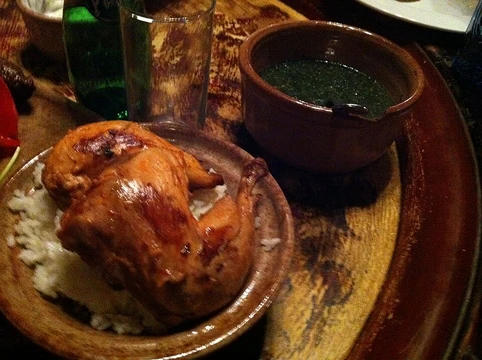
Ancient Egyptian cuisine
Ancient Egyptian cuisine centered on bread and beer for over three millennia.

Photo: Andreas Praefcke · Public domain
Ancient Egyptian cuisine encompasses the food and drink consumed over more than three thousand years, retaining many consistent traits into Greco-Roman times. Its staples were bread and beer, supplemented with vegetables, legumes, fruits, meat, and seasonings prepared in various ways. The cuisine is notable for its long continuity and the central role of beer and bread as both food and currency.
- Staples
- bread and beer
- Main grain for bread
- emmer wheat
- Common vegetables
- scallions, onions, garlic, lettuce, cucumbers, leeks
- Most common fruit
- dates
- Primary meat animals
- cattle, sheep, goats, pigs
- Preservation methods
- salting, drying
- Cooking techniques
- stewing, baking, boiling, grilling, frying, roasting
Lore & Background
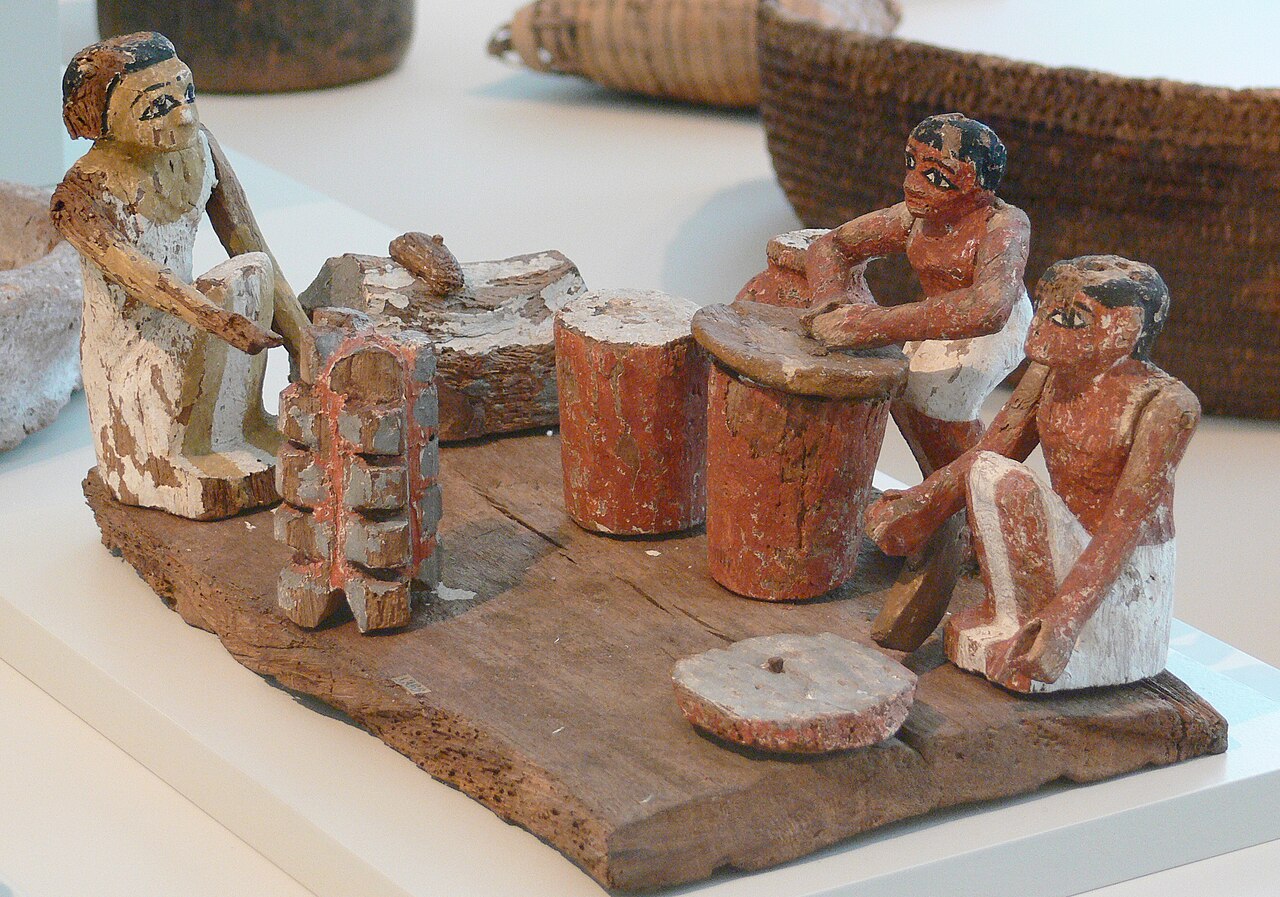
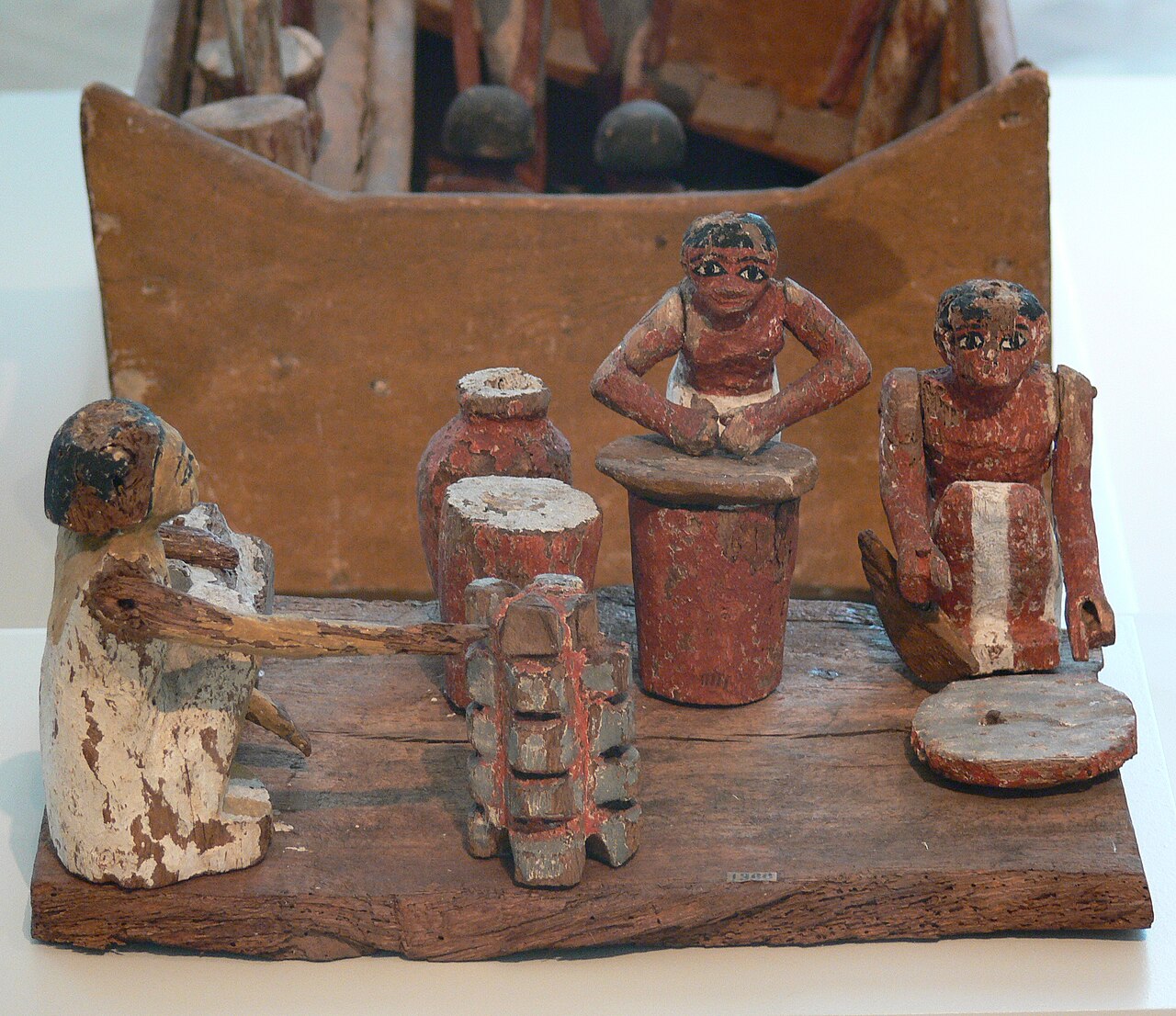
The cuisine of ancient Egypt remained remarkably consistent for over three thousand years. Bread was made almost exclusively from emmer wheat, which required laborious processing: moistening, pounding, drying, winnowing, sieving, and milling on a saddle quern. Baking techniques evolved over time, from heavy pottery molds set in embers in the Old Kingdom to tall cones on square hearths in the Middle Kingdom, and finally to large open-topped clay ovens in the New Kingdom, used similarly to a tandoor. Beer was a primary source of nutrition, consumed daily, and even used as currency. It was made either by baking a lightly baked 'beer bread' that was crumbled and fermented, or by sprouting grain, cooking another batch, mixing them, and adding yeast. Most beers were made from barley, with a few from emmer wheat.
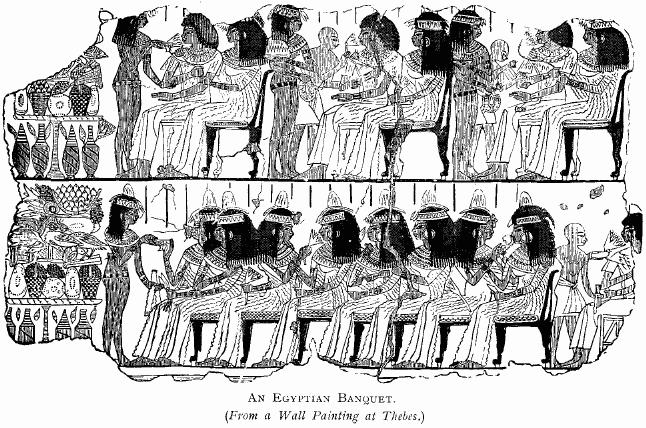
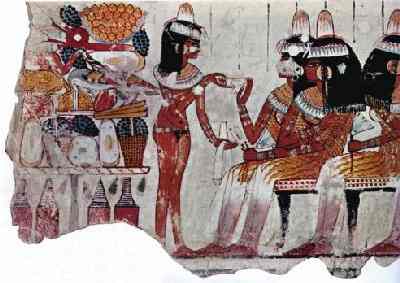
Meals, especially banquets depicted in paintings from the Old and New Kingdoms, began in the afternoon. Seating reflected social status: the highest sat on chairs, those lower on stools, and the lowest on the floor. Before food, basins and aromatics were provided, and flower-scented fat was burned. Lily flowers and flower collars were distributed, and dancers and musicians entertained. Foods included whole roast oxen, ducks, geese, pigeons, fish, stews with bread, fresh vegetables, fruit, and cakes sweetened with honey. The goddess Hathor was often invoked during feasts.
Vegetables and legumes were the main source of calories after bread and beer. Common vegetables included scallions, onions, garlic, lettuce, cucumbers, and leeks. Dates were the most common fruit, along with figs, grapes, dom palm nuts, and nabk berries. Meat came from cattle, sheep, goats, and pigs, as well as poultry and fish. Mice and hedgehogs were also eaten. Spices and herbs added flavor, but expensive imports were confined to the wealthy.
Reader's Guide
Ancient Egyptian cuisine is significant for its remarkable continuity over three millennia and its foundational role in daily life. Bread and beer were not merely foods but also served as currency and medicine, reflecting their economic and nutritional importance. The cuisine's reliance on emmer wheat and barley shaped agricultural practices and food preparation techniques, such as the use of saddle querns and evolving oven designs. Banquets and feasts, often invoking the goddess Hathor, highlight the social and religious dimensions of food, with seating hierarchies and entertainment underscoring status distinctions. The inclusion of diverse ingredients—from vegetables and legumes to meats, fish, and even hedgehogs—demonstrates a broad diet adapted to available resources. Preservation methods like salting and drying allowed for long-term storage, while the use of spices and honey indicated wealth. The legacy of ancient Egyptian cuisine persists in modern traditional foods like bouza, a home-brewed beer similar to ancient 'beer bread' preparations, and in the continued cultivation of staples such as dates and legumes.
Did You Know?
- Beer was used as currency in ancient Egypt.
- Bread was made almost exclusively from emmer wheat, which required moistening and pounding to remove the chaff.
- Banquet seating varied by social status: highest on chairs, lower on stools, lowest on the floor.
The Nile as Culinary Lifeline
The Nile River functioned as the central artery of ancient Egyptian food production, flowing through the lower reaches of eastern North Africa. Its predictable seasonal flooding, combined with controlled irrigation of the valley's fertile land, produced surplus crops that sustained a population far denser than the surrounding arid regions could support. This agricultural surplus was not merely a matter of feeding people; it became the economic foundation that allowed the centralized state to flourish. With resources beyond basic subsistence, the administration under the pharaoh could sponsor mineral exploitation in the desert, organize collective construction and agricultural projects, and maintain trade networks with other civilizations. The bureaucracy of elite scribes, religious leaders, and administrators who managed these activities also ensured the coordination necessary to keep the irrigation systems functioning. In essence, the relationship between the Nile's flood cycle and human labor created a food system robust enough to underwrite the entire breadth of Egyptian civilization, from monumental construction to the development of an independent writing system.
Predynastic Foodways: From Savanna to Settlement
In the Predynastic era, the Egyptian landscape was markedly different from the arid terrain familiar to modern observers. Large stretches of what is now desert were once open savanna, traversed by herds of grazing ungulates, while the Nile region teemed with large populations of waterfowl. Hunting was a common pursuit for the people of this period, and it was also during these centuries that many animals were first brought under human domestication. By roughly 5500 BC, small tribal communities in the Nile valley had developed firm command over both agriculture and animal husbandry, marking a decisive shift toward settled food production. The Badarian culture of southern Egypt, likely originating in the Western Desert, was noted for its high-quality ceramics and stone tools, suggesting a material culture well adapted to processing and preparing food. The subsequent Naqada cultures further refined these capabilities, developing from scattered farming communities into a society whose leaders held complete control over the people and resources of the Nile valley.
Trade Networks and the Broader Food Landscape
Ancient Egyptian food culture was never isolated from the wider world. As early as the Naqada II period, around 3600 to 3350 BC, mutual trade with the Levant was established, and commercial contact with Mesopotamia began, continuing well into the early dynastic era and beyond. Naqada III leaders extended their reach southward into Nubia, westward to the oases of the western desert, and eastward toward the cultures of the eastern Mediterranean and Near East. These extensive exchange networks meant that the material goods available to Egyptian communities, from the obsidian imported from Ethiopia for shaping blades to the diverse finished products of a growing elite, reflected connections far beyond the Nile valley. The administration's sponsorship of trade with other civilizations and its military presence to assert dominance throughout the Near East further opened channels through which resources relevant to food production and preparation could flow. The result was a food landscape shaped not only by local agriculture but by a web of regional and intercontinental exchange stretching across the ancient world.
Material Culture of the Table
The physical objects associated with ancient Egyptian food culture reveal a sophisticated material tradition. The Badarian culture was recognized for its high-quality ceramics, while the Naqada peoples produced painted pottery, high-quality decorative stone vases, and a diverse array of household items including combs, small statuary, and jewelry crafted from gold, lapis, and ivory. The Naqada culture also developed a ceramic glaze known as faience, a technology that persisted well into the Roman Period and was used to decorate cups, amulets, and figurines. These vessels and implements, cups, vases, painted pots, formed the tangible backdrop against which daily food preparation and consumption took place. The broader catalogue of Egyptian achievements that touches the culinary world includes irrigation systems and agricultural production techniques, the quarrying and construction methods that produced the monumental architecture in which communal gatherings would have been held, and a practical system of medicine that likely intersected with dietary practices. Together, these material and technical accomplishments paint a picture of a civilization that invested deeply in the infrastructure of feeding its people.
Gallery
Frequently Asked Questions
What is Ancient Egyptian cuisine?
Ancient Egyptian cuisine refers to the food and drink traditions practiced over roughly three thousand years, from early dynastic periods through the Greco-Roman era. It is defined by an unbroken continuity of core staples—especially bread and beer—that persisted across millennia.
What are Ancient Egyptian cuisine's staples?
Bread made from emmer wheat and beer served as the two foundational foods, functioning not just as nutrition but also as a form of currency. These were rounded out with vegetables like scallions, garlic, and lettuce, legumes, dates, and meats from cattle, sheep, goats, and pigs.
Why is Ancient Egyptian cuisine important?
It stands out among ancient food cultures because of its extraordinary longevity and the dual role bread and beer played as both sustenance and economic medium. This long unbroken thread makes it one of the most well-documented culinary traditions from the ancient world.
What preservation methods did Ancient Egyptian cuisine use?
Salting and drying were the primary techniques for keeping meat and other perishables edible over time. These methods allowed households and temples to store protein and extend the shelf life of seasonal produce.
More in Egyptian Cuisine 1-22
Spotted an error? Know more?
Reader corrections go straight into our review queue. Suggest an edit · How this site is sourced