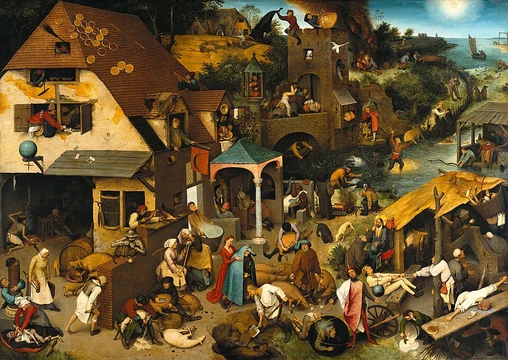
Saeftinghe legend
Dutch folk tale of a prosperous city lost to greed and flood.

The Saeftinghe legend is an old Dutch folk tale that explains the fate of the sunken city of Saeftinghe in eastern Zeelandic Flanders near Nieuw-Namen, The Netherlands. The city existed until it was entirely flooded by sea waters in 1584, and the legend serves as a moral warning against greed and pride.
- Field
- Folklore
- Nationality
- Dutch
- Known for
- Legend of a sunken city destroyed by flood due to inhabitants' greed
- Associated location
- Saeftinghe, eastern Zeelandic Flanders, near Nieuw-Namen, The Netherlands
Lore & Background
According to the Saeftinghe legend, the city grew to be the most prosperous on the fertile lands of the Scheldts, but its inhabitants became vain and proud. Farmers dressed in silk, horses wore silver, and thresholds were made of gold. Wealth attracted poor immigrants, but the people of Saeftinghe chased them away with sticks and dogs. Greed corrupted hearts and blinded them to imminent threats.
On a foggy day, a fisherman caught a mermaid on the waters of the Western Scheldt. The mermaid warned him that Saeftinghe needed to change its ways or suffer dire consequences. When the mermaid's husband surfaced and asked for her release, the fisherman refused and yelled at him. The merman cursed the fisherman and the city, saying, 'The lands of Saeftinghe will fall, only its towers will continue to stand tall!'
Occupied with greed, the people neglected their dikes. One day, a maid found cod and other fish swimming in a well, signaling the sea was nearing and the water turning salt. In 1584, a huge tidal wave washed over Saeftinghe, destroying the city itself and nearby settlements like Namen, killing all inhabitants. Saeftinghe withered, its towers testifying to its past until it sank into muddy swamps.
Reader's Guide
The Saeftinghe legend is significant as a cautionary tale about the consequences of greed, pride, and neglect of communal responsibilities. It reflects historical anxieties about flooding in the Low Countries, where dike maintenance was essential for survival. The story incorporates supernatural elements—a mermaid and merman—to deliver a moral warning, and it preserves the memory of actual towns lost in the All Saints' flood of 1570. The legend's legacy endures in local folklore: on foggy days, the tower bells are said to call for help, and visitors near Emmadorp sometimes report seeing ghosts of the flood's victims. This tale has become a cultural touchstone for the region, illustrating how natural disasters are woven into narrative traditions to explain loss and impart lessons.
Did You Know?
- The Saeftinghe legend says the city's inhabitants dressed in silk, horses wore silver, and thresholds were made of gold.
- A fisherman caught a mermaid who warned that Saeftinghe needed to change its ways or suffer dire consequences.
- The merman cursed the city, saying its lands would fall but its towers would continue to stand tall.
- The flood that destroyed Saeftinghe occurred in 1584, not the All Saints' flood of 1570, and primarily affected the city itself and nearby settlements like Namen.
More in Dutch folklore 1-24
Spotted an error? Know more?
Reader corrections go straight into our review queue. Suggest an edit · How this site is sourced