Kamper onion
Dutch mock tales ridiculing local pretensions, named after an absurd onion-growing story.

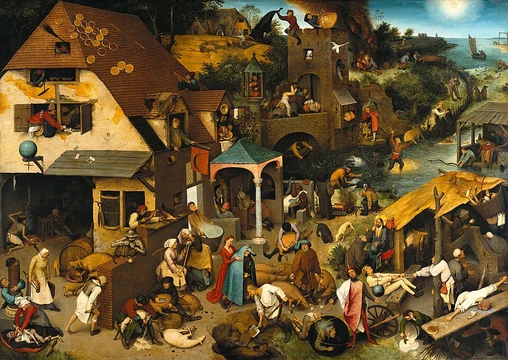
The Kamper onion (Kamper ui) is a Dutch term for a genre of mock and teasing tales that ridicule the pretensions and stupidity of residents and leaders of certain places, particularly Kampen. The name originates from an absurd tale about a farmer who tries to grow onions in a bell tower or a similar ridiculous scenario, not from a Stone Soup variant. This term has become a generic name for such folk tales, and about 20 to 30 different Kamper onions have been recorded, many being variations of common motifs in the Aarne–Thompson–Uther Index.
- Field
- Folklore
- Nationality
- Dutch
- Known for
- Mock and teasing tales ridiculing local pretensions, especially of Kampen
Lore & Background
The Kamper onion genre takes its name from a specific tale: a farmer, in a display of absurd stupidity, tries to grow onions in a bell tower or engages in a similarly ridiculous endeavor. This is not a Stone Soup variant. The term 'Kamper ui' has become a generic name for this type of folk tale, and about 20 to 30 different Kamper onions have been recorded, with many being variations of common motifs found in the Aarne–Thompson–Uther Index.
Inhabitants of Kampen are also referred to as 'Kamper steuren,' which refers to the famous Kamper ui 'The sturgeon with the bell.' Nowadays, the residents of Kampen even consider the term a term of endearment. Such mock tales about a city or region can be found all over Europe, including the 'Cabbage Hare from Lochem,' The Seven Swabians, The Expensive Executioner (Dokkum), and the Pot with Three Ears (Olen, Belgium).
Annually, during the summer period, the Kamper ui(t)dagen are organized in Kampen, with each day having its own theme. The opening of the Kamper ui(t)dagen is marked by a cow being hoisted with ropes to the Nieuwe Toren, in the presence of the mayor, referring to a famous Kamper ui.
Reader's Guide
The Kamper onion represents a significant genre of European folk humor, specifically the mock tale that targets the pretensions and perceived stupidity of a town's residents and leaders. Originating from a simple Stone Soup-style trick, the term has expanded to cover about 40 recorded tales, many sharing motifs with the Aarne–Thompson–Uther Index, indicating its place within a broader folklore tradition. The genre's legacy is evident in its continued cultural relevance: the residents of Kampen now embrace the term as a term of endearment, and the annual Kamper ui(t)dagen festival celebrates these tales with events like hoisting a cow to the Nieuwe Toren. This festival, held during the summer, keeps the tradition alive and ties it to local identity. The Kamper onion also connects to similar mock tales across Europe, such as The Seven Swabians and the Pot with Three Ears, showing a widespread pattern of communities using humor to define themselves against neighboring stereotypes. Its endurance from folk tale to modern festival demonstrates how such narratives can evolve from ridicule to affectionate cultural markers.
Did You Know?
- The term 'Kamper ui' comes from an absurd tale about a farmer trying to grow onions in a bell tower, not from a Stone Soup variant.
- Inhabitants of Kampen are also referred to as 'Kamper steuren,' from the tale 'The sturgeon with the bell.'
- The annual Kamper ui(t)dagen opens with a cow being hoisted to the Nieuwe Toren in the presence of the mayor.
Frequently Asked Questions
What is a Kamper onion?
A Kamper onion is a Dutch folk-tale genre built around mocking the arrogance and foolishness of people from a particular town, with Kampen being the most frequent target. The stories are deliberately absurd and designed to deflate local pretensions through humor.
Where does the name 'Kamper onion' come from?
The label traces back to a ridiculous tale in which a farmer attempts to grow onions inside a bell tower or some similarly nonsensical setting. Over time, that single story became the umbrella term for an entire category of teasing folk narratives.
What do Kamper onion stories typically involve?
They usually center on a local figure—often a pompous resident or leader—being outwitted or exposed through a chain of increasingly absurd events. Many of the plots overlap with well-known motifs catalogued in the Aarne-Thompson-Uther Index, adapted with a local, satirical twist.
How many Kamper onion tales are known?
Roughly twenty to thirty distinct versions have been collected and recorded. They share a common satirical structure but vary in their specific targets, settings, and comic set-pieces.
Why are Kamper onions significant in Dutch folklore?
They represent a tradition of grassroots humor that lets ordinary people poke fun at local authority and self-importance without direct confrontation. As a genre, they show how Dutch communities used storytelling as a social-pressure valve against pretension.
More in Dutch folklore 1-24
Spotted an error? Know more?
Reader corrections go straight into our review queue. Suggest an edit · How this site is sourced