
Eosinophilic myocarditis
Rare heart inflammation caused by eosinophil white blood cells.

Kurt Deb, Behrus Djavidani, Stefan Buchner, Florian Poschenrieder, Norbert Heini · CC BY 2.0
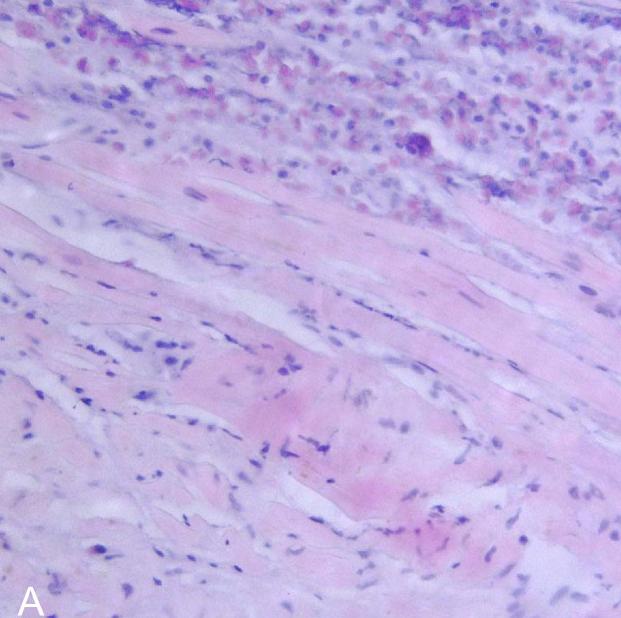
Eosinophilic myocarditis is a rare disorder characterized by inflammation in the heart muscle caused by the infiltration and destructive activity of eosinophils, a type of white blood cell. It is typically associated with hypereosinophilia, defined as an eosinophil blood cell count greater than 1,500 per microliter, and is distinguished from non-eosinophilic myocarditis due to its distinct underlying causes and treatments.
Quick Facts
- Field
- cardiology
Facts from the source article.
Lore & Background
Eosinophilic myocarditis is often viewed as having three progressive stages. The first stage involves acute inflammation and cardiac cell necrosis, presenting as acute coronary syndrome. The second stage is thrombotic, where blood clots form in the endocardium and may block arteries. The third stage is fibrotic, with scarring leading to poor heart contraction and valve disease. Some experts view these as separate but sequentially linked disorders in a spectrum of eosinophilic cardiac diseases.
Reader's Guide
Eosinophilic myocarditis is significant because its treatment differs fundamentally from other forms of myocarditis, focusing on addressing the underlying cause of eosinophil hyperactivity rather than general anti-inflammatory measures. It is usually secondary to conditions such as drug hypersensitivity, parasitic infections, or allergic diseases. The disorder's rarity and variable symptoms, which can range from none to sudden death, make diagnosis challenging. Elevated blood eosinophil counts are a key clue, though they may be absent early on. Understanding its distinct pathophysiology is crucial for appropriate management, as misdiagnosis can lead to ineffective treatment.
Did You Know?
- Before cardiac symptoms, about 66% of cases have symptoms of a common cold and 33% have symptoms of asthma or other allergic disorders.
- The rarest form, acute necrotizing eosinophilic myocarditis, presents with rapidly progressive heart failure and potentially lethal arrhythmias.
- Hypereosinophilia (eosinophil count ≥1,500 per microliter) is found in the vast majority of cases, but elevated counts may not occur during the early phase.
- Parasitic infestations can cause eosinophilic myocarditis, but this is distinct from Tropical endomyocardial fibrosis, which is a separate chronic fibrotic disease.
Clinical Presentation & Disease Progression
Myocarditis represents an inflammatory assault on the heart muscle, and its clinical expression is remarkably diverse. Patients may experience breathlessness, chest discomfort, a diminished capacity for physical exertion, or an erratic pulse, with the timeline stretching anywhere from mere hours to several months. When chronic inflammation drives ventricular remodeling and sustained cardiac dysfunction, the condition can evolve into inflammatory cardiomyopathy. Because the underlying trigger is frequently a viral illness, many individuals first notice fever, skin rashes, appetite suppression, gastrointestinal upset, joint aches, and pronounced fatigue before cardiac symptoms emerge. Pericarditis often accompanies the myocardial inflammation, producing a combined clinical picture. In pediatric patients, the viral prodrome dominates the early presentation, and later respiratory involvement—increased work of breathing—is frequently misdiagnosed as asthma. Clinicians further stratify the condition into fulminant and acute non-fulminant forms: the former strikes abruptly with severe heart-failure symptoms at rest developing over hours to days and necessitating mechanical circulatory support, while the latter unfolds more gradually over days to months without requiring such intervention.
Causative Agents & Immune Triggers
The etiology of myocarditis spans a wide spectrum, and in a notable number of cases no specific culprit is ever identified. In Europe and North America, viral pathogens predominate, particularly single-stranded RNA viruses such as Coxsackie B3 and B5, though adenovirus, parvovirus B19, Epstein-Barr virus, hepatitis C, influenza, and SARS-CoV-2 have all been implicated. On a global scale, Chagas disease—driven by the protozoan Trypanosoma cruzi—stands as the leading infectious cause, especially across Central and South America. Bacterial agents including Brucella, diphtheria, gonococcus, and Borrelia burgdorferi can also incite myocardial inflammation, though this is uncommon in immunocompetent individuals. Beyond infections, immune-mediated triggers play a significant role: hypersensitivity reactions to drugs like acetazolamide or amitriptyline, Kawasaki disease, and systemic autoimmune conditions such as lupus, scleroderma, sarcoidosis, and vasculitides all feature in the differential. Toxic exposures—anthracycline chemotherapy, clozapine, alcohol, cocaine, mephedrone, arsenic, carbon monoxide, snake venom, and heavy metals—add further layers. Even vaccination carries a small risk, with mRNA vaccines estimated at roughly one case per 100,000 recipients, peaking in males aged sixteen to twenty-nine.
Diagnostic Workup & Therapeutic Strategies
Establishing a diagnosis of myocarditis typically requires a multimodal approach. An electrocardiogram and serum troponin levels provide initial clues, while cardiac MRI offers detailed imaging of myocardial inflammation. In select cases, an endomyocardial biopsy remains the definitive tool. A transthoracic ultrasound is considered essential to exclude mimics such as valvular pathology. Treatment is tailored to both the severity of the episode and the identified or suspected cause. For many patients, a cornerstone regimen of ACE inhibitors, beta-blockers, and diuretics helps manage hemodynamic stress, and a period of complete exercise restriction is standard during the recovery window. When the inflammatory or immune component is prominent, corticosteroids or intravenous immunoglobulin may be introduced to dampen the pathological response. In the most severe presentations—particularly fulminant cases with refractory heart failure or life-threatening arrhythmias—mechanical circulatory support, an implantable cardioverter-defibrillator, or ultimately heart transplantation may become necessary to preserve life.
Epidemiological Landscape & Historical Roots
The epidemiological footprint of myocarditis is substantial and continues to grow. In 2013, an estimated 1.5 million episodes of acute myocarditis occurred worldwide. Although the condition can affect individuals of any age, younger populations bear the highest burden, and males are slightly more frequently affected than females. The reassuring note is that the majority of cases remain mild and self-limiting. Yet the long-term toll is significant: by 2015, cardiomyopathy—including myocarditis as a contributing factor—accounted for approximately 354,000 deaths globally, a marked increase from the 294,000 recorded in 1990. Complications such as dilated cardiomyopathy leading to progressive heart failure, or sudden cardiac arrest, underscore the potential severity even in initially mild presentations. The medical literature traces the first formal descriptions of myocarditis to the mid-nineteenth century, meaning clinicians have recognized this entity for roughly two centuries. Despite that long history, the precise pathogenic mechanisms in many cases remain elusive, and the condition continues to present diagnostic and therapeutic challenges that drive ongoing research.
Gallery
Frequently Asked Questions
Who is Eosinophilic myocarditis?
Eosinophilic myocarditis is a rare inflammatory condition that targets the heart muscle, driven by an overactive population of eosinophils, a specific subtype of white blood cells. It falls under the broader category of immune- or drug-mediated cardiac disorders.
What are Eosinophilic myocarditis's powers/role?
Its mechanism involves eosinophils flooding into cardiac tissue and releasing toxic granule proteins that damage heart cells from the inside out. This distinguishes it from viral or idiopathic myocarditis because the injury is specifically eosinophil-mediated rather than virus- or autoantibody-driven.
Why is Eosinophilic myocarditis important?
It matters clinically because its treatment pathway differs sharply from viral or idiopathic myocarditis, often requiring aggressive immunosuppression or immediate removal of the offending agent. Recognizing it early—frequently through a markedly elevated peripheral eosinophil count exceeding 1,500 per microliter—is critical to preventing irreversible scarring.
What triggers Eosinophilic myocarditis to appear?
The most common inciting factors include hypersensitivity reactions to medications, ongoing parasitic infections, and various allergic or atopic conditions. In the drug-induced context, it typically emerges when a patient's immune system mounts an exaggerated eosinophilic response to a pharmaceutical agent.
More in Drug-induced diseases 1-20
Spotted an error? Know more?
Reader corrections go straight into our review queue. Suggest an edit · How this site is sourced