
Drug-induced autoimmune hemolytic anemia
Rare immune-mediated anemia triggered by over 130 drugs.

Spicy · CC BY-SA 4.0
Drug-induced autoimmune hemolytic anemia (DIIHA) is an uncommon form of anemia where the body’s immune system mistakenly attacks its own red blood cells. Because its symptoms overlap with other types of anemia, it is often hard to diagnose quickly, which can delay treatment. The condition is triggered by certain medications—most commonly antibiotics—and stopping the drug responsible is the primary treatment. Worldwide, DIIHA occurs in about one to two people per million.
In some cases, a drug causes the immune system to view the body’s red blood cells as foreign threats. This leads to the production of antibodies that attach to the cells and cause them to break down prematurely. More than 150 drugs are known to trigger this reaction, including cephalosporins, dapsone, levodopa, levofloxacin, methyldopa, nitrofurantoin, nonsteroidal anti-inflammatory drugs (such as diclofenac and ibuprofen), phenazopyridine, and quinidine.
**Signs and symptoms** Early signs of DIIHA are often vague and reflect the severity of the anemia, which can be mild, moderate, or severe. Symptoms may appear within hours or months after first taking the drug. The condition ranges from severe intravascular hemolysis to milder extravascular forms. Common symptoms include fatigue, shortness of breath, dizziness, dark or bloody urine, weakness, and palpitations. Rarely, it presents with hemoglobinuria and chills. Patients may look pale and develop jaundice. Enlarged liver, spleen, or lymph nodes have also been noted. If not recognized promptly, DIIHA can lead to life-threatening complications like shock, ischemia, acute respiratory distress syndrome, disseminated intravascular coagulation, and acute kidney failure.
**Causes** As of 2020, over 130 drugs have been linked to DIIHA, and that number continues to grow. Antimicrobials account for 42% of cases, making them the most common cause. Nonsteroidal anti-inflammatory drugs cause about 15% of cases, and antineoplastic drugs around 11%.
**Mechanism** The main mechanism involves the development of antibodies. These can be drug-dependent antibodies, which need the offending drug present to bind and destroy red blood cells, or drug-independent autoantibodies. Drug-dependent antibodies are more common.
Quick Facts
- Field
- Hematology
- Symptoms
- Fatigue, shortness of breath, dizziness, bloody urine, jaundice, weakness, and palpitations
- Complications
- Hemolysis, shock, ischemia, acute respiratory distress syndrome, disseminated intravascular coagulation, and acute renal failure.
- Onset
- Hours to months (various types of hypersensitivities reactions)of the initial drug exposure.
- Causes
- Antimicrobials, nonsteroidal anti-inflammatory drugs, antineoplastic drugs, and other drugs.
- Diagnosis
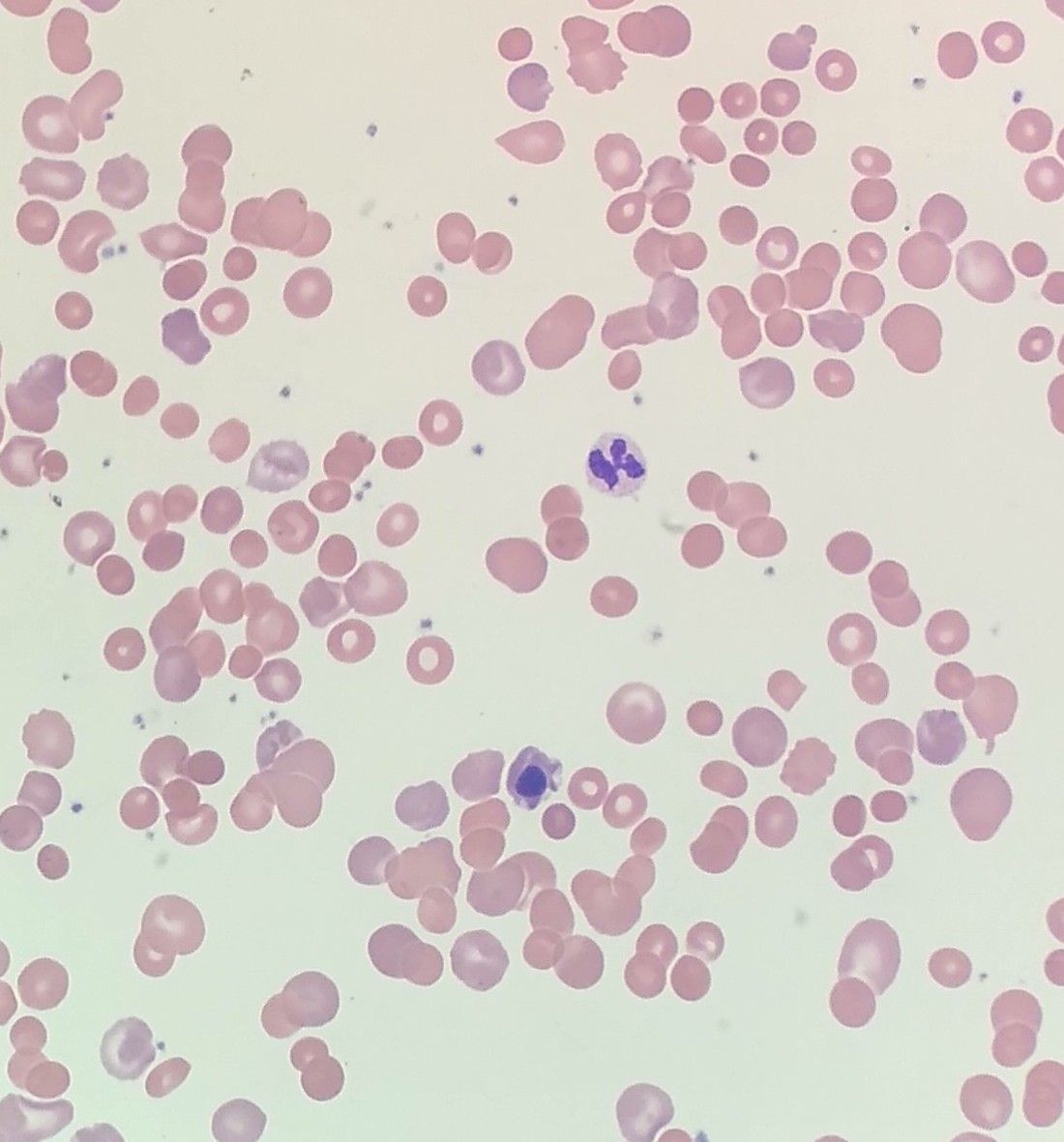
- Blood tests, blood smear, and Direct antiglobulin testing
- Differential
- Warm antibody autoimmune hemolytic anemia.
- Treatment
- Stopping the offending drug, blood transfusions, and thromboprophylaxis.
- Frequency
- One to two people per million worldwide.
Facts from the source article.
Lore & Background
Drug-induced autoimmune hemolytic anemia occurs when a drug causes the immune system to mistakenly attack the body's own red blood cells. Antibodies develop against the red blood cells, attach to them, and cause them to break down too early. More than 150 drugs can cause this condition, including cephalosporins, dapsone, levodopa, levofloxacin, methyldopa, nitrofurantoin, nonsteroidal anti-inflammatory drugs (such as diclofenac and ibuprofen), phenazopyridine, and quinidine.
Initial symptoms are typically vague and reflect mild, moderate, or severe anemia. Symptoms can manifest within hours to months of initial drug exposure. Common symptoms include fatigue, shortness of breath, dizziness, bloody or dark urine, weakness, and palpitations. Patients may appear pale and have jaundice. Hepatomegaly, splenomegaly, and adenopathy have also been observed. When not recognized promptly, DIIHA can lead to life-threatening complications such as shock, ischemia, acute respiratory distress syndrome, disseminated intravascular coagulation, and acute renal failure.
The main mechanism involves the development of drug-dependent antibodies (common) or drug-independent autoantibodies (less common). Diagnosis is confirmed by direct antiglobulin testing, which determines if complement C3 antibody and/or immunoglobulin G is bound to the red blood cell membrane. Treatment primarily involves stopping the offending drug, with blood transfusions as needed. Corticosteroids have been used, but their effects are difficult to differentiate. Improvement is typically seen within a few weeks of cessation of the offending drug.
Reader's Guide
Drug-induced autoimmune hemolytic anemia represents a significant diagnostic challenge in clinical medicine due to its rarity and vague initial symptoms. Its importance lies in the potential for life-threatening complications if not recognized promptly, including shock, acute renal failure, and disseminated intravascular coagulation. The condition underscores the critical role of medication history in evaluating anemia, as over 130 drugs have been reported to cause it, with antimicrobials being the most common trigger (42% of cases). The mechanism involves drug-dependent or drug-independent antibodies that attack red blood cells, and diagnosis relies on direct antiglobulin testing. Treatment centers on discontinuation of the offending agent, with supportive care including blood transfusions. The condition's legacy includes raising awareness among clinicians to consider drug-induced causes in unexplained hemolytic anemia, as delays in diagnosis can be fatal. Ongoing research continues to identify new causative drugs, and the list of known triggers continues to grow.
Did You Know?
- Drug-induced autoimmune hemolytic anemia affects an estimated one to two people per million worldwide.
- Antimicrobials are responsible for 42% of DIIHA cases, making them the most common cause.
- More than 150 drugs can cause this type of hemolytic anemia, including common NSAIDs like ibuprofen and diclofenac.
- Direct antiglobulin testing is the only way to confirm DIIHA.
The Oxidative Assault on Red Blood Cells
When certain medications enter the bloodstream, they can trigger a cascade of intracellular oxidizing radicals—molecules like hydrogen peroxide—that attack the structural integrity of red blood cells. These radicals interact directly with hemoglobin and the cell membrane, crosslinking proteins and initiating lipid peroxidation that weakens the delicate bilayer. Over time, this oxidative damage promotes the formation of Heinz bodies, abnormal inclusions that further compromise the cell's ability to function. Unlike the autoimmune variant, where the immune system itself turns against red cells, this nonautoimmune pathway is purely chemical: the drug or its metabolites act as the aggressor. The result is a progressive destruction of red cells that the bone marrow struggles to outpace, particularly when the insult is acute and severe. This mechanism explains why the condition can strike without any prior immune sensitization, making it a distinct clinical entity from antibody-mediated hemolysis.
Genetic Vulnerability and the Antioxidant Shield
Red blood cells depend on robust antioxidant defense systems to neutralize the oxidizing radicals produced during normal metabolism. In individuals carrying a deficiency in glucose-6-phosphate dehydrogenase, the enzyme responsible for generating NADPH—the key antioxidant molecule—operates at reduced capacity, leaving cells far more vulnerable to exogenous oxidative insults. Similarly, those with Hemoglobin H disease, a condition resulting from the loss of three alpha-globin chain genes, produce abnormal hemoglobin that simultaneously increases the generation of oxidizing radicals while impairing the cell's ability to withstand them. This double hit explains why drugs such as primaquine, dapsone, nitrofurantoin, rasburicase, and pegloticase, which are generally well tolerated in the broader population, can precipitate dramatic hemolytic episodes in these genetically predisposed individuals. The interplay between pharmacologic oxidative stress and inherited antioxidant fragility lies at the heart of this condition's clinical significance.
From First Symptoms to Life-Threatening Crisis
The clinical picture of drug-induced nonautoimmune hemolytic anemia can emerge abruptly after a single drug exposure or gradually over days to weeks, and its severity spans a wide spectrum. Early manifestations mirror those of any acute anemia: pallor, fatigue, dizziness, tachycardia, shortness of breath, and even syncope. As hemolysis intensifies, patients develop the hallmark signs of red cell destruction—abdominal and back pain, jaundice, and urine that turns dark or frankly red from free hemoglobin. In the most devastating presentations, the process escalates into shock, disseminated intravascular coagulation, acute renal failure, or even death. The rapidity with which symptoms can progress, combined with the fact that initial production of new red cells by the bone marrow cannot keep pace with ongoing destruction, makes early recognition critical. The condition's unpredictability and potential for catastrophic decompensation underscore why it must be distinguished promptly from other causes of hemolytic anemia.
Unmasking the Diagnosis and Breaking the Cycle
Because the onset can be sudden and severe, the initial diagnostic workup centers on a complete blood count paired with a peripheral blood smear. Hemoglobin and hematocrit values typically fall as the marrow's compensatory erythropoiesis lags behind the pace of destruction, while reticulocyte counts rise as the bone marrow ramps up production. Biochemical markers of hemolysis—elevated lactate dehydrogenase, increased unconjugated bilirubin, and depleted haptoglobin—provide corroborating evidence, and a urine dipstick positive for heme further supports ongoing red cell breakdown. Treatment, once the offending agent is identified, is fundamentally straightforward: discontinue the suspected drug and provide supportive care, including aggressive hydration and, when necessary, red blood cell transfusions to restore oxygen-carrying capacity. In cases complicated by thrombotic microangiopathy, managing the underlying vascular injury becomes an additional priority alongside hemolysis control.
Gallery
Frequently Asked Questions
Who is Drug-induced autoimmune hemolytic anemia?
DIIHA is a rare hematologic condition in which the immune system erroneously targets the body's own red blood cells for destruction. It sits at the intersection of hematology and immunology and affects roughly one to two individuals per million people globally.
What are Drug-induced autoimmune hemolytic anemia's powers/role?
Its central 'power' is the ability to trick the immune system into recognizing red blood cells as foreign invaders, triggering their accelerated breakdown. Over 130 different medications have been identified as capable of triggering this immune misdirection.
Why is Drug-induced autoimmune hemolytic anemia important?
It matters because its symptoms closely mimic many other anemias, making rapid diagnosis difficult and potentially delaying critical treatment. Recognizing it as drug-triggered rather than idiopathic fundamentally changes the entire management approach.
What's Drug-induced autoimmune hemolytic anemia's origin story?
The condition most commonly originates from antimicrobial drugs, which account for roughly 42 percent of all reported cases. Other causative agents span a wide range of medication classes, but antibiotics remain the leading trigger worldwide.
More in Drug-induced diseases 1-20
Spotted an error? Know more?
Reader corrections go straight into our review queue. Suggest an edit · How this site is sourced