Pit bull
Last updated
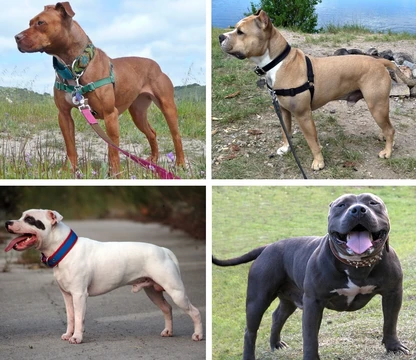
"Pit bull" refers to a group of dogs thought to descend from bull and terrier breeds. In the U.S., this label typically covers the American Pit Bull Terrier, American Staffordshire Terrier, Staffordshire Bull Terrier, American Bully, and sometimes the Bull Terrier, plus mixed breeds with similar traits. These dogs have a contentious global reputation, stemming from their involvement in dog fighting and numerous well-publicized attacks.
Quick Facts
- Country
- United States, Great Britain
Facts from the source article.
History
The term has been used since at least the early 20th century. All dogs now classified as pit bulls are believed to descend from the British bull-and-terrier, which was developed in the United Kingdom in the early 19th century for dog fighting and rat baiting. This type was created by crossing the Old English Bulldog with the Black and Tan Terrier. The Old English Bulldog, bred for bear and bull baiting, was also used in organized dog fights, but lighter, faster dogs proved better suited to that sport.
Outcrosses from local terriers produced a dog that retained the Bulldog's courage and tenacity. Dog fighting became popular in 19th-century America, and bull-and-terriers were imported for the blood sport. Organized dog fights were progressively outlawed in various states beginning in 1874, culminating in federal legislation in 2007. In the 1890s, breeders of American pit bull–type dogs sought recognition from the American Kennel Club, but the club refused due to the type's association with dogfighting.
In 1898, breeders established the United Kennel Club, which also regulated dogfights. In the 1930s, the American Kennel Club recognized Pit Bull Terriers as Staffordshire Terriers, prohibiting their use in organized fights.
Identification
Knowing if a dog is a pit bull breed can matter for health or legal reasons, since these breeds and their mixes face regulation or bans in many places. Who has to prove the dog’s breed depends on the situation—sometimes it’s the owner, sometimes the authorities. In Denmark, police can ask an owner to show their dog isn’t banned under the Danish Dog Act. Danish officials suggest owners keep documents on their dog’s origin and breed, especially if it looks like a prohibited type.
In the UK, owners must prove their dog isn’t a banned fighting type under the 1991 Dangerous Dogs Act, or show a Certificate of Exemption. The UK has specially trained Dog Legislation Officers who identify dogs and give expert evidence. To identify a pit bull breed, you can use registration papers, DNA tests for parentage or ancestry, look at physical traits, or use artificial intelligence. The right method depends on why you need to know.
For example, France banned pit bull type dogs, but purebred American Staffordshire Terriers registered with the Central Canine Society are only restricted. Only those registered dogs can enter or re-enter France; a DNA test for parentage on an unregistered purebred wouldn’t be accepted under French law.
Dog attack and death risk
A 2000 joint review by researchers at the CDC, HSUS, and AVMA found that Rottweilers and pit bull–type dogs accounted for just over half of 238 human dog bite-related fatalities in the United States between 1979 and 1998. Pit bull–type dogs were identified in approximately one-third of dog bite-related fatalities between 1981 and 1992. The review noted that studies relying on news reports are subject to potential errors. After 2000, the CDC stopped tracking dog bites.
A 2021 review of 19 retrospective dog bite studies from U.S. Level I trauma centers found that pit bulls inflicted a higher prevalence and severity of injuries compared with other breeds. A 2020 literature review found that from 1971 to 2018, pit bull–type breeds were second behind the German Shepherd for the most bites severe enough to require hospital treatment. The proportion of bites caused by pit bulls increased by 1.17 percent per year over that period, while German Shepherd bites decreased by 0.63 percent per year. In Denver, where breed-specific legislation existed, the pit bull proportion increased more slowly.
Commercial restrictions
Dog owners in the United States can be held legally liable for injuries caused by their dogs. Homeowners and renters insurance policies typically provide liability coverage for dog bites, but some insurance companies limit exposure by refusing to cover bites, increasing rates for specific breeds, requiring special training or AKC Canine Good Citizen certification, or requiring muzzles, chains, or enclosures. Some companies refuse to write policies for owners of specific breeds.
Owners of rental properties may also be held liable if they knew an aggressive dog lived on the property and did nothing; many rental properties forbid pit bull–type dogs if the property's insurance will not cover damage inflicted by that type. Breeds often not covered include pit bull–type dogs, Rottweilers, German Shepherd Dogs, Doberman Pinschers, Akitas, and Chow Chows. In 2013, Farmers Insurance notified California policyholders that it would no longer cover bites by pit bulls, Rottweilers, and wolf-dog hybrids, stating those groups account for more than a quarter of the agency's dog bite claims.
Did You Know?
- Sallie Ann Jarrett was the mascot of the 11th Pennsylvania Infantry Regiment during the American Civil War.
- Nipper, a mongrel sometimes referred to as a pit bull, appears in Francis Barraud's 1898 painting His Master's Voice.
- Pit bulls have been adopted as a hate symbol by racist skinheads, according to the Anti-Defamation League.
More in Dog Breeds Originating in the United States
Sources
Compiled from Wikipedia and the sources listed below. Text from Wikipedia is available under CC BY-SA 4.0; this entry is adapted from it.
- Wikipedia: Pit bull (CC BY-SA 4.0).
Spotted an error? Know more?
Reader corrections go straight into our review queue. Suggest an edit · How this site is sourced