La Loca (opera)
Menotti's opera about Joanna of Castile, written for Beverly Sills.
Last updated
La Loca (The Madwoman), also known as Juana la Loca, is an opera by Gian Carlo Menotti composed in 1979. It is a romantic drama about the life of Joanna of Castile and was written as a vehicle for soprano Beverly Sills. The work premiered on June 3, 1979, at the San Diego Opera, followed by the New York City Opera.
Composition history
La Loca was Menotti's tenth opera, with both music and libretto by him, written in English. It was barely completed in time for the premiere, with revisions made as late as the dress rehearsal; pages with handwritten notes were rushed from his hotel suite to the theater with ink still wet. The opera was written in honor of Sills' 50th birthday, commissioned by Cyril Magnin and Lawrence P. Deutsch at the urging of San Diego Opera director Tito Capobianco, who also directed the production. The role of Juana is a soprano, premiered by Sills, while her three male counterparts are all sung by the same baritone.
Historical background
Juana, born November 6, 1479, was daughter of Isabella I of Castile and Ferdinand II of Aragon. She married Philip, son of Maximilian I, Holy Roman Emperor, on October 20, 1496, and had six children in nine years. After her mother's death in 1504 she became Queen of Castile, with Philip as King Philip I. Her father Ferdinand, seeking control, argued she was mentally unstable and became her guardian. Philip resisted, but in 1506 they agreed she should be excluded from government.
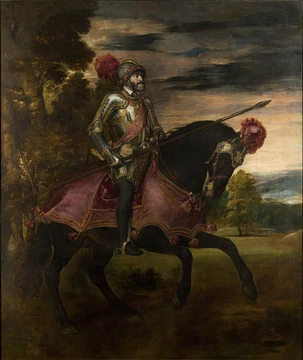
Philip died of typhoid fever months later. Juana attempted to retain power but was confined to a nunnery, refusing to sign abdication papers. Authority was exercised in her name by Ferdinand, then by her son Charles, later Charles V, Holy Roman Emperor. She remained titular queen, confined at the Convent of Santa Clara at Tordesillas until her death at 75.
Synopsis
The opera begins with Juana and Philip, newly married as arranged, sending their attendants away to sing a love duet. Time passes, and Juana’s love for Philip remains intense, but he is repeatedly unfaithful and pressures her to sign over her claim to the Spanish throne. Philip then dies. While transporting his body back to Spain, Juana opens his coffin and sings to him. Once in Spain, her father Fernando tries to force her to abdicate her kingdom.
She refuses, so he locks her in a convent, taking all her children except Catalina. Later, after Fernando’s death, Juana’s son Carlos demands she sign abdication papers. She refuses again, so he removes Catalina and boards up her cell window. In the final scene, after 46 years imprisoned, the priest Miguel—once a knight in her service—comforts her, saying God is a faithful bridegroom.
More in Cultural Depictions of Charles V, Holy Roman Emperor
Sources
Compiled from Wikipedia and the sources listed below. Text from Wikipedia is available under CC BY-SA 4.0; this entry is adapted from it.
- Wikipedia: La Loca (opera) (CC BY-SA 4.0).
Spotted an error? Know more?
Reader corrections go straight into our review queue. Suggest an edit · How this site is sourced