Pyramid scheme
Fraudulent scheme relying on endless recruitment to pay participants.

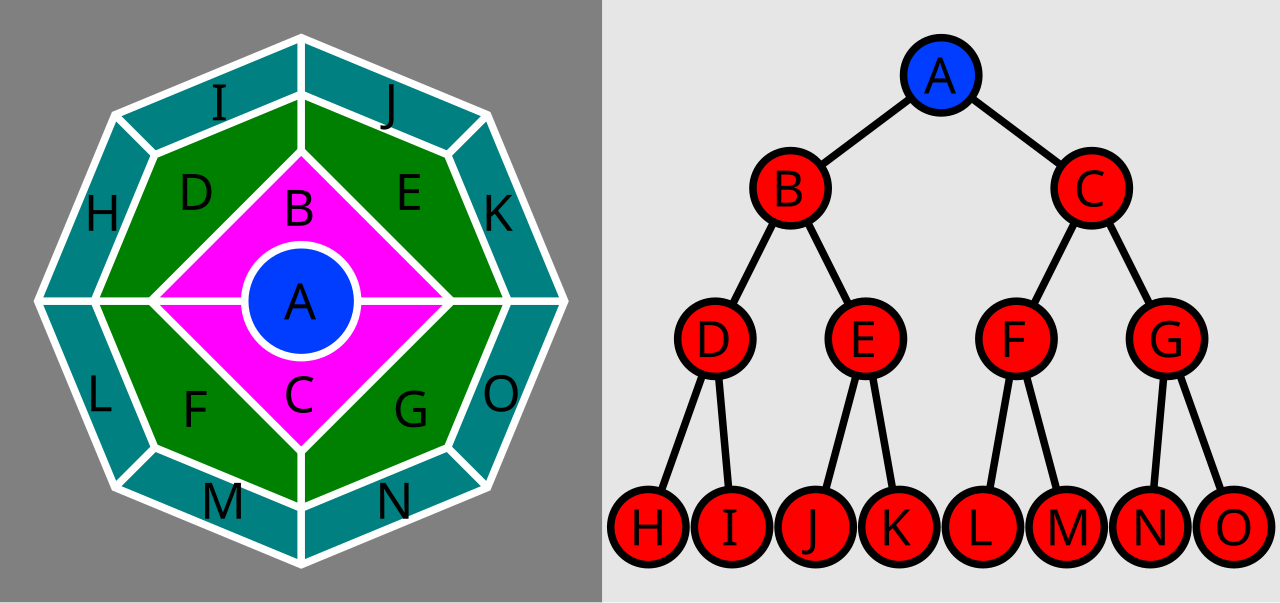
GDK (original design), Tachymètre (vectorization). · CC BY-SA 3.0
A pyramid scheme, also known as a pyramid scam, is a fraudulent business model where participants make money mainly by bringing in new members, not by selling products or services to customers or through legitimate investments. These schemes rely on a constantly growing number of recruits, which makes them inherently unsustainable. Because recruitment eventually fails to keep the scheme going, most participants—especially those who join late—lose money, while only a handful of people at the top profit. As a result, pyramid schemes are considered fraud and are illegal in many countries.
Pyramid schemes have existed in various forms since at least the mid-to-late 1800s. While some multi-level marketing (MLM) companies have been found to operate as pyramid schemes, legitimate MLMs are different because their compensation is based mainly on retail sales to end consumers, not on recruitment.
**Concept and basic models**
In a pyramid scheme, an organization requires new members to pay a fee. In return, the organization promises them a cut of the money taken from every additional person they recruit. The scheme’s directors (those at the top) also receive a share of these payments. For the directors, the scheme can be very profitable—whether they do any work or not—because members have a strong incentive to keep recruiting and sending money upward.
These organizations rarely involve selling valuable products or services. Without creating any goods or services, the only way to generate revenue is by recruiting more members or asking current members for more money. The behavior of pyramid schemes closely follows the mathematics of exponential growth. Each level of the pyramid is much larger than the one before it. For a pyramid scheme to make money for everyone who joins, it would have to expand forever. When it inevitably runs out of new recruits and has no other income, it collapses. Because the largest numbers in this geometric sequence are at the end, most people end up in the lower levels, which contain the most members. People working for pyramid schemes often promote the company itself rather than any product. Eventually, everyone at the lower levels makes no money; only those at the top profit. When the scheme collapses, members in the bottom layers never had a chance to profit, but they have already paid to join. So a pyramid scheme is characterized by a few people (including its creators) making large amounts of money, while later members lose theirs. This is why they are considered scams.
**The "eight ball" model**
Many pyramids are more complex than the simple model. They recognize that recruiting a large number of people can be difficult, so they use a seemingly simpler model. In this model, each person must recruit two others, but the ease of doing this is offset because the depth needed to recoup any money also increases. The scheme requires a person to recruit two others, who each must recruit two others, and so on.
Earlier versions of this scheme have been called the "Airplane Game," with four tiers labeled "captain," "co-pilot," "crew," and "passenger" to indicate a person's level. Another version was called the "Original Dinner Party," with tiers named "dessert," "main course," "side salad," and "appetizer." A person on the "dessert" course is at the top of the tree. Another variant, "Treasure Traders," used gemology terms like "polishers" and "stone cutters." One version called the Abundance Fractal uses the four elements as tier names: "Fire," "Air," "Earth," and "Water." A more recent variation called the Living Workshop uses plant names: "seed," "sapling," "blossom," and "lotus."
Such schemes may try to downplay their pyramid nature by calling themselves "gifting circles," with money described as "gifted." Others focus on sharing circles or educational themes around "abundance" to distract from the unsustainable structure. Popular schemes like "Women Empowering Women" do exactly this.
Whatever euphemism is used, there are 15 total people in four tiers (1 + 2 + 4 + 8) in the scheme—using the Airplane Game as an example, the person at the top is the "captain," the two below are "co-pilots," the four below are "crew," and the bottom eight joiners are the "passengers." The eight passengers must each pay (or "gift") a sum (e.g., $5,000) to join. This total (e.g., $40,000) goes to the captain, who then leaves, with everyone else moving up one tier. There are now two new captains, so the group splits in two, with each group requiring eight new passengers. A person who joins as a passenger will not see a return until they advance through the crew and co-pilot tiers and exit as a captain. Therefore, participants in the bottom three tiers lose their money if the scheme collapses.
- field
- Fraudulent business model
- known_for
- Recruitment-based earnings, unsustainable exponential growth, and eventual collapse
- illegal_in
- Many countries
- earliest_known_existence
- Mid-to-late 19th century
- related_concept
- Multi-level marketing (MLM) – legitimate if based on retail sales
Lore & Background
Pyramid schemes have existed in various forms since at least the mid-to-late 19th century. In a basic model, an organization compels individuals who wish to join to make a payment, promising them a share of money taken from every additional member they recruit. The directors at the top also receive a share, making the scheme potentially lucrative for them regardless of work. Such organizations seldom involve sales of products or services with value; the only revenue streams are recruiting more members or soliciting more money from current members. A common variant is the "eight ball" model, where each person must recruit two others, creating a structure of 15 total people in four tiers. Examples include the "Airplane Game" (with tiers labeled captain, co-pilot, crew, and passenger) and the "Original Dinner Party" (with tiers labeled dessert, main course, side salad, and appetizer). The Blessing Loom has been ruled illegal in multiple US cities. Matrix schemes operate similarly, with participants paying to join a waiting list for a desirable product that only a fraction can ever receive. Franchise fraud, defined by the US Federal Bureau of Investigation as a pyramid scheme, involves offering a distributorship where real profit comes from selling new distributorships rather than the product. Pyramid schemes are distinct from Ponzi schemes, though often confused; pyramid schemes are based on network marketing.
Reader's Guide
Pyramid schemes represent a persistent form of financial fraud that exploits exponential growth mathematics. Their significance lies in their inherent unsustainability: for everyone to profit, the scheme would have to expand indefinitely, which is impossible. Consequently, most participants—especially those who join later—lose money, while only a small number near the top profit. This structure makes pyramid schemes illegal in many countries. The legacy of pyramid schemes includes their frequent disguise as legitimate multi-level marketing (MLM) companies, though legitimate MLMs are distinguished by compensation based primarily on retail sales to end consumers. Variants like the eight-ball model, Blessing Loom, and matrix schemes show how the basic concept adapts to evade detection, using euphemisms such as "gifting circles" or "abundance" themes. Law enforcement agencies, including the US Federal Bureau of Investigation, classify franchise fraud as a pyramid scheme. The schemes collapse when recruitment inevitably becomes insufficient, leaving bottom-tier members with losses. Understanding pyramid schemes is crucial for consumer protection and regulatory enforcement, as they continue to resurface under new names and formats.
Did You Know?
- Pyramid schemes have existed in various forms since at least the mid-to-late 19th century.
- In the 'eight ball' model, there are 15 total people in four tiers (1 + 2 + 4 + 8).
- The Blessing Loom scheme has been ruled illegal in multiple US cities.
- The US Federal Bureau of Investigation defines franchise fraud as a pyramid scheme.
Gallery
Frequently Asked Questions
What is a Pyramid scheme in the Crime and Deviance series?
A Pyramid scheme is a fraudulent business model where participants make money mainly by recruiting new members into the structure rather than by selling real products or generating genuine investment returns. It sits in the Crime and Deviance canon as a classic example of recruitment-driven fraud.
How does a Pyramid scheme actually operate?
Each new recruit is expected to bring in additional participants, and the money paid to earlier members comes from the fees collected by those newcomers. Because the structure relies on exponential growth in recruitment, it eventually runs out of potential recruits and collapses.
Why is a Pyramid scheme inherently unsustainable?
The scheme requires a continuously expanding base of new participants to keep paying earlier members, which is mathematically impossible to maintain indefinitely. Once recruitment slows, the flow of incoming funds dries up and the entire structure fails.
What distinguishes a Pyramid scheme from legitimate Multi-Level Marketing (MLM)?
A legitimate MLM bases its compensation on actual retail sales to end consumers, whereas a pyramid scheme centers earnings on the act of recruiting itself. The key legal and ethical test is whether genuine products or services are sold to outside customers rather than just to new recruits.
When did Pyramid schemes first emerge and what is their legal status?
The earliest known examples date back to the mid-to-late 19th century, making them a recurring feature of economic crime for well over a century. They are classified as illegal in many countries because they function as a form of fraud that inevitably harms the majority of participants.
More in Crime And Deviance 1-24
Spotted an error? Know more?
This is a living reference — every entry is fact-audited, and reader corrections feed straight into our audit queue. Suggest an edit · See this site's audit record